 © Wilfried Berns / CC BY-SA 2.0 de
Sandfish Skink
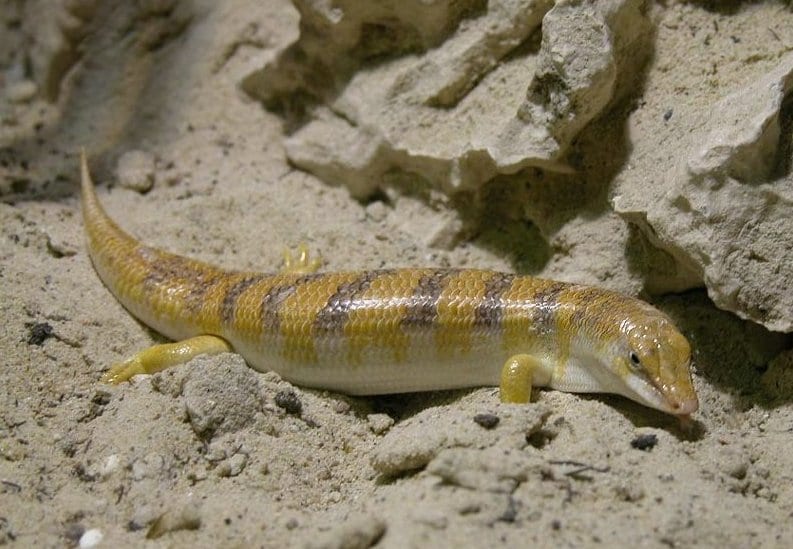
The sandfish skink is a distinctive lizard known for "swimming" through loose sand rather than crawling over it, thanks to its wedge-shaped snout, countersunk lower jaw, and flattened, fringed limbs. Its coloring is a warm, caramel-like yellow crossed with dark brown bands, and adults reach about 20 cm in total length. Because it spends much of its time buried, sightings above the sand tend to be brief, but watching it vanish into the substrate is part of its unique appeal. It is generally considered a species suited to experienced keepers, since getting the substrate and temperature setup right takes some know-how.
View Sandfish Skink encyclopedia →0% commission on your first sales!Register by September 30, 2026 and your first 2 sales are commission-free!
Breeder Wanted!
List on BreederDirect and sell directly to customers nationwide!
6 Transparency Promises from Br-Choku
Every Reptiles & Amphibians from verified Breeder breeders includes complete information: morph, genetics, feeding requirements, and temperament details.
- Morph Information
- Actual Photos
- Feeding Information
- Temperament Information
- Genetics Information
- Age (Months)
Browse all 280 breeds
Difficulty Level
Feeding Type
Temperament
Verified breeders wanted for Reptiles & Amphibians
Breeders are signing up now ahead of launch. Subscribe to be notified when new listings go live.
Getting alerts is free with a member account. When new listings match your saved search, we'll notify you by email and in-app.
Browse other categories
Verified breeders (preview)
Are you raising reptiles & amphibians?
Register as a breeder and connect with buyers directly.
Apply as a breederSandfish Skink key facts
- Care level
- Advanced
- Lifespan
- 6-10 years
- Size
- About 20cm total length including the short tail
- Temperature
- Diet
- Carnivorous: insects and other arthropods
- Temperature & Humidity
- A desert animal of northern Africa, it wants very high basking temperatures. Keep the basking surface at 54-60 C and the cool side at 26-32 C, and switch the heat off at night so temperatures fall to 21-26 C. As long as the animal is well hydrated and basking temperatures are high enough, it passes the sand it swallows without trouble.
- Enclosure
- Because it lives buried in sand, choose an enclosure that will hold at least 10 cm of sand without spilling. It must be large enough that a hot basking area can be provided without turning the whole enclosure into an oven, leaving a properly cool zone as well. Substrate quality directly determines quality of life, so use fine-grained sand.
- Diet & Feeding
- It feeds on insects and other arthropods. In captivity offer feeders such as crickets and roaches scaled to its size, dusted with calcium and vitamin supplements. It dives after prey dropped on the sand, so use a feeding dish or otherwise reduce how much sand it takes in.
- Temperament
- Timid, diving into the sand as soon as it is startled. It is not a species for handling and spends long periods out of sight. If keeping more than one, allow ample floor area so that they do not compete over food.
- Notes
- Not currently listed on any CITES appendix. The IUCN assesses it as Least Concern. It appears neither on the schedule of designated dangerous animals under the Order for Enforcement of the Act on Welfare and Management of Animals nor on Japan's list of invasive alien species. Its adaptation to a life in sand is extreme, and long-term keeping is difficult where the substrate and thermal gradient cannot be reproduced.
About Sandfish Skink
Meet the sandfish skink, a lizard that swims through sand instead of crawling. Learn its traits, temperament, and what to know before bringing one home.
7 things to know before welcoming a Sandfish Skink
1Built for a sand-diving lifestyle
Sandfish skinks use their flattened limbs and countersunk jaw to move through sand as if swimming through it. Provide a deep enough layer of fine-grained sand so it has plenty of room to burrow and move naturally.
2Suited to experienced keepers
This species is generally rated as suited to experienced keepers. Managing the right balance of substrate type, temperature, and humidity calls for some prior reptile-keeping knowledge, so it's better suited to those already comfortable with more demanding species.
3Expect brief above-ground appearances
Because it spends much of its time buried in the substrate, you won't see it out in the open very often during the day. If you enjoy observing it, feeding time is often when it's most likely to surface.
4Coloring varies between individuals
Its base coloring is a warm, caramel-like yellow marked with dark brown crossbands. The exact pattern and shade can vary between individuals, which makes comparing different animals part of the fun when choosing one.
5A compact adult size
Adults reach roughly 20 cm in total length, including the short tail, making it a relatively compact species to house among reptiles. Even so, you'll still need an enclosure sized appropriately for its needs.
6Watch for escape routes
Its strong digging ability means you should carefully check enclosure layout and lid security. Because it naturally burrows and moves through sand, it can sometimes find unexpected escape routes.
7Not subject to CITES
The sandfish skink is not subject to CITES. That said, be sure to also review the housing and daily-care points covered elsewhere on this page.
Frequently asked questions about Sandfish Skink
- Q.Can beginners keep a sandfish skink?
- A.This species is generally rated as suited to experienced keepers. Since setting up the right substrate and temperature takes some know-how, it's best suited to those with prior reptile-keeping experience.
- Q.How big does a sandfish skink get?
- A.Adults reach a total length of about 20 cm, including the short tail. This makes them a relatively compact and manageable size among reptiles.
- Q.What does its typical day-to-day behavior look like?
- A.It spends much of its time buried in the sand, using its flattened limbs to move through it almost like swimming. It's not visible for long stretches, but that behavior is part of its charm.
- Q.Is the sandfish skink regulated under CITES?
- A.The sandfish skink is not subject to CITES.
- Q.What should I be careful about with its enclosure?
- A.Because it's a strong digger that naturally moves through sand, you should check the enclosure layout and lid security carefully to prevent unexpected escapes.
Useful tools for Sandfish Skink care
Learn more about Sandfish Skink in the encyclopedia
View Sandfish Skink encyclopedia entry →
Care difficulty, lifespan, size and diet — all basics covered.
More in this category
Can't find the one you're looking for?
Post your wishes for free and breeders with matching animals will contact you with introductions.