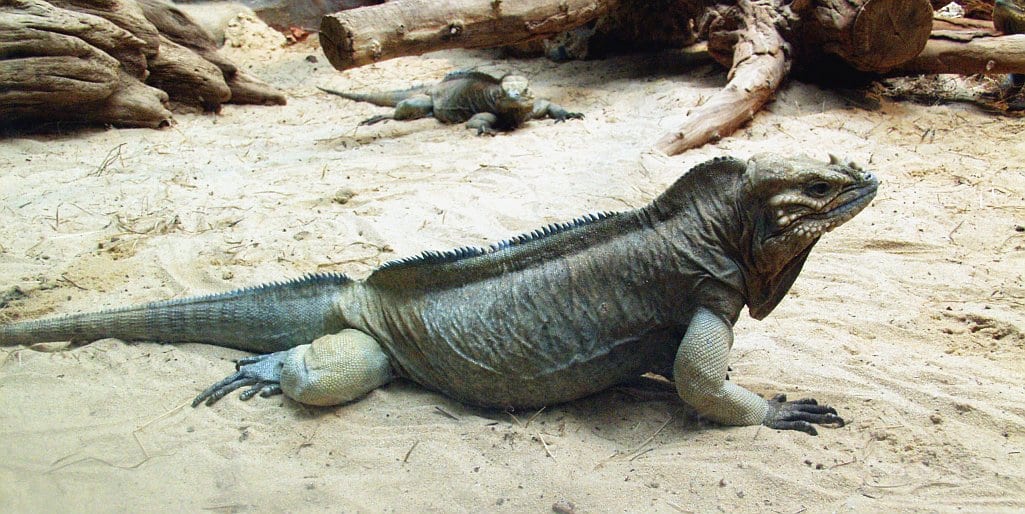
 © Raimond Spekking / CC BY-SA 4.0
Rhinoceros Iguana
The Rhinoceros Iguana is a large rock iguana native to Hispaniola, named for the horn-like bony protrusions on its snout. Reaching 60 to 136 cm in total length, it has an imposing, prehistoric presence despite being strictly herbivorous. A crest of spiny scales runs from the nape to the tail, adding to its rugged appearance. This is a species suited to experienced keepers, requiring ample space and dedicated husbandry knowledge. With proper long-term care, it can become a striking centerpiece animal for a serious reptile keeper.
View Rhinoceros Iguana encyclopedia →0% commission on your first sales!Register by September 30, 2026 and your first 2 sales are commission-free!
Breeder Wanted!
List on BreederDirect and sell directly to customers nationwide!
6 Transparency Promises from Br-Choku
Every Reptiles & Amphibians from verified Breeder breeders includes complete information: morph, genetics, feeding requirements, and temperament details.
- Morph Information
- Actual Photos
- Feeding Information
- Temperament Information
- Genetics Information
- Age (Months)
Browse all 280 breeds
Difficulty Level
Feeding Type
Temperament
Verified breeders wanted for Reptiles & Amphibians
Breeders are signing up now ahead of launch. Subscribe to be notified when new listings go live.
Getting alerts is free with a member account. When new listings match your saved search, we'll notify you by email and in-app.
Browse other categories
Verified breeders (preview)
Are you raising reptiles & amphibians?
Register as a breeder and connect with buyers directly.
Apply as a breederRhinoceros Iguana key facts
- Care level
- Advanced
- Lifespan
- 50-70 years
- Size
- 60-136cm; adults weigh 4.56-9kg
- Temperature
- Diet
- Mainly plant matter such as leaves, flowers and fruit
- Temperature & Humidity
- Adjust the height of the basking lamp to give a basking surface of about 41C, and place the basking area at the far end of the enclosure so that a gradient forms. Daytime ambient is best around 27C within an acceptable range of 24-31C, with the cool zone about 5C lower. Never expose the animal to temperatures below 17C for any length of time. A lightless infrared heat projector is useful for holding night-time or large-enclosure ambient temperatures.
- Enclosure
- It is large and terrestrial, so an adult needs space equivalent to a dedicated room or an outdoor pen. Provide both flat places to lie down on and a retreat it can withdraw into to sleep. Mount the UVB lamp at the height the manufacturer specifies and combine it with the basking lamp to approximate sunlight. It digs powerfully, so build pen foundations it cannot tunnel through.
- Diet & Feeding
- Like other rock iguanas it is strongly herbivorous, so build the diet around leaves, flowers and fruit and do not over-supply animal matter. Any plants placed in the enclosure must be non-toxic, since they will be eaten.
- Temperament
- It is large and powerfully jawed, and mature males are strongly territorial; males must not be housed together. Patient, consistent contact over time accustoms it to people, but breeding males can turn aggressive.
- Notes
- It has been listed on CITES Appendix I since 6 June 1981. Under Japan's Species Conservation Act it is an internationally endangered species, and transferring one within Japan requires an individual registration certificate; trading or transferring an unregistered animal breaches that Act. It is neither a specified animal nor an invasive alien species under Japanese law. The IUCN assesses it as Endangered. It is bred in captivity with some regularity, so choose captive-bred stock and always check the registration certificate and origin. It is a large, decades-lived species, so secure facilities and a plan for its whole life before acquiring one.
About Rhinoceros Iguana
A large rock iguana from Hispaniola with horn-like snout protrusions. Herbivorous, reaching 60–136 cm, suited to experienced keepers.
7 things to know before welcoming a Rhinoceros Iguana
1Requires a Large Enclosure
Adults can reach 60 to 136 cm in length, so a spacious, tall enclosure must be set up before bringing one home. With adult body weight reaching 4.56 to 9 kg, consider floor load capacity when placing furniture or stands.
2UVB and Heat Management
As with herbivorous iguanas in general, strong UVB lighting is essential for calcium metabolism. Setting up a basking spot with a temperature gradient across the enclosure is a fundamental part of the husbandry.
3A Strictly Herbivorous Diet
This species is strictly herbivorous, feeding mainly on vegetables and leafy greens. Keepers need to plan meals with calcium-to-phosphorus balance in mind, so learning the basics of feeding before bringing one home is worthwhile.
4Suited to Experienced Keepers
This species is classified as suitable for experienced keepers. Prior experience handling large reptiles and managing temperature and humidity is recommended, making it a less suitable choice for a first reptile.
5A Powerful Build and Temperament
The species is characterized by a sturdy build, with a crest of spiny scales running from the nape to the tip of the tail. Like other large lizards, it has considerable physical strength, so calm handling and ample space are important when interacting with it.
6Plan for Long-Term Growth
Even though juveniles start out small, adults can reach up to 136 cm in total length. It's important to plan the future housing setup at the time you bring one home, not after it has grown.
7Consult with the Breeder
Individual animals can vary in health condition and temperament. Before bringing one home, it's reassuring to consult directly with the breeder about the enclosure setup and diet, and to resolve any questions in advance.
Frequently asked questions about Rhinoceros Iguana
- Q.Can beginners keep this species?
- A.The Rhinoceros Iguana is classified as suitable for experienced keepers. It's best suited to those with prior experience keeping large reptiles and the ability to manage adequate space, UVB lighting, and temperature.
- Q.How large does it grow?
- A.Adults reach a total length of 60 to 136 cm and a body weight of 4.56 to 9 kg. Individual variation is significant, so it's important to secure enough space in anticipation of full-grown size.
- Q.What does it eat?
- A.It is strictly herbivorous, feeding mainly on vegetables and leafy greens. Meals need to be planned with attention to calcium-to-phosphorus balance.
- Q.Are there legal restrictions on this species?
- A.Rhinoceros Iguana is listed in CITES Appendix I. In Japan it is an "internationally endangered species" under the Act on Conservation of Endangered Species of Wild Fauna and Flora, so only registered individuals may be sold or transferred, and the registration certificate goes with the animal. Always check that the certificate is provided.
- Q.What is the purpose of the horn-like snout protrusions?
- A.The bony protrusions on the snout are a distinctive physical feature of the species and the origin of its common name. Combined with the crest of spiny scales running from the nape to the tail tip, they give the animal a powerful appearance.
Useful tools for Rhinoceros Iguana care
Learn more about Rhinoceros Iguana in the encyclopedia
View Rhinoceros Iguana encyclopedia entry →
Care difficulty, lifespan, size and diet — all basics covered.
More in this category
Can't find the one you're looking for?
Post your wishes for free and breeders with matching animals will contact you with introductions.