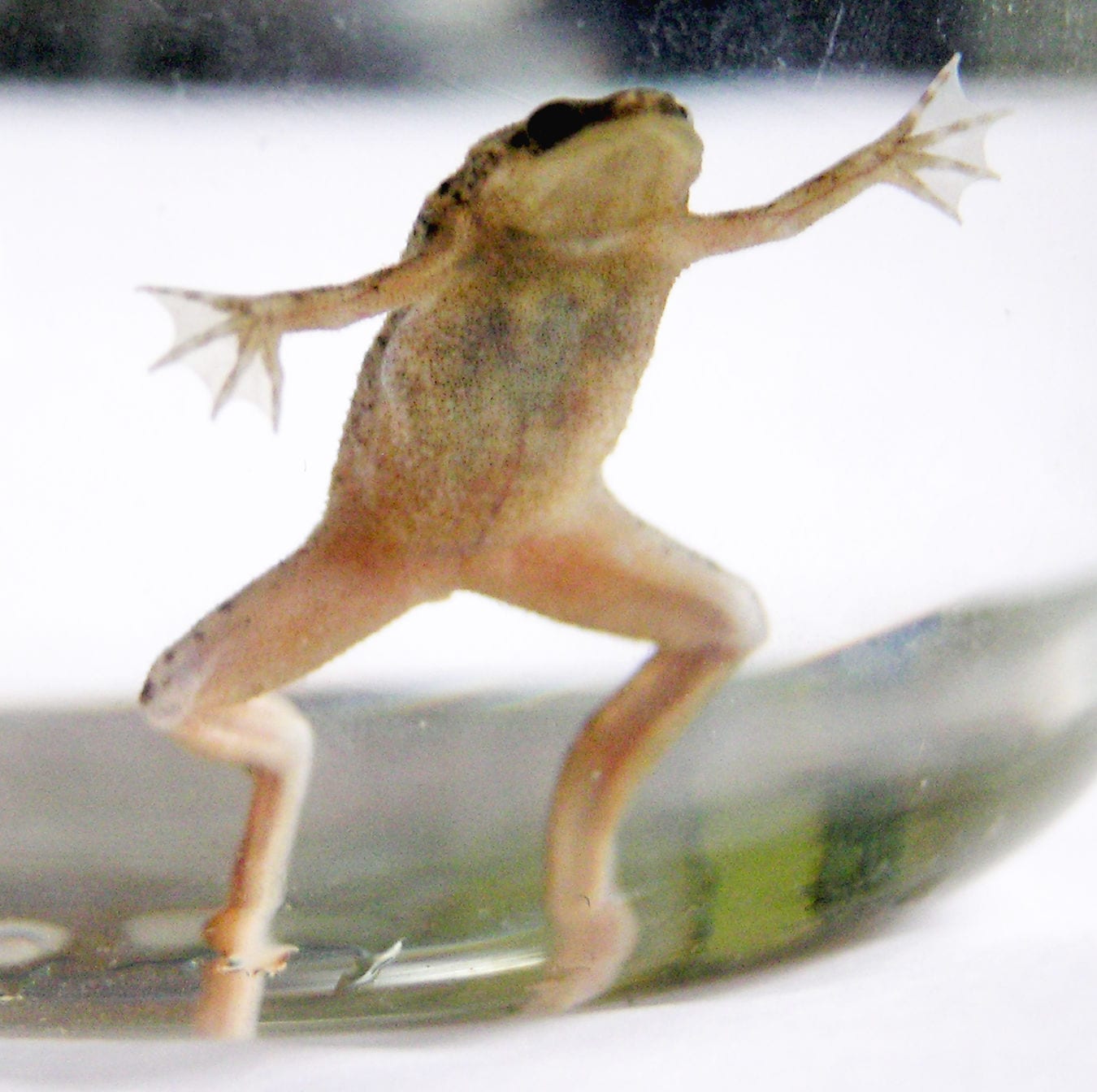
 © Mwatro / CC BY-SA 3.0
African Dwarf Frog
The African Dwarf Frog (Hymenochirus boettgeri) is a fully aquatic frog that grows to about 3.5 cm. Its brownish or grayish body is dotted with darker markings, and unlike most frogs, it has no tongue or eyelids. Because it thrives in the same tank setup as tropical fish, it has long been a popular starter species in the aquarium hobby. The tiny claws on its front feet give the species its name, and many keepers enjoy watching it paddle busily around the tank or dart up to the surface to breathe. Considered easy to care for, it's a good choice for anyone bringing home their first aquatic pet.
View African Dwarf Frog encyclopedia →0% commission on your first sales!Register by September 30, 2026 and your first 2 sales are commission-free!
Breeder Wanted!
List on BreederDirect and sell directly to customers nationwide!
6 Transparency Promises from Br-Choku
Every Reptiles & Amphibians from verified Breeder breeders includes complete information: morph, genetics, feeding requirements, and temperament details.
- Morph Information
- Actual Photos
- Feeding Information
- Temperament Information
- Genetics Information
- Age (Months)
Browse all 280 breeds
Difficulty Level
Feeding Type
Temperament
Verified breeders wanted for Reptiles & Amphibians
Breeders are signing up now ahead of launch. Subscribe to be notified when new listings go live.
Getting alerts is free with a member account. When new listings match your saved search, we'll notify you by email and in-app.
Browse other categories
Verified breeders (preview)
Are you raising reptiles & amphibians?
Register as a breeder and connect with buyers directly.
Apply as a breederAfrican Dwarf Frog key facts
- Care level
- Beginner-friendly
- Lifespan
- 5-8 years
- Size
- 2.5-3.5cm
- Temperature
- 22〜26℃
- Diet
- Bloodworms, prepared foods
- Temperature & Humidity
- Hold the water at 22-26 C and pH 6.5-7.8, stabilised with a thermostatically controlled heater and a thermometer.
- Enclosure
- Ordinary tropical aquarium equipment works. Use coarse gravel so it cannot be swallowed, and avoid very deep water, since the frog must surface to breathe.
- Diet & Feeding
- Its mouth is small and it moves slowly, so use sinking foods such as bloodworms. Fish will outcompete it, so feed it separately.
- Temperament
- Peaceable and almost never aggressive. It can be kept in groups and behaves more confidently with company.
- Notes
- It is sometimes traded confused with juvenile Xenopus. Its claws snag in nets, so move it in a container rather than a net.
About African Dwarf Frog
African Dwarf Frogs are fully aquatic, grow to 2.5–3.5 cm, and can share a tank with tropical fish. An easy, beginner-friendly species — here's what to know before bringing one home.
7 things to know before welcoming a African Dwarf Frog
1Fully aquatic, no land needed
African Dwarf Frogs spend their entire lives in water and never come ashore, so no land area is needed in the tank. All the space can simply be filled with water. Just keep the water level low enough that the frog can easily reach the surface to breathe.
2Relies on smell over sight
Their eyesight is quite poor, so they rely mainly on smell and the sensory organs along their sides to find food. They may not notice food dropped right in front of them, so give the scent time to spread through the water.
3Surfaces to breathe air
Adults breathe with lungs rather than gills, so they regularly swim to the surface for air. Avoid crowding the surface with floating plants or decorations, and keep a clear path so the frog can reach the air easily.
4Choose tankmates carefully
Because they swim slowly, active tropical fish can easily out-compete them for food. On the other hand, very small fish or shrimp that fit in their mouth may end up being eaten, so choose tankmates carefully based on size and temperament.
5Well-suited to group keeping
They're often found in groups and generally get along well when several are kept in the same tank. That said, more frogs means the water fouls faster, so keep the number appropriate for your tank size.
6Needs consistent water care
They also absorb some oxygen through their skin, making them sensitive to poor water quality — a buildup of ammonia can quickly affect their health. Regular water changes and consistent filter maintenance are essential to keeping them healthy.
7Prepare shelters and a lid
They like to hide in sheltered spots, so having shelters or plants in the tank helps them feel secure. They can also jump surprisingly well and may leap out of an open tank, so don't forget a secure lid.
Frequently asked questions about African Dwarf Frog
- Q.Can they live in the same tank as tropical fish?
- A.Yes, African Dwarf Frogs are commonly kept in the same tank as tropical fish since they prefer similar water temperatures and conditions. Because they swim slowly, though, consider tankmate species and numbers carefully so they can still get enough food.
- Q.Do they need a land area in the tank?
- A.No, they don't. African Dwarf Frogs are fully aquatic and spend their whole lives in water, so they do fine without any land area. Just make sure the water level lets them swim to the surface to breathe.
- Q.What should I feed them?
- A.Frozen bloodworms, tubifex worms, and sinking pellets made for aquatic frogs are common choices. Since they locate food by smell rather than sight, give it a little time to sink and the scent to spread before checking on them.
- Q.Can I keep several together in one tank?
- A.Yes, they're often found in groups and can be kept together in the same tank. Just keep the number appropriate for your tank size and stay on top of water changes, since more frogs means the water fouls faster.
- Q.How are they different from Xenopus (African Clawed Frogs)?
- A.Despite the similar name, they're a different species — Xenopus, often called the African Clawed Frog, grows considerably larger than the African Dwarf Frog. Since the two are easy to mix up, it's worth double-checking the species name or size when buying.
Useful tools for African Dwarf Frog care
Learn more about African Dwarf Frog in the encyclopedia
View African Dwarf Frog encyclopedia entry →
Care difficulty, lifespan, size and diet — all basics covered.
More in this category
Can't find the one you're looking for?
Post your wishes for free and breeders with matching animals will contact you with introductions.