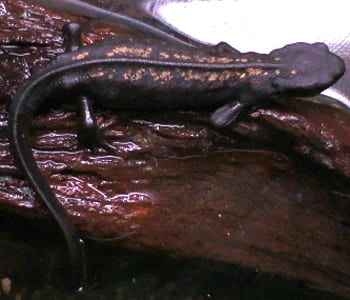
 © J-Moss / CC BY-SA 3.0
Sword-Tailed Newt
The Sword-Tailed Newt is native only to Japan's Amami and Okinawa island groups, and it's the largest member of the Cynops genus, reaching up to 18cm in length. Its black back is marked with lichen-like pale blotches and a bright orange dorsal stripe, while its belly glows a deep reddish orange when flipped over. Calm and unhurried in its movements, it tends to settle into captivity without much fuss, alternating between hiding in cover and growing comfortable around its keeper. Because it hails from subtropical islands, it tolerates warmth better than its relatives, so summer temperature management is less of a worry. Hardy and forgiving, it's a newt that rewards attentive care and suits anyone keeping an amphibian for the first time.
View Sword-Tailed Newt encyclopedia →0% commission on your first sales!Register by September 30, 2026 and your first 2 sales are commission-free!
Breeder Wanted!
List on BreederDirect and sell directly to customers nationwide!
6 Transparency Promises from Br-Choku
Every Reptiles & Amphibians from verified Breeder breeders includes complete information: morph, genetics, feeding requirements, and temperament details.
- Morph Information
- Actual Photos
- Feeding Information
- Temperament Information
- Genetics Information
- Age (Months)
Browse all 280 breeds
Difficulty Level
Feeding Type
Temperament
Verified breeders wanted for Reptiles & Amphibians
Breeders are signing up now ahead of launch. Subscribe to be notified when new listings go live.
Getting alerts is free with a member account. When new listings match your saved search, we'll notify you by email and in-app.
Browse other categories
Verified breeders (preview)
Are you raising reptiles & amphibians?
Register as a breeder and connect with buyers directly.
Apply as a breederAbout Sword-Tailed Newt
Sword-Tailed Newt, the largest Cynops species, native to Amami and Okinawa. Growing up to 18cm with striking black-and-orange markings, it's heat-tolerant and beginner-friendly to keep.
7 things to know before welcoming a Sword-Tailed Newt
1Native Range
The Sword-Tailed Newt is endemic to Japan's Amami and Okinawa island groups and isn't found naturally anywhere else. It evolved to suit a humid, subtropical environment.
2Largest of Its Genus
This is the largest species in the Cynops genus, with adults reaching 11 to 18cm. It has a sturdy, substantial build compared to its relatives.
3Heat Tolerance
Coming from subtropical islands, it handles warm temperatures better than other Cynops newts. That makes summer water temperature management less of a worry for keepers.
4A Long-Term Companion
In captivity it commonly lives 20 years or more, with one record reaching 36 years. Plan your setup with that long-term commitment in mind before bringing one home.
5Skin Secretions
Like other newts, it secretes substances through its skin, so washing your hands after handling is essential. Be especially careful that children keep their hands away from their eyes and mouth after contact.
6Needs Both Water and Land
As a semi-aquatic species, its enclosure needs both a swimming area and dry land to climb onto. It's also a capable escape artist, so a snug-fitting lid matters.
7Manageable for Beginners
It's considered beginner-friendly, with calm movements and a temperament that adjusts well to a keeper's presence. Still, as a living animal it needs daily observation and proper environmental upkeep.
Frequently asked questions about Sword-Tailed Newt
- Q.How big does a Sword-Tailed Newt grow?
- A.Adults typically reach 11 to 18cm, making it one of the largest species in the Cynops genus. Some individuals have grown to the maximum recorded length of 18cm.
- Q.How long do they live?
- A.In captivity they commonly live 20 years or more, with one record of 36 years. Be prepared for a long-term commitment when bringing one home.
- Q.Is this newt suitable for a first-time amphibian keeper?
- A.It's generally considered beginner-friendly. That said, you'll still need to set up both a water area and dry land, so some basic preparation is required.
- Q.Is it safe to handle with bare hands?
- A.Like other newts, it secretes substances through its skin, so you should wash your hands thoroughly after handling. Avoid touching your eyes or mouth until you do.
- Q.Is this species subject to CITES regulation?
- A.The Sword-Tailed Newt is not subject to CITES.
Useful tools for Sword-Tailed Newt care
Learn more about Sword-Tailed Newt in the encyclopedia
View Sword-Tailed Newt encyclopedia entry →
Care difficulty, lifespan, size and diet — all basics covered.
More in this category
Can't find the one you're looking for?
Post your wishes for free and breeders with matching animals will contact you with introductions.