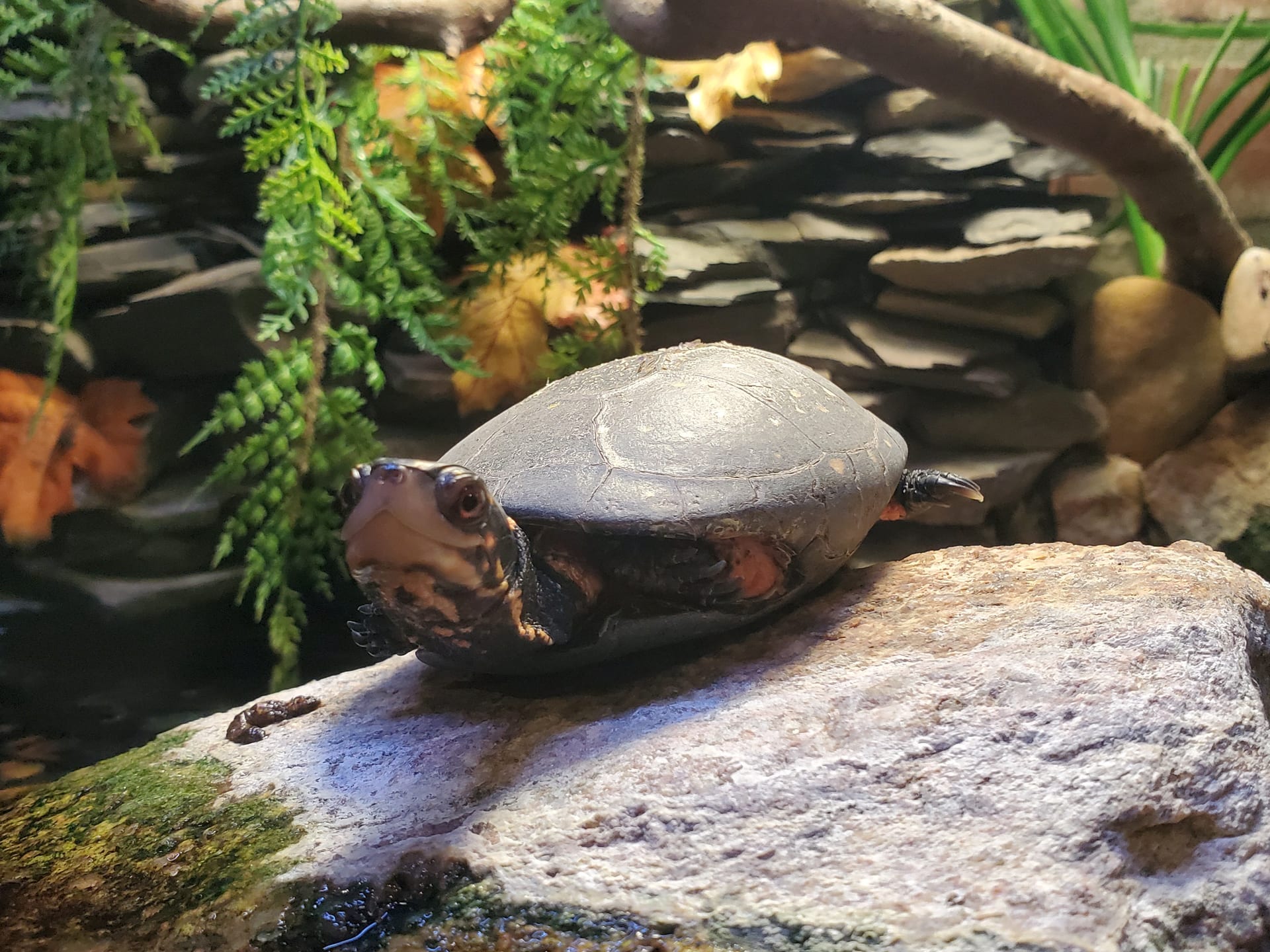
 © Jstuby / CC0
Spotted Turtle
The Spotted Turtle gets its name from the bright yellow spots scattered across its black carapace — a small pond turtle native to eastern North America. Its spot pattern keeps changing throughout its life: the number of spots typically increases with age, though some older individuals lose them again over time. Calm and quiet by nature, it tends to settle down and grow comfortable around its keeper once acclimated. Its compact adult size means it doesn't demand as much space as many other aquatic turtles, but careful water temperature and UV management make it better suited to keepers with some prior experience.
View Spotted Turtle encyclopedia →0% commission on your first sales!Register by September 30, 2026 and your first 2 sales are commission-free!
Breeder Wanted!
List on BreederDirect and sell directly to customers nationwide!
6 Transparency Promises from Br-Choku
Every Reptiles & Amphibians from verified Breeder breeders includes complete information: morph, genetics, feeding requirements, and temperament details.
- Morph Information
- Actual Photos
- Feeding Information
- Temperament Information
- Genetics Information
- Age (Months)
Browse all 280 breeds
Difficulty Level
Feeding Type
Temperament
Verified breeders wanted for Reptiles & Amphibians
Breeders are signing up now ahead of launch. Subscribe to be notified when new listings go live.
Getting alerts is free with a member account. When new listings match your saved search, we'll notify you by email and in-app.
Browse other categories
Verified breeders (preview)
Are you raising reptiles & amphibians?
Register as a breeder and connect with buyers directly.
Apply as a breederSpotted Turtle key facts
- Care level
- Intermediate
- Lifespan
- At least 50 years under good care, with over 100 years considered possible
- Size
- Carapace up to 14.3cm; males up to 12.2cm
- Temperature
- Diet
- Aquatic turtle pellets, fish, amphibians, insects, spiders, crustaceans, fruit, aquatic plants and algae
- Temperature & Humidity
- Keep the water at 21-29 C and the basking surface at 30-32 C. The species is diurnal, so run lights about 14 hours a day in summer and 10 in winter, and position UVB lighting to give a UV index of 3.0-4.0 over the basking area.
- Enclosure
- House it in an aqua-terrarium with a generous land area. The floating basking platforms sold for aquatic turtles suit this species poorly; give it land it can walk about on. Turtles foul water heavily, so use filtration rated for two to three times the water volume and change water regularly.
- Diet & Feeding
- Omnivorous: build the diet around aquatic turtle pellets with fish, insects, crustaceans and aquatic plants alongside. Because it feeds in the water, powdered calcium is impractical; leave a cuttlebone in the enclosure instead.
- Temperament
- Some individuals are fussy feeders, most notably wild-caught animals. Males in breeding condition pursue females persistently and wear them down, so keeping animals singly is preferable unless breeding is intended.
- Notes
- Listed on CITES Appendix II with effect from 12 June 2013; as an Appendix II species it needs no individual registration certificate in Japan. It is neither a designated dangerous animal nor an invasive alien species there. Many US states protect the species, and collection and trade in wild animals are tightly restricted.
About Spotted Turtle
The Spotted Turtle is a small North American pond turtle with a yellow-spotted black shell, growing to about 14.3cm. Calm-natured but best suited to keepers with some experience.
7 things to know before welcoming a Spotted Turtle
1Watch Water Temperature
Spotted Turtles don't tolerate high water temperatures well and can become stressed if the water gets too warm. Since they prefer cooler conditions, it's worth planning ahead for summer cooling measures.
2UVB Lighting Is Essential
Spotted Turtles enjoy basking, and exposure to UVB light is important for healthy shell and bone development. When kept indoors, set up a reptile-grade UVB lamp along with a dedicated basking spot.
3Calm but Can Be Shy
They're generally quiet and non-aggressive, though newly acquired turtles often hide at first. Given time to settle into their environment, most gradually grow comfortable around their keeper.
4An Omnivorous Diet
Their diet is broad, ranging from insects and worms to aquatic plants and commercial turtle pellets. Because calcium deficiency can affect shell health, calcium supplementation is worth considering.
5A Multi-Decade Commitment
Under good care, Spotted Turtles are reported to live 50 years or more, with some possibly exceeding a century. Bringing one home means planning for a long-term commitment, not a short-lived pet.
6Cold-Season Handling
As a species from a temperate climate, outdoor-kept individuals may naturally go through a cold-weather dormant period. Indoor keeping without this dormant period is also possible, but it requires consistent year-round temperature and lighting management.
7Set Up Before Bringing One Home
Although adults stay fairly compact, they still need space for both swimming and basking, along with filtration and a basking area set up in advance. It's best kept as a single individual, so have the enclosure fully ready before your turtle arrives.
Frequently asked questions about Spotted Turtle
- Q.Can beginners keep a Spotted Turtle?
- A.Spotted Turtles are generally considered suited to intermediate-level keepers. Because they require careful attention to water temperature and UVB lighting, prior experience keeping other animals makes for a smoother start.
- Q.How big do they grow?
- A.The carapace reaches up to about 14.3cm in length. Males tend to stay somewhat smaller, typically maxing out around 12.2cm.
- Q.How long do Spotted Turtles live?
- A.With proper care, they're known to live 50 years or more, and some may potentially live past a century. It's worth planning for a long-term commitment before bringing one home.
- Q.Do the yellow spots change as they grow?
- A.Yes — the number of spots generally increases with age, though in some older individuals they can fade or disappear again. Watching this pattern change over time is part of the appeal of keeping this species.
- Q.Is the Spotted Turtle listed under CITES?
- A.Spotted Turtle is listed in CITES Appendix II. International trade requires a permit from the exporting country, but as far as CITES is concerned, no registration is needed to buy or sell individuals already legally in Japan.
Useful tools for Spotted Turtle care
Learn more about Spotted Turtle in the encyclopedia
View Spotted Turtle encyclopedia entry →
Care difficulty, lifespan, size and diet — all basics covered.
More in this category
Can't find the one you're looking for?
Post your wishes for free and breeders with matching animals will contact you with introductions.