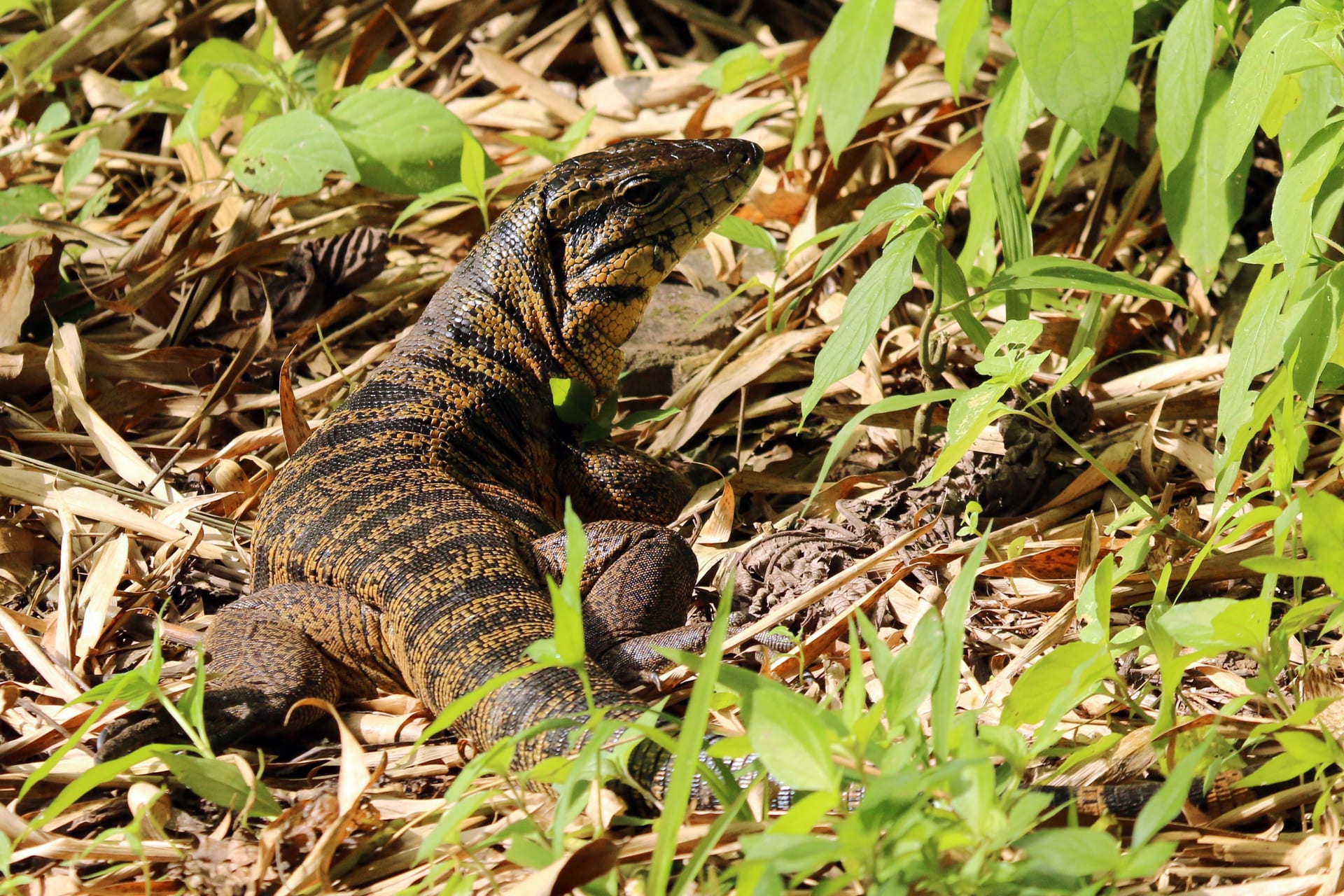
 © Charles J. Sharp / CC BY-SA 4.0
Gold Tegu
The Gold Tegu, also known as the Colombian Tegu, is a large lizard from the Teiidae family native to tropical forests stretching from northern South America to Panama. It's known for its striking glossy black body marked with bands of golden yellow, along with thick limbs and a long tail, reaching 60 to 100 cm in total length. These lizards are notably intelligent and, with consistent handling from a young age, can become quite tame — though their size and strength mean they require an experienced keeper. As omnivores, they eat everything from insects to fruit, and need spacious enclosures with careful temperature and humidity control. With a lifespan of 15 to 20 years, prospective owners should be prepared for a long-term commitment, making this a species best suited to advanced keepers.
View Gold Tegu encyclopedia →0% commission on your first sales!Register by September 30, 2026 and your first 2 sales are commission-free!
Breeder Wanted!
List on BreederDirect and sell directly to customers nationwide!
6 Transparency Promises from Br-Choku
Every Reptiles & Amphibians from verified Breeder breeders includes complete information: morph, genetics, feeding requirements, and temperament details.
- Morph Information
- Actual Photos
- Feeding Information
- Temperament Information
- Genetics Information
- Age (Months)
Browse all 319 breeds
Difficulty Level
Feeding Type
Temperament
Verified breeders wanted for Reptiles & Amphibians
Breeders are signing up now ahead of launch. Subscribe to be notified when new listings go live.
Getting alerts is free with a member account. When new listings match your saved search, we'll notify you by email and in-app.
Browse other categories
Verified breeders (preview)
Are you raising reptiles & amphibians?
Register as a breeder and connect with buyers directly.
Apply as a breederGold Tegu key facts
- Care level
- Advanced
- Lifespan
- 15-20 years
- Size
- 60-100cm
- Temperature
- Diet
- Insects, snails, small mammals, small reptiles, birds, fish and eggs
- Temperature & Humidity
- Keep the basking surface at 52-57 C, the warm side at 32-35 C and the cool side at 24-29 C, switching off all lighting and heat at night for a drop to 20-23 C. Tegus fall in Ferguson Zone 3, so aim for a UV index of 3.0-4.0 on the basking surface.
- Enclosure
- An adult of this species is considered to need an enclosure of at least 1.7 x 0.8 x 0.8 m. It digs, so use a deep substrate, and provide a water container large enough for the whole animal along with hides. It is powerful, so secure the lid and doors firmly.
- Diet & Feeding
- Colombian tegus are strongly carnivorous and are fed insects, rodents, fish and eggs, with calcium and vitamin D3 supplementation. They are opportunistic feeders that will eat almost anything, so portion sizes must be managed to prevent obesity.
- Temperament
- Intelligent and active, but less inclined to tame than the Argentine tegu. Animals handled often from a young age settle well. The bite is powerful and the claws sharp, so handling calls for experience.
- Notes
- The genus Tupinambis is listed on CITES Appendix II, so no Japanese registration certificate is required. It is not among Japan's designated dangerous animals. The lizard is large and long-lived, so make sure the space and the time for lifelong care are in place before acquiring one.
About Gold Tegu
A guide to the Gold Tegu (Colombian Tegu), a large South American lizard reaching 60-100 cm with a 15-20 year lifespan - traits, temperament, and care essentials for advanced keepers.
7 things to know before welcoming a Gold Tegu
1Needs a Large Enclosure
Adults reach 60 to 100 cm in total length, so they require a spacious enclosure with generous floor space. Plan ahead for a location that can accommodate a larger setup as they grow.
2Temperature and Humidity Control
As a species from tropical forests, they need a temperature gradient with a warm basking spot and a cooler zone, along with consistently high humidity. Check conditions daily with a thermometer and hygrometer.
3Taming Takes Patience
Gold Tegus are intelligent and can become quite tame, but this requires consistent, patient handling over time. Starting gentle handling sessions while they're still young helps raise a more manageable adult.
4Omnivorous, Varied Diet
They eat a wide range of foods, including insects, small prey, eggs, fruit, and vegetables. A balanced diet with added calcium and vitamin supplementation is important for their health.
5Natural Burrowing Instinct
In the wild, they dig burrows to rest in, so providing substrate deep enough to burrow into helps them feel secure in captivity. Adding multiple hides in the enclosure is also recommended.
6Seasonal Activity Dips
Some individuals become less active and eat less during cooler, shorter-daylight periods. Since this can be hard to distinguish from illness, consult an experienced vet if you notice changes.
7Respect Their Strength
Adults can weigh 3.5 to 4 kg and are physically powerful lizards. Make sure the enclosure is sturdy with secure locking mechanisms, and handle them only within safe, comfortable limits.
Frequently asked questions about Gold Tegu
- Q.Is the Gold Tegu suitable for beginners?
- A.Because of their large size, strength, and the specialized enclosure and climate control they need, Gold Tegus are considered an advanced-keeper species. It's best to gain experience with reptiles before taking one on.
- Q.Can they become tame?
- A.They're intelligent, and with patient, consistent handling from a young age, many individuals become fairly tame. That said, temperament varies between individuals, and taming takes time.
- Q.How large do they grow?
- A.Adults reach 60 to 100 cm in total length and weigh around 3.5 to 4 kg. It's important to prepare a large enclosure in advance to accommodate this growth.
- Q.What should I feed them?
- A.They're omnivores that eat a wide variety of foods, including insects, small prey, eggs, fruit, and vegetables. Aim for a balanced diet with added calcium and vitamin supplementation.
- Q.How long of a commitment is keeping one?
- A.With a lifespan of 15 to 20 years, keeping a Gold Tegu requires long-term planning. Before bringing one home, carefully consider whether you can provide responsible care for its entire life.
Useful tools for Gold Tegu care
Learn more about Gold Tegu in the encyclopedia
View Gold Tegu encyclopedia entry →
Care difficulty, lifespan, size and diet — all basics covered.
More in this category
Can't find the one you're looking for?
Post your wishes for free and breeders with matching animals will contact you with introductions.