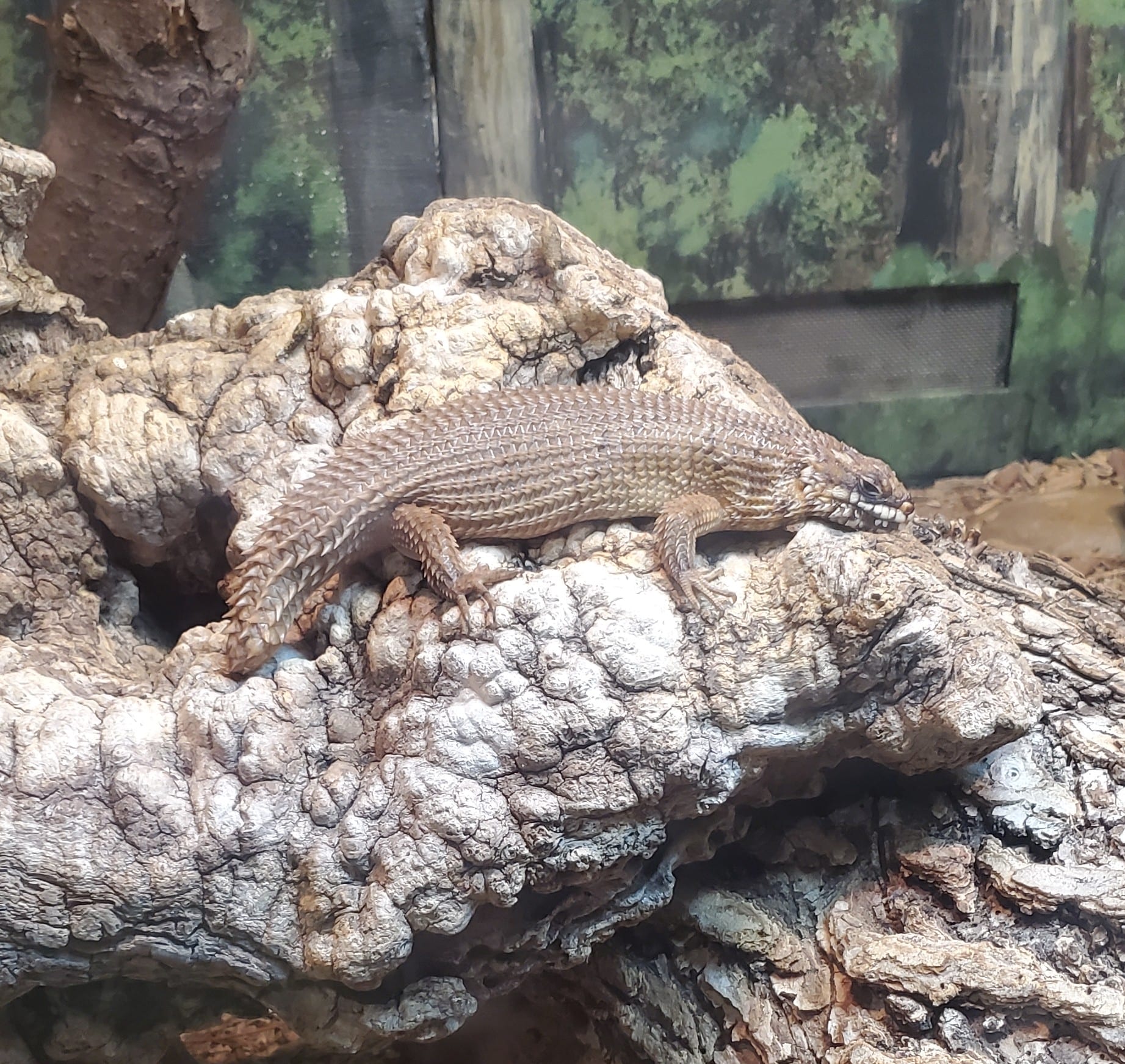
 © Wikipedia User / CC BY-SA 4.0
Hosmer's Spiny-tailed Skink
Hosmer's Spiny-tailed Skink is a large, sturdily built skink native to the dry, rocky outcrops of northern Australia. Its reddish-brown body is scattered with light and dark markings, while the head and neck take on a darker brown shade. The flattened, spine-covered tail is its signature feature, distinguishing it from the closely related Cunningham's skink. These skinks are known for wedging themselves into rock crevices and are often described as calm, steady animals once settled in. Because they're generally considered suitable for keepers with some reptile experience, they make a rewarding choice for anyone ready to look after a distinctive rock-dwelling lizard.
View Hosmer's Spiny-tailed Skink encyclopedia →Breeder Wanted!
List on BreederDirect and sell directly to customers nationwide!
BreederDirect's 6 Transparency Commitments
Every Reptiles & Amphibians from verified Breeder breeders includes complete information: morph, genetics, feeding requirements, and temperament details.
- Morph Information
- Actual Photos
- Feeding Information
- Temperament Information
- Genetics Information
- Age (Months)
Browse all 319 breeds
Difficulty Level
Feeding Type
Temperament
Verified breeders wanted for Reptiles & Amphibians
Breeders are signing up now ahead of launch. Subscribe to be notified when new listings go live.
Getting alerts is free with a member account. When new listings match your saved search, we'll notify you by email and in-app.
Browse other categories
Verified breeders (preview)
Are you raising reptiles & amphibians?
Register as a breeder and connect with buyers directly.
Apply as a breederHosmer's Spiny-tailed Skink key facts
- Care level
- Intermediate
- Lifespan
- Few data on lifespan in captivity
- Size
- About 18 cm snout-vent length (tail about 60% of SVL)
- Diet
- Omnivore (insects, leaves, shoots, berries)
- Housing
- A terrestrial lizard of dry rocky country; build rock piles with crevices and keep the enclosure fairly dry and well ventilated.
- Temperature & Humidity
- It is diurnal; provide a basking spot and a cooler area to create a gradient.
- Diet & Feeding
- An omnivore: offer insects plus leafy greens, shoots and berries.
- Health & Cautions
- It is viviparous, averaging four young per litter; watch the condition of breeding females.
- Notes
- Tell it from Cunningham's skink by its flatter, spinier tail, and check the scientific name when buying. Never release a captive animal into the wild.
About Hosmer's Spiny-tailed Skink
A large skink from northern Australia's rocky outcrops, known for its reddish-brown body and spiny flattened tail. Considered suitable for keepers with some reptile experience.
7 things to know before welcoming a Hosmer's Spiny-tailed Skink
1Rock-Based Habitat Design
In the wild, this skink lives among dry rocky outcrops, so a captive setup with stacked rocks and hides that create plenty of crevices helps it feel secure. Since it likes to wedge itself into tight gaps, make sure any rock structure is stable and won't shift or collapse.
2Spiny, Flattened Tail
Its flattened, spine-covered tail is the clearest way to tell it apart from the closely related Cunningham's skink. The tail is thought to help block off crevice entrances, shielding the body when the skink retreats into a gap.
3An Intermediate-Level Reptile
This species is generally considered suitable for keepers with some reptile experience and a feel for environmental management. First-time keepers may want to build up experience with an easier species before taking one on.
4Calm but Sizeable Temperament
Individuals are often described as steady and not easily startled, but given their large, sturdy build, sudden movements should be avoided and handling should be slow and calm. Temperament varies between individuals, so take time to observe each skink before interacting closely.
5An Omnivorous Diet
This skink is thought to eat plant matter as well as insects, reflecting an omnivorous tendency. Offering a varied mix of foods helps support balanced nutrition over the long term.
6Limited Lifespan Data
There isn't yet much documented data on lifespan in captivity. It's worth planning for a long-term commitment and considering whether ongoing care fits your circumstances before bringing one home.
7Listed Under CITES Appendix III
The genus Egernia has been listed under CITES Appendix III at the request of Australia since June 2022. Exports from Australia require an Australian export permit, and imports from any other country also need documents such as a certificate of origin. No registration is required to keep or transfer one within Japan.
Frequently asked questions about Hosmer's Spiny-tailed Skink
- Q.How big do Hosmer's Spiny-tailed Skinks get?
- A.They reach a snout-vent length of about 18 cm. The tail adds roughly 60% more length and has a distinctive flattened, spiny shape.
- Q.Is this skink suitable for beginners?
- A.This species is generally considered better suited to keepers with some reptile experience. Having a basic understanding of reptile care and environmental management will help you keep one with confidence.
- Q.How is it different from Cunningham's skink?
- A.The two look quite similar, but the flattened, spine-covered tail is the clearest way to tell them apart. Hosmer's Spiny-tailed Skink also has a reddish-brown body with light and dark markings, and a darker brown head and neck.
- Q.How long do they live in captivity?
- A.There currently isn't much solid data on captive lifespan for this species. Since you may be caring for one over a long period, it's worth thinking through whether that long-term commitment fits your situation before bringing one home.
- Q.Are there any legal considerations when getting one?
- A.Hosmer's Spiny-tailed Skink, along with the rest of the genus Egernia, is listed under CITES Appendix III by Australia. Exports from Australia require an Australian export permit, and imports from other countries also need documents such as a certificate of origin. No registration is needed to keep or transfer one within Japan.
Useful tools for Hosmer's Spiny-tailed Skink care
Learn more about Hosmer's Spiny-tailed Skink in the encyclopedia
View Hosmer's Spiny-tailed Skink encyclopedia entry →
Care difficulty, lifespan, size and diet — all basics covered.
More in this category
Can't find the one you're looking for?
Post your wishes for free and breeders with matching animals will contact you with introductions.