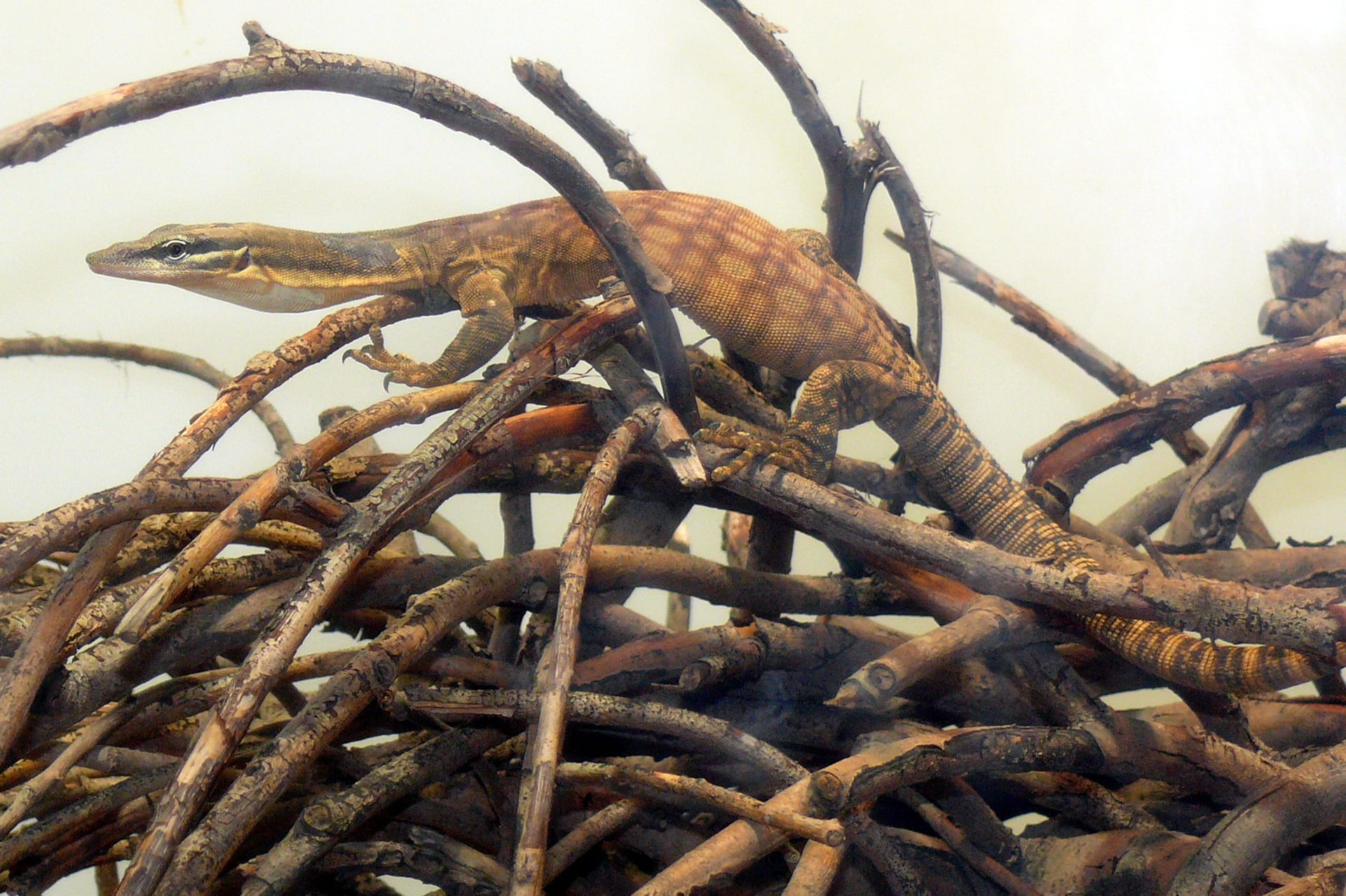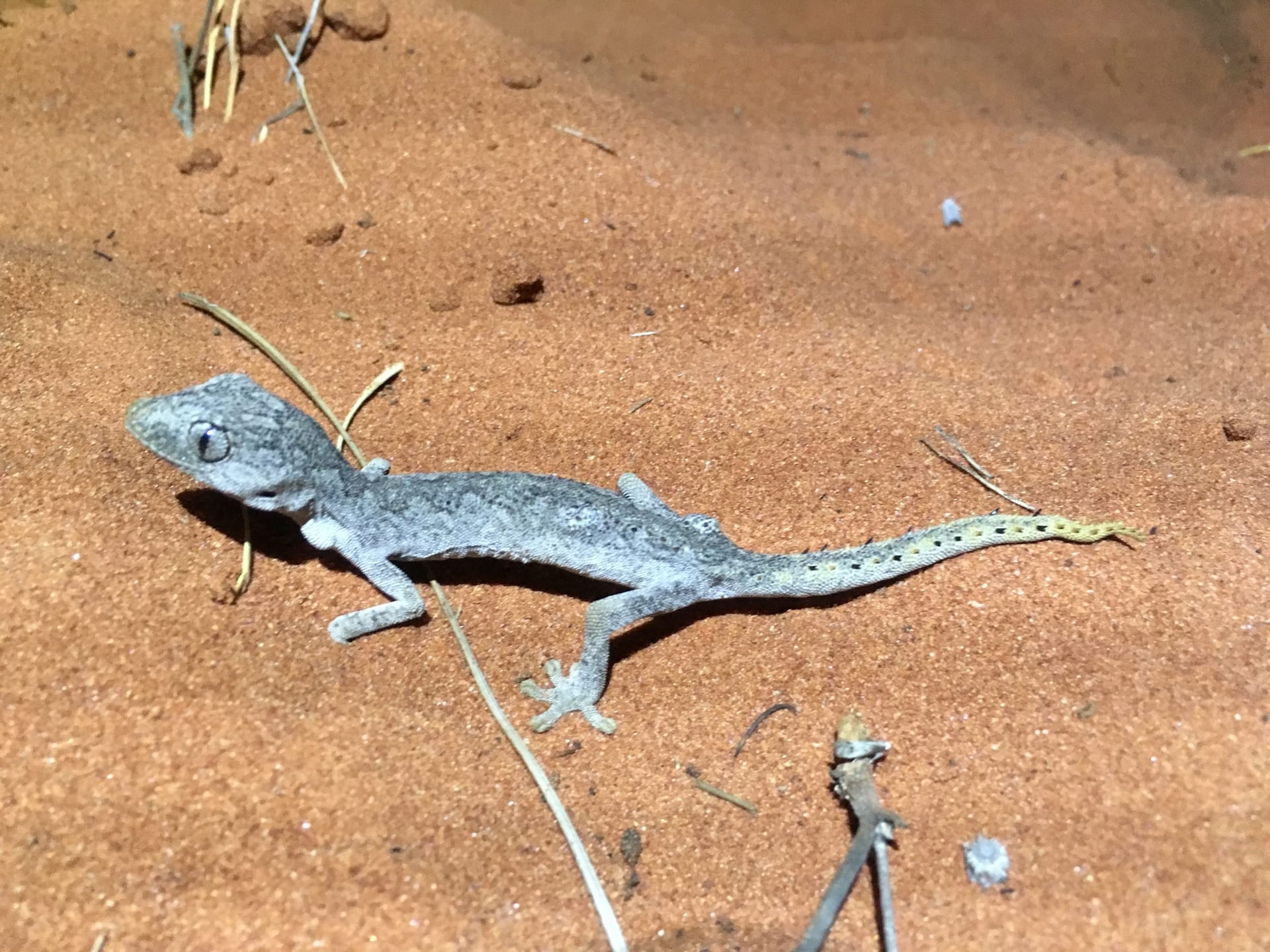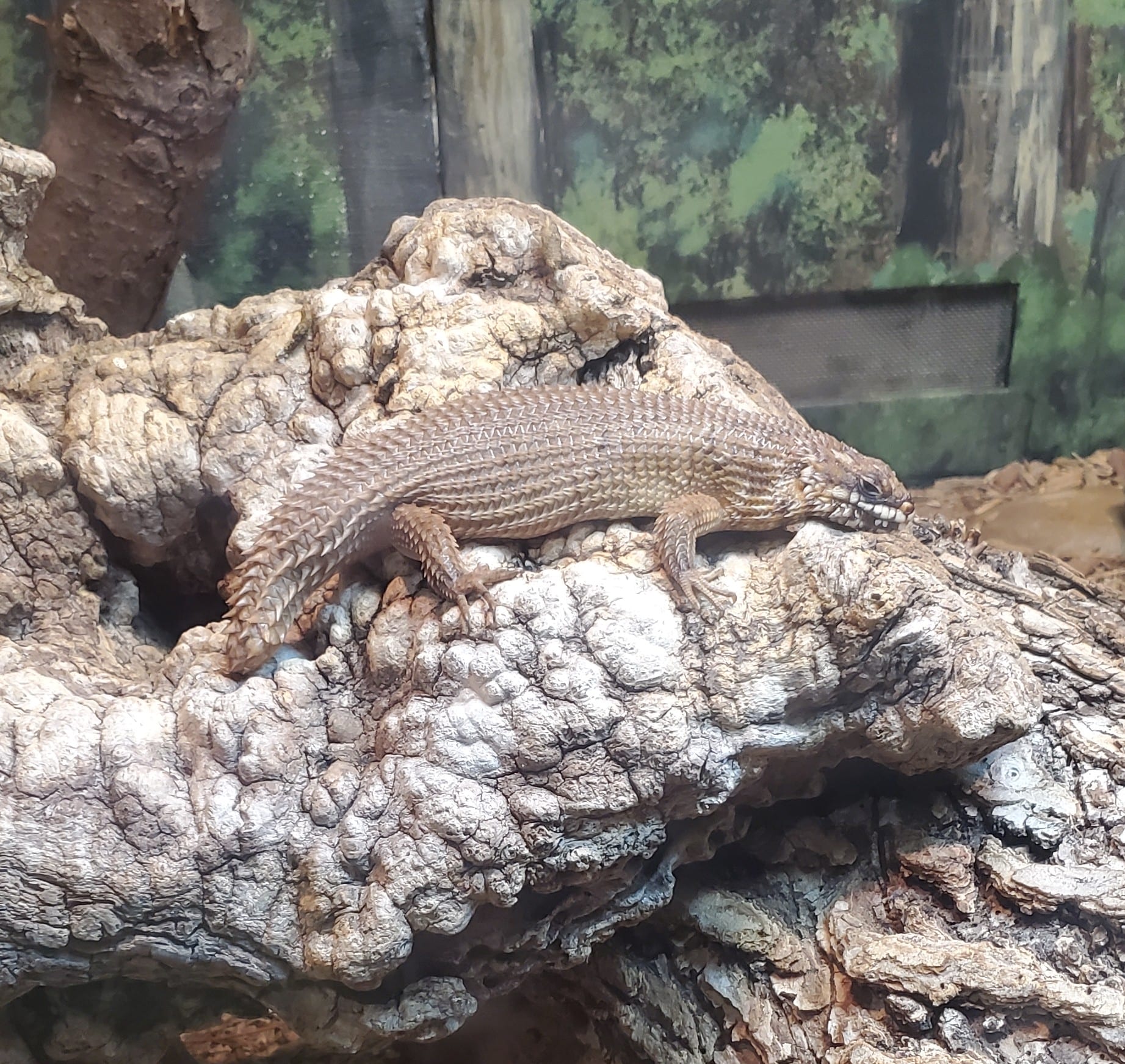
Source: Wikimedia Commons
Hosmer's Spiny-tailed Skink
IntermediateEgernia hosmeri
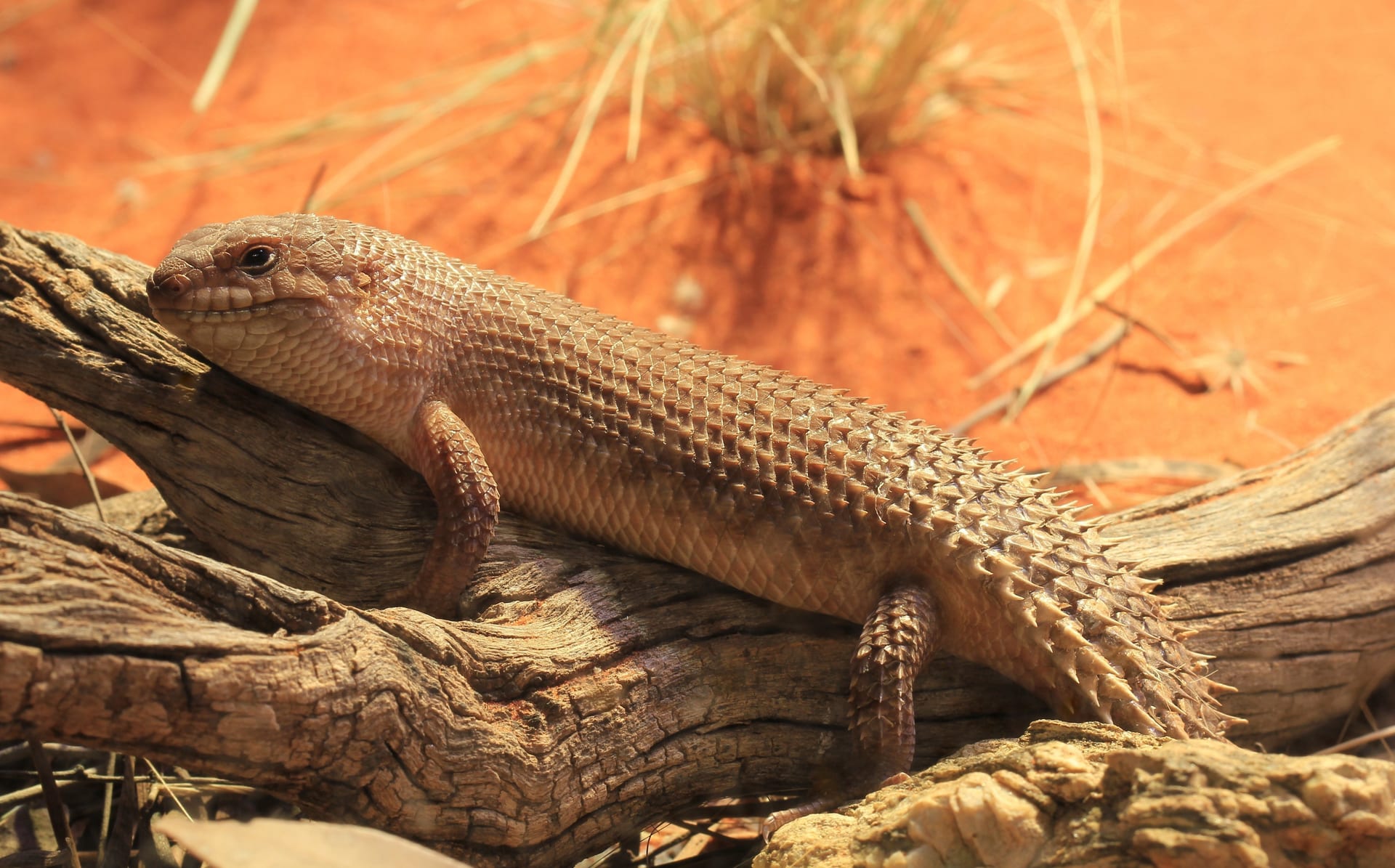
A large skink of dry, rocky northern Australia. It is reddish brown with light and dark spots and a darker head and neck. Its flatter, spinier tail separates it from Cunningham's skink.
Difficulty
Intermediate
Temperature
25〜32℃
Lifespan
Few data on lifespan in captivity
Size
About 18 cm snout-vent length (tail about 60% of SVL)
Humidity
40〜70%
Diet
Omnivore (insects, leaves, shoots, berries)
About
Hosmer's spiny-tailed skink is a large Egernia skink found in the dry, rocky regions of Queensland and the Northern Territory, Australia. Its type locality is Kaban, Queensland, and the species name honors Australian herpetologist William Hosmer. It is diurnal and terrestrial, living in rocky areas. The upper surface is mostly reddish brown with scattered darker and paler spots on the back, legs and tail; the head and neck are darker brown, the belly white, and there are a few dark brown blotches under the chin. Snout-vent length is about 18 cm, and the tail is about 60% of that. Its closest relative is Cunningham's spiny-tailed skink (E. cunninghami), but E. hosmeri has a flatter and spinier tail. It is viviparous, giving birth to an average of four young. It is omnivorous, eating insects, leaves, shoots and berries. Egernia has been in CITES Appendix III at Australia's request since June 2022, so international trade needs documents. In Japan small numbers of captive-bred animals are sold in specialist shops.
Source: Wikipedia (CC BY-SA 4.0)
Size of the Hosmer's Spiny-tailed Skink
The Hosmer's Spiny-tailed Skink grows to About 18 cm snout-vent length (tail about 60% of SVL).
Basic Info
Origin
Dry rocky areas of Queensland and the Northern Territory, Australia
Lifespan
Few data on lifespan in captivity
Size
About 18 cm snout-vent length (tail about 60% of SVL)
Temperature
25〜32℃
References & Sources
Edited & verified by: BreederDirect editorial team
The taxonomic, regulatory, and husbandry data on this page are compiled and verified against the authoritative primary sources below.
Taxonomy & Authority
Accepted name: Egernia hosmeri Kinghorn, 1955
Authority databases: GBIF · The Reptile Database: Egernia hosmeri · GBIF: Egernia hosmeri
Nomenclature follows global taxonomic authority databases.
Regulations & Conservation Status
CITES Appendix III
Listed in CITES Appendix III by Australia (genus-level listing since 22 June 2022). Exports from Australia need an Australian export permit and exports from other countries need a certificate of origin or similar, but no registration is needed to keep or transfer the animal within Japan.
Sources: Species+ (CITES): Egernia hosmeri
Regulations may change. Always verify the latest information with the relevant authorities.
Hosmer's Spiny-tailed Skink Listings
Loading latest listingsFind listings for this species