Source: Wikimedia Commons
Eastern Water Dragon
IntermediateIntellagama lesueurii
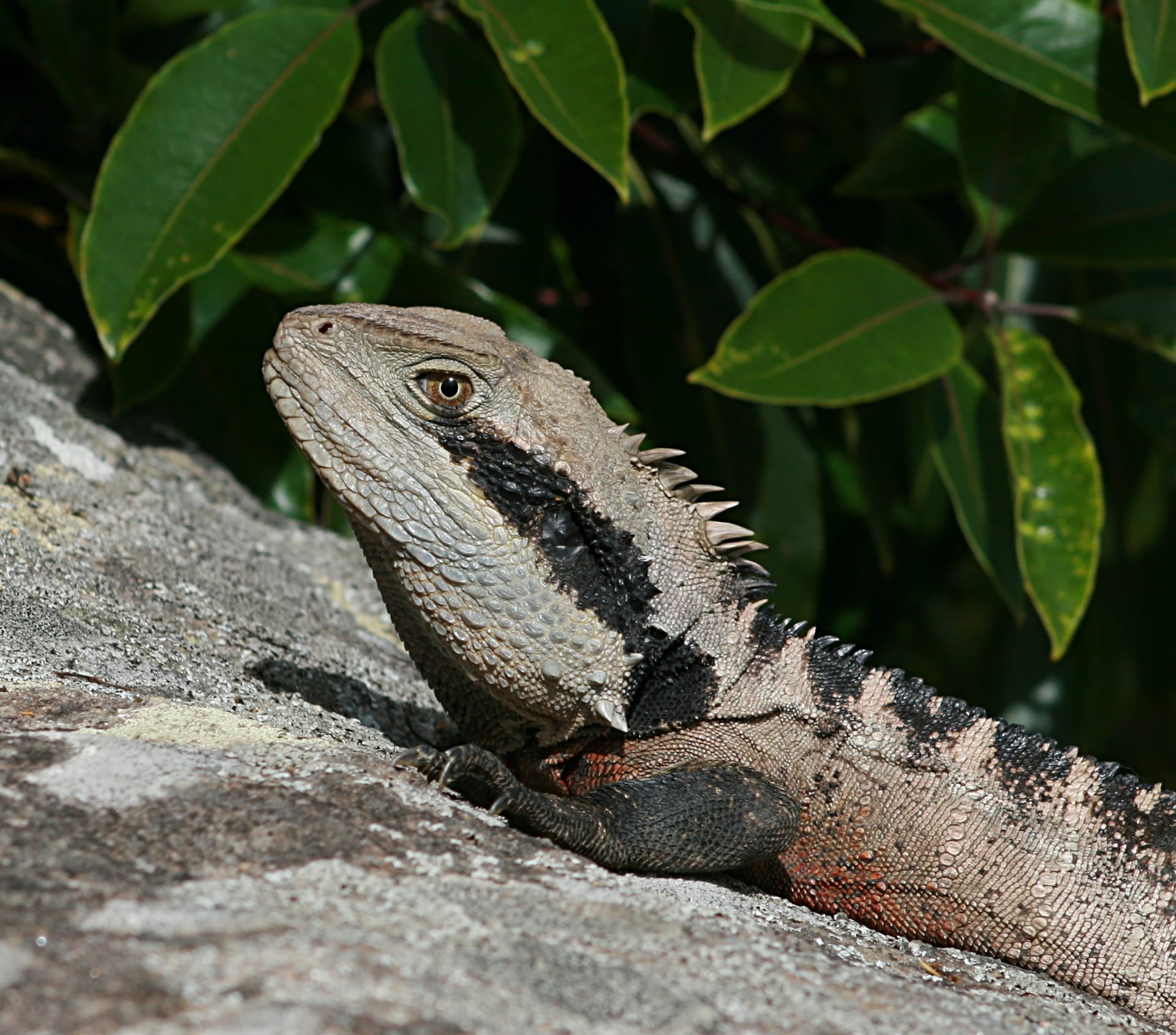
A semi-aquatic, semi-arboreal agamid of the waterways of eastern Australia. A crest of spiny scales runs from the nape along the back and tail, most developed in males, and the strongly laterally compressed tail drives its swimming.
Difficulty
Intermediate
Temperature
25〜32℃
Lifespan
15-20 years
Size
About 70cm total length (SVL up to 24.5cm, tail about 2.5 times SVL)
Humidity
40〜70%
Diet
Omnivorous with a strong animal bias: insects, aquatic animals such as frogs, small reptiles, birds and mammals, and fruit
About
The eastern water dragon (Intellagama lesueurii) is an agamid lizard of eastern Australia. Its snout-vent length reaches 24.5 cm and the tail is about 2.5 times that, giving a total length of around 70 cm. It is grey-brown to olive with dark crossbands, and the nominate subspecies has a dark stripe running from the eye to the nape. Adult males develop a vivid red or orange chest. A crest of spiny scales runs from the nape along the back and tail, and the strongly laterally compressed tail provides propulsion when swimming. It is diurnal, semi-aquatic and semi-arboreal, resting on branches overhanging water and dropping in from considerable heights when disturbed; it will also rear up and run bipedally. Because Australia prohibits the export of native wildlife, the only animals in trade descend from stock that reached Europe and North America in the past. Parthenogenesis was reported in the species in 2019, and it also shows temperature-dependent sex determination.
Source: Wikipedia (CC BY-SA 4.0)
Lifespan of the Eastern Water Dragon
The Eastern Water Dragon lives 15-20 years.
Size of the Eastern Water Dragon
The Eastern Water Dragon grows to About 70cm total length (SVL up to 24.5cm, tail about 2.5 times SVL).
Basic Info
Origin
Eastern Australia (Victoria, New South Wales and Queensland), always near running water, in lowland riparian forest
Lifespan
15-20 years
Size
About 70cm total length (SVL up to 24.5cm, tail about 2.5 times SVL)
Care Specifications
Semi-aggressivePairBreeding: Moderate
Sources: Reptiles Magazine: Breeding Australian Water Dragons / Wikipedia (Japanese) / Reptile Database: Intellagama lesueurii
References & Sources
Edited & verified by: BreederDirect editorial team
The taxonomic, regulatory, and husbandry data on this page are compiled and verified against the authoritative primary sources below.
Taxonomy & Authority
Accepted name: Intellagama lesueurii (Gray, 1831)
Synonyms: Lophura lesueurii Gray, 1831, Physignathus lesueurii (Gray, 1831), Istiurus lesueurii (Gray, 1831), Amphibolurus heterurus Peters, 1866
Authority databases: GBIF · Reptile Database
Nomenclature follows global taxonomic authority databases.
Regulations & Conservation Status
CITES Appendix IIIIUCN LC · Least Concern
Listed in CITES Appendix III as Intellagama spp. at Australia's request (effective June 22, 2022). As an Appendix III species, no CITES registration certificate for internationally rare wild fauna and flora is required. Australia prohibits the export of wild animals occurring within its territory, so traded individuals are limited to captive-bred specimens. This species is not included in the designated animals listed in the Ordinance for the Enforcement of the Law Concerning the Protection and Management of Animals, nor is it designated as a specified alien species under the Alien Species Act Ordinance.
Sources: CITES Species+ (Intellagama spp., Appendix III, Australia, effective 22 June 2022) / IUCN Red List
Regulations may change. Always verify the latest information with the relevant authorities.
Eastern Water Dragon Listings
Loading latest listingsFind listings for this species