Water Dragon Care Guide — Recreating Aquatic Habitats & Climate Control
Complete care guide for Chinese and Australian water dragons: enclosure design, water features, temperature/humidity management, and feeding.
Key Takeaways
Complete care guide for Chinese and Australian water dragons: enclosure design, water features, temperature/humidity management, and feeding.
Related Species
Water dragons are semi-arboreal lizards that live near bodies of water, prized for their beautiful green coloration and active behavior. However, because they grow large and require access to water, adequate preparation and knowledge are essential for their care. This article provides a detailed guide to creating the right environment and managing care for a healthy, long-lived water dragon.
Basic Information About Water Dragons
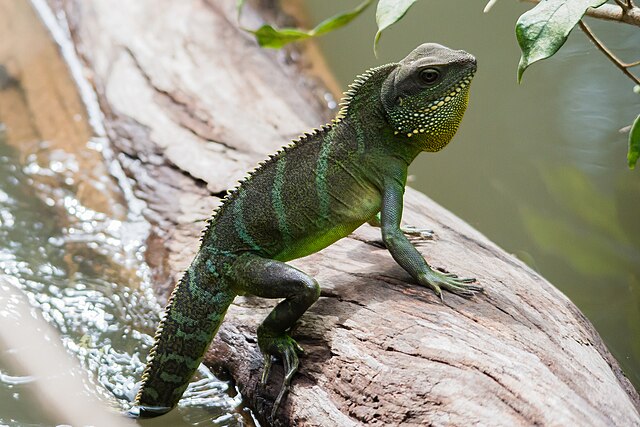
Two species are primarily available as pets: the Chinese water dragon (Physignathus cocincinus) and the Australian water dragon (Intellagama lesueurii). Chinese water dragons grow to 80–100 cm in total length, while Australian water dragons reach 60–90 cm, with the tail accounting for about two-thirds of the total length in both species. Under proper care, lifespan ranges from 10 to 15 years. Their temperament is relatively mild, though juveniles are often skittish. They are prone to "nose rub"—repeatedly ramming their snouts against the glass—so the initial enclosure setup is critical.
Enclosure Design and Water Features
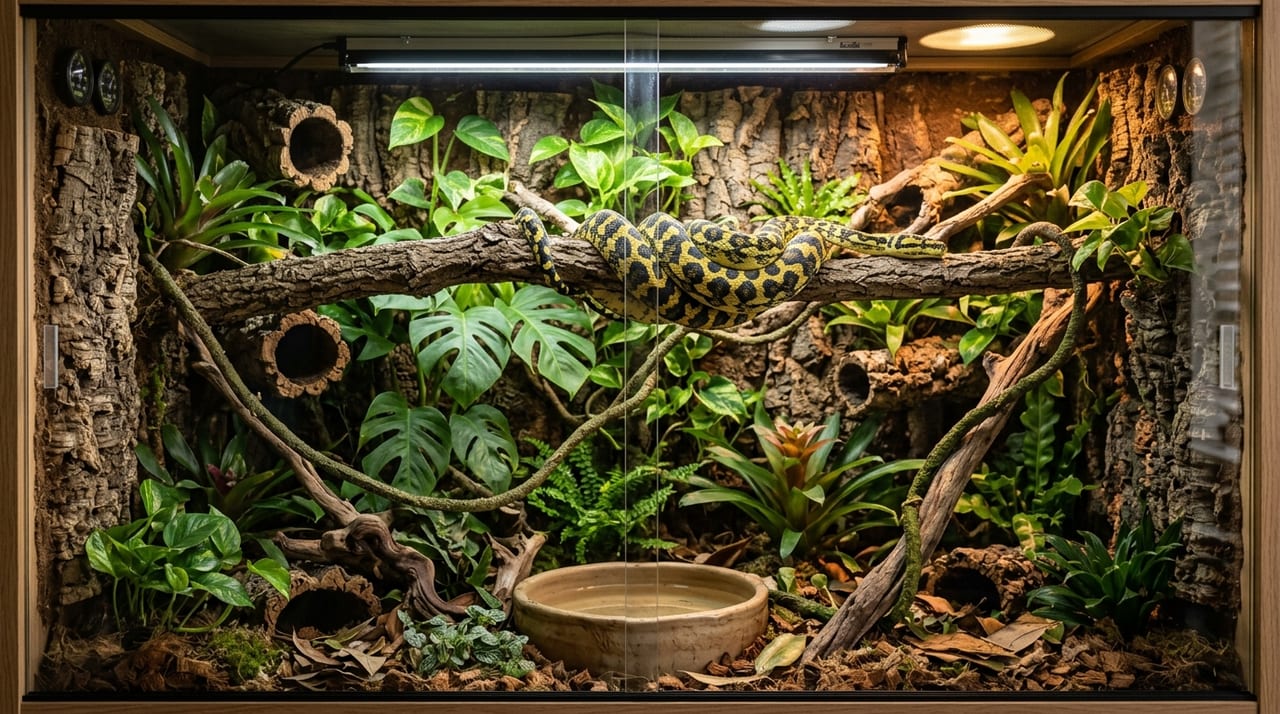
Water dragons require a minimum enclosure of 120 cm wide × 60 cm deep × 120 cm tall (a vertically oriented setup). For adult males, an even larger space is ideal—150 cm wide × 60 cm deep × 150 cm tall or larger if possible. Since they are semi-arboreal, arrange thick driftwood and branches at angles to create multiple climbing routes. Covering the sides of the enclosure with background panels or live plants helps prevent glass-ramming injuries. The water area should cover about one-third of the floor space, with sufficient depth for complete submersion (15–20 cm for adults). Install a filter in the water area to maintain water quality, and perform full water changes two to three times per week. Keep the water temperature at 25–28°C (77–82°F), and if using a submersible heater, choose one with a protective cover to prevent burns.
Temperature, Humidity, and UVB Lighting
Daytime basking spot temperatures should be 32–35°C (90–95°F), with the overall enclosure at 26–30°C (79–86°F), dropping to 22–25°C (72–77°F) at night. Position the basking light so it shines onto a branch, creating a temperature gradient that allows the dragon to thermoregulate freely. Humidity should ideally be 70–80%, achievable through misting two to three times daily or using an automatic misting system. Low humidity can cause incomplete shedding. UVB lighting is essential—select an appropriate wattage for your enclosure size. Mercury vapor bulbs (such as Mega-Ray) can provide both basking heat and UVB, making them especially suitable for large enclosures. Replace UVB lamps every 6–12 months, watching for declining UV output.