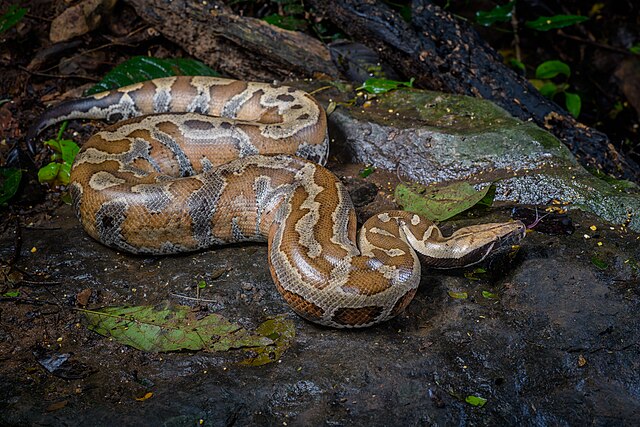
Blood Python Care Guide | Temperature & Humidity Management and Handling
The Blood Python is a medium-sized python with beautiful deep red and brown coloration. While wild-caught individuals have a reputation for being aggressive, captive-bred (CB) individuals develop calm temperaments with proper acclimation. This guide explains in detail how to manage high-humidity environments and master feeding techniques.
Key Takeaways
The Blood Python is a medium-sized python with beautiful deep red and brown coloration. While wild-caught individuals have a reputation for being aggressive, captive-bred (CB) individuals develop calm temperaments with proper acclimation. This guide explains in detail how to manage high-humidity environments and master feeding techniques.
What is a Blood Python?
The Blood Python (Python brongersmai) is a species of python inhabiting Southeast Asia, including the Malay Peninsula, Sumatra, and Borneo. Its coloration ranges from deep red to orange-red, and as its name suggests, it is known as "a snake as red as blood."
✍️
BreederDirect Editorial
The BreederDirect editorial team specializes in care information for animals, covering veterinary care and breeding to deliver beginner-friendly guides.
Find Reptiles on BreederDirect
Buy directly from verified breeders
Browse Related Listings
Find Reptiles listings related to this article on BreederDirect. Buy directly from verified breeders.
Its distinctive body structure features a thick, stout build on a short frame, and this compact appearance is popular among enthusiasts. Related species include the Short-tailed Python (Python curtus) and Sumatran Short-tailed Python (Python curtus curtus) within the same genus, collectively referred to as the "Short-tailed Python" group.
Basic Specifications
Item
Details
Scientific Name
Python brongersmai
Alternative Name
Red Short-tailed Python
Native Range
Malay Peninsula, Southern Sumatra
Adult Length
120–180 cm (females tend to be larger)
Lifespan
20–25 years or more
Care Difficulty
Intermediate
Natural Habitat
Tropical rainforests, wetlands, agricultural areas
Color Variations
Wild Type: Red to orange-red coloration with brown and tan markings
Albino: Cream to yellow ground color with red eyes
Super Red: Captive-bred line with more vivid red coloration
Setting Up the Enclosure
Choosing Enclosure Size
Blood Pythons prefer enclosures with moderate, enclosed spaces for hiding rather than large open areas.
Juveniles (up to 50 cm): 40×30×30 cm plastic enclosure
Subadults (50–100 cm): 60×45×30 cm
Adults: 90×60×30 cm or larger (width × depth × height)
Oversized enclosures can cause stress. A width of approximately 2/3 to 1 times the snake's body length is ideal.
Types of Enclosures
Plastic enclosures (rack systems): Excellent heat and humidity retention; suitable for housing multiple snakes
Wooden enclosures (laminate-coated): Aesthetically pleasing and ideal for maintaining high humidity
Glass aquariums: High airflow makes humidity maintenance challenging; modifications needed (partially covering the lid with plastic sheeting, etc.)
Temperature and Humidity Management (Most Critical)
The most important aspect of Blood Python care is maintaining high humidity.
Temperature Settings
Zone
Temperature
Basking Spot
32–34°C
Cool Side
26–28°C
Nighttime
24–26°C
Create a temperature gradient using an under-tank heating pad or ceramic heat emitter positioned above the enclosure
Placing a hide box at the basking spot allows the snake to warm up while resting securely
Humidity Settings (Very Important)
The natural habitat of Blood Pythons—tropical rainforests and wetlands—maintains consistently high humidity.
Ideal Humidity: 70–90% (constant maintenance is preferred)
Low humidity (60% or below) increases the risk of improper shedding, respiratory disease, and dehydration
Methods to Maintain High Humidity
Use highly absorbent substrates: Coconut husk and sphagnum moss are optimal
Restrict ventilation of the enclosure lid: Partially seal with plastic sheeting or a damp towel to retain moisture
Install an automatic mister: A timer-controlled automated misting system is convenient
Place a water bowl: Set up a large water container (ideally large enough for the snake to soak in fully)
Substrate Selection
Coconut husk (husk chips): A standard choice with excellent balance of moisture retention and airflow
Sphagnum moss: Exceptional moisture retention; ideal for recreating wetland conditions
Bark chips: Good airflow; suitable for slightly drier environments
Feeding
Food Type and Size
Blood Pythons are carnivorous (feeding primarily on small mammals and birds in the wild). In captivity, frozen mice and rats are standard prey items.
Recommended diet: Frozen mice or rats (complete diet)
Prey size: Approximately 1.0–1.5 times the diameter of the snake's thickest body section
Juveniles: Hopper mice to first-sized rats
Subadults and adults: Adult rats (sizes S to L depending on the snake's size)
Feeding Frequency and Feeding Refusal
Juveniles to subadults: Once every 1–2 weeks
Adults: Once every 2–3 weeks
Frozen prey must be completely thawed and warmed to body temperature (35–40°C) before feeding
About Feeding Refusal
Blood Pythons frequently experience prolonged feeding refusal (weeks to months). Possible causes include:
First, review the enclosure conditions. If feeding refusal persists for more than 3 months, consultation with a reptile veterinarian is recommended.
Handling and Taming
Blood Pythons, especially wild-caught (WC) individuals, are often described as "aggressive" and "prone to biting." However, captive-bred (CB) individuals develop calm temperaments with proper acclimation.
Acclimation Steps
Avoid handling for 2–3 weeks after introduction: Allowing the snake to adjust to its new environment is the top priority
Start with scent familiarization: Place your hand near the enclosure to let the snake recognize your scent
Begin with short handling sessions: Start with 5–10 minutes initially
Avoid sudden movements: Approach slowly and deliberately
Recognize defensive signals: Return the snake to its enclosure immediately if it coils into an S-shape or hisses
If you have significant anxiety about being bitten, you can initially use a snake hook (an L-shaped tool designed for snakes) for safe handling.
Treatment: Review temperature and humidity settings. If symptoms persist, consult a reptile veterinarian
Mouth Rot (Stomatitis)
Symptoms: Swelling around the mouth, yellowish-white discharge
Cause: Injury or bacterial infection
Treatment: Antibiotic treatment from a reptile veterinarian is necessary
Mite Infestation (Snake Mites)
Symptoms: Tiny black insects visible between scales
Treatment: Disinfect the entire enclosure and use reptile mite treatments
Improper Shedding
Cause: Low humidity
Treatment: Soak in warm water (30°C for 30 minutes), then gently remove old skin. Maintain proper humidity to prevent recurrence
Conclusion
With proper humidity management, Blood Pythons are relatively easy to care for among medium-sized pythons. Captive-bred individuals develop calm temperaments and allow you to enjoy their distinctive beautiful red coloration up close. By maintaining a high-humidity environment and practicing consistent feeding management, you can enjoy the rewarding experience of keeping Short-tailed Pythons.