What Kind of Snake is a Blood Python
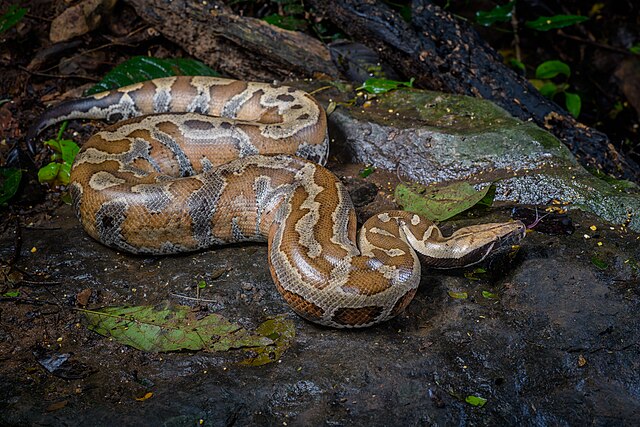
The Blood Python (Python brongersmai) is a medium-sized python native to the low-altitude tropical rainforests and wetlands around rivers in Sumatra, the Malay Peninsula, and southern Thailand. The English name "Blood Python" derives from its striking deep red to orange coloration that resembles fresh blood.
Historically, wild-caught (WC) specimens were imported in large quantities, and due to transport stress and unfamiliar environments, many were aggressive and nervous, establishing an image of Blood Pythons as "aggressive snakes." Today, high-quality captive-bred (CB) specimens are more commonly available, and with proper handling, many prove to be docile and manageable.
Basic Information
| Item | Details |
|---|
| Scientific Name | Python brongersmai |
| English Name | Blood Python, Red Blood Python |
| Native Range | Sumatra, Malay Peninsula, Southern Thailand |
| Body Length | Male 1.0–1.5m / Female 1.5–2.5m |
| Weight | 3–10kg (varies by individual) |
| Lifespan | 20–30 years |
| Care Difficulty | Intermediate to Advanced |
| CITES | Appendix II (CB specimens are legal) |
Comparison of Three Short-Tailed Python Species
The "Short-tailed Python" group, which includes the Blood Python, consists of three species.
| Species | Common Name | Body Color | Characteristics |
|---|
| Python brongersmai | Blood Python | Red to Orange | Most vibrant red coloration |
| Python curtus | Sumatran Short-tailed Python | Black to Gray | Slender body type |
| Python breitensteini | Borneo Short-tailed Python | Brown to Black | Endemic to Borneo |
The Blood Python (P. brongersmai) is the most commonly available in trade, and selectively bred morphs are becoming increasingly popular.
Proper Enclosure and Environmental Setup
Enclosure Size
Although Blood Pythons are not highly active, their stocky, heavy bodies require adequate space.
| Body Length | Recommended Enclosure (Minimum) |
|---|
| Juvenile (≤60cm) | 45×30×30cm |
| Subadult (60–120cm) | 90×45×45cm |
| Adult (120cm+) | 120×60×45cm (females 150cm+ recommended) |
Material: Plastic or glass containers both work. Enclosed enclosures are preferred as they maintain higher humidity more easily.
Temperature Setup
Blood Pythons require a proper thermal gradient.
| Zone | Temperature |
|---|
| Basking Spot (Hot Spot) | 32–34℃ |
| Warm Side (Average) | 28–30℃ |
| Cool Side | 24–26℃ |
| Night (All Enclosure) | 22–26℃ |
Heating Methods
- Panel heaters (placed on 1/3 to 1/2 of the enclosure floor) are most common
- Infrared heat bulbs are also effective
- Maintaining room temperature at 25℃ or above with air conditioning is fundamental
Important: Prolonged temperatures below 22℃ can cause digestive problems, immune suppression, and respiratory infections. Juveniles are especially sensitive to low temperatures, so strict temperature control is essential.
Humidity Setup
Blood Python habitats are tropical rainforests with high temperature and humidity year-round.
| Condition | Target Humidity |
|---|
| Normal Care | 70–80% |
| Around Shedding | 80–90% |
Methods to Increase Humidity
- Place a large water bowl in the enclosure and utilize evaporation
- Use 5–10cm of moisture-retaining substrate such as coconut husk or jungle mix designed for reptiles
- Create a wet side with moistened substrate and a dry side with dry substrate to establish a humidity gradient
Substrate Selection
| Substrate | Moisture Retention | Ease of Cleaning | Recommendation |
|---|
| Reptile Coco Husk (Husk Chips) | High | Moderate | ◎ |
| Jungle Mix (Soil-based) | Very High | Somewhat Difficult | ○ |
| Paper Towel (Juveniles) | Low | Very Easy | △ (Juveniles Only) |
| Bark (Bark Chips) | Moderate | Moderate | ○ |
Coconut husk has high moisture retention and excellent support for shedding. When placed at a deeper depth (8–10cm), it allows the snake to burrow and provides a hiding spot.
Feeding Method
Food Types and Sizes
The primary diet for Blood Pythons consists of frozen mice and frozen rats.
| Snake Weight | Recommended Food | Frequency |
|---|
| Juvenile (–500g) | Pinky Mouse / Fuzzy Mouse | Once per week |
| Subadult (500g–2kg) | Adult Mouse / Hopper Rat | Once per 7–10 days |
| Adult (2kg+) | Small to Medium Rat | Once per 10–14 days |
Prey Size Selection: The prey should be approximately the same size as the thickest part of the snake's body (girth) to 1.2 times that size. Oversized prey can cause regurgitation.
Feeding Procedure
- Completely thaw frozen prey (soak in warm water to warm throughout, or thaw at room temperature).
- Present the food using feeding tongs or tweezers.
- Once the snake responds to the food, quietly step away from the front of the enclosure.
- Do not handle or stress the snake for 24–48 hours after feeding (to prevent regurgitation).
Do Not Use Live Prey: Live mice and rats pose a risk of biting or scratching the snake. Frozen-thawed prey is safe and nutritionally adequate.
Handling
Handling Blood Pythons requires caution.
Acclimation Process
Juvenile Period (After Purchase): Do not handle for the first 1–2 weeks; establish a stable feeding routine first.
Gradual Acclimation:
- When opening the enclosure, approach from the ventral side of the body (not from the head).
- Start with short 5–10 minute sessions and gradually extend.
- If the snake appears stressed or coils defensively, stop handling.
Precautions
- Do Not Handle Within 48 Hours of Feeding (prevents regurgitation and stress).
- Do Not Handle During Pre- and Post-Shedding (when eyes appear blue/cloudy).
- If the snake frequently flicks its tongue or appears restless, stop handling.
- Support from the middle of the body rather than lifting by the head.
Health Management and Common Diseases
Daily Monitoring Points
- Weight changes (measure monthly; a loss of 10% or more is abnormal)
- Shedding condition (complete shedding in one piece)
- Fecal condition (defecation every 7–14 days is normal; assess urate, color, and consistency)
- Breathing sounds (wheezing may indicate respiratory infection)
Common Diseases
Respiratory Infection (Pneumonia): Caused by low temperature, low humidity, or stress. Symptoms include nasal discharge, mouth breathing, and wheezing. Treatment by a reptile veterinarian with antibiotics is necessary.
Retained Shed (Dysecdysis): Incomplete shedding, primarily caused by insufficient humidity. Improving humidity levels to 70–80% or higher and providing warm baths helps. Pay special attention to eye retention, which can cause vision problems.
Mouth Rot (Stomatitis): Bacterial infection in the oral cavity. Suspect if the mouth remains open or there is excessive mucus. Veterinary treatment is required.
Conclusion: Vibrant Coloration and a Long-Term Relationship
With proper temperature, humidity control, and feeding, Blood Pythons can live 20–30 years as long-term companions. While captive-bred specimens become relatively docile with proper acclimation, remember they are still pythons and always prioritize safe handling.
Once you establish a high-humidity enclosure and a weekly feeding routine, maintenance becomes a matter of regular health checks. We encourage you to experience the joy of raising a vibrant red adult Blood Python.