Source: Wikimedia Commons
Blotched Blue-Tongued Skink
IntermediateTiliqua nigrolutea
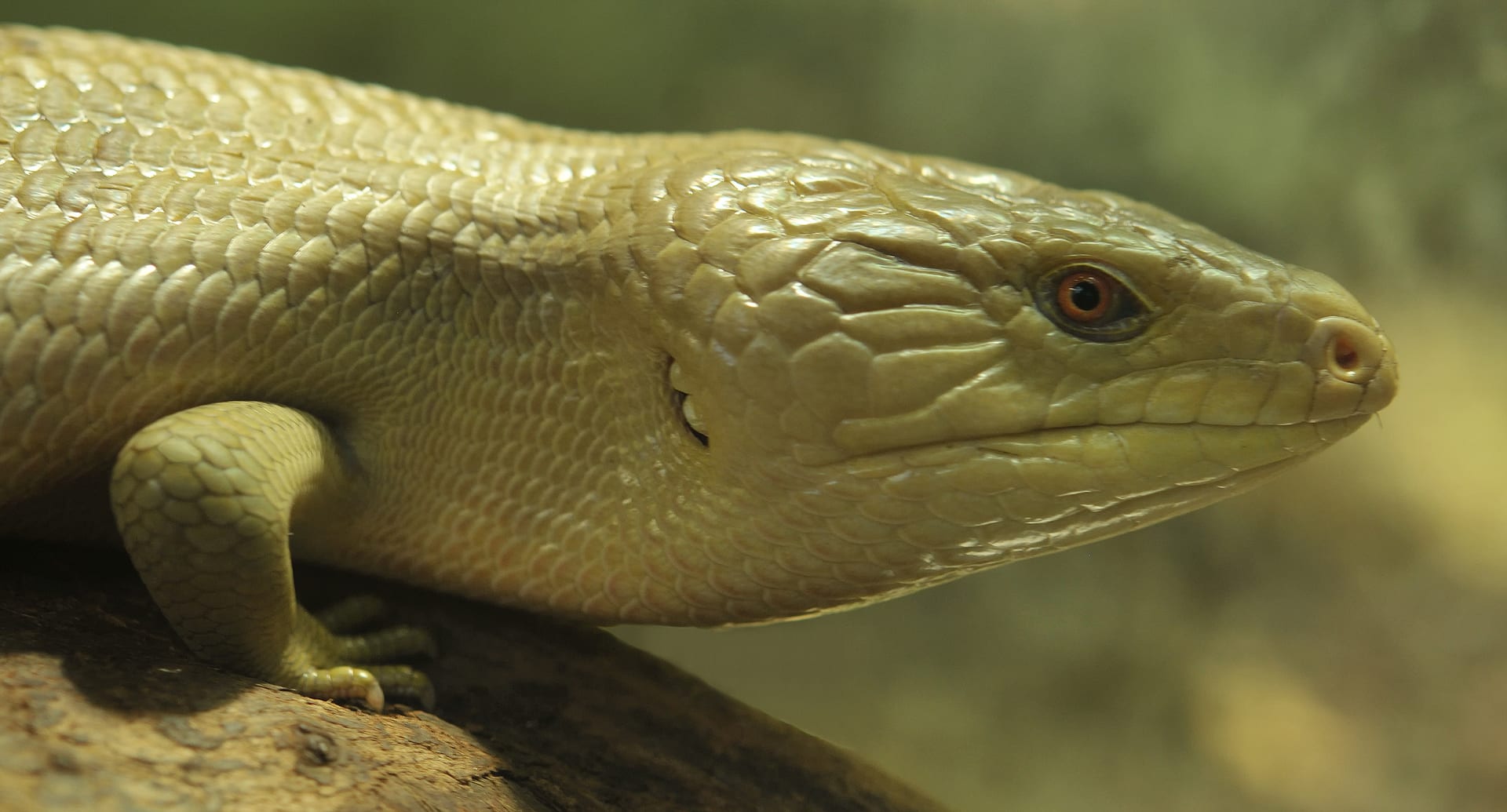
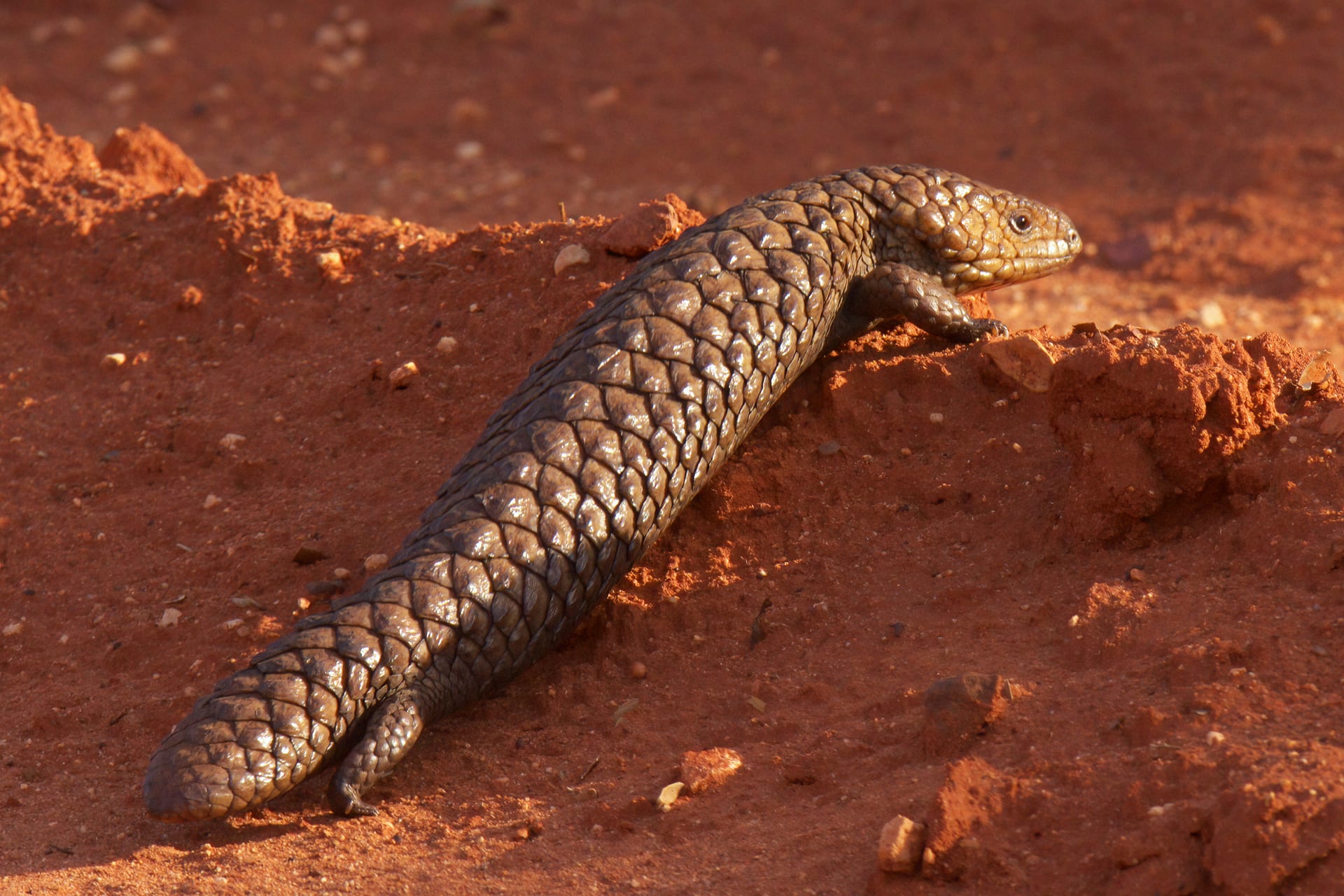
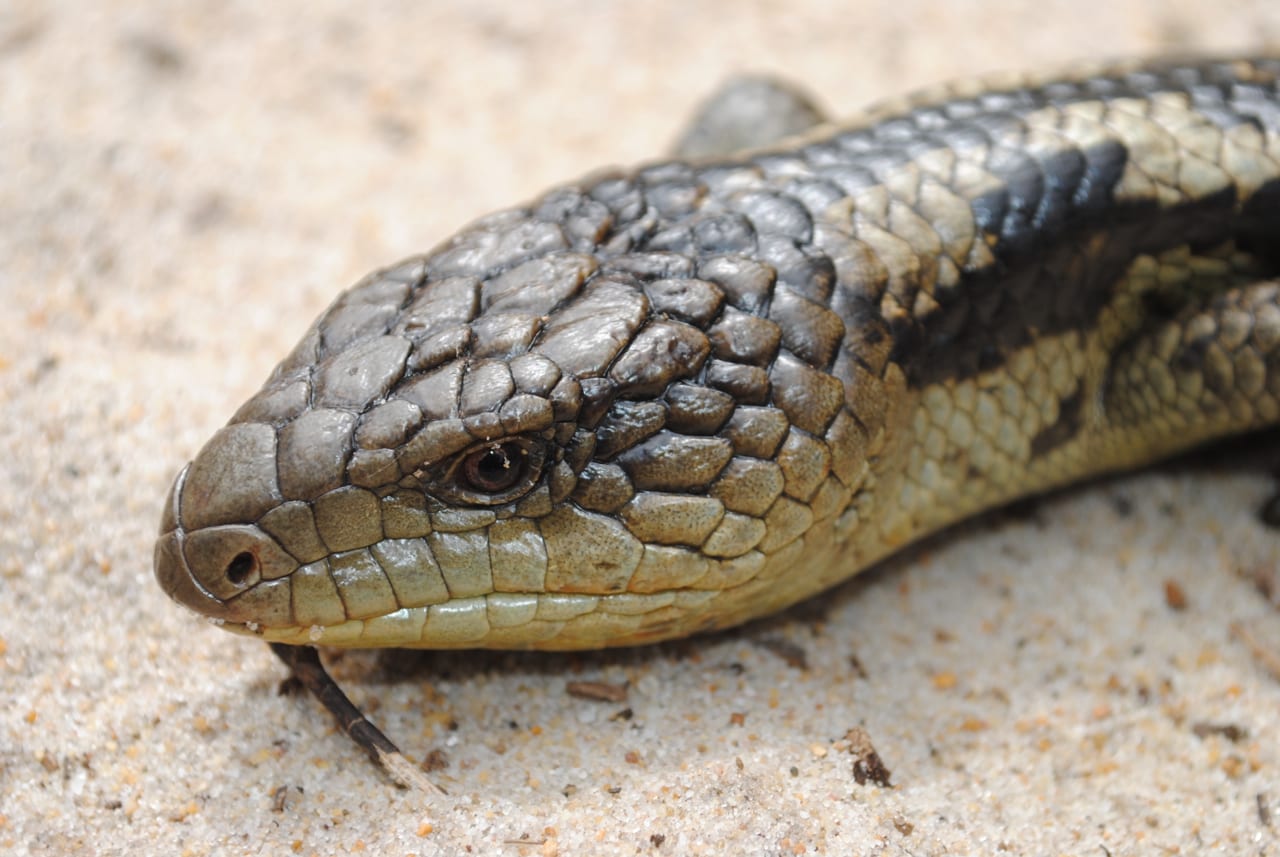
A blue-tongued skink endemic to south-eastern Australia and Tasmania. Large blotches of silvery grey, cream or in some animals pink or orange stand out against a dark ground. It is long-lived for the genus, reaching 30 years.
Difficulty
Intermediate
Temperature
21〜29℃
Lifespan
Up to 30 years
Size
35-60cm
Humidity
40〜50%
Diet
Insects, snails, carrion, wildflowers and fruit (omnivorous)
About
Tiliqua nigrolutea is a blue-tongued skink endemic to south-eastern Australia and Tasmania. It measures 35-60 cm with a robust body and relatively short limbs. Colour and pattern vary geographically, and some herpetologists recognise a lowland and a highland form. Lowland animals are grey or brown with paler silvery to tan blotches along the back set against darker surrounds, while highland animals are darker, often nearly jet black, with much paler cream, pink, salmon or orange blotches in strong contrast. The fleshy blue tongue both tastes the air and startles predators. Defence rests mainly on camouflage and bluff: cornered animals put on an impressive display and bite only as a last resort. The jaws are powerful but the teeth blunt, and a bite rarely breaks the skin. It lives in wet and dry sclerophyll forest, montane woodland and coastal heath, eating insects, snails, carrion, wildflowers and native fruit. It is viviparous.
Source: Wikipedia (CC BY-SA 4.0)
Lifespan of the Blotched Blue-Tongued Skink
Blotched Blue-Tongued Skink lifespan: Up to 30 years
Size of the Blotched Blue-Tongued Skink
Blotched Blue-Tongued Skink adult size: 35-60cm
Temperature & humidity for the Blotched Blue-Tongued Skink
The ideal temperature for the Blotched Blue-Tongued Skink is 21〜29℃. Ideal humidity is 40〜50%.
Basic Info
Origin
South-eastern Australia (New South Wales, South Australia, Victoria and Tasmania): wet and dry sclerophyll forest, montane woodland and coastal heath
Care Specifications
PeacefulSolitaryBreeding: Moderate
Sources: ReptiFiles: Blue Tongue Skink Care / ReptiFiles: Blue Tongue Skink Temperatures, UVB & Humidity / ReptiFiles: Blue Tongue Skink Subspecies / Wikipedia (English) / Reptile Database
References & Sources
Edited & verified by: BreederDirect editorial team
The taxonomic, regulatory, and husbandry data on this page are compiled and verified against the authoritative primary sources below.
Primary sources
- Wikipedia
- CITES Appendices (Tiliqua nigrolutea, Appendix III listed by Australia, effective 22 June 2022)
- IUCN Red List
- Order for Enforcement of the Act on Welfare and Management of Animals, Appended Table
- ReptiFiles: Blue Tongue Skink Care
- ReptiFiles: Blue Tongue Skink Temperatures, UVB & Humidity
- ReptiFiles: Blue Tongue Skink Subspecies
- Reptile Database
- GBIF
Taxonomy & Authority
Accepted name: Tiliqua nigrolutea (Quoy & Gaimard, 1824)
Synonyms: Scincus nigroluteus Quoy & Gaimard, 1824, Scincus erucotis Gray, 1838
Authority databases: GBIF · Reptile Database
Nomenclature follows global taxonomic authority databases.
Regulations & Conservation Status
CITES Appendix IIIIUCN LC · Least Concern
It was listed in CITES Appendix III on June 22, 2022, at the application of Australia (Species+). Appendix III is a category requiring proof of origin and export permits from the listing country for export; registration certificates for species designated as international rare wild animals and plants are not required. It is not designated as a special animal in Japan.
Sources: CITES Appendices (Tiliqua nigrolutea, Appendix III listed by Australia, effective 22 June 2022) / IUCN Red List / Order for Enforcement of the Act on Welfare and Management of Animals, Appended Table
Regulations may change. Always verify the latest information with the relevant authorities.
Blotched Blue-Tongued Skink Listings
Loading latest listingsFind listings for this species