Source: Wikimedia Commons
Shingleback
IntermediateTiliqua rugosa
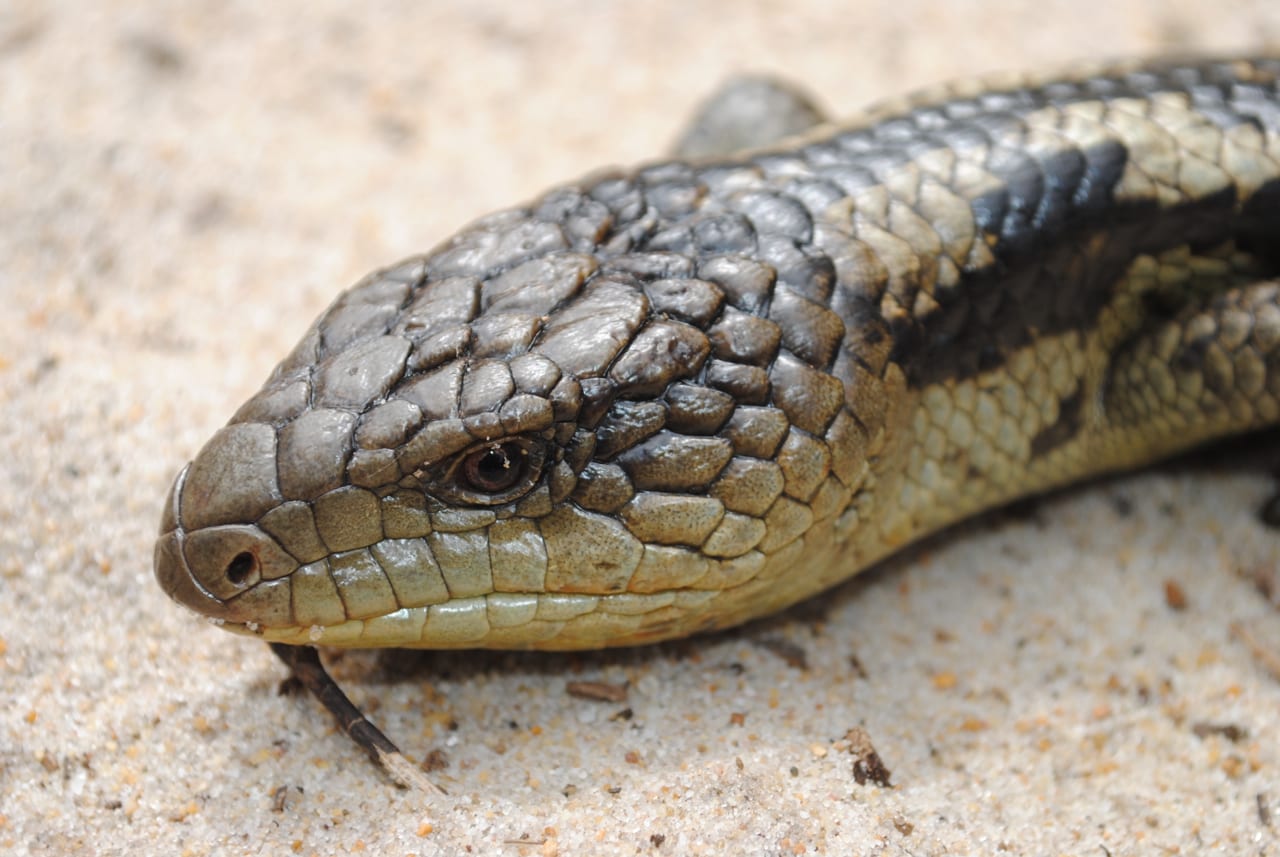
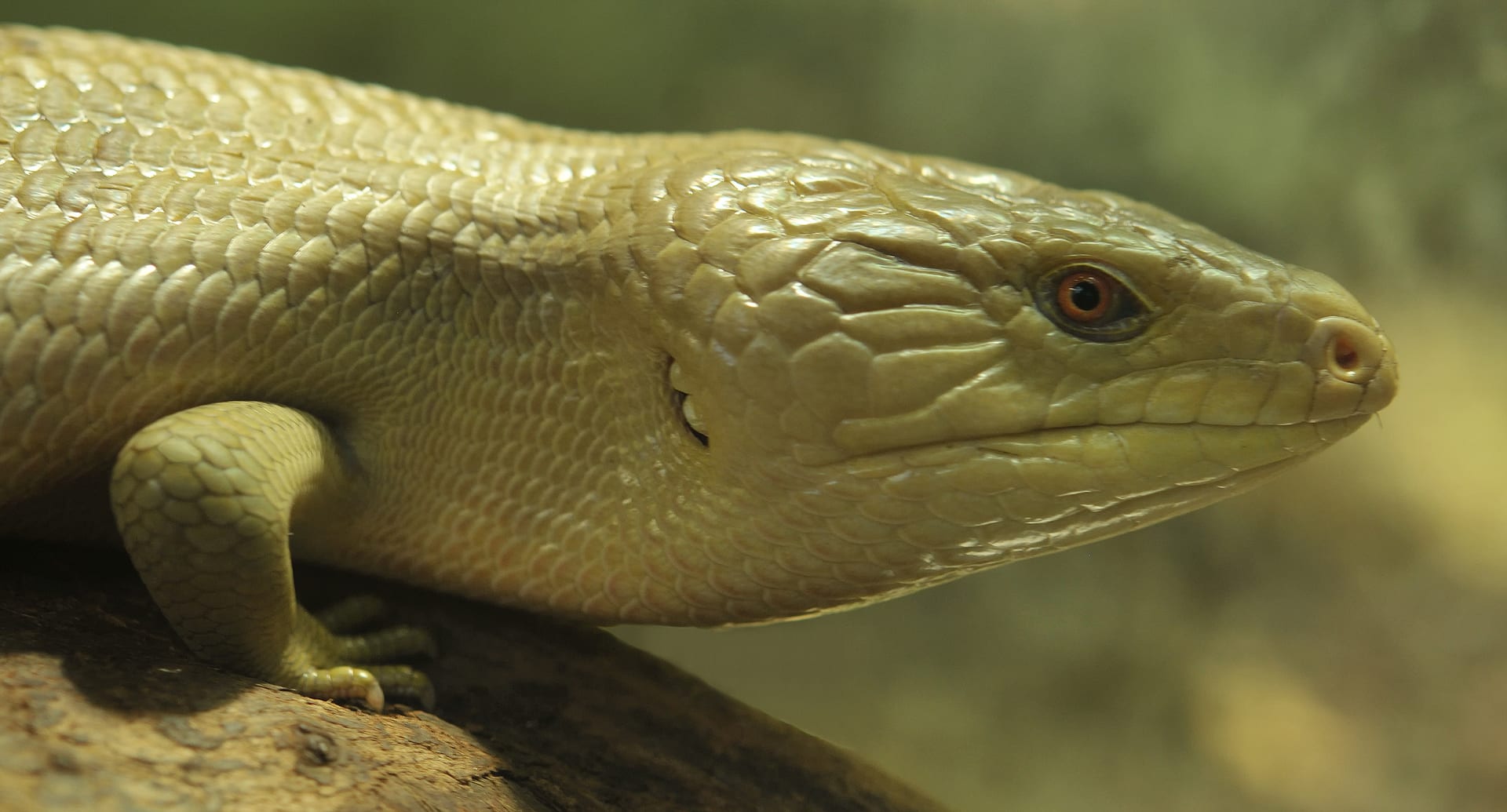
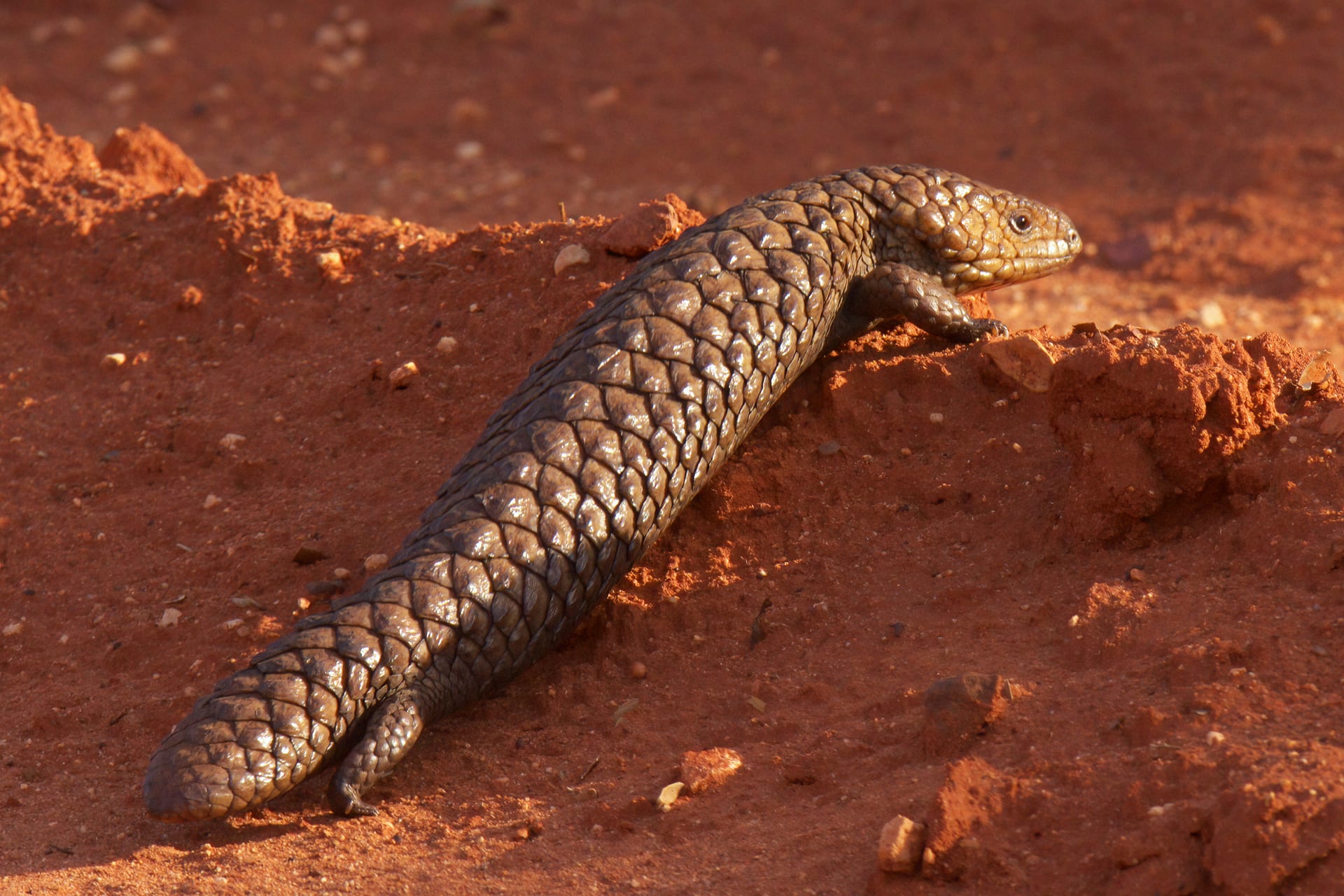
A blue-tongued skink of arid Australia. Rough pinecone-like scales and a short, thick tail resembling the head are its hallmarks, and its tongue is a dark, nearly black colour. It moves slowly and eats a high proportion of plant matter.
Difficulty
Intermediate
Temperature
21〜29℃
Lifespan
15-20 years, with records over 35 years
Size
30-35cm
Humidity
20〜40%
Diet
Mainly plant matter such as flowers, fruit and leaves, plus snails, insects and carrion
About
Tiliqua rugosa is a blue-tongued skink widespread across arid and semi-arid Australia. It reaches 30-35 cm and is stocky, with rough raised scales like a pinecone and a short, thick tail that closely resembles the head. The tail is thought to confuse predators and also stores fat, which is drawn on during winter brumation. Unlike other blue tongues its tongue is a dark, nearly black colour. Four subspecies are recognised, three of them in Western Australia and only T. r. asper in the east. It is omnivorous but strongly herbivorous: plants make up 70-80% of an adult's diet. It is ovoviviparous, producing one or two large young at a time, and the young are raised in family groups, making this the only truly social blue-tongued skink. Pairs bond with the same partner for life. Australia bans the export of its native wildlife, so the only animals in legal trade are descendants of stock exported in the past.
Source: Wikipedia (CC BY-SA 4.0)
Lifespan of the Shingleback
The Shingleback lives 15-20 years, with records over 35 years.
Size of the Shingleback
The Shingleback grows to 30-35cm.
Temperature & humidity for the Shingleback
The ideal temperature for the Shingleback is 21〜29℃. Ideal humidity is 20〜40%.
Basic Info
Origin
Arid to semi-arid Australia (southern Western Australia, southern South Australia, Victoria, inland New South Wales and central to southern Queensland)
Care Specifications
References & Sources
Edited & verified by: BreederDirect editorial team
The taxonomic, regulatory, and husbandry data on this page are compiled and verified against the authoritative primary sources below.
Primary sources
- Wikipedia
- CITES Appendices (Tiliqua rugosa, Appendix III listed by Australia, effective 22 June 2022)
- IUCN Red List
- Order for Enforcement of the Act on Welfare and Management of Animals, Appended Table
- ReptiFiles: Blue Tongue Skink Care
- ReptiFiles: Blue Tongue Skink Temperatures, UVB & Humidity
- ReptiFiles: Blue Tongue Skink Subspecies
- ReptiFiles: Blue Tongue Skink Food & Feeding
- Reptile Database
Taxonomy & Authority
Accepted name: Tiliqua rugosa (Gray, 1825)
Synonyms: Trachydosaurus rugosus Gray, 1825, Trachydosaurus asper Gray, 1845
Authority databases: GBIF · Reptile Database
Nomenclature follows global taxonomic authority databases.
Regulations & Conservation Status
CITES Appendix IIIIUCN LC · Least Concern
Listed in Appendix III at Australia's request on June 22, 2022 (Species+). Appendix III requires certificates of origin and export permits for exports from the listing country, and an international endangered species certificate is not required. Due to Australia's export prohibition, legal trade is limited to descendants of individuals previously removed from the country. It does not qualify as a designated animal under Japan's regulations.
Sources: CITES Appendices (Tiliqua rugosa, Appendix III listed by Australia, effective 22 June 2022) / IUCN Red List / Order for Enforcement of the Act on Welfare and Management of Animals, Appended Table
Regulations may change. Always verify the latest information with the relevant authorities.
Shingleback Listings
Loading latest listingsFind listings for this species