Source: Wikimedia Commons
Children's Python
BeginnerAntaresia childreni
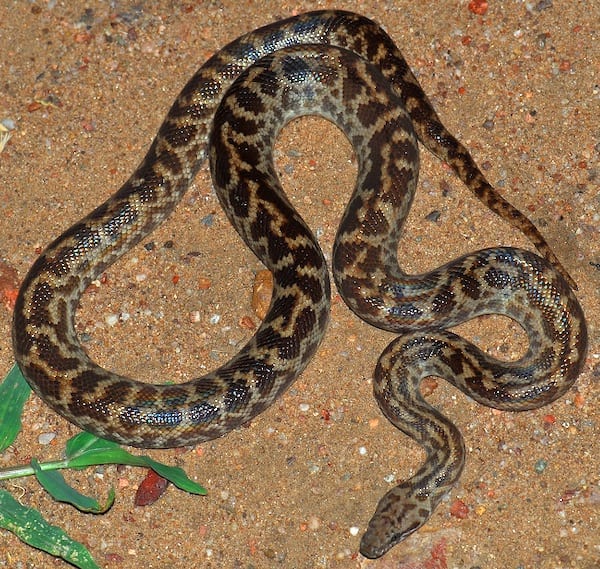
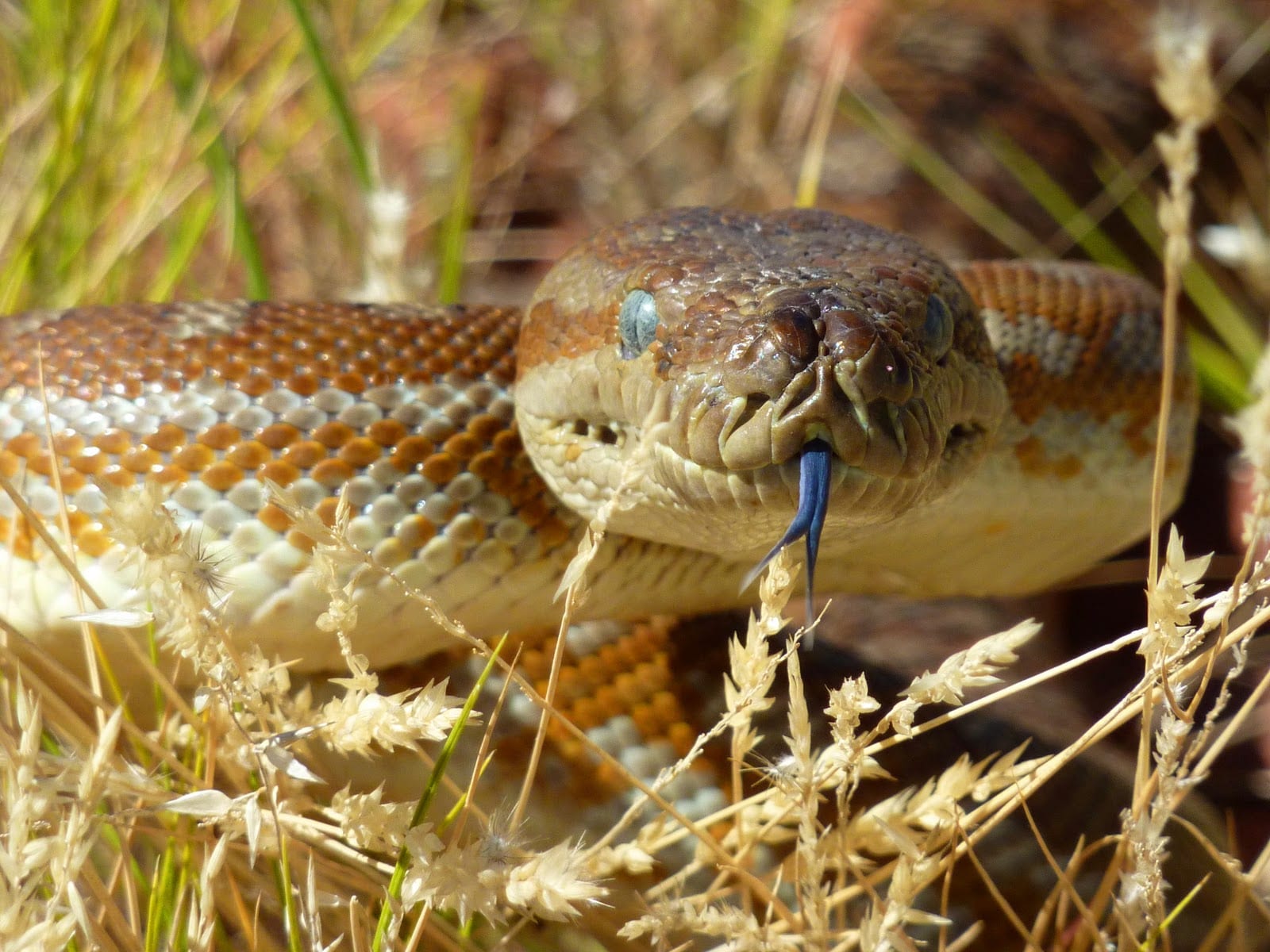
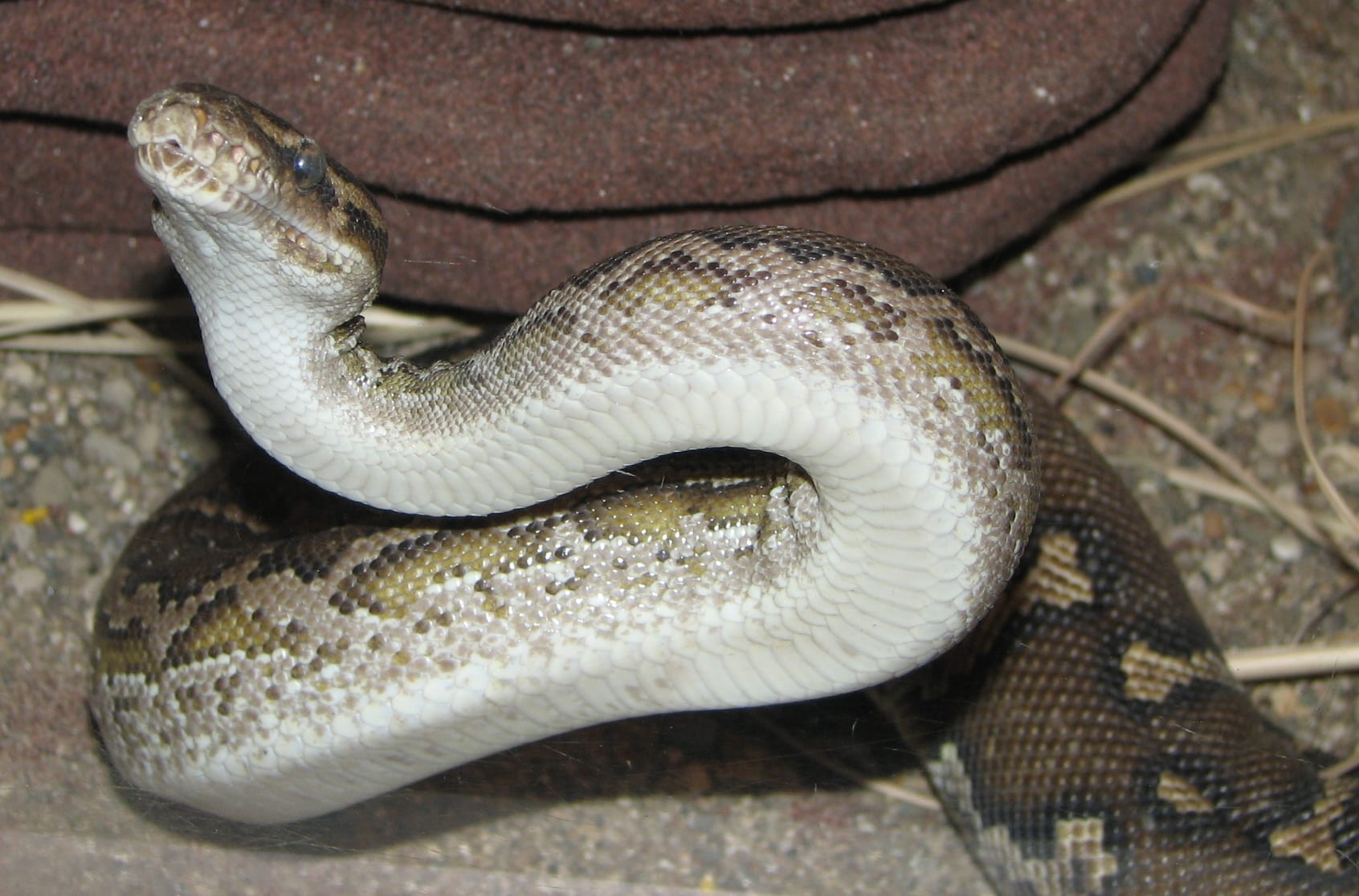
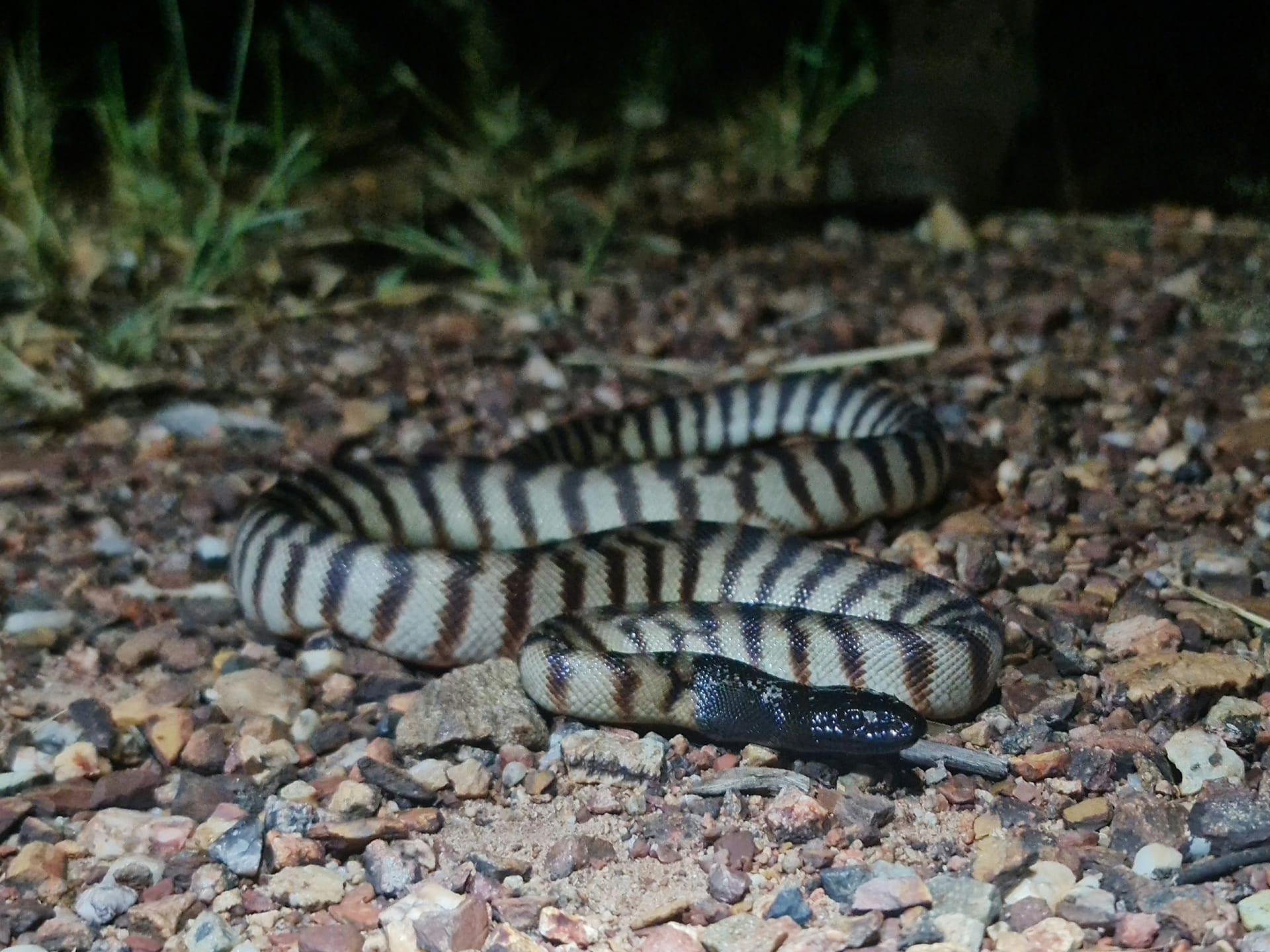
A small python averaging 75 cm and reaching 112 cm. Rows of dark brown blotches mark a grey- to reddish-brown body, and a dark band runs from the corner of the mouth through the eye to the nostril. Juveniles are more strongly patterned and fade with age.
Difficulty
Beginner
Lifespan
Up to 30 years with proper care
Size
Average about 75cm, maximum 112cm
Humidity
20〜80%
Diet
Carnivorous: lizards, frogs, birds and small mammals
About
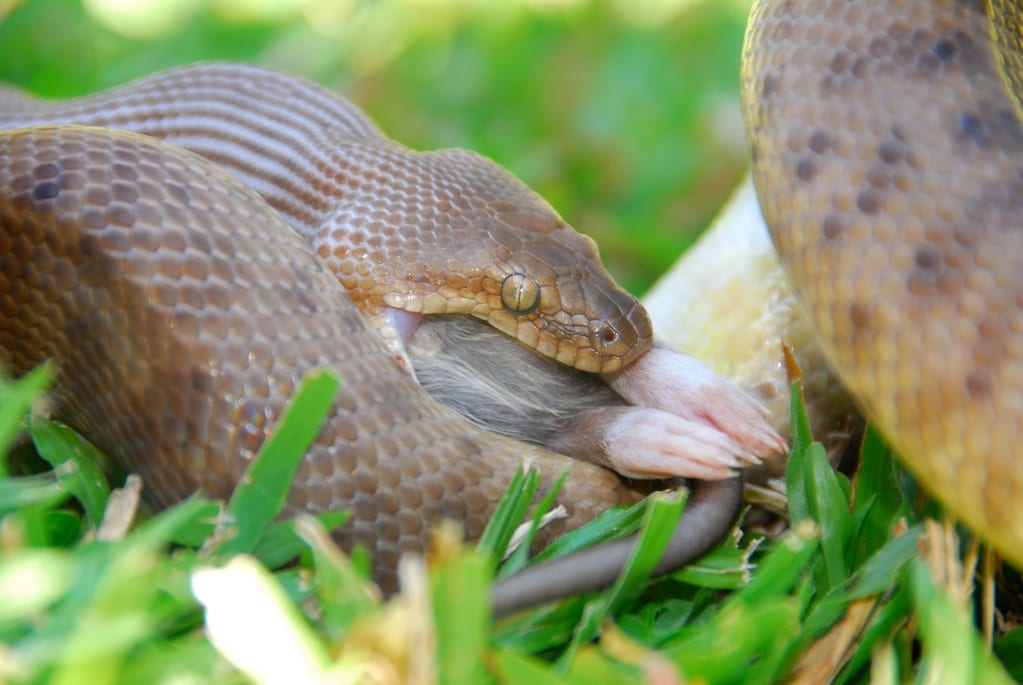
Children's python (Antaresia childreni) is a small python of northern Australia, averaging about 75 cm and reaching 112 cm. Colour varies considerably with locality, typically grey- to reddish-brown with rows of dark brown blotches and paler flanks. The head is only weakly set off from the neck, is more or less uniformly brown above, and carries a dark brown band from the corner of the mouth through the eye to the nostril. The seventh to tenth infralabials bear heat-sensing pits, while the supralabials do not. Juveniles are darker and more clearly marked, fading with age, and uniformly dark brown animals occur in the north of its range. It is mainly terrestrial and nocturnal but climbs readily. Prey comprises lizards, frogs, birds and small mammals, constricted and swallowed whole. Mating takes place in the cool months from May to August, when males engage in ritualised combat; seven to fifteen eggs are laid in September or October and the female coils around them, with hatchlings of about 25 cm emerging in December. Small and even-tempered, it is easy to keep and popular as a beginner's snake.
Source: Wikipedia (CC BY-SA 4.0)
Lifespan of the Children's Python
The Children's Python lives Up to 30 years with proper care.
Size of the Children's Python
The Children's Python grows to Average about 75cm, maximum 112cm.
Basic Info
Origin
Northern Australia, from north-eastern Western Australia through the Northern Territory to north-western Queensland, and some coastal islands, in habitats ranging from coastal rainforest to inland desert
Lifespan
Up to 30 years with proper care
Care Specifications
PeacefulSolitaryBreeding: Easy
Sources: ReptiFiles: Stimson's Python Care Sheet (congeneric husbandry) / ReptiFiles: Spotted Python Care Sheet / Wikipedia (German): Gefleckter Python
References & Sources
Edited & verified by: BreederDirect editorial team
The taxonomic, regulatory, and husbandry data on this page are compiled and verified against the authoritative primary sources below.
Primary sources
- Wikipedia
- CITES Species+ (Pythonidae spp., Appendix II, effective 4 February 1977)
- Order for Enforcement of the Act on Welfare and Management of Animals, appended table
- ReptiFiles: Stimson's Python Care Sheet (congeneric husbandry)
- ReptiFiles: Spotted Python Care Sheet
- Wikipedia (German): Gefleckter Python
- GBIF
- Reptile Database
Taxonomy & Authority
Accepted name: Antaresia childreni (Gray, 1842)
Synonyms: Liasis childreni Gray, 1842, Antaresia stimsoni (Smith, 1985), Liasis stimsoni Smith, 1985
Authority databases: GBIF · Reptile Database
Nomenclature follows global taxonomic authority databases.
Regulations & Conservation Status
CITES Appendix IIIUCN LC · Least Concern
All species of family Pythonidae spp. have been listed on CITES Appendix II (effective February 4, 1977). Because it is on Appendix II, registration as an international rare species is not required. Among specific animals listed in the Schedule of the Enforcement Ordinance of the Animal Protection and Management Law, only five python species are designated: amethystine python, Australian scrub python, Indian python, reticulated python, and African python, and this species is not included. It is also not designated as a specified alien species under the Enforcement Ordinance of the Alien Species Law. The IUCN Red List assessment is Least Concern (LC).
Sources: CITES Species+ (Pythonidae spp., Appendix II, effective 4 February 1977) / Order for Enforcement of the Act on Welfare and Management of Animals, appended table
Regulations may change. Always verify the latest information with the relevant authorities.
Children's Python Listings
Loading latest listingsFind listings for this species