Source: Wikimedia Commons
Black-Headed Python
IntermediateAspidites melanocephalus
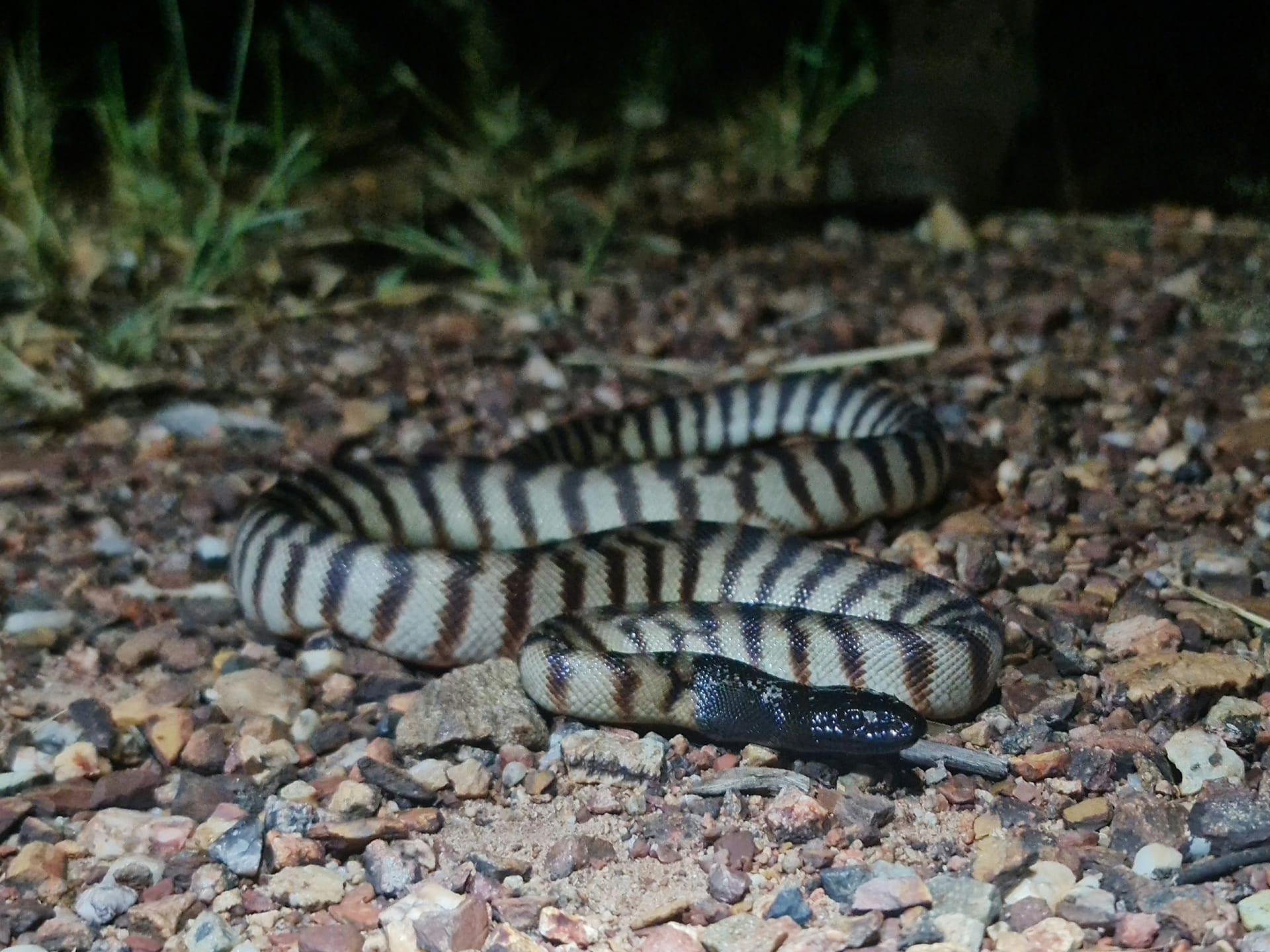
The glossy black head continues several centimetres down the neck and throat, which is the origin of its English and Japanese names. It is a python without heat-sensing pits, and its main prey is reptiles, including other snakes. Endemic to Australia.
Difficulty
Intermediate
Lifespan
Twenty to thirty years in captivity
Size
Typically 1.5-2m, with a maximum of 3.5m; captive animals are generally 1.8-2.4m
Humidity
40〜70%
Diet
Thawed frozen rats: about two small to medium rats every ten days for males and three to four for females
About
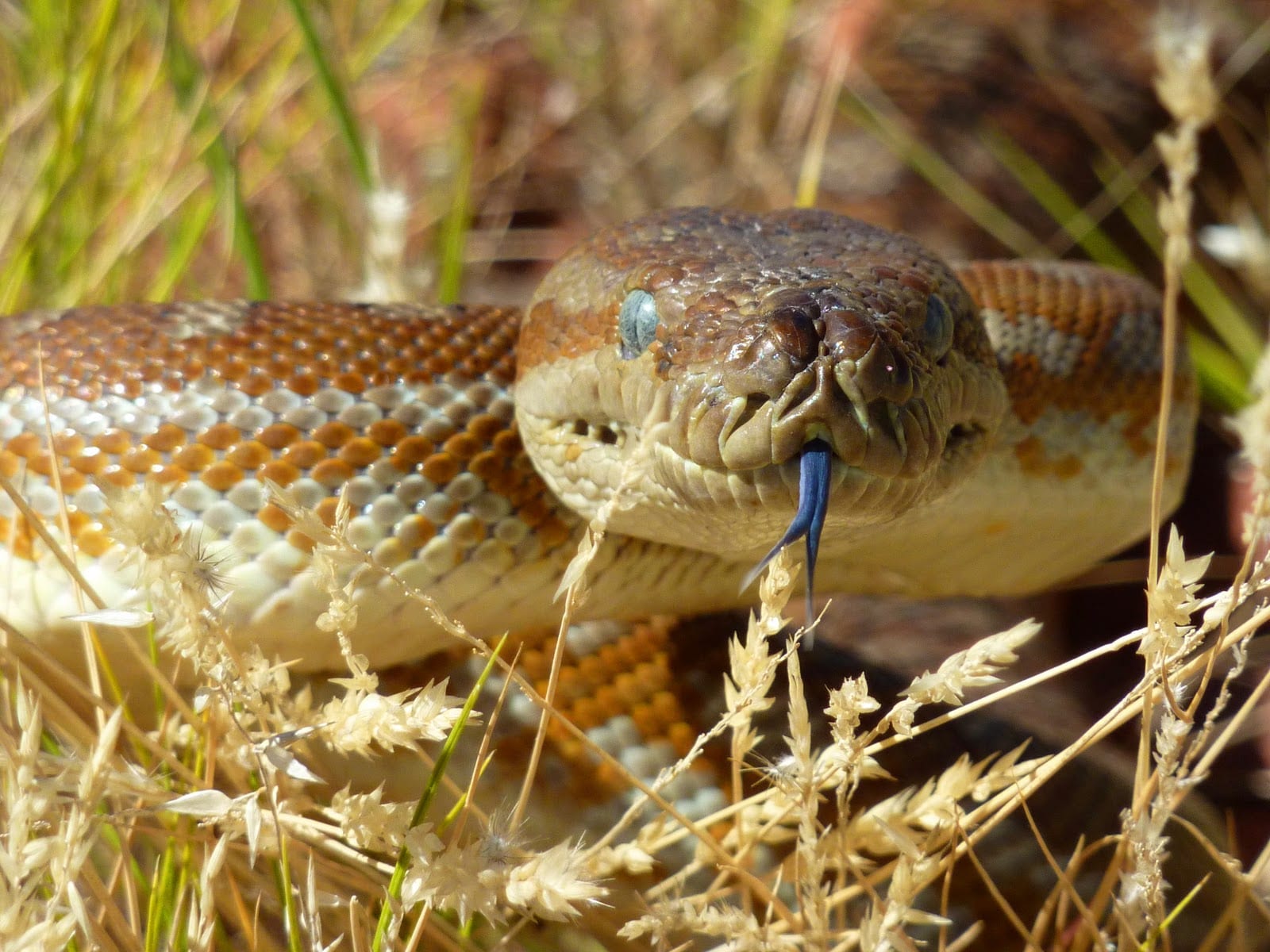
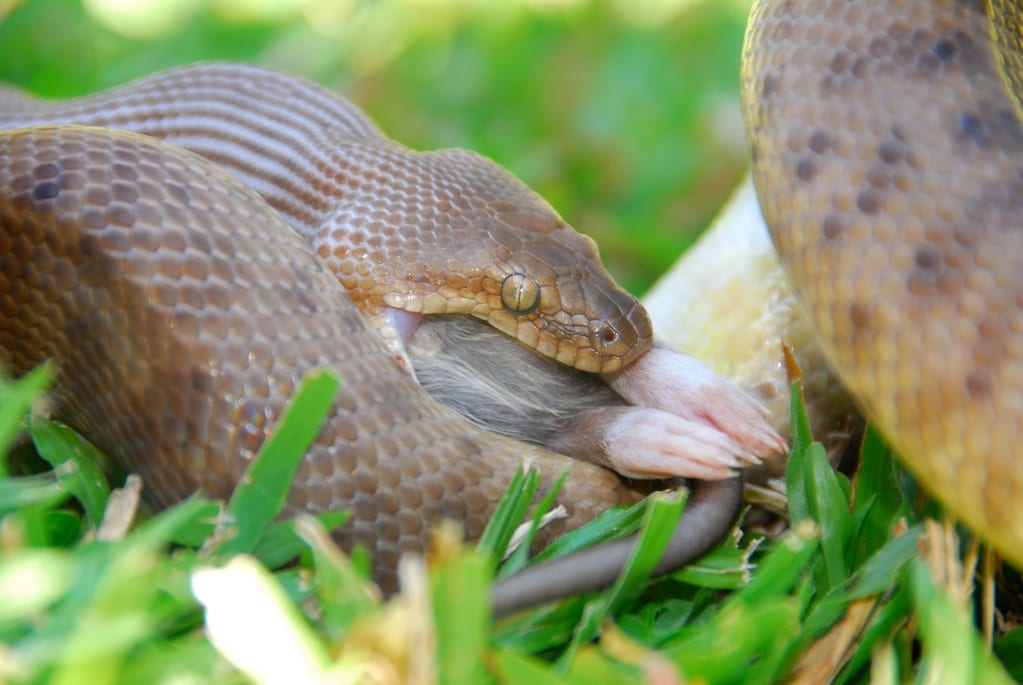
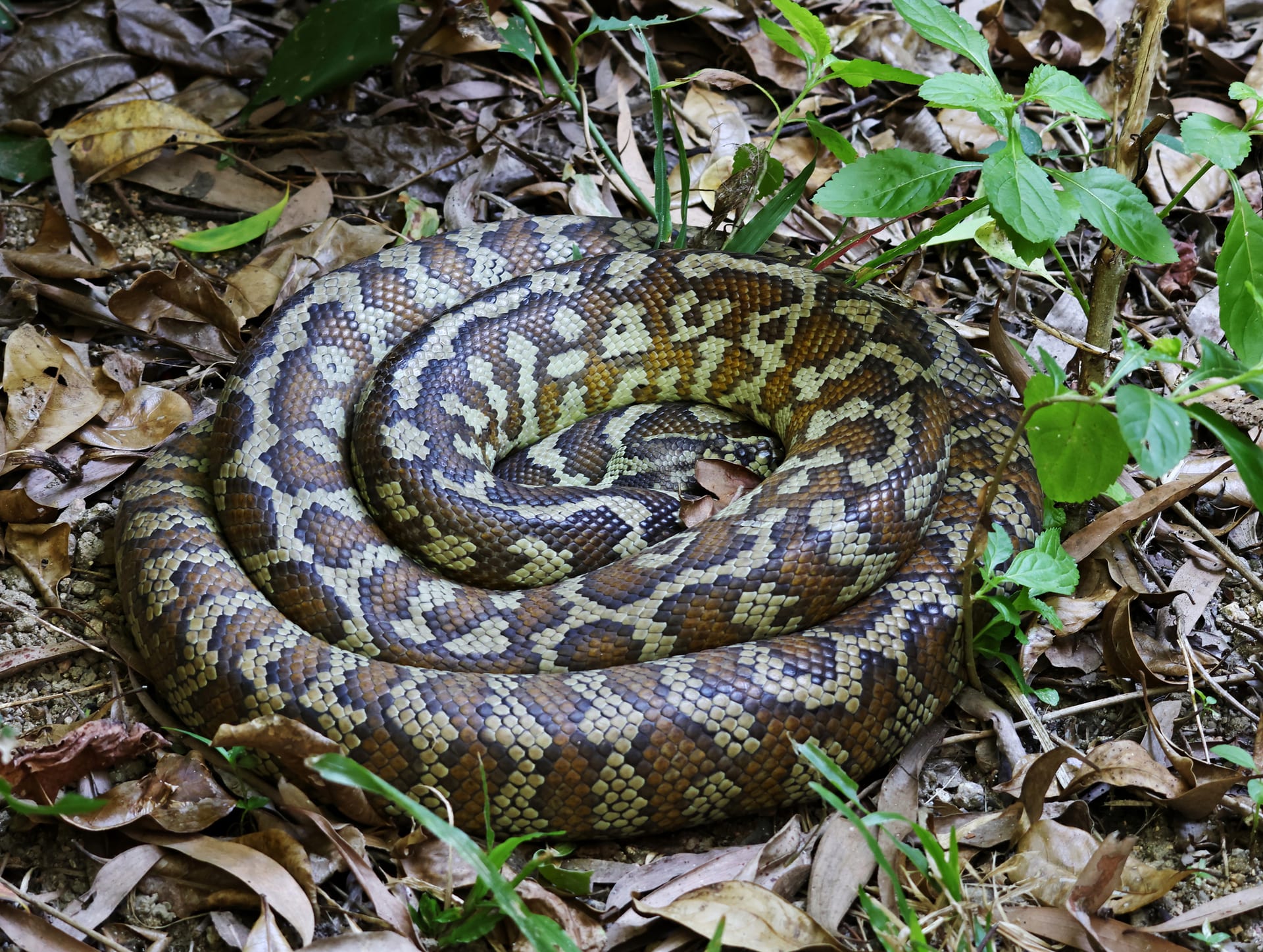
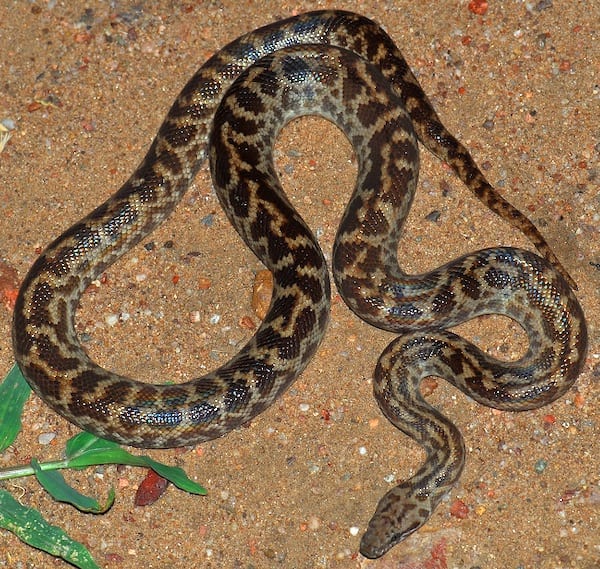
Aspidites melanocephalus is a python endemic to Australia, usually 1.5-2 m long and reaching 3.5 m. The body is muscular and flattened and the tail tapers to a fine point. Large symmetrical scales cover the top of the head, and the glossy jet black of the head continues several centimetres down the neck and throat - the origin of its English and Japanese names. The body is patterned in bands or brindling of black, dark grey, brown, gold and cream, and the pale belly is flecked with darker spots. Terrestrial, it is often found among rocks and loose debris. It has no heat-sensing pits, and its diet is mainly reptiles - skinks above all, as well as other snakes - with mammals and birds taken when available. A disturbed animal hisses loudly but rarely bites except when hunting. Its docile nature and striking pattern have made it a popular species.
Source: Wikipedia (CC BY-SA 4.0)
Size of the Black-Headed Python
The Black-Headed Python grows to Typically 1.5-2m, with a maximum of 3.5m; captive animals are generally 1.8-2.4m.
Basic Info
Origin
The northern half of Australia excluding the most arid regions, in humid tropical to semi-arid country among rocks and loose debris
Lifespan
Twenty to thirty years in captivity
Size
Typically 1.5-2m, with a maximum of 3.5m; captive animals are generally 1.8-2.4m
Humidity
40〜70%
Diet
Care Specifications
PeacefulSolitaryBreeding: Moderate
Sources: Reptiles Magazine: Black-Headed Python Care Sheet / Wikipedia (English): Black-headed python / Reptile Database
References & Sources
Edited & verified by: BreederDirect editorial team
The taxonomic, regulatory, and husbandry data on this page are compiled and verified against the authoritative primary sources below.
Taxonomy & Authority
Accepted name: Aspidites melanocephalus (Krefft, 1864)
Synonyms: Aspidiotes melanocephalus Krefft, 1864, Python melanocephalus (Boulenger, 1893), Aspidites melanocephalus (Kinghorn, 1929)
Authority databases: Reptile Database
Nomenclature follows global taxonomic authority databases.
Regulations & Conservation Status
CITES Appendix IIIUCN LC · Least Concern
All species of the family Pythonidae are listed in CITES Appendix II (effective February 4, 1977; initially listed under the family Boidae). As an Appendix II species, registration certificates for species designated as international rare wild animals and plants are not required. It is not included in the five special animals of the family Pythonidae listed in the table of the Ordinance for the Enforcement of the Animal Welfare and Management Act (Amethystine Python, Australian Scrubpython, Indian Python, Reticulated Python, African Python), and is not a special animal. It is not designated as an invasive alien species. Australia prohibits the export of wild animals.
Sources: CITES Appendices / Ministry of the Environment: list of invasive alien species / Order for Enforcement of the Act on Welfare and Management of Animals (designated dangerous animals)
Regulations may change. Always verify the latest information with the relevant authorities.
Black-Headed Python Listings
Loading latest listingsFind listings for this species