Source: Wikimedia Commons
Spotted Python
BeginnerAntaresia maculosa
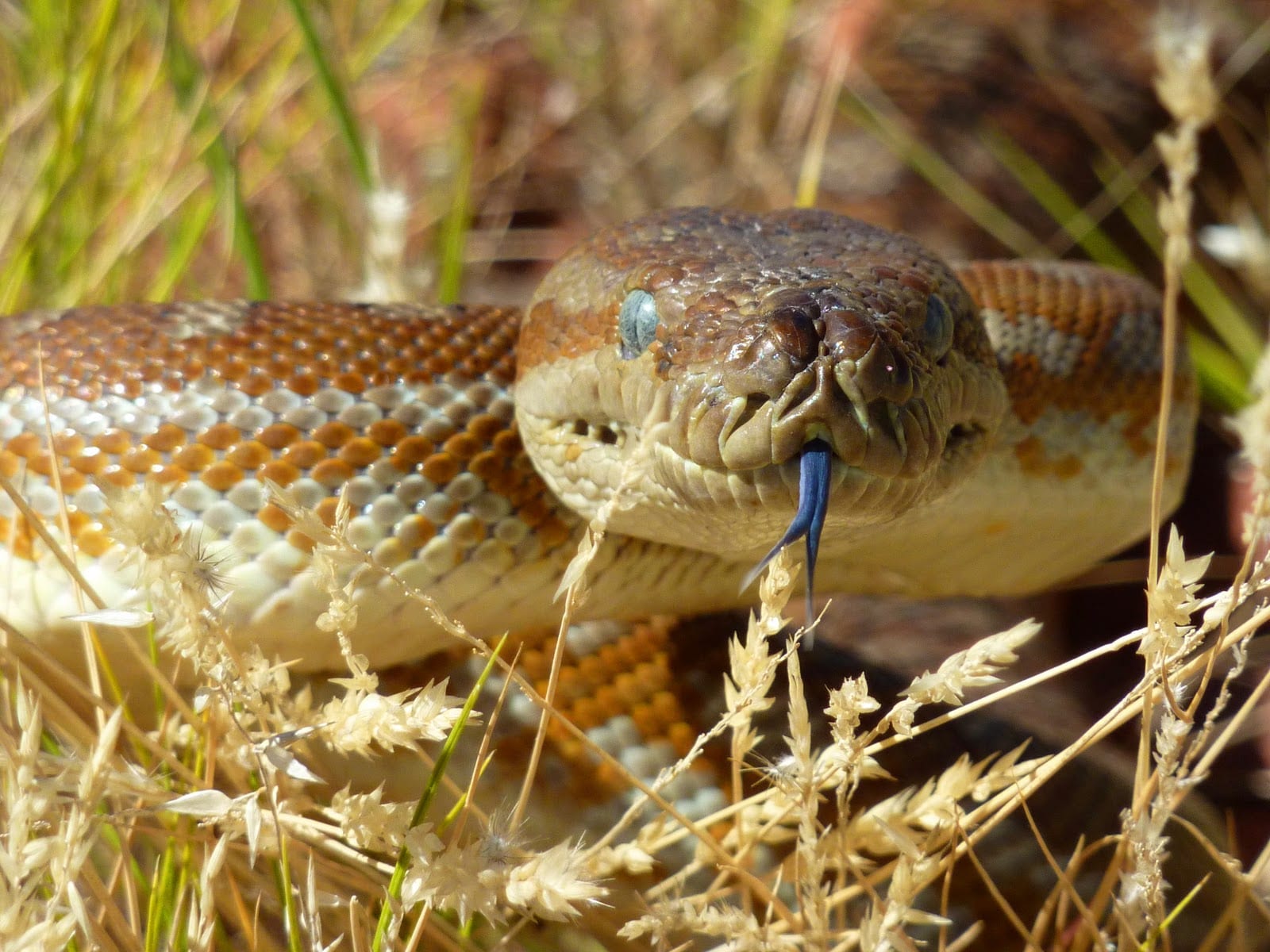
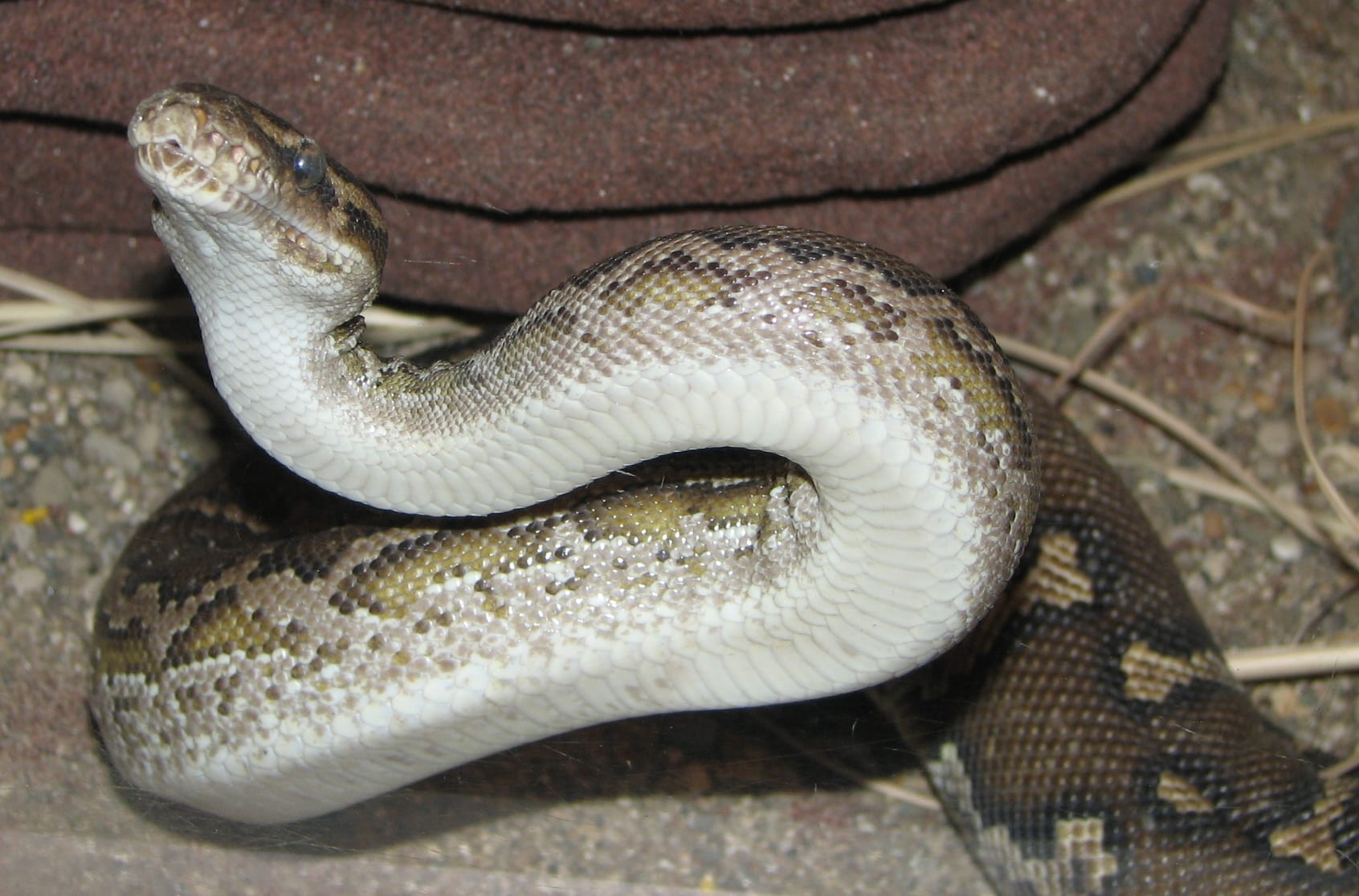
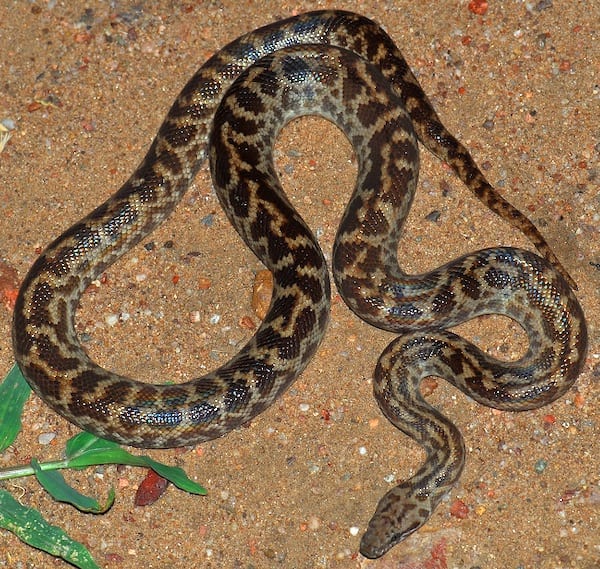
A small python in pale brown with large, highly contrasted dark blotches that usually have ragged edges. It is the largest species of Antaresia, normally 100-140 cm long, and the irregular blotching persists throughout life.
Difficulty
Beginner
Lifespan
Up to 30 years with proper care
Size
Usually 100-140cm, with a record of 180cm and a maximum SVL of 122cm
Humidity
20〜80%
Diet
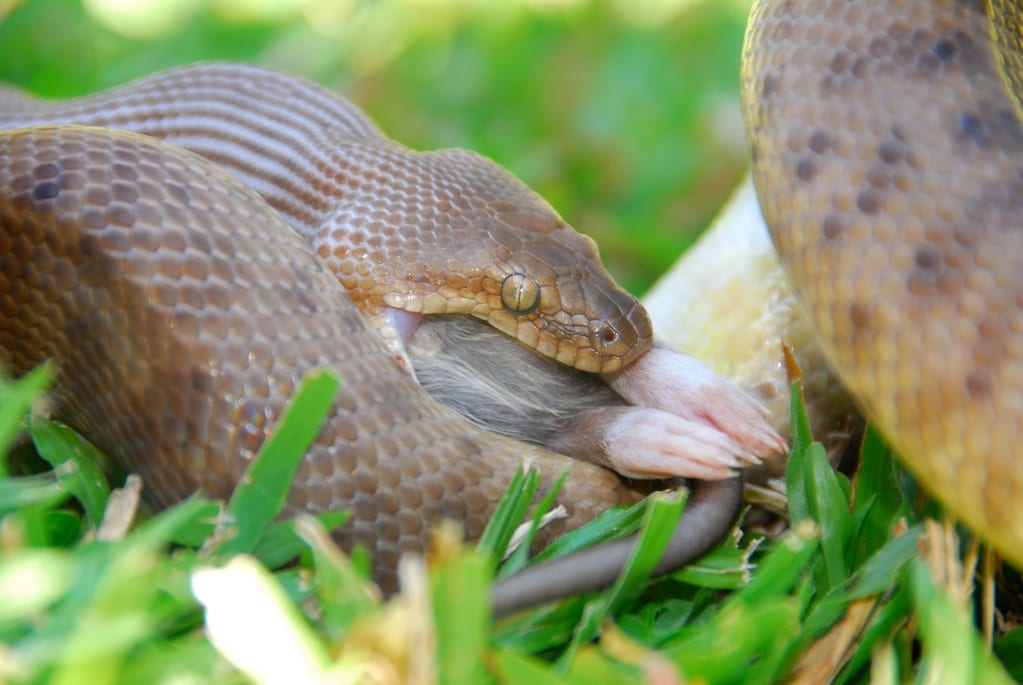
Carnivorous: small mammals, birds and lizards
About
The spotted python (Antaresia maculosa) is a small python of eastern Australia and New Guinea. It is normally 100-140 cm long, with a record of 180 cm, making it the largest species of Antaresia. Large dark blotches with ragged edges stand out strongly against a pale brown ground: it differs from A. perthensis in having larger, better contrasted blotches and from A. childreni in being blotched at all, or in lacking gaps between the blotches on the anterior third of the body. Ventral scale counts are high at 249-280. The blotched pattern remains irregular throughout life. Small and even-tempered, it is popular with keepers in Australia and abroad. Wilhelm Peters described it in 1873, and two subspecies were recognised in 2020. The New Guinea populations have been proposed as a separate species, A. papuensis, but ITIS and the Reptile Database currently treat them as synonymous. It is relatively slow-moving and hardy and may live up to 30 years with good care.
Source: Wikipedia (CC BY-SA 4.0)
Lifespan of the Spotted Python
The Spotted Python lives Up to 30 years with proper care.
Size of the Spotted Python
The Spotted Python grows to Usually 100-140cm, with a record of 180cm and a maximum SVL of 122cm.
Basic Info
Origin
Australia (New South Wales and eastern Queensland) and New Guinea, in forest and woodland with rocky outcrops
Lifespan
Up to 30 years with proper care
Size
Usually 100-140cm, with a record of 180cm and a maximum SVL of 122cm
Care Specifications
PeacefulSolitaryBreeding: Easy
Sources: ReptiFiles: Spotted Python Care Sheet / Reptile Database: Antaresia maculosa / Wikipedia (English)
References & Sources
Edited & verified by: BreederDirect editorial team
The taxonomic, regulatory, and husbandry data on this page are compiled and verified against the authoritative primary sources below.
Taxonomy & Authority
Accepted name: Antaresia maculosa (Peters, 1873)
Synonyms: Liasis maculosus Peters, 1873, Antaresia maculosa brentonoloughlini Hoser, 2003
Authority databases: GBIF · Reptile Database
Nomenclature follows global taxonomic authority databases.
Regulations & Conservation Status
CITES Appendix IIIUCN LC · Least Concern
All species of family Pythonidae spp. have been listed on CITES Appendix II (effective February 4, 1977). Because it is on Appendix II, registration as an international rare species is not required. Among specific animals listed in the Schedule of the Enforcement Ordinance of the Animal Protection and Management Law, only five python species are designated: amethystine python, Australian scrub python, Indian python, reticulated python, and African python, and this species is not included. It is also not designated as a specified alien species under the Enforcement Ordinance of the Alien Species Law. The IUCN Red List assessment is Least Concern (LC).
Sources: CITES Species+ (Pythonidae spp., Appendix II, effective 4 February 1977) / Order for Enforcement of the Act on Welfare and Management of Animals, appended table
Regulations may change. Always verify the latest information with the relevant authorities.
Spotted Python Listings
Loading latest listingsFind listings for this species