Source: Wikimedia Commons
Eastern Blue-Tongued Skink
BeginnerTiliqua scincoides
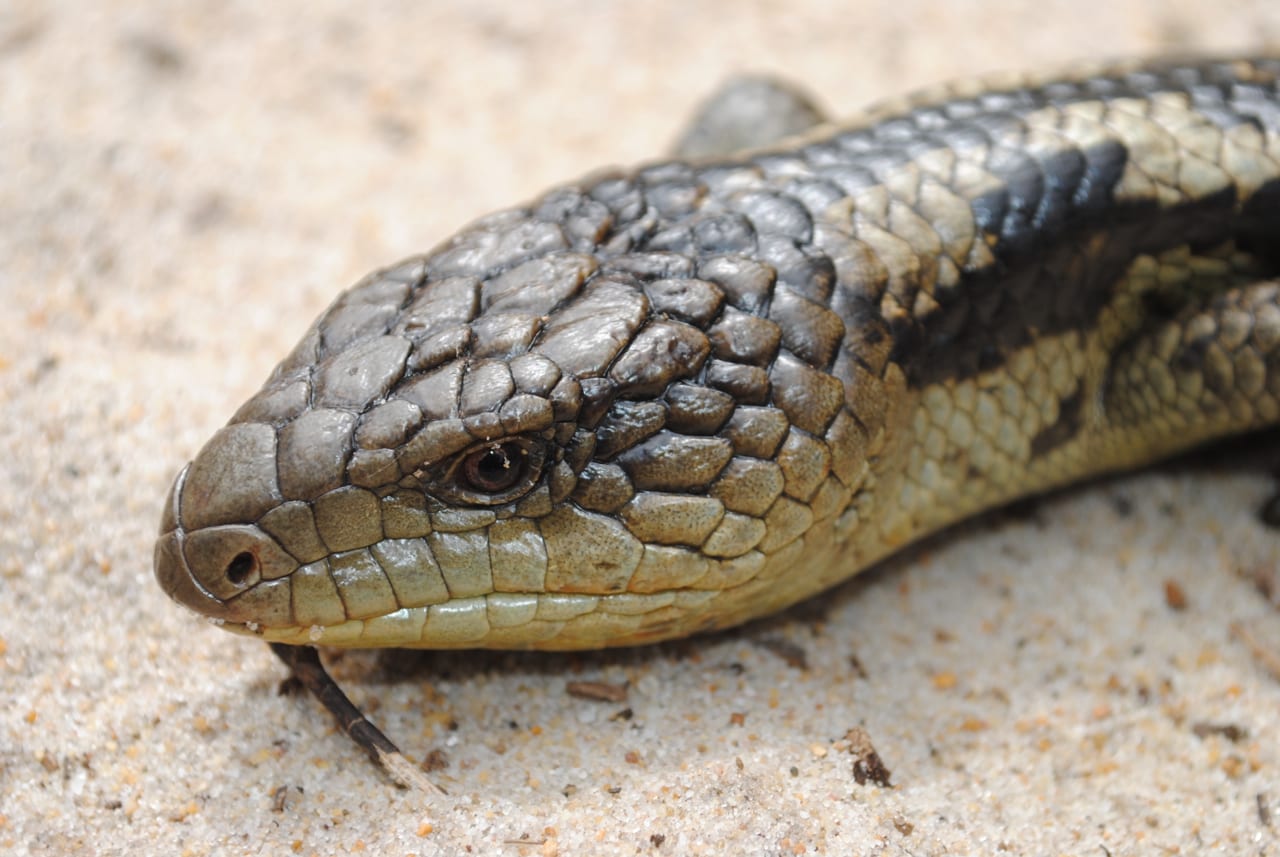
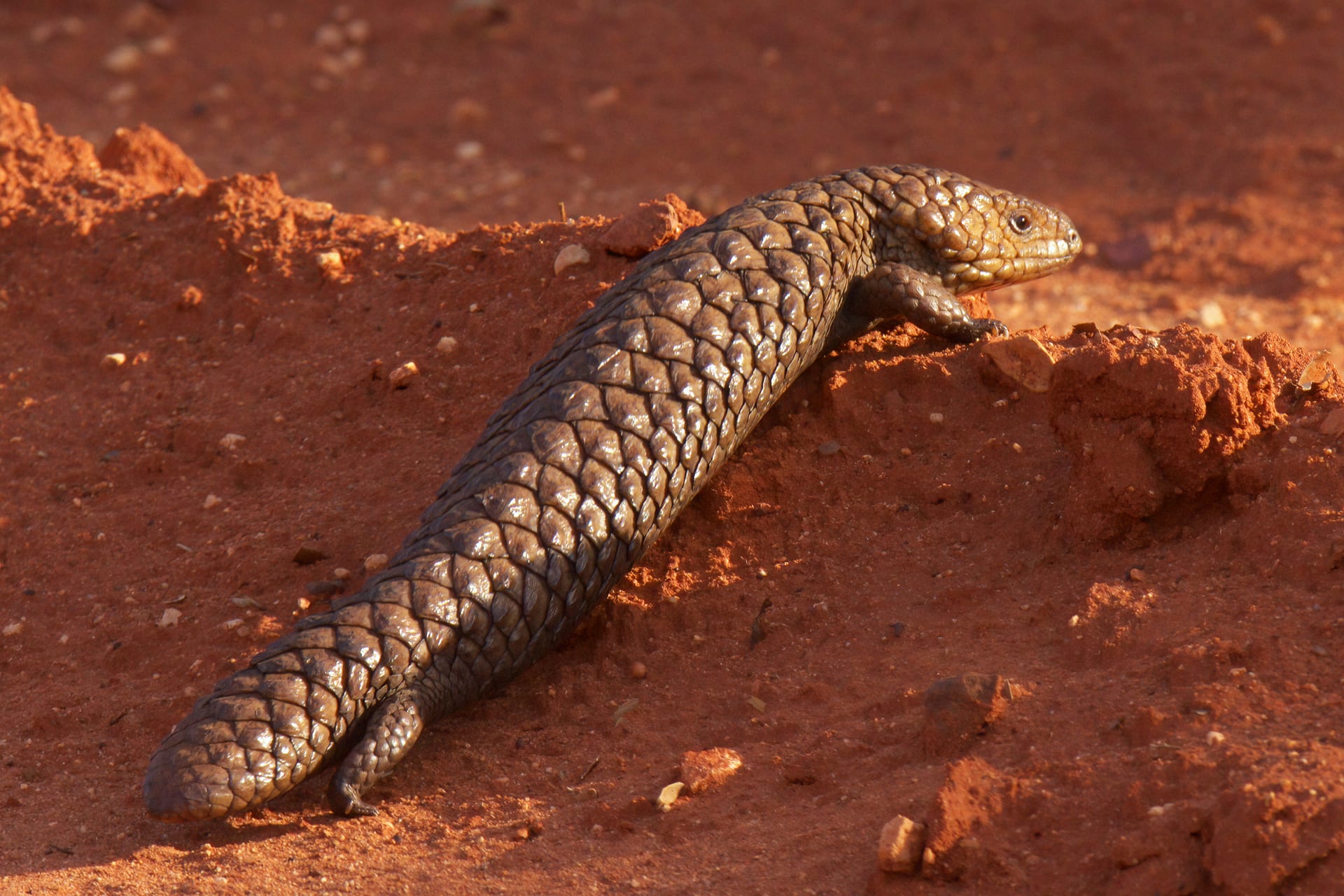
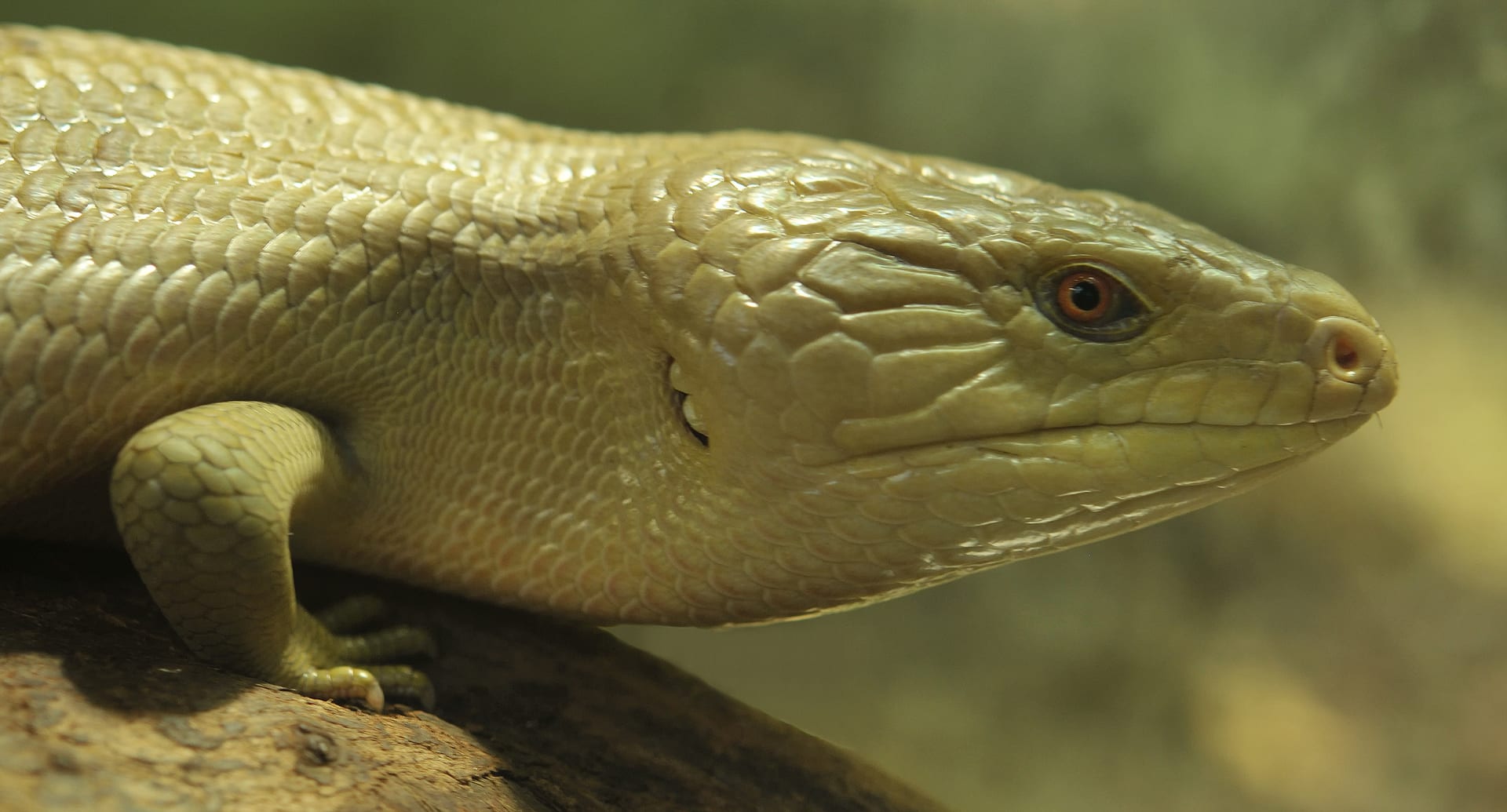
A large blue-tongued skink of Australia and the Tanimbar Islands of Indonesia. Stout-bodied with short legs, it exceeds 60 cm and 1 kg. The blue-violet tongue it displays when threatened gives the group its name.
Difficulty
Beginner
Temperature
21〜29℃
Lifespan
15-20 years, with records over 35 years
Size
Over 60cm
Humidity
40〜60%
Diet
Insects, snails, small animals, vegetables and fruit (omnivorous)
About
Tiliqua scincoides is a large skink of Australia and the Tanimbar Islands of Indonesia. It exceeds 60 cm in total length and over 1 kg in mass, with the stout body and short limbs typical of the genus. Colour varies widely but is generally banded. The tongue is blue-violet to cobalt and is displayed with a wide gape as a threat, which gives the group its name; it also carries scent molecules to a sensory organ in the roof of the mouth and is coated in sticky mucus used to catch prey. Three subspecies are recognised: the nominate form in south-eastern Australia, T. s. intermedia in the north, and T. s. chimaera in the Tanimbar Islands. It is ovoviviparous. It is omnivorous, taking everything from insects and snails to small animals, flowers and fruit. Hardy and readily tamed, it is treated as the entry species among blue-tongued skinks.
Source: Wikipedia (CC BY-SA 4.0)
Lifespan of the Eastern Blue-Tongued Skink
The Eastern Blue-Tongued Skink lives 15-20 years, with records over 35 years.
Size of the Eastern Blue-Tongued Skink
The Eastern Blue-Tongued Skink grows to Over 60cm.
Temperature & humidity for the Eastern Blue-Tongued Skink
The ideal temperature for the Eastern Blue-Tongued Skink is 21〜29℃. Ideal humidity is 40〜60%.
Basic Info
Origin
Australia (New South Wales, Northern Territory, Queensland, south-eastern South Australia, Victoria and north-western Western Australia) and the Tanimbar Islands, Maluku, Indonesia
Care Specifications
PeacefulSolitaryBreeding: Moderate
Sources: ReptiFiles: Blue Tongue Skink Care / ReptiFiles: Blue Tongue Skink Temperatures, UVB & Humidity / ReptiFiles: Blue Tongue Skink Subspecies / Wikipedia (English) / Reptile Database
References & Sources
Edited & verified by: BreederDirect editorial team
The taxonomic, regulatory, and husbandry data on this page are compiled and verified against the authoritative primary sources below.
Primary sources
- Wikipedia
- CITES Appendices (Tiliqua scincoides, Appendix III listed by Australia, effective 22 June 2022)
- IUCN Red List
- Order for Enforcement of the Act on Welfare and Management of Animals, Appended Table
- ReptiFiles: Blue Tongue Skink Care
- ReptiFiles: Blue Tongue Skink Temperatures, UVB & Humidity
- ReptiFiles: Blue Tongue Skink Subspecies
- Reptile Database
- GBIF
Taxonomy & Authority
Accepted name: Tiliqua scincoides (White, 1790)
Synonyms: Lacerta scincoides White, 1790, Scincus tuberculatus Merrem, 1820, Cyclodus boddaertii Duméril & Bibron, 1839
Authority databases: GBIF · Reptile Database
Nomenclature follows global taxonomic authority databases.
Regulations & Conservation Status
CITES Appendix IIIIUCN LC · Least Concern
Listed in Appendix III on June 22, 2022, at Australia's request (Species+, listed as subspecies T. s. scincoides and T. s. intermedia). Appendix III requires certificates of origin and export permits for exports from the listing country, and no CITES registration certificate for internationally rare wild fauna and flora is required. It does not fall under Japan's designated animals.
Sources: CITES Appendices (Tiliqua scincoides, Appendix III listed by Australia, effective 22 June 2022) / IUCN Red List / Order for Enforcement of the Act on Welfare and Management of Animals, Appended Table
Regulations may change. Always verify the latest information with the relevant authorities.
Eastern Blue-Tongued Skink Listings
Loading latest listingsFind listings for this species