Source: Wikimedia Commons
Thick-Tailed Gecko
BeginnerUnderwoodisaurus milii
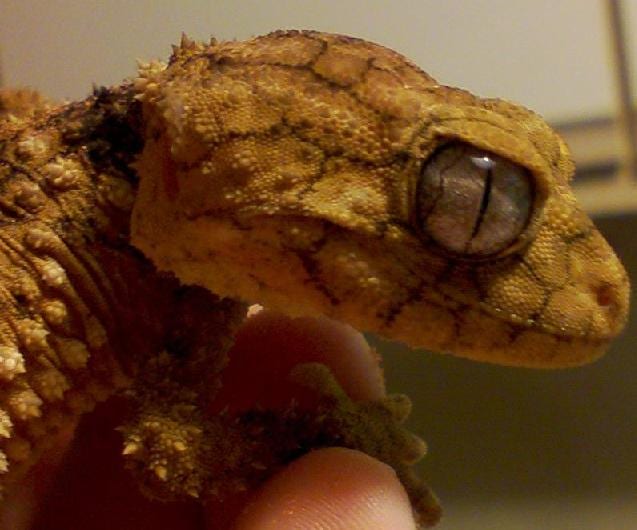
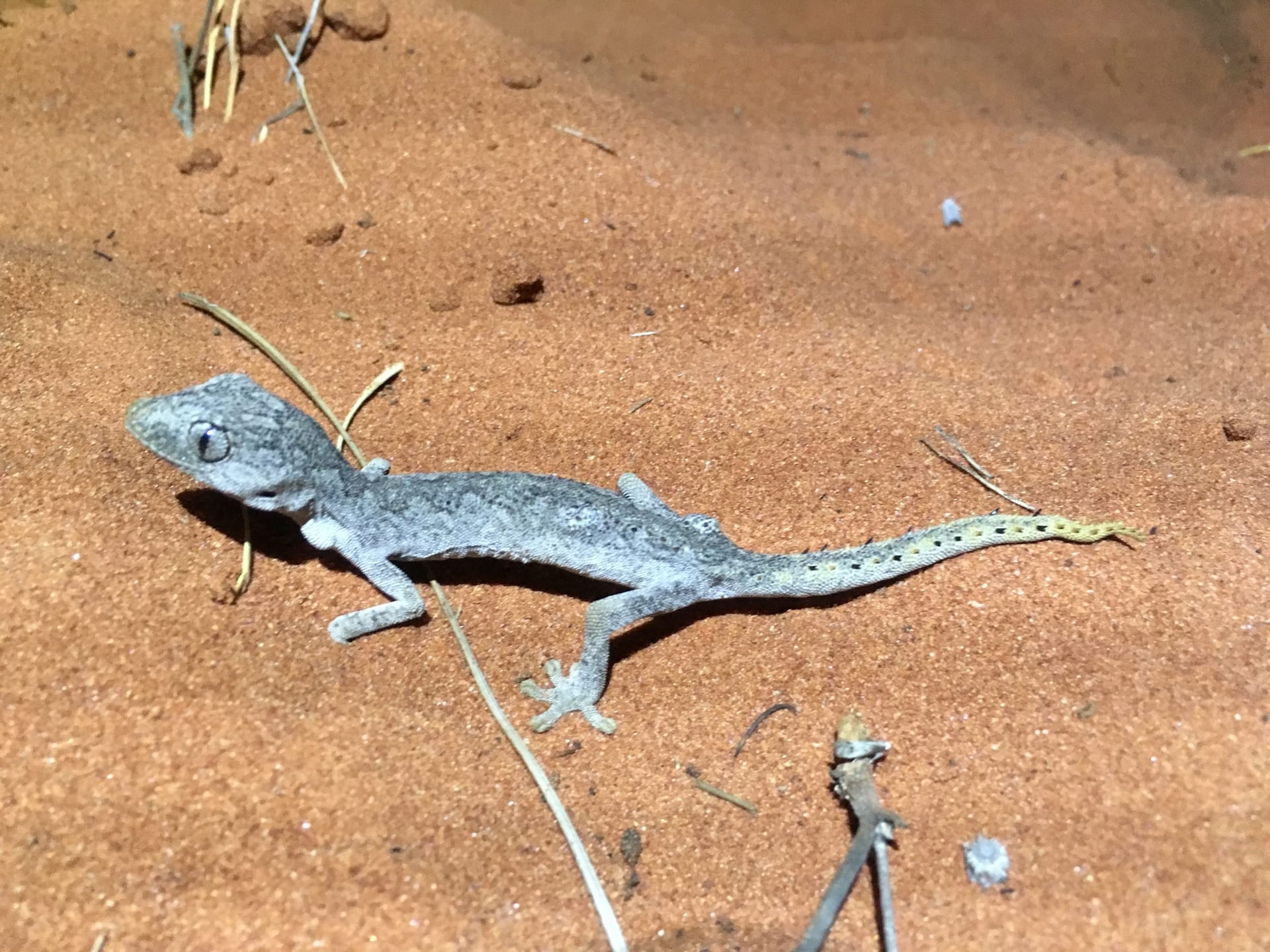
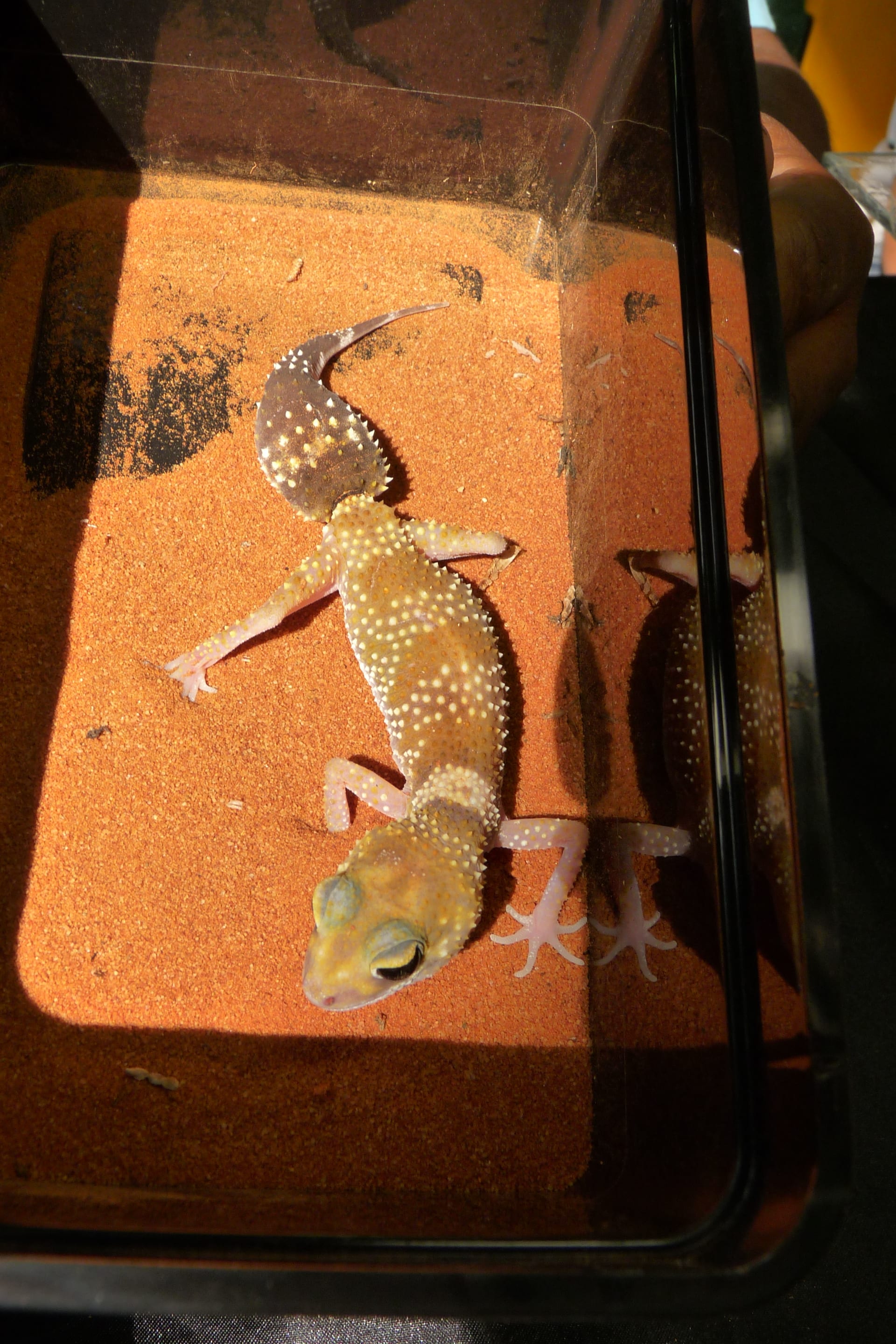
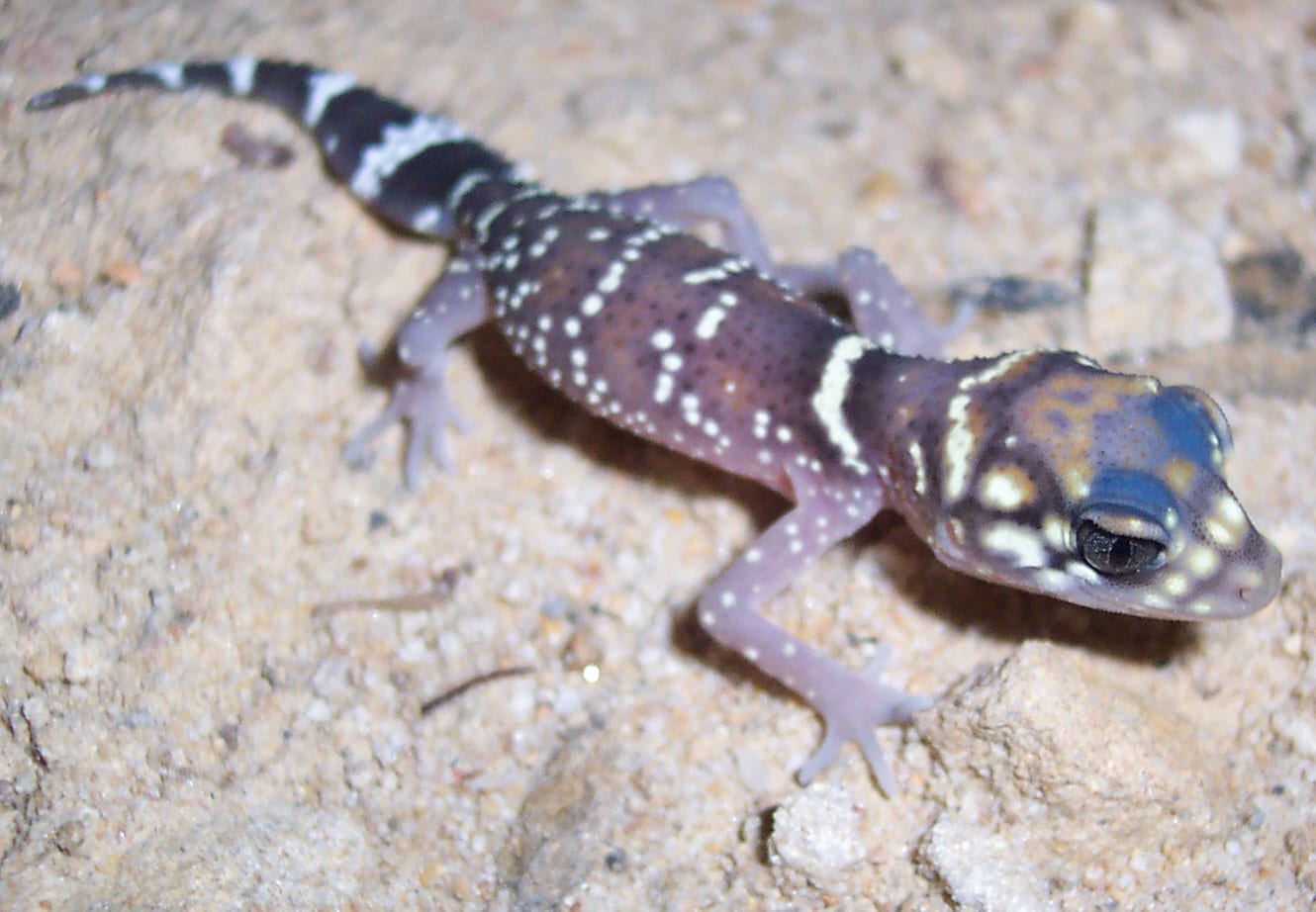
A terrestrial gecko in reddish to orange-brown, speckled with white and yellow tubercles that form bands on the head and tail. Its names come from the plump tail and the sharp barking call it gives in threat display.
Difficulty
Beginner
Lifespan
Over 10 years in captivity
Size
12-15cm total length (14-20g)
Humidity
40〜70%
Diet
Carnivorous: arthropods such as crickets and roaches, and smaller geckos
About
The thick-tailed gecko (Underwoodisaurus milii) is a carphodactylid gecko widespread in southern Australia. The ground colour is reddish to orange-brown, speckled with white and yellow tubercles that form two to three bands on the head and four to six on the tail. The original tail is black with pale bands, while a regenerated tail carries almost no pattern. It lacks adhesive toe pads and cannot climb smooth surfaces, living on the ground and active at night. It shelters in rocky crevices and under fallen timber, and is unusually cold-tolerant for the family, having been recorded active at 9 C in winter. Unusually for a reptile, several individuals will aggregate in a daytime retreat, a habit thought to conserve body heat rather than indicate sociality. In threat display it arches its back, raises its tail and barks. It is easy to keep and is treated as a beginner species.
Source: Wikipedia (CC BY-SA 4.0)
Lifespan of the Thick-Tailed Gecko
The Thick-Tailed Gecko lives Over 10 years in captivity.
Size of the Thick-Tailed Gecko
The Thick-Tailed Gecko grows to 12-15cm total length (14-20g).
It measures 12-15 cm and weighs 14-20 g.
Basic Info
Origin
Southern Australia, from south-western Western Australia through the goldfields, wheatbelt and Nullarbor north to Shark Bay, and across South Australia, New South Wales, northern Victoria and central Queensland, in rocky outcrops and under fallen timber
Lifespan
Over 10 years in captivity
Care Specifications
Semi-aggressiveGroupBreeding: Easy
Sources: Reptiles Magazine: Australian Barking Gecko Care Sheet / Reptiles Magazine: Care Tips For The Australian Barking Gecko / Wikipedia (Japanese)
References & Sources
Edited & verified by: BreederDirect editorial team
The taxonomic, regulatory, and husbandry data on this page are compiled and verified against the authoritative primary sources below.
Taxonomy & Authority
Accepted name: Underwoodisaurus milii (Bory de Saint-Vincent, 1823)
Synonyms: Phyllurus milii Bory de Saint-Vincent, 1823, Gymnodactylus miliusii Duméril & Bibron, 1836, Nephrurus milii (Bory, 1823), Underwoodisaurus husbandi Wells & Wellington, 1984
Authority databases: GBIF · Reptile Database
Nomenclature follows global taxonomic authority databases.
Regulations & Conservation Status
CITES Appendix IIIIUCN LC · Least Concern
Listed on CITES Appendix III as Underwoodisaurus spp. at Australia's request (effective June 22, 2022). As it is listed on Appendix III, no international endangered species certificate is required. Australia prohibits the export of wild animals native to its territory, and traded individuals are limited to captive-bred specimens. The species is not included in the list of specified animals under the Animal Welfare and Management Law Enforcement Decree, nor in the specified invasive species under the Invasive Species Law Enforcement Decree.
Sources: CITES Species+ (Underwoodisaurus spp., Appendix III, Australia, effective 22 June 2022) / IUCN Red List
Regulations may change. Always verify the latest information with the relevant authorities.
Thick-Tailed Gecko Listings
Loading latest listingsFind listings for this species