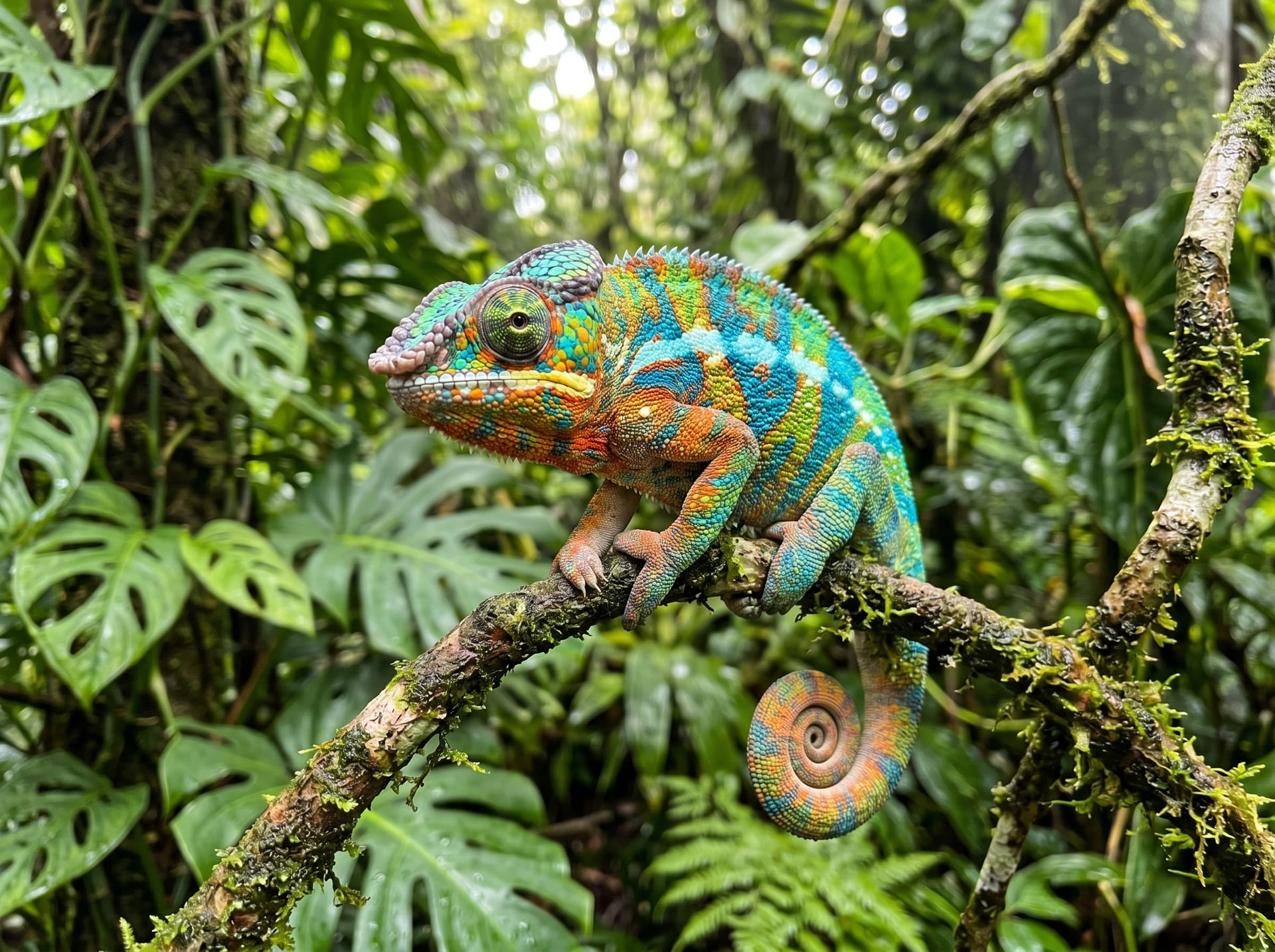
Reptile Dehydration and Hydration Guide | Species-Specific Water Intake Methods and Dehydration Treatment
Reptile dehydration is an often-overlooked health issue. This guide explains early detection methods for dehydration symptoms, species-appropriate hydration techniques (snakes, lizards, chameleons, tortoises), and emergency care procedures in detail.
Key Takeaways
Reptile dehydration is an often-overlooked health issue. This guide explains early detection methods for dehydration symptoms, species-appropriate hydration techniques (snakes, lizards, chameleons, tortoises), and emergency care procedures in detail.
The Importance of Hydration for Reptiles
Unlike mammals, reptiles may not give the impression of being "animals that actively drink water." However, proper water management is essential for reptile health. Prolonged dehydration can lead to serious complications such as kidney failure, uric acid deposits, and shedding problems.
✍️
BreederDirect Editorial
The BreederDirect editorial team specializes in care information for animals, covering veterinary care and breeding to deliver beginner-friendly guides.
Find Reptiles on BreederDirect
Buy directly from verified breeders
Browse Related Listings
Find Reptiles listings related to this article on BreederDirect. Buy directly from verified breeders.
This article provides practical guidance on identifying dehydration and explains water intake methods that vary by species.
Identifying Dehydration Signs
Skin Turgor Test
This is the simplest method to assess dehydration in reptiles.
Gently pinch and pull the skin with your finger
In healthy individuals, the skin returns to normal immediately
In dehydrated individuals, the skin remains "tent-like" for 5 or more seconds before returning
Sunken Eye Orbits
Eyes that appear recessed indicate moderate to severe dehydration. This sign is particularly easy to observe in chameleons, geckos, and snakes.
Urate Appearance
Healthy reptile urates are white to cream-colored and slightly soft. During dehydration, urates become dry, harder, and whiter, with reduced volume. Lack of urate excretion indicates severe dehydration and kidney stress.
Other Signs
Mucous membrane dryness (mouth and eyes) and increased stickiness
Loss of appetite and reduced activity levels
Incomplete shedding (dysecdysis)
Species-Specific Water Intake Methods
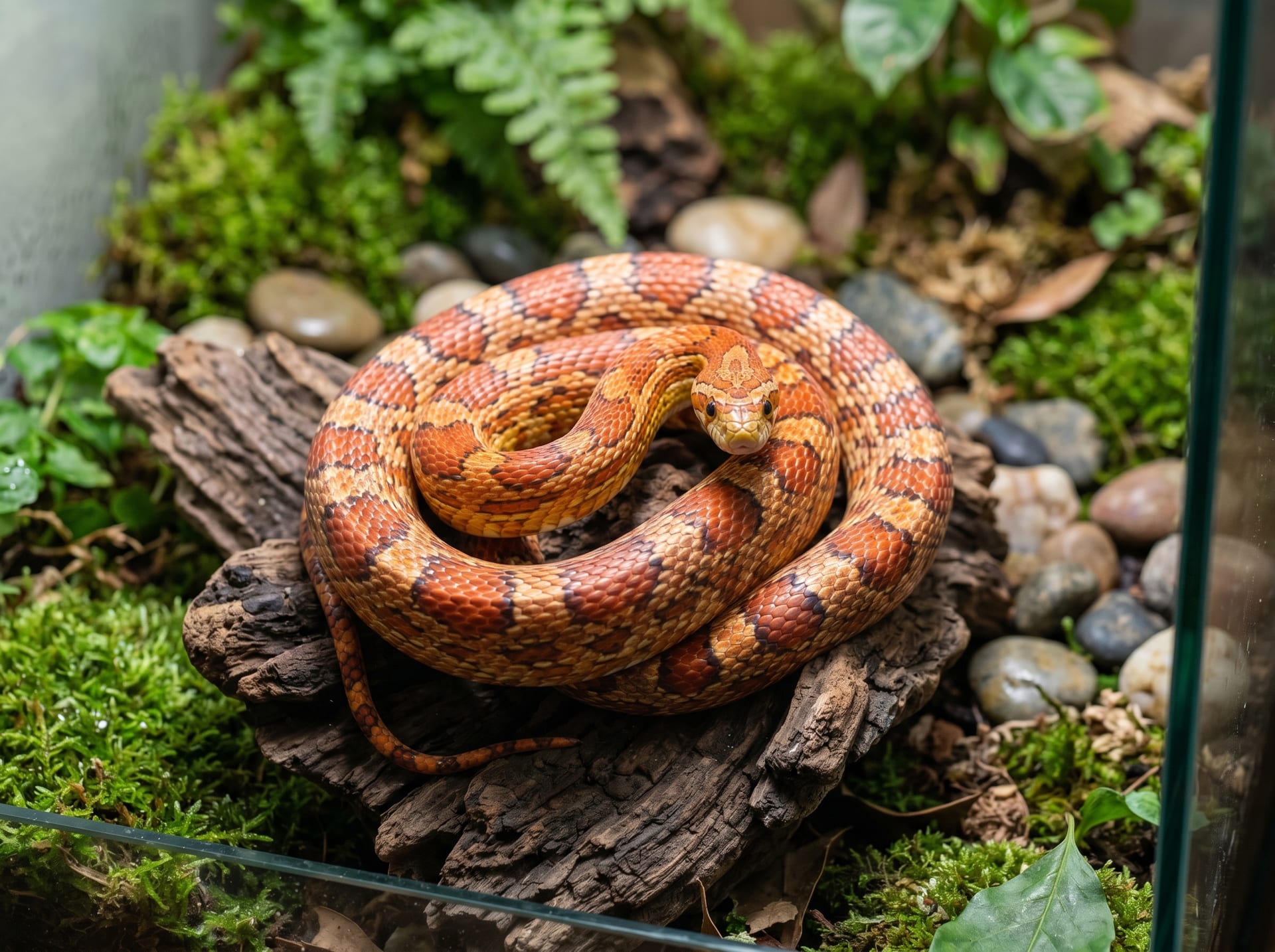
Snakes (Ball Pythons, Corn Snakes, etc.)
Water intake for snakes is relatively straightforward.
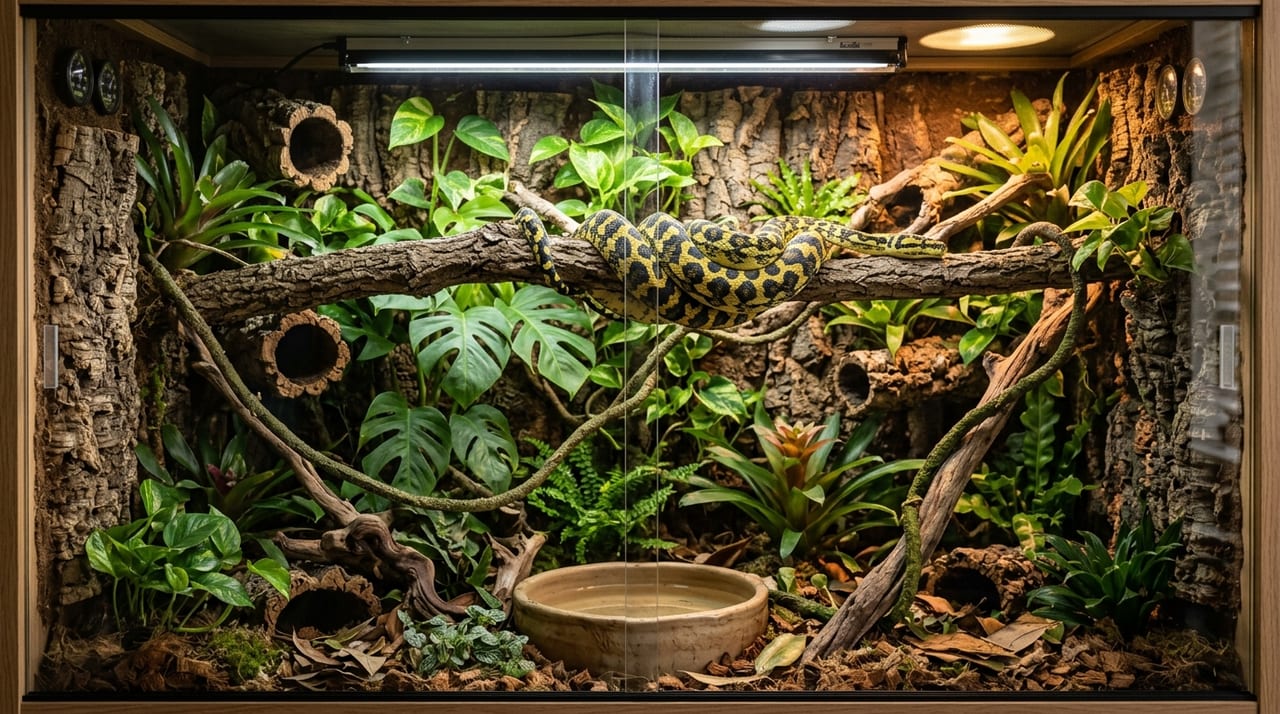
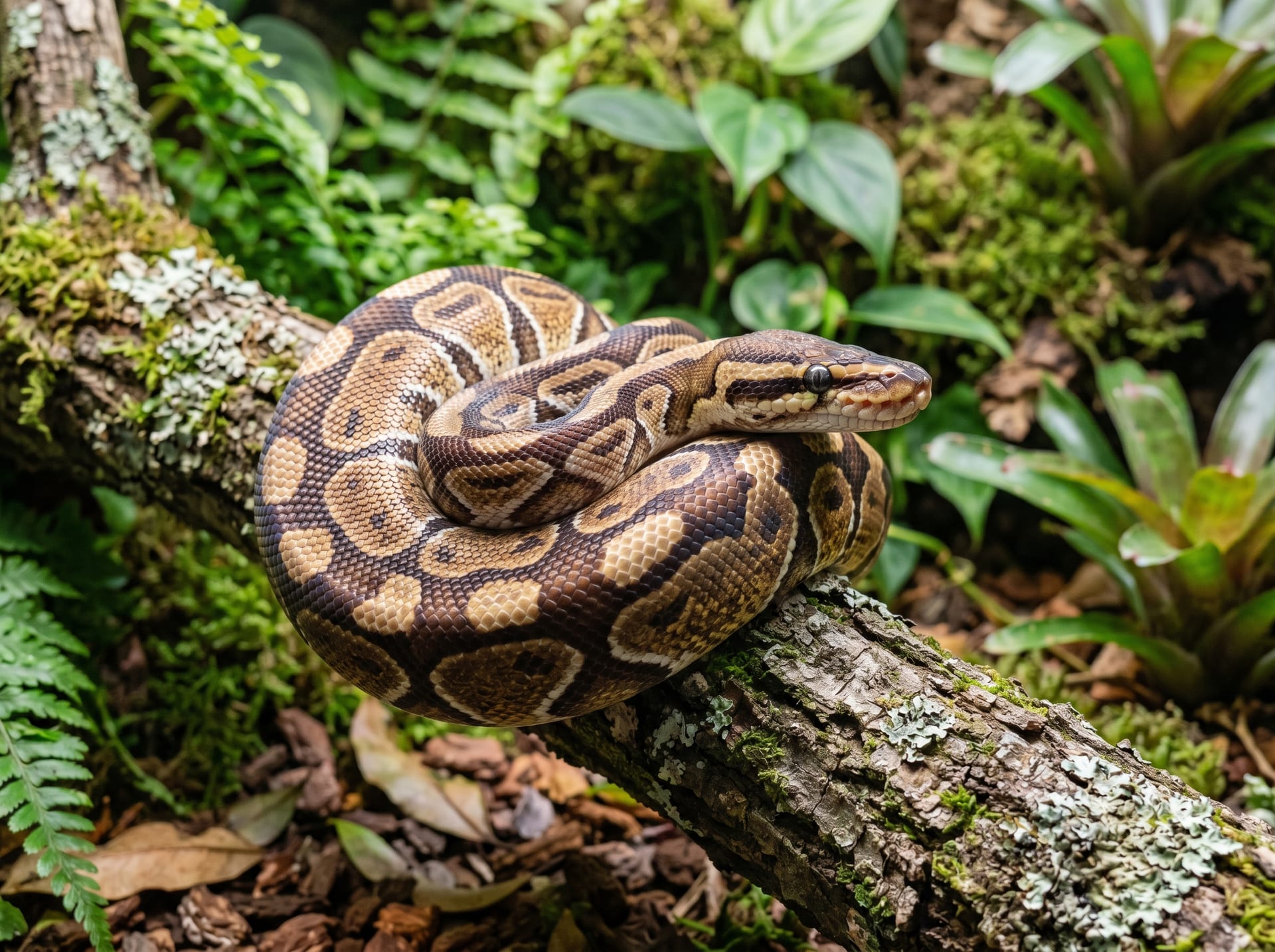
Method: Provide a shallow water container that allows the entire body to soak. For ball pythons, an ideal container size allows one-third to half the body length to be submerged.
Important points:
Change water daily or every 2 days (prevents bacterial growth)
Water temperature should match room temperature (avoid cold water)
Use heavy containers (ceramic, etc.) to prevent tipping
Soaking before and after shedding: Full-body warm soaks (30–32°C for 15–30 minutes) performed before shedding aid hydration and prevent incomplete shedding.
Leopard Geckos and Gecko Species
Geckos tend to "lick droplets" rather than "drink" water.
Method 1: Water bowl placement
Set up a shallow container (bottle cap-sized). Being nocturnal, some individuals will drink voluntarily at night.
Method 2: Misting
Misting cage walls encourages licking behavior. Perform 1–2 times daily, particularly before nighttime.
Method 3: Humid hides (Wet shelters)
Wet shelters maintain higher humidity than the surrounding cage, reducing water loss through the skin.
Chameleons are among the most challenging species for water management. Many chameleons do not recognize standing water as "water" and will not drink from containers.
Method 1: Drip systems
Install a "dripper" or "drip system" that delivers water one drop at a time. Encourage the chameleon to lick falling water droplets or water accumulated on leaves.
Method 2: Automated misting systems
Use a timer-controlled misting system to mist 3–5 times daily for 2–5 minutes each. This achieves both humidity maintenance and hydration simultaneously.
Method 3: Syringe feeding
If dehydration is suspected, use a syringe to deliver small amounts of water directly to the mouth. Exercise caution to minimize stress during forced hydration.
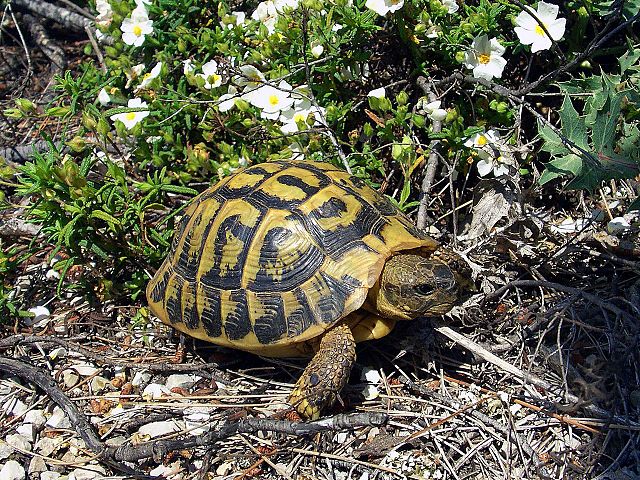
Terrestrial tortoises are relatively straightforward drinkers.
Method 1: Shallow water container
A shallow tray low enough for easy access, ideally lower than shell height.
Method 2: Warm soaking (lukewarm water soaks)
Perform 1–2 times per week for 15–20 minutes in 30–32°C water. Soaking promotes water absorption through skin and the cloaca while encouraging defecation. For tortoise care, soaking is nearly essential.
Method 3: Water intake through vegetables and fruits
Incorporate water-rich vegetables and fruits such as cucumbers, lettuce, and watermelon into the feeding regimen.
Species-Specific Water Intake Methods Quick Reference
Species
Primary Hydration Method
Snakes
Shallow water container always available • Warm soak before shedding (30–32°C)
Offer water via syringe near the mouth to encourage voluntary drinking
Moderate to Severe Dehydration
Sunken eyes and severely reduced skin turgor require immediate action.
Contact a veterinarian while performing warm soaks for transdermal rehydration
Subcutaneous injections or IV fluids administered by a reptile-experienced veterinarian are most effective
Exercise caution with forced oral rehydration due to aspiration risk
Environmental Management for Prevention
Humidity Maintenance
Maintaining species-appropriate humidity is fundamental to dehydration prevention.
Species
Appropriate Humidity
Ball Python
60–80%
Leopard Gecko
30–50% (70–80% inside humid shelters)
Chameleon
50–80% (varies day and night)
Hermann's Tortoise
40–60%
Water Change Frequency
Water containers are prone to bacterial and algal growth. Maintain a water-change routine of every 1–2 days.
Summary
Reptile dehydration is difficult to detect visually until advanced. Regularly perform skin turgor tests, assess eye appearance, and monitor urate output for early detection. Since water intake methods vary significantly by species, selecting the appropriate method for your reptile's species is crucial. If dehydration is suspected, consult an exotic animal veterinarian without hesitation.