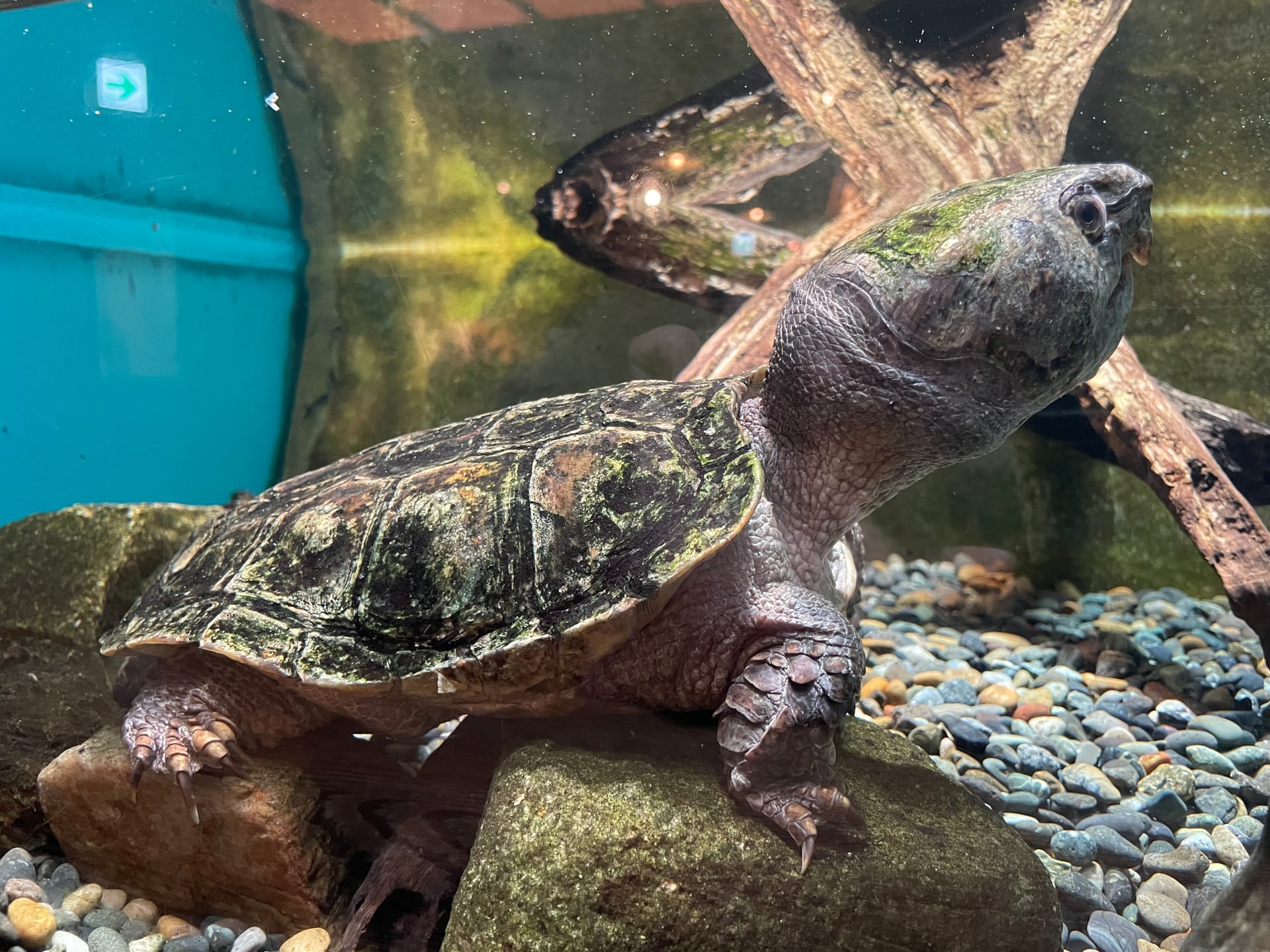
 © Totti / CC BY-SA 4.0
Big-Headed Turtle
The Big-Headed Turtle is instantly recognizable for its oversized head, which is almost as thick as its shell is tall. That head is simply too large to withdraw into the shell, so the tough, bony skull itself acts as the turtle's main defense. Its tail is unusually long as well, often matching or exceeding the length of its carapace, helping it grip and clamber over rocks in fast-flowing mountain streams. Active mainly at night, it tends to stay tucked away and motionless during the day before becoming more mobile after dark. With its striking looks and unusual biology, it has a devoted following, though its care requirements make it a species best suited to experienced keepers rather than beginners.
View Big-Headed Turtle encyclopedia →0% commission on your first sales!Register by September 30, 2026 and your first 2 sales are commission-free!
Breeder Wanted!
List on BreederDirect and sell directly to customers nationwide!
6 Transparency Promises from Br-Choku
Every Reptiles & Amphibians from verified Breeder breeders includes complete information: morph, genetics, feeding requirements, and temperament details.
- Morph Information
- Actual Photos
- Feeding Information
- Temperament Information
- Genetics Information
- Age (Months)
Browse all 280 breeds
Difficulty Level
Feeding Type
Temperament
Verified breeders wanted for Reptiles & Amphibians
Breeders are signing up now ahead of launch. Subscribe to be notified when new listings go live.
Getting alerts is free with a member account. When new listings match your saved search, we'll notify you by email and in-app.
Browse other categories
Verified breeders (preview)
Are you raising reptiles & amphibians?
Register as a breeder and connect with buyers directly.
Apply as a breederBig-Headed Turtle key facts
- Care level
- Advanced
- Lifespan
- Maximum recorded longevity in captivity is 27 years
- Size
- Carapace up to 21.5cm, with males larger than females
- Diet
- Insects, crustaceans, molluscs, fish, tadpoles and prepared pellets
- Temperature & Humidity
- It does poorly in warm conditions and often stops feeding or declines when the water is too warm. Remember that it lives in hill and low-mountain streams, and keep the water from getting too warm.
- Enclosure
- It prefers shallow, cool running water, so keep the water shallow and moving with strong filtration. It is sensitive to poor water quality, and very frequent water changes with tap water can bring on fungal skin disease. It climbs using its limbs and tail, so fix the lid securely to prevent escapes.
- Diet & Feeding
- Carnivorous, taking insects, crustaceans, molluscs, fish and tadpoles. Some captive animals will accept prepared or dried foods.
- Temperament
- Bad tempered, it bites hard with a large hooked beak. It cannot withdraw its head, so forcing a restraint is dangerous and it must be handled with great care. House it singly as a rule.
- Notes
- The whole family Platysternidae was moved to CITES Appendix I with effect from 12 June 2013. In Japan the species is therefore an internationally endangered species, and every transfer requires an individual registration certificate. It is neither a designated dangerous animal nor an invasive alien species. Habitat loss and collection for food, medicine and the pet trade have caused a steep decline.
About Big-Headed Turtle
A guide to the Big-Headed Turtle, a nocturnal, stream-dwelling species known for its oversized head and long tail — an advanced-keeper species that can't retract its head into its shell.
7 things to know before welcoming a Big-Headed Turtle
1Can't Retract Its Head
The Big-Headed Turtle's head is so large — nearly as thick as the shell itself — that it cannot pull it back inside for protection. Instead, the sturdy head serves as its main defense, so it's worth avoiding sharp-edged tank decorations the turtle could strike its head against.
2A Stream-Like Habitat
In the wild these turtles live in mountain streams, so their enclosure should include flowing water along with a dry basking area or rocks to climb onto. Their claws are well developed for gripping rock, so a stable, secure layout helps them move around comfortably.
3Cool Water Is Essential
As a cold, fast-flowing stream species, it isn't suited to the warm water tropical turtles enjoy, and water temperature needs to be managed carefully through the seasons. It can be sensitive to shifts in water quality and temperature, so frequent checks are important.
4Skilled Climber, Escape Risk
Strong claws make this turtle a surprisingly capable climber, able to scale rocks and even mesh, so a secure lid and tall enclosure walls are a must. They're more active and mobile than their bulky head might suggest, so escape-proofing the setup is essential.
5Bites Hard When Stressed
With its oversized head and strong jaws, this turtle can deliver a firm bite when startled or handled roughly. It generally does best housed alone, and bare-handed handling should be kept to a minimum.
6Nocturnal, Hides by Day
This is a strongly nocturnal species that tends to stay tucked away and still during daylight hours. Providing a shelter or hiding spot helps it feel secure and settled during the day.
7A Long-Term Commitment
Captive individuals have reportedly lived as long as 27 years, so bringing one home means preparing for many years of care. As an advanced-keeper species, it's worth researching its needs and husbandry thoroughly before taking one on.
Frequently asked questions about Big-Headed Turtle
- Q.Is this turtle suitable for beginners?
- A.Big-Headed Turtles are generally considered an advanced-keeper species and aren't a great fit for someone new to reptile keeping. They need stream-like water quality and temperature management along with tank setups that protect their oversized head, all of which call for some prior experience.
- Q.Why can't it pull its head into its shell?
- A.Its head is roughly as thick as the shell itself, and the shell is somewhat flattened, so there simply isn't room to withdraw the head inside. Instead, the tough, bony head itself serves as the turtle's main line of defense.
- Q.Can it be kept with other turtles?
- A.Because it can be feisty and prone to biting, it generally does best kept alone. If housing more than one is being considered, watch closely for biting or signs of stress between them.
- Q.How big does it get?
- A.Shell length tops out at around 21.5 cm, with males typically growing larger than females. Since the head and tail are both large relative to the body, more space is often needed than the shell size alone would suggest.
- Q.How long do they typically live?
- A.The longest recorded captive lifespan is 27 years, so this is very much a long-term commitment. Before bringing one home, it's worth thinking through whether you can provide care for that many years ahead.
Useful tools for Big-Headed Turtle care
Learn more about Big-Headed Turtle in the encyclopedia
View Big-Headed Turtle encyclopedia entry →
Care difficulty, lifespan, size and diet — all basics covered.
More in this category
Can't find the one you're looking for?
Post your wishes for free and breeders with matching animals will contact you with introductions.