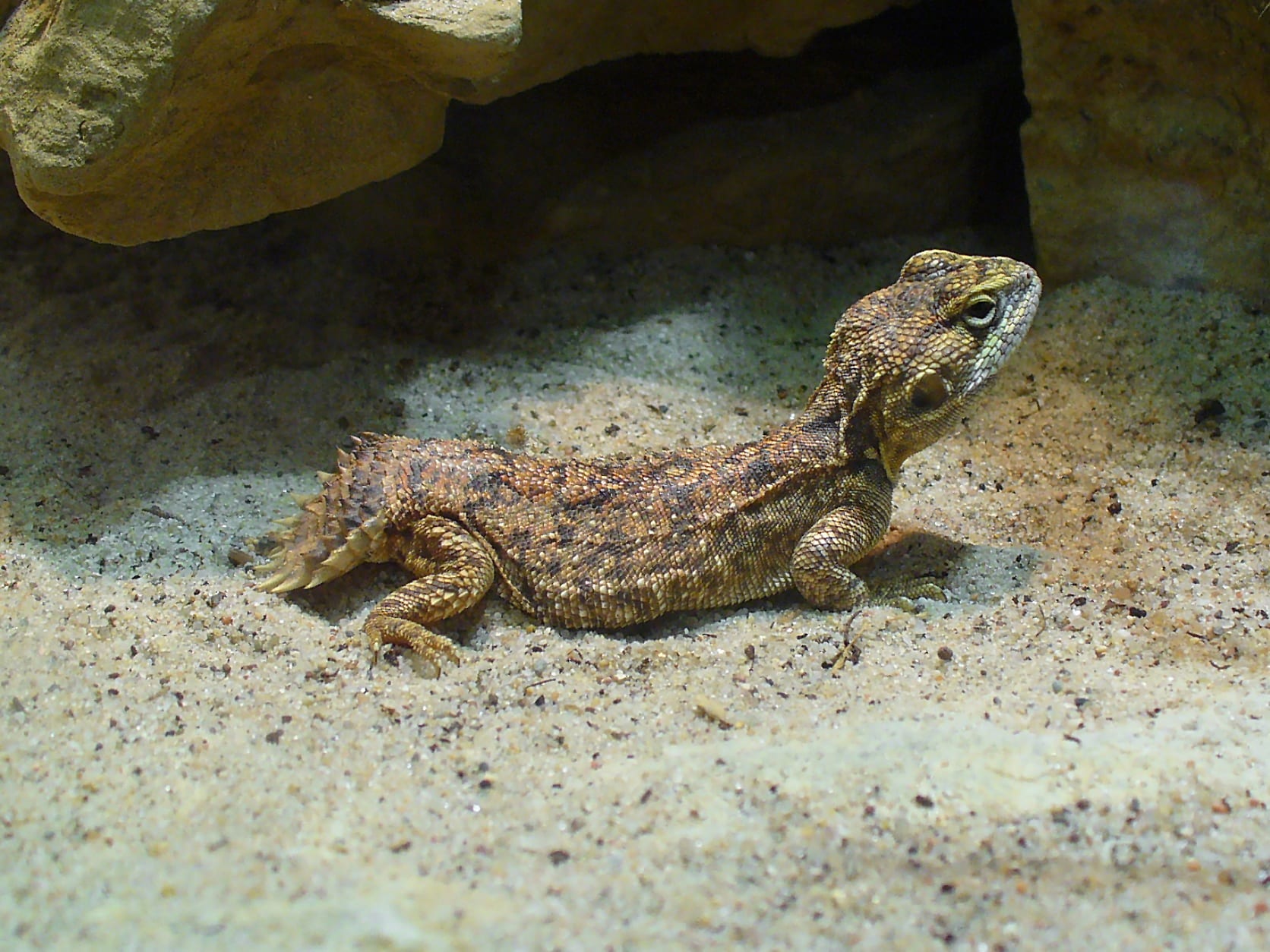
 © H. Zell / CC BY-SA 3.0
Turnip-Tailed Agama
The Turnip-Tailed Agama is instantly recognizable for its unusual tail, which flares into a disc-like base before tapering into a thin, whip-like tip — a shape unlike any other agamid. It is the smallest species in the genus Xenagama, and males grow larger than females. Native to the arid Horn of Africa, it thrives in dry conditions and is often seen basking energetically during the day. With its striking tail shape and lively movement, it makes an appealing next step for keepers who already have some reptile-keeping experience.
View Turnip-Tailed Agama encyclopedia →0% commission on your first sales!Register by September 30, 2026 and your first 2 sales are commission-free!
Breeder Wanted!
List on BreederDirect and sell directly to customers nationwide!
6 Transparency Promises from Br-Choku
Every Reptiles & Amphibians from verified Breeder breeders includes complete information: morph, genetics, feeding requirements, and temperament details.
- Morph Information
- Actual Photos
- Feeding Information
- Temperament Information
- Genetics Information
- Age (Months)
Browse all 280 breeds
Difficulty Level
Feeding Type
Temperament
Verified breeders wanted for Reptiles & Amphibians
Breeders are signing up now ahead of launch. Subscribe to be notified when new listings go live.
Getting alerts is free with a member account. When new listings match your saved search, we'll notify you by email and in-app.
Browse other categories
Verified breeders (preview)
Are you raising reptiles & amphibians?
Register as a breeder and connect with buyers directly.
Apply as a breederAbout Turnip-Tailed Agama
The smallest Xenagama species, known for its disc-shaped tail base. Native to the arid Horn of Africa, it suits keepers with some reptile experience.
7 things to know before welcoming a Turnip-Tailed Agama
1Build an Arid Setup
Since this species comes from the arid Horn of Africa, keep humidity low and provide dry substrate along with a dedicated basking spot. Adding rock formations or hides for shelter helps it settle in.
2Watch the Distinctive Tail
The most striking feature of this species is its tail, which flares into a wide disc at the base before narrowing into a thin, thread-like tip. While it's fascinating to observe up close, avoid grabbing the tail roughly, as it can be dropped like other agamids.
3Males Are Larger Than Females
In this genus, males grow noticeably larger than females. If keeping multiple individuals, factor in this size difference and temperament when planning enclosure space and compatibility between animals.
4An Insectivorous Diet
Feed primarily on insects such as crickets, dusted with calcium and vitamin supplements. Despite being an arid-adapted species, occasional misting alongside a water dish helps ensure it has chances to hydrate.
5Provide a Daytime Thermal Gradient
This species is highly active and basks readily during the day, so setting up both a basking spot and a cooler zone to create a thermal gradient supports its wellbeing. Consider adding UVB lighting as well.
6Understand Why It Suits Experienced Keepers
This species is generally considered suited to keepers with some experience. Managing arid-style temperature and humidity, along with understanding its distinctive behavior, is easier with a foundation in reptile care.
7Prepare Equipment Before Bringing One Home
Setting up the enclosure, basking light, UVB lighting, dry substrate, and hides before bringing your agama home helps it adjust smoothly to its new environment.
Frequently asked questions about Turnip-Tailed Agama
- Q.Can beginners keep a Turnip-Tailed Agama?
- A.This species is generally categorized as suited to intermediate keepers. Managing an arid-style setup and understanding its particular temperament call for some prior reptile-keeping experience.
- Q.Why does it have such an unusual tail shape?
- A.Its tail base flares into a wide disc before tapering into a thin, thread-like tip — a shape characteristic of the genus Xenagama that clearly sets it apart from other agamid species.
- Q.How can males and females be told apart?
- A.In this genus, males tend to grow larger than females. If you're considering keeping more than one, it's worth factoring in this size difference along with individual temperament.
- Q.Is this species covered by CITES?
- A.The Turnip-Tailed Agama is not listed under CITES.
- Q.What kind of enclosure setup is needed?
- A.Since it comes from the arid Horn of Africa, the basic setup combines dry substrate, a basking spot, and UVB lighting. Adding a hide or shelter also helps it feel secure.
Useful tools for Turnip-Tailed Agama care
Learn more about Turnip-Tailed Agama in the encyclopedia
View Turnip-Tailed Agama encyclopedia entry →
Care difficulty, lifespan, size and diet — all basics covered.
More in this category
Can't find the one you're looking for?
Post your wishes for free and breeders with matching animals will contact you with introductions.