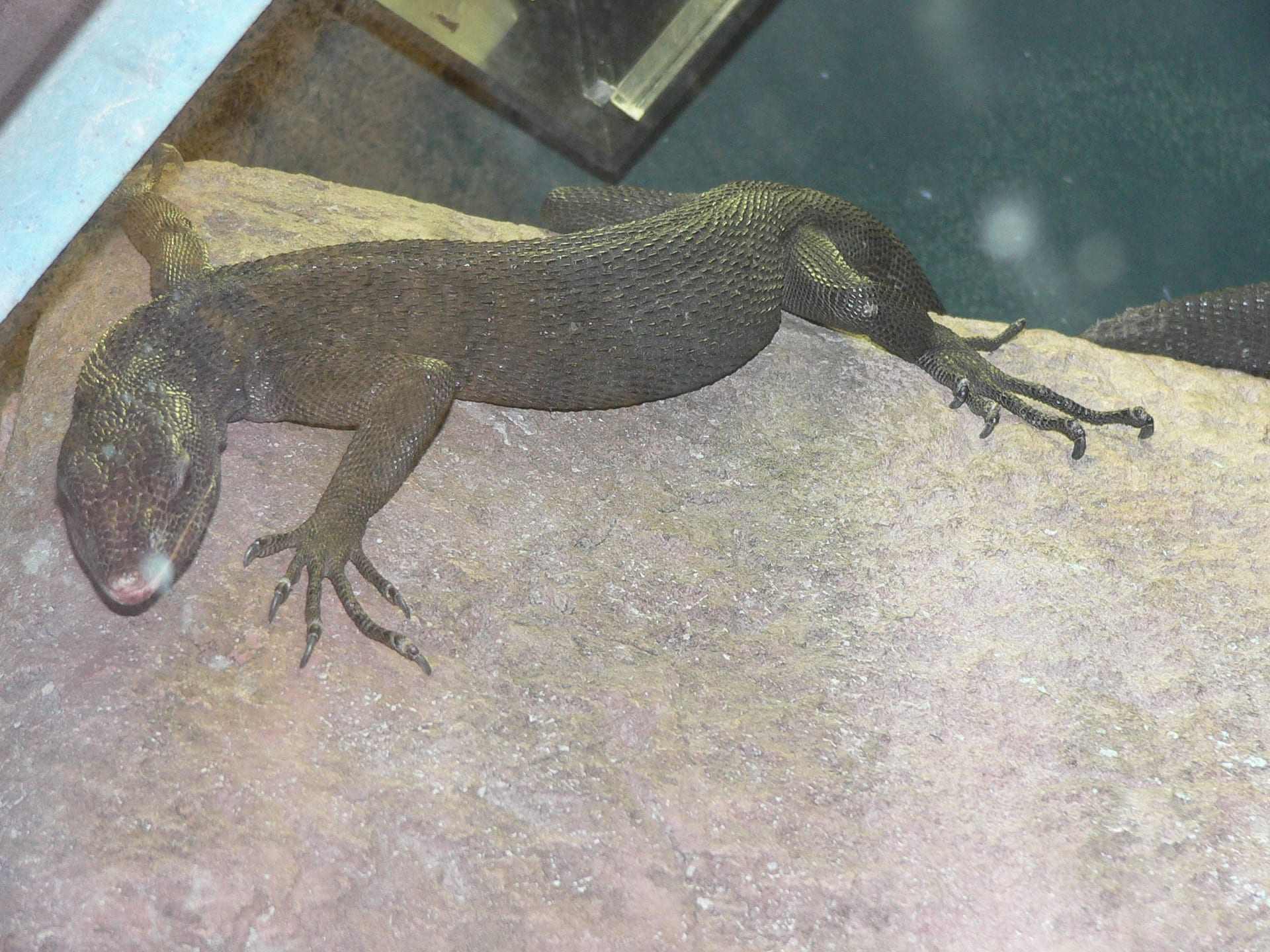
 © Mark Pellegrini / CC BY-SA 2.5
Black Tree Monitor
The Black Tree Monitor is a striking, all-black monitor lizard found only on the Aru Islands of Indonesia. Using its long prehensile tail and sharp claws, it moves through the branches with remarkable agility, giving it a wild, distinctive presence unlike other monitor species. At 90 to 120 cm in total length, it's relatively compact for its group, combining arboreal agility with quick, precise movements. Many individuals are naturally alert and can be flighty, so this species is generally considered suitable for experienced keepers who can build trust gradually while providing a properly structured enclosure.
View Black Tree Monitor encyclopedia →Breeder Wanted!
List on BreederDirect and sell directly to customers nationwide!
BreederDirect's 6 Transparency Commitments
Every Reptiles & Amphibians from verified Breeder breeders includes complete information: morph, genetics, feeding requirements, and temperament details.
- Morph Information
- Actual Photos
- Feeding Information
- Temperament Information
- Genetics Information
- Age (Months)
Browse all 319 breeds
Difficulty Level
Feeding Type
Temperament
Verified breeders wanted for Reptiles & Amphibians
Breeders are signing up now ahead of launch. Subscribe to be notified when new listings go live.
Getting alerts is free with a member account. When new listings match your saved search, we'll notify you by email and in-app.
Browse other categories
Verified breeders (preview)

Are you raising reptiles & amphibians?
Register as a breeder and connect with buyers directly.
Apply as a breederBlack Tree Monitor key facts
- Care level
- Advanced
- Lifespan
- 15-20 years
- Size
- 90-120cm
- Temperature
- Basking 49-54°C / cool side 27-28°C / ambient 27-28°C at night
- Humidity
- 70% or above
- Diet
- Crickets, dubia roaches and other insects, with rodents as a supplement
- Temperature & Humidity
- Figures published for the tree monitors call for a gradient reaching from a basking site of 49-54C down to cool areas of 27-28C. Supplemental heat is sometimes used at night to hold ambient temperatures at 27-28C. Humidity must not fall below 70 per cent; these lizards dehydrate easily and rehydrate only by drinking.
- Enclosure
- It is strongly arboreal, so climbing surface and height matter more than floor area. An enclosure of roughly 120 cm wide by 180 cm tall by 60 cm deep is cited for a pair, and larger is better. Use a deep leaf-litter layer and branches of varying thickness arranged both vertically and horizontally. Ventilation holes are considered unnecessary, since high humidity must be held.
- Diet & Feeding
- In the wild it is an arboreal insectivore taking mainly arthropods, with small vertebrates as well. In captivity base the diet on crickets, dubia and other roaches with rodents as a supplement, dusting feeders with calcium.
- Temperament
- It is nervous and fast, fleeing through vegetation when threatened and biting if cornered. It is not suited to handling and is kept singly or in pairs. Water is best offered in several small, shallow containers secured among the branches.
- Notes
- Varanus spp. (excluding species listed in Appendix I) are listed on CITES Appendix II, so import requires an export permit; no Japanese registration certificate is needed for Appendix II. Of the varanids, only the Komodo dragon and the crocodile monitor are specified animals under Japanese law, and this species is not among them. The IUCN assesses it as Data Deficient and its range is confined to the Aru Islands, so confirm the origin of any animal you acquire.
About Black Tree Monitor
An all-black monitor lizard native only to Indonesia's Aru Islands. Arboreal and agile at 90-120 cm long, it's a striking species best suited to experienced keepers.
7 things to know before welcoming a Black Tree Monitor
1Tall, arboreal enclosure
Black Tree Monitors spend much of their time above ground, so they need a tall enclosure with sturdy branches and driftwood to climb rather than a wide, ground-level setup. Vertical space matters more than floor space for this species.
2Hot, humid climate care
In their native Aru Islands, these monitors experience a consistently hot and humid tropical climate. A basking light, UVB lighting, and regular misting help maintain the temperature gradient and humidity levels they need to thrive.
3Naturally alert temperament
Many individuals are wary and easily stressed by sudden movement or forceful handling. Give a new arrival time to settle into its enclosure first, then build trust gradually through calm, consistent interaction.
4Sharp claws, strong tail
Sharp claws built for climbing and a long, powerful tail mean handling should be approached carefully, ideally with protective gloves. Always read the animal's body language before attempting to handle it.
5An advanced-level species
Between precise temperature and humidity requirements and a temperament that needs patient handling, this species asks a lot of its keeper. It's best suited to those with prior monitor lizard experience or who are prepared to research thoroughly beforehand.
6Primarily carnivorous diet
This species is largely carnivorous, feeding mainly on insects and small prey animals in the wild. A varied diet with appropriate calcium and vitamin supplementation is essential to support healthy growth.
7Prepare equipment in advance
A large enclosure, heating, and lighting equipment all need to be in place before your monitor arrives. Since adults reach a substantial size, plan your space and gear with their full-grown dimensions in mind.
Frequently asked questions about Black Tree Monitor
- Q.Can beginners keep this species?
- A.This species requires careful temperature, humidity, and handling knowledge, so it's generally considered suitable for experienced keepers. We recommend gaining reptile-keeping experience before bringing one home.
- Q.How large does it grow?
- A.Adults reach a total length of about 90 to 120 cm, which is relatively compact for its group of monitors. You'll still need to prepare enclosure space with the full-grown size in mind.
- Q.Will it bond with its keeper?
- A.Many individuals tend to be wary and easily stressed. With patient, gradual handling over time, some individuals can become calmer around their keeper.
- Q.What does it eat?
- A.This species is primarily carnivorous, feeding mainly on insects and small prey animals. A nutritionally balanced diet with calcium and vitamin supplementation is recommended.
- Q.Are there any legal restrictions?
- A.Black Tree Monitor is listed in CITES Appendix II. International trade requires a permit from the exporting country, but as far as CITES is concerned, no registration is needed to buy or sell individuals already legally in Japan.
Useful tools for Black Tree Monitor care
Learn more about Black Tree Monitor in the encyclopedia
View Black Tree Monitor encyclopedia entry →
Care difficulty, lifespan, size and diet — all basics covered.
More in this category
Can't find the one you're looking for?
Post your wishes for free and breeders with matching animals will contact you with introductions.