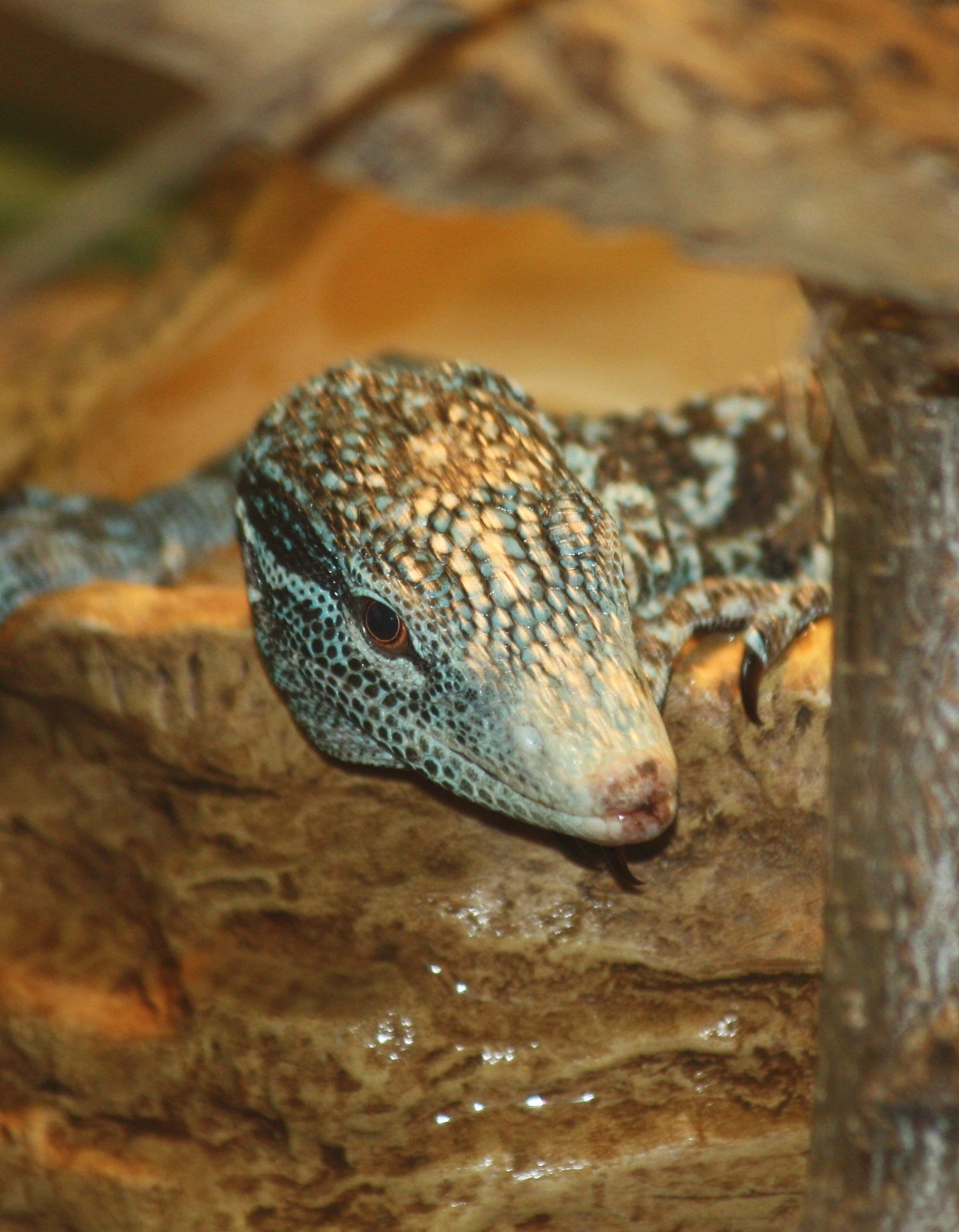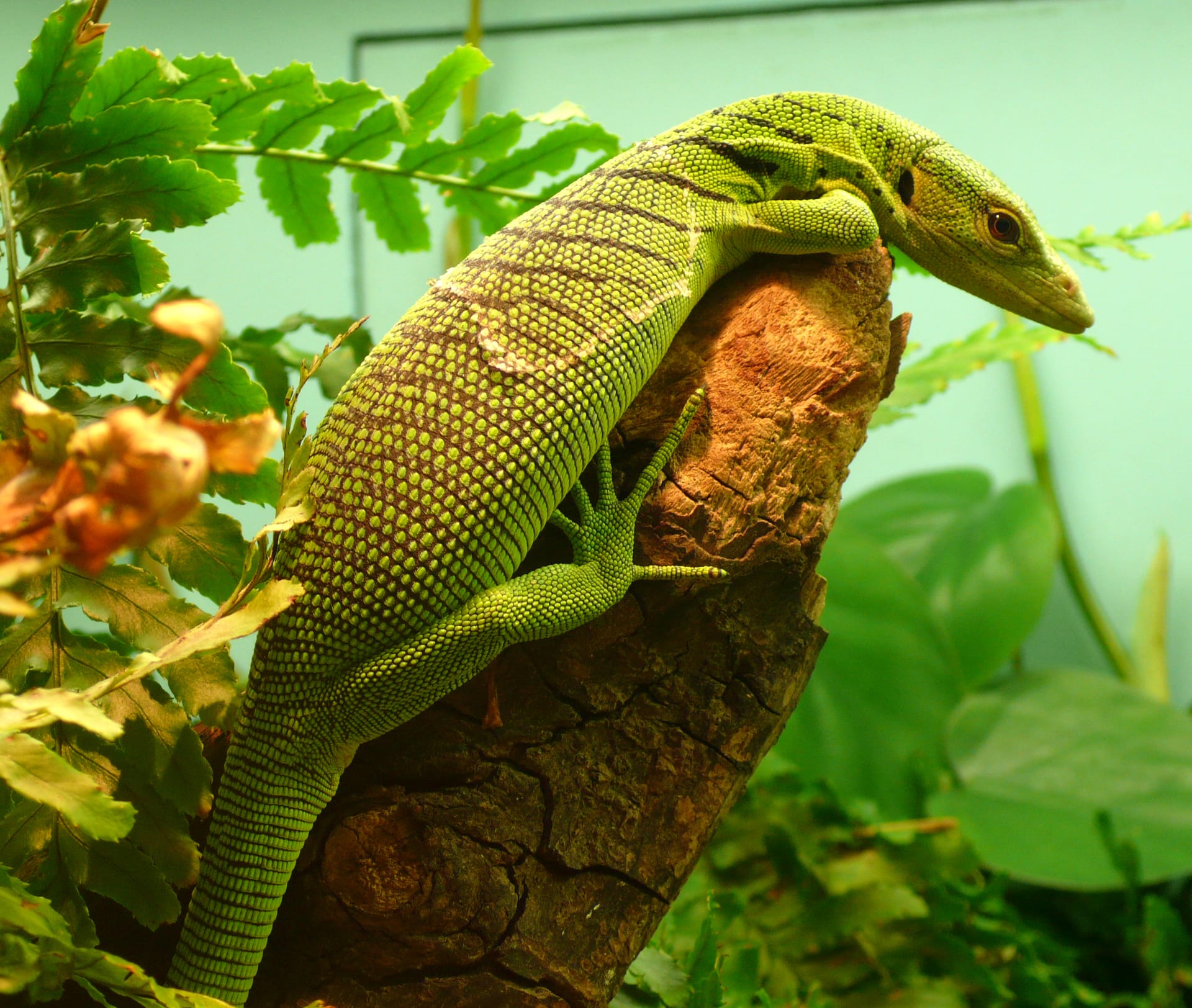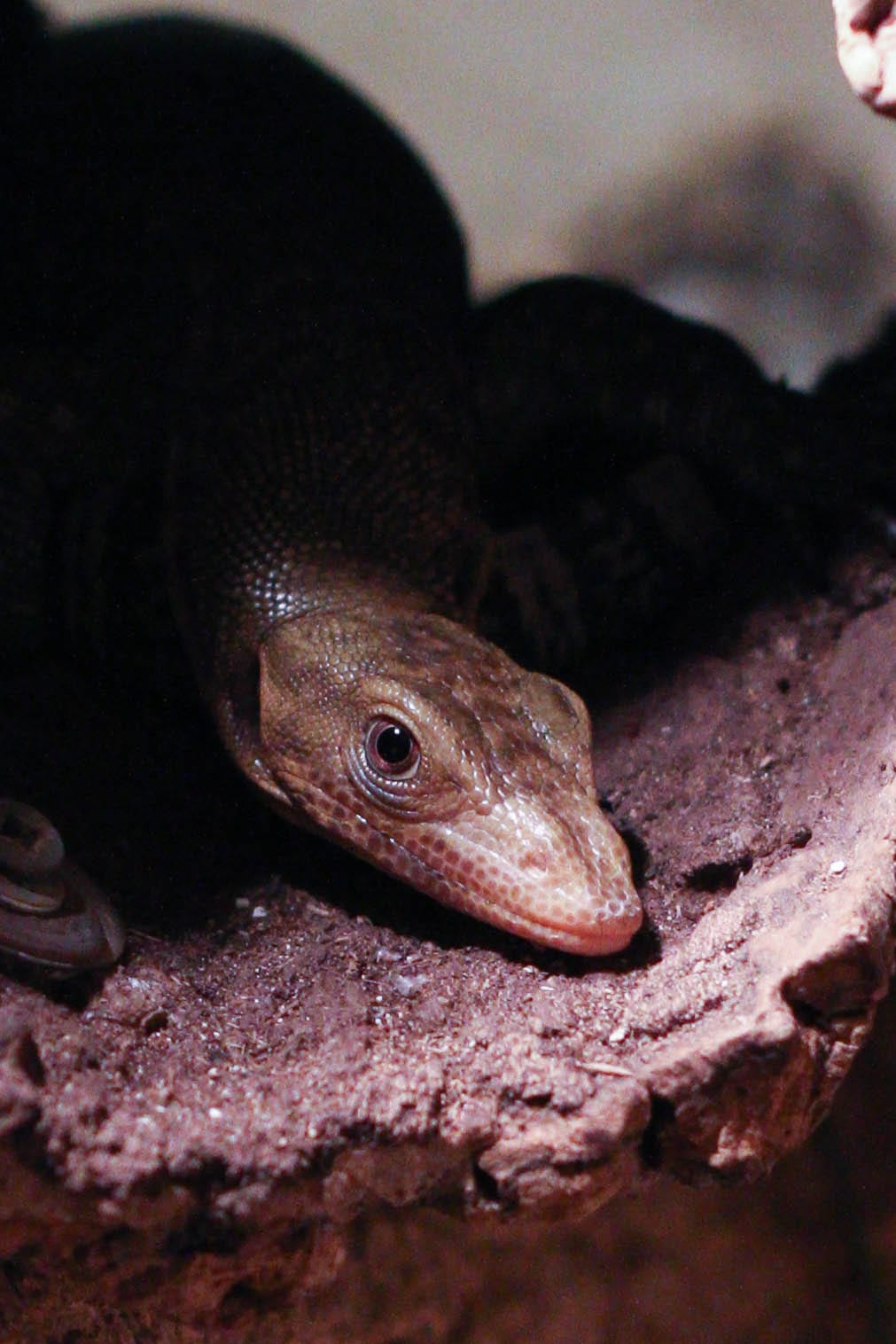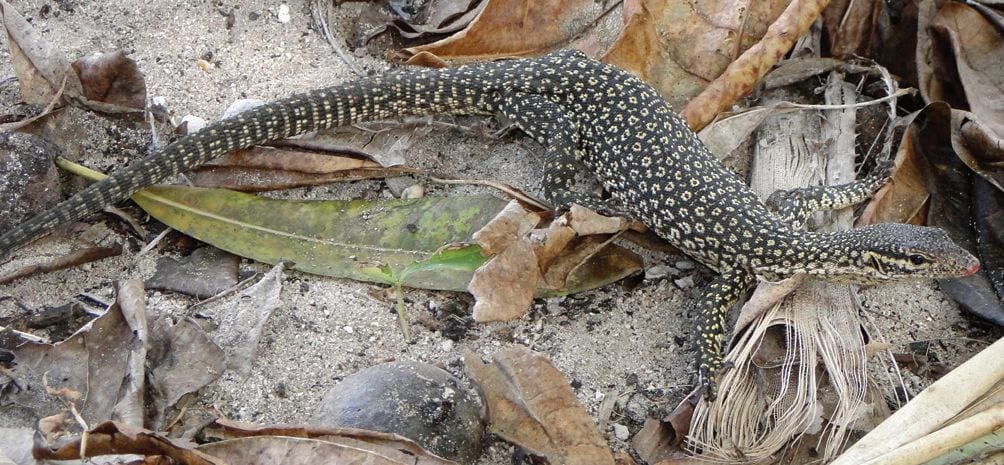
Source: Wikimedia Commons
Black Tree Monitor
AdvancedVaranus beccarii
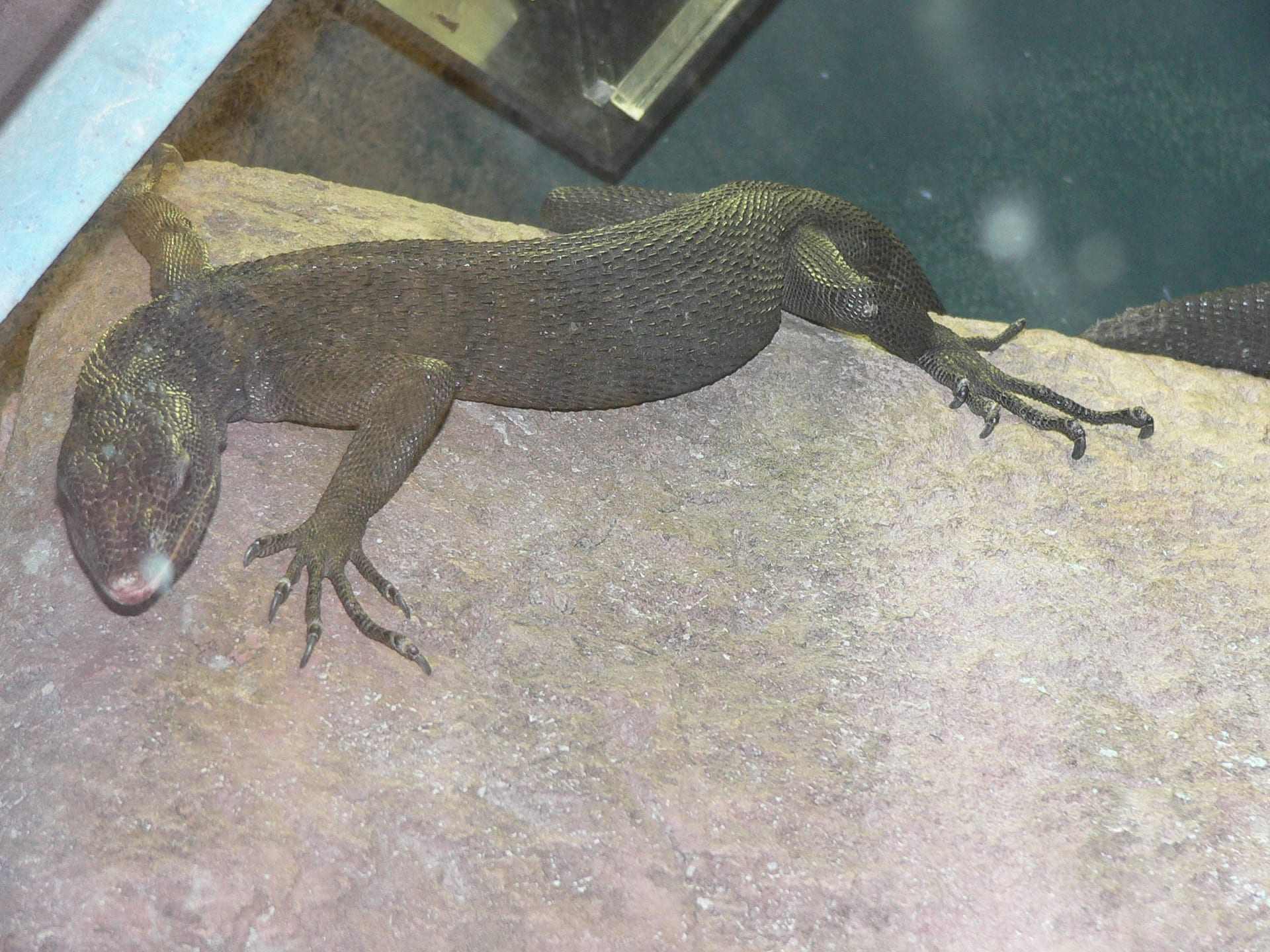
An all-black tree monitor found only on the Aru Islands of Indonesia. At 90-120 cm it is relatively small for the group, an arboreal species that moves skilfully through the canopy with a long prehensile tail and sharp claws.
Difficulty
Advanced
Lifespan
15-20 years
Size
90-120cm
Humidity
70%
Diet
Crickets, dubia roaches and other insects, with rodents as a supplement
About
Varanus beccarii is an arboreal varanid found only on the Aru Islands of Indonesia. A member of the tree monitor group, the Varanus prasinus complex, it is relatively small for that group at 90 to 120 cm in total length. As its name suggests it is uniformly black, in contrast to the vivid greens and blues of its relatives. It wraps its long prehensile tail around branches and grips slender ones with long claws and enlarged scales on the soles of its feet. Because its range is confined to the Aru Islands its status is hard to assess, and the IUCN lists it as Data Deficient. In captivity, as with the other tree monitors, it needs both a hot basking site and humidity that never falls below 70 per cent. It dehydrates very easily and rehydrates only by drinking. It requires a tall enclosure with a deep leaf-litter layer and climbing routes built from branches of varying thickness. Nervous and fast-moving, it is demanding to keep.
Source: Wikipedia (CC BY-SA 4.0)
Lifespan of the Black Tree Monitor
The Black Tree Monitor lives 15-20 years.
Size of the Black Tree Monitor
The Black Tree Monitor grows to 90-120cm.
Basic Info
Origin
The Aru Islands, Indonesia
Lifespan
15-20 years
Size
90-120cm
Humidity
70%
Care Specifications
Semi-aggressivePairBreeding: Hard
Sources: Reptiles Magazine: The Tree Monitors / Chameleon Academy: Blue Tree Monitors / Wikipedia (English) / Reptile Database
References & Sources
Edited & verified by: BreederDirect editorial team
The taxonomic, regulatory, and husbandry data on this page are compiled and verified against the authoritative primary sources below.
Taxonomy & Authority
Accepted name: Varanus beccarii (Doria, 1874)
Authority databases: GBIF · Reptile Database
Nomenclature follows global taxonomic authority databases.
Regulations & Conservation Status
CITES Appendix IIIUCN DD · Data Deficient
Varanidae spp. are listed in CITES Appendix II. Because of Appendix II listing, an international CITES registration certificate is not required, but an export permit issued by the exporting country is necessary for importation. In Japan, only 2 species of Varanidae are designated as Specified Animals; this species is not included. It does not fall under Designated Invasive Species under the Invasive Species Act.
Sources: CITES Appendices (Varanidae spp., Appendix II) / IUCN Red List
Regulations may change. Always verify the latest information with the relevant authorities.
Black Tree Monitor Listings
Loading latest listingsFind listings for this species