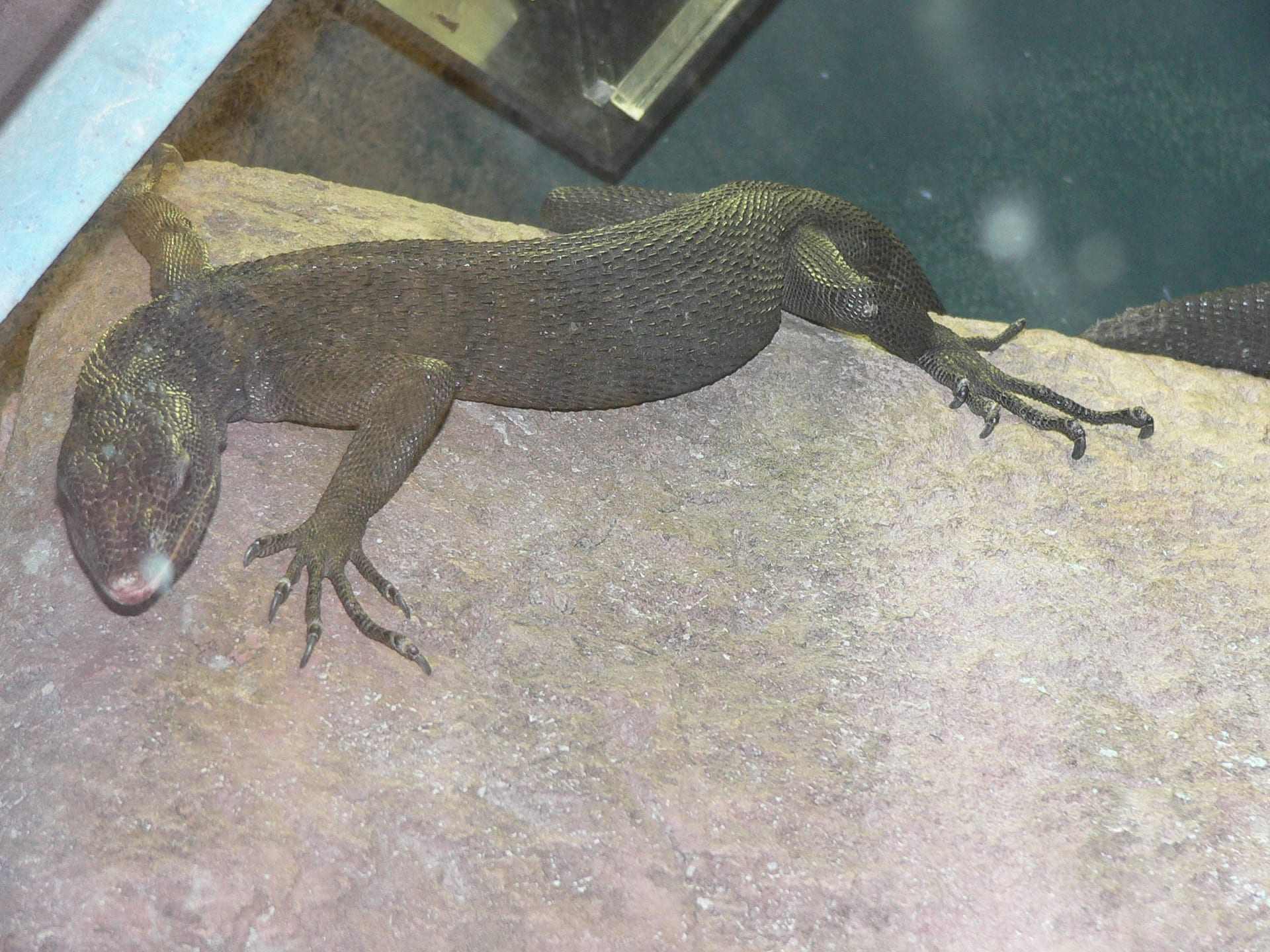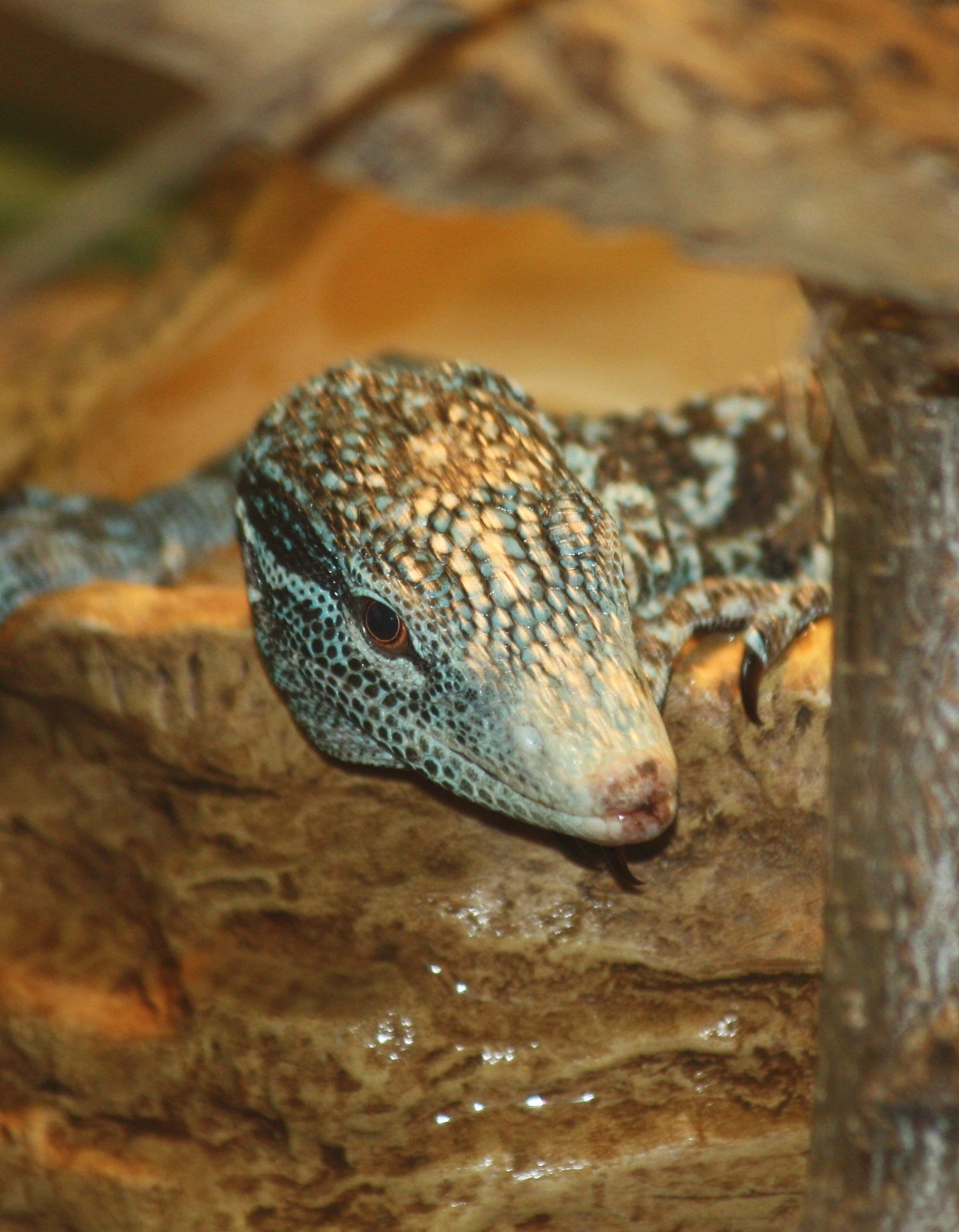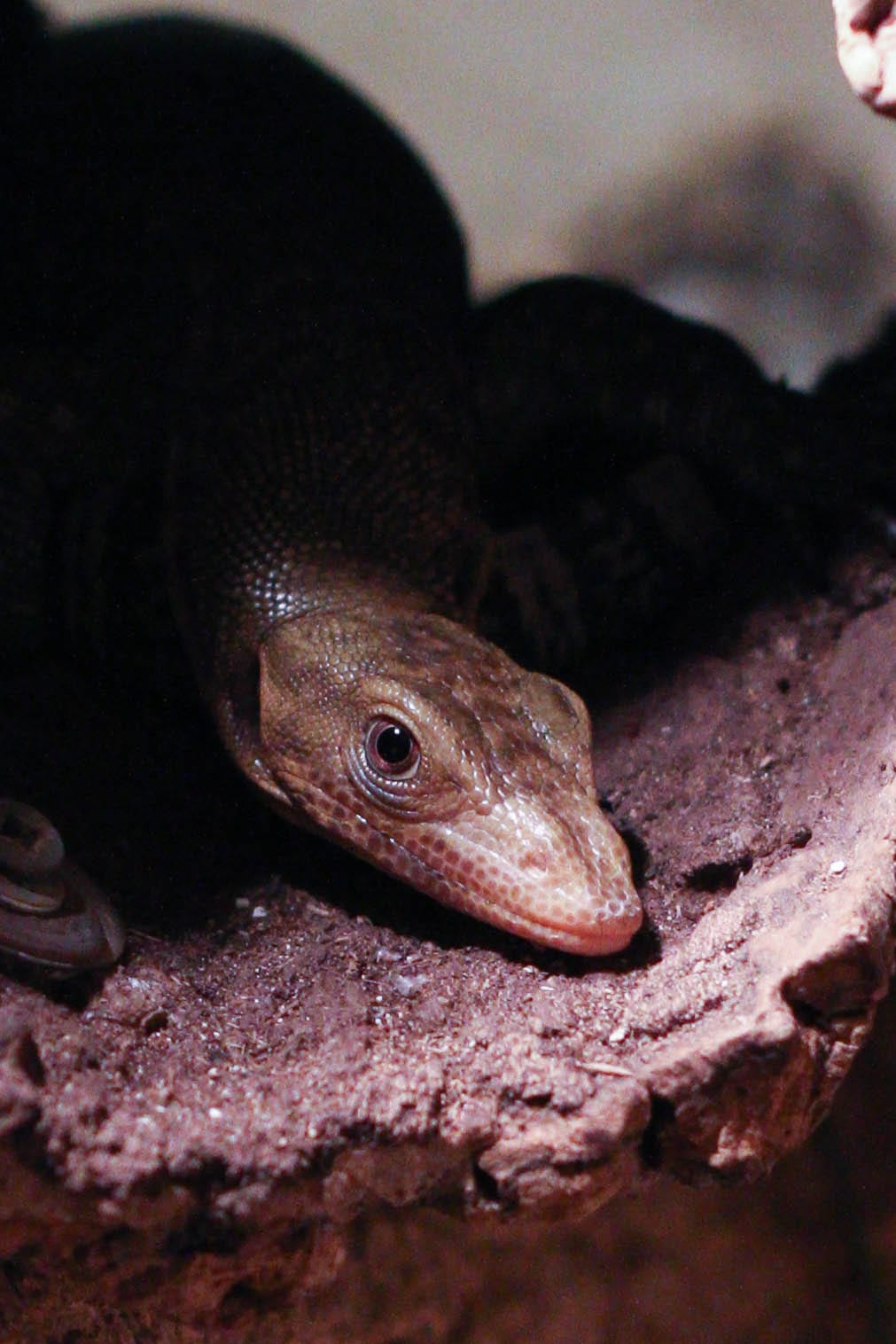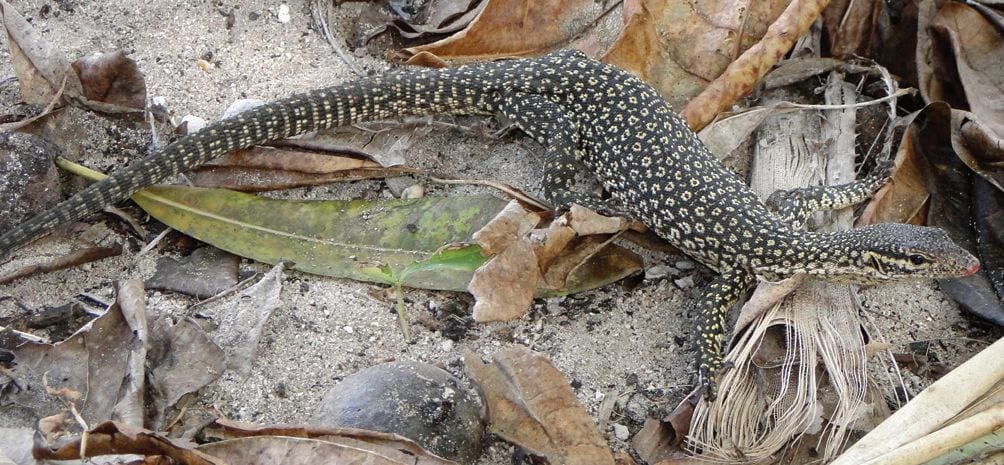
Source: Wikimedia Commons
Emerald Tree Monitor
AdvancedVaranus prasinus
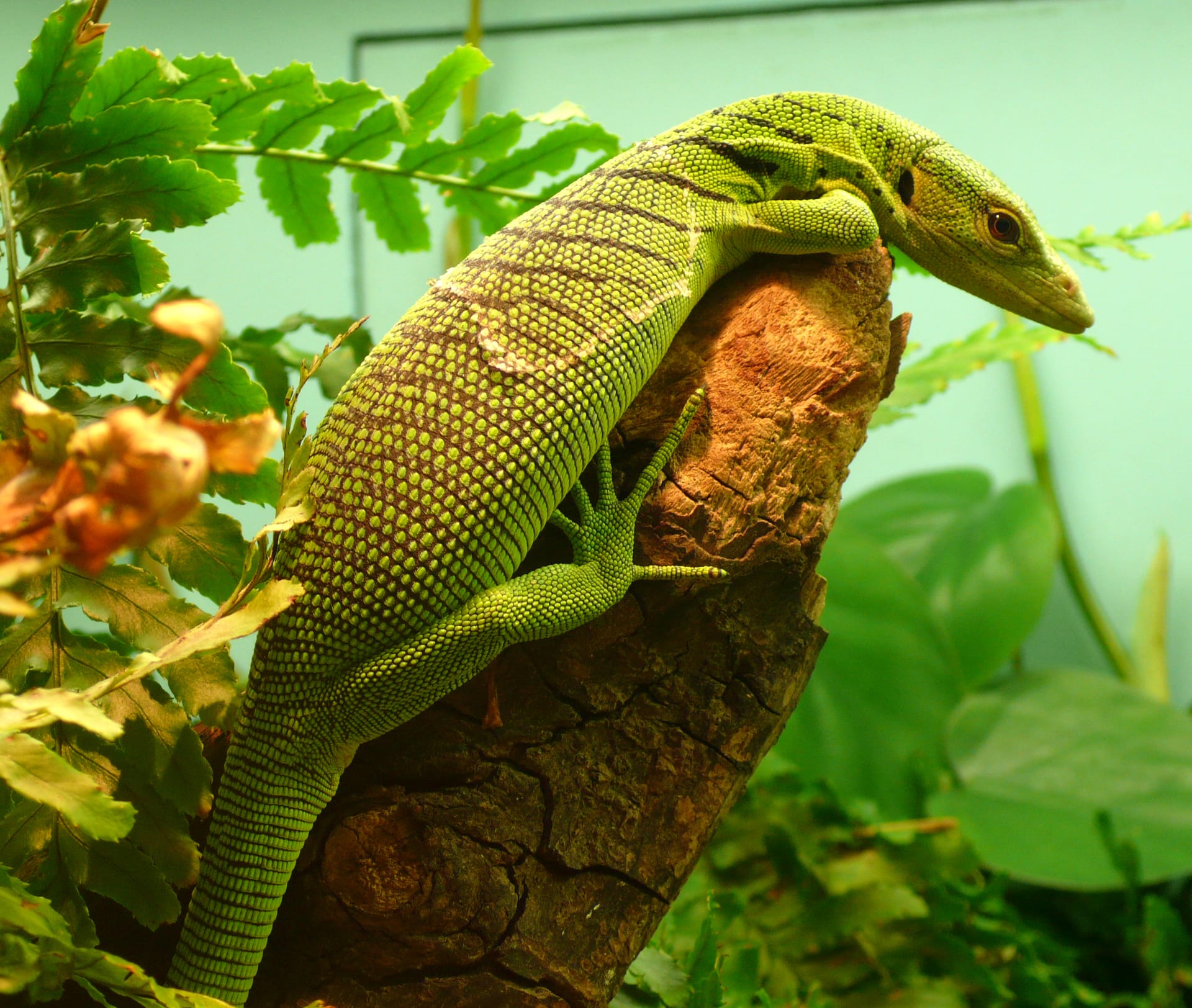
A slender, brilliantly green arboreal monitor of 75-100 cm that grips slender branches with a prehensile tail and long claws. Unusually for a varanid, it is a social species that lives in small groups.
Difficulty
Advanced
Lifespan
15-20 years
Size
75-100cm
Humidity
70%
Diet
Crickets, dubia roaches and other insects, with rodents as a supplement
About
Varanus prasinus is an arboreal varanid of New Guinea and adjacent islands, the best known and most studied member of the tree monitor group, belonging to the Indo-Australian subgenus Euprepiosaurus. It measures 75 to 100 cm with a slender body that helps it support itself on narrow branches, and it grips them with a prehensile tail and long claws; enlarged scales on the soles of its feet are a further arboreal adaptation. Unlike most varanids, which lash with the tail in defence, this species protects its tail instead. When threatened it flees through vegetation and bites if cornered. It is one of the few social monitors, living in small groups made up of a dominant male, several females and a few other males and juveniles. In captivity it requires both high humidity and a hot basking site and dehydrates very easily. Clutches of two to six eggs are laid, hatching after 148 to 215 days when incubated at 28 to 31C.
Source: Wikipedia (CC BY-SA 4.0)
Lifespan of the Emerald Tree Monitor
The Emerald Tree Monitor lives 15-20 years.
Size of the Emerald Tree Monitor
The Emerald Tree Monitor grows to 75-100cm.
Basic Info
Origin
New Guinea and adjacent islands, some islands of the Torres Strait, with records also reported from Queensland, Australia
Lifespan
15-20 years
Size
75-100cm
Care Specifications
Semi-aggressiveGroupBreeding: Hard
Sources: Reptiles Magazine: The Tree Monitors / Chameleon Academy: Blue Tree Monitors / Wikipedia (English) / Reptile Database
References & Sources
Edited & verified by: BreederDirect editorial team
The taxonomic, regulatory, and husbandry data on this page are compiled and verified against the authoritative primary sources below.
Taxonomy & Authority
Accepted name: Varanus prasinus (Schlegel, 1839)
Authority databases: GBIF · Reptile Database
Nomenclature follows global taxonomic authority databases.
Regulations & Conservation Status
CITES Appendix IIIUCN LC · Least Concern
Varanidae spp. are listed in CITES Appendix II. Because of Appendix II listing, an international CITES registration certificate is not required, but an export permit issued by the exporting country is necessary for importation. In Japan, only 2 species of Varanidae are designated as Specified Animals; this species is not included. It does not fall under Designated Invasive Species under the Invasive Species Act.
Sources: CITES Appendices (Varanidae spp., Appendix II) / IUCN Red List
Regulations may change. Always verify the latest information with the relevant authorities.
Emerald Tree Monitor Listings
Loading latest listingsFind listings for this species