モニターリザードの環境エンリッチメント|知能が高い爬虫類の飼育の工夫
モニターリザードの環境エンリッチメントを、隠し餌や散布給餌などの採餌の工夫、月1〜2回のレイアウト変更、5〜10分のクリッカートレーニングまで紹介します。知能が高い爬虫類の飼育の工夫が具体的に分かります。

この記事のポイント
モニターリザードの環境エンリッチメントを、隠し餌や散布給餌などの採餌の工夫、月1〜2回のレイアウト変更、5〜10分のクリッカートレーニングまで紹介します。知能が高い爬虫類の飼育の工夫が具体的に分かります。
関連品種
※本記事はアフィリエイト広告(Amazonアソシエイト・楽天アフィリエイト)を含みます
モニターリザードに環境エンリッチメントが必要な理由
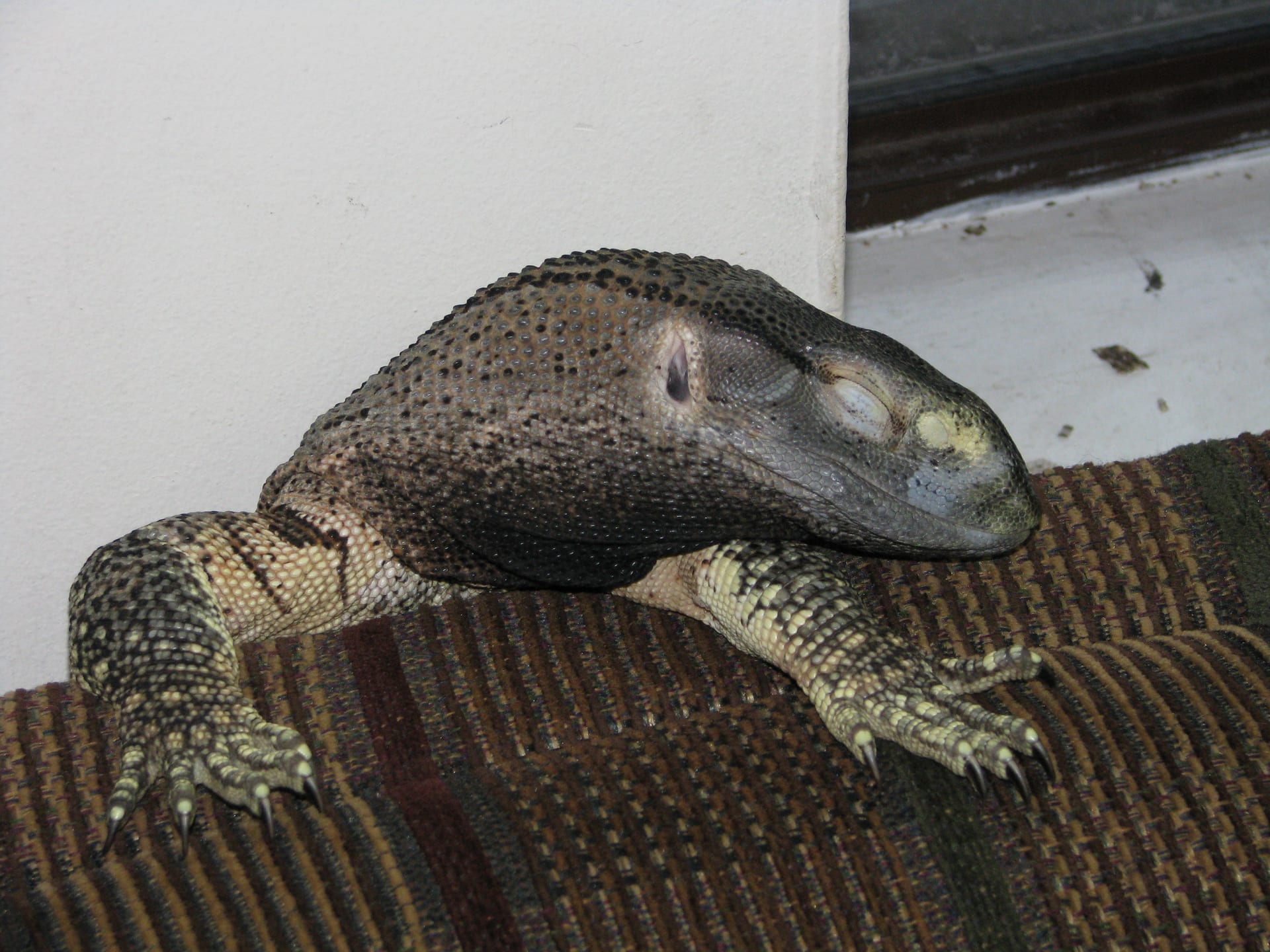
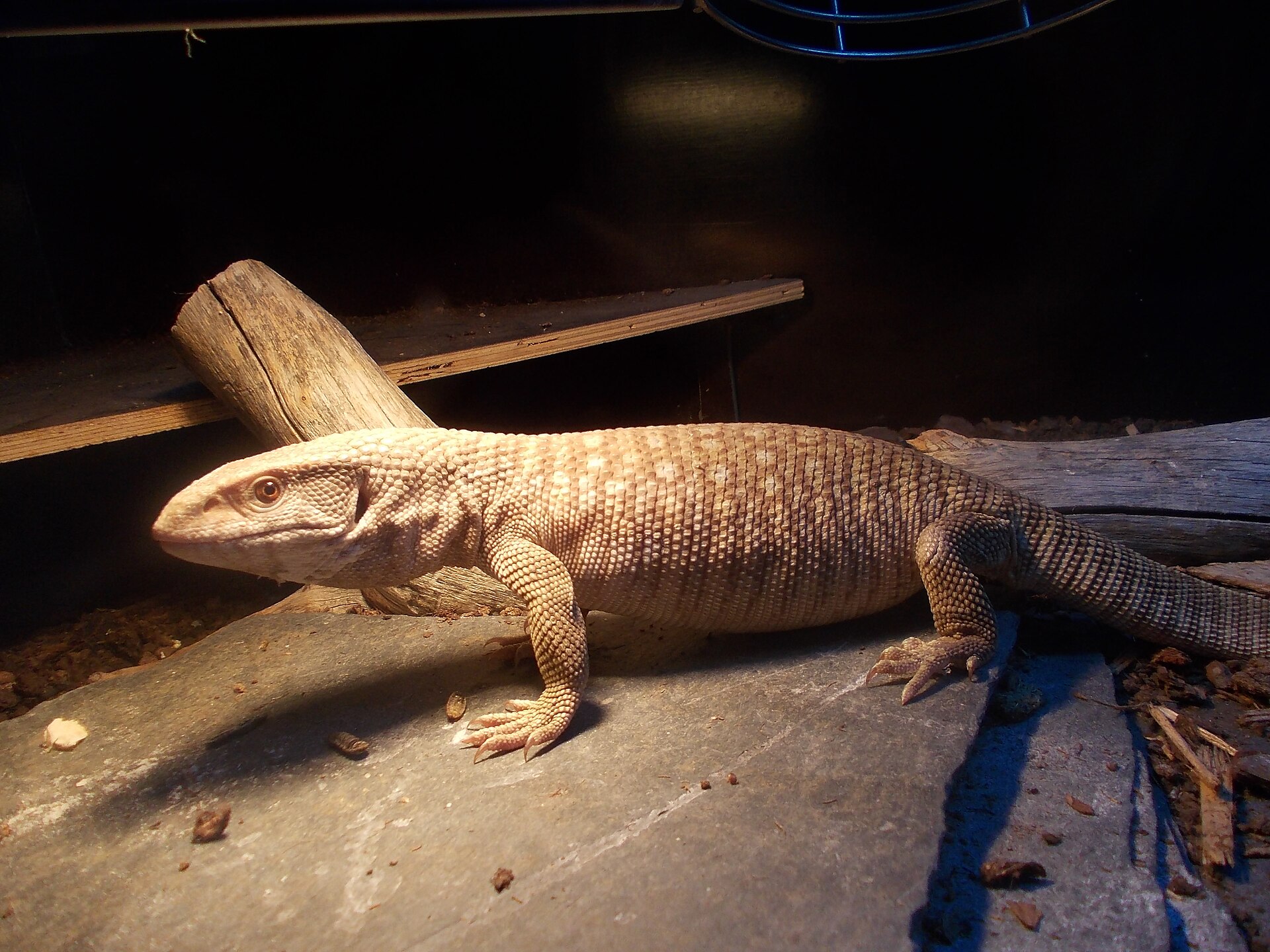
モニターリザード(オオトカゲ)は、爬虫類の中でも群を抜いて高い知能を持つ生き物です。哺乳類に匹敵するほどの問題解決能力を持ち、個体を識別する記憶力、さらには道具的な学習能力まで備えているとされています。野生下では広大なテリトリーを巡回し、獲物を追い、岩や倒木を調べ、巣穴を掘るといった多様な行動を一日中繰り返しています。
ところが飼育環境では、これらの行動のほとんどが制限されてしまいます。広さの限られたケージの中で毎日決まった場所に餌が置かれる状況は、高い知能を持つモニターにとって著しく刺激が乏しい世界です。その結果として現れるのが「退屈からくるストレス行動」です。
ストレスのサインとして代表的なものを以下に挙げます。
- ガラス面を延々と引っ掻き続ける(ガラスサーフィン)
- 食欲の低下や拒食
- ハンドリング時の攻撃性の増加
- 同じ場所をぐるぐると歩き続ける常同行動
- 免疫力の低下による疾病リスクの上昇
環境エンリッチメントとは、飼育動物が本来持つ行動欲求を満たすための工夫の総称です。モニターリザードの長期的な健康と福祉を維持するうえで、エンリッチメントは「あればいい」ものではなく「なくてはならない」ケアの一部です。
採餌エンリッチメント|食事の時間を狩りの時間に変える
野生のモニターが一日の大部分を費やす行動のひとつが「採餌」です。餌を探し、追いかけ、仕留めるプロセス全体が彼らの脳に豊富な刺激を与えています。飼育下でこのプロセスを再現することが、採餌エンリッチメントの目的です。
パズルフィーダー・隠し餌
餌を小さなタッパーや木箱の中に入れ、フタをして与えます。匂いを手がかりに探索し、開け方を試行錯誤する一連の行動が、脳への刺激になります。慣れてきたら難易度を上げ、複数のボックスのうち一箇所にだけ餌を隠す「どこにあるか探せ」形式にするとさらに効果的です。
散布給餌
ケージ内の複数箇所に餌を分散して置く方法です。「いつも同じ場所」をなくすだけで、モニターはケージ全体を積極的に探索するようになります。基材(床材)の下に埋めて嗅覚を使わせるのも有効です。
活き餌の活用
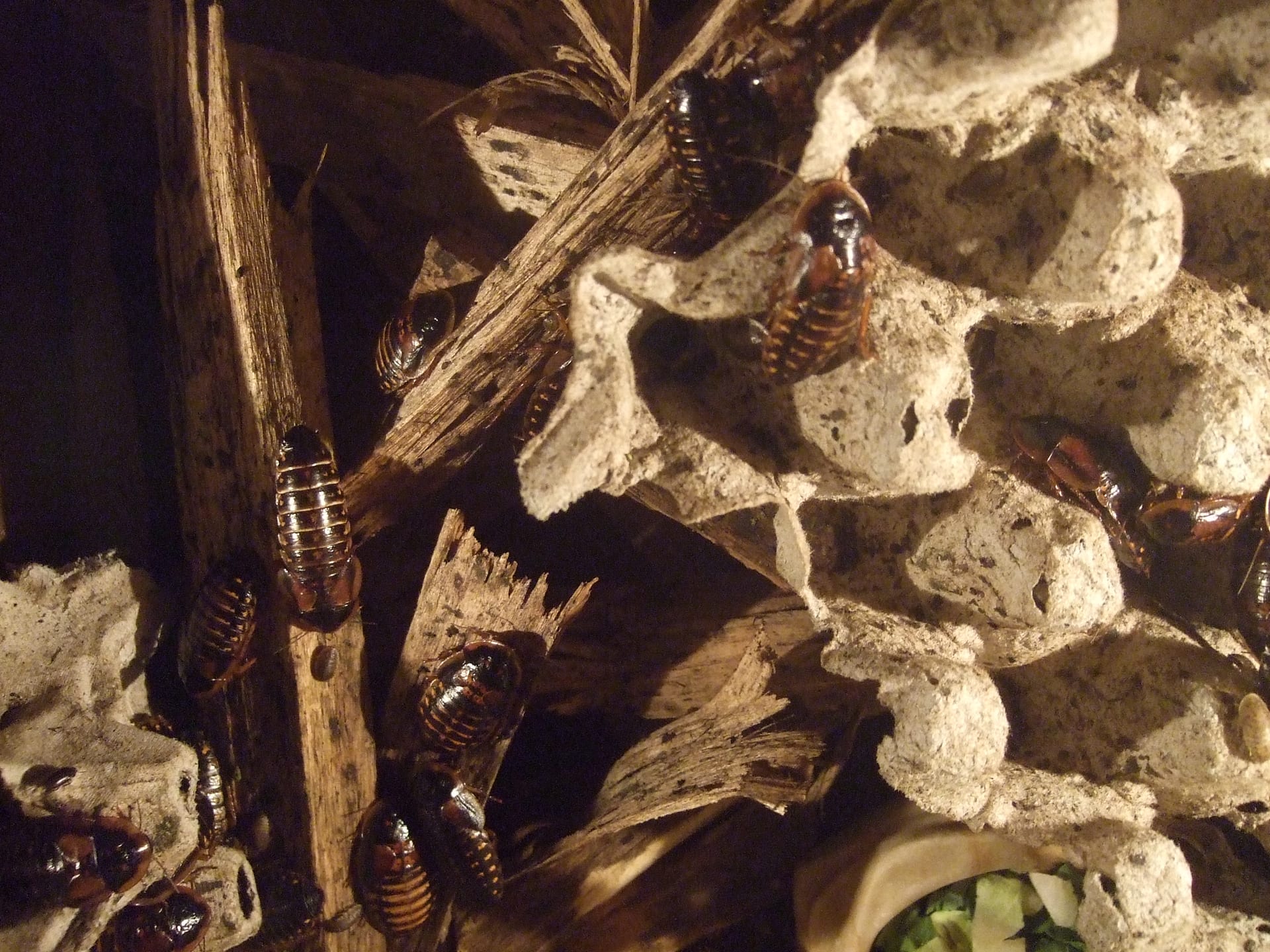
デュビアローチやコオロギ、ミルワームなどの活き餌をケージ内に放すと、捕食行動が自然な形で引き出されます。ただし活き餌が逃げ込める隙間が多すぎると回収困難になるため、シェルターの配置には注意が必要です。