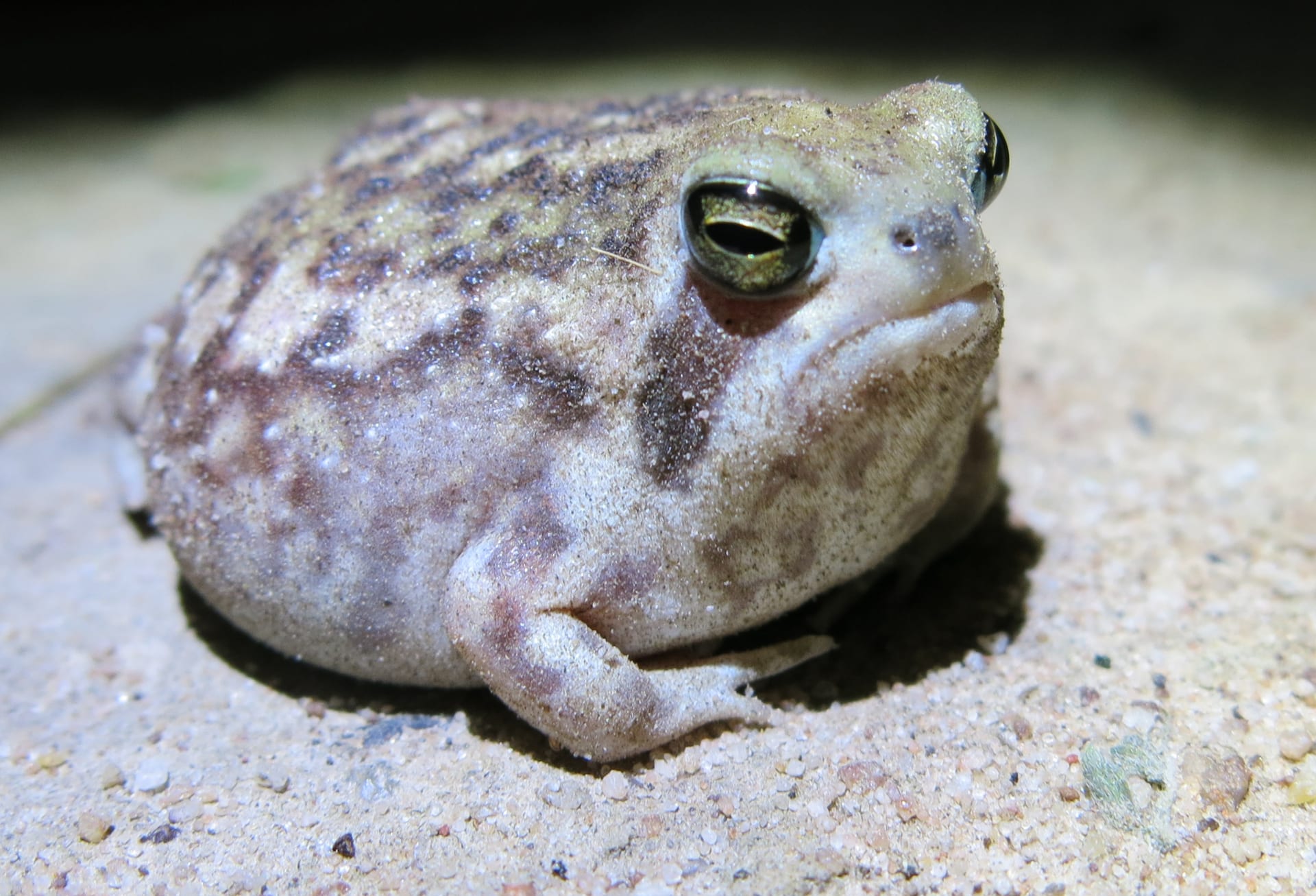
 © Ryanvanhuyssteen / CC BY-SA 4.0
Bushveld Rain Frog
The Bushveld rain frog is a burrowing amphibian from the sandy soils of southern Africa. Its round, balloon-like body and short limbs mean it can neither hop nor swim, giving it an endearing, slow-paced charm. When startled, it puffs itself up and lets out a small squeak before wriggling backward into its burrow — a quirky defense that has won over many keepers. Unlike most frogs, it skips the tadpole stage entirely, hatching directly into a tiny froglet. Calm and low-key rather than active, it's a frog best enjoyed by watching rather than handling.
View Bushveld Rain Frog encyclopedia →0% commission on your first sales!Register by September 30, 2026 and your first 2 sales are commission-free!
Breeder Wanted!
List on BreederDirect and sell directly to customers nationwide!
6 Transparency Promises from Br-Choku
Every Reptiles & Amphibians from verified Breeder breeders includes complete information: morph, genetics, feeding requirements, and temperament details.
- Morph Information
- Actual Photos
- Feeding Information
- Temperament Information
- Genetics Information
- Age (Months)
Browse all 280 breeds
Difficulty Level
Feeding Type
Temperament
Verified breeders wanted for Reptiles & Amphibians
Breeders are signing up now ahead of launch. Subscribe to be notified when new listings go live.
Getting alerts is free with a member account. When new listings match your saved search, we'll notify you by email and in-app.
Browse other categories
Verified breeders (preview)
Are you raising reptiles & amphibians?
Register as a breeder and connect with buyers directly.
Apply as a breederBushveld Rain Frog key facts
- Care level
- Intermediate
- Lifespan
- 5-8 years
- Size
- 3-6cm
- Temperature
- 21〜27℃
- Humidity
- 60〜80%
- Diet
- Termites, ants and small insects
- Temperature & Humidity
- Aim for 21-27 C and 60-80% humidity. It comes from dry habitats but still needs damp substrate, so keep the air moving and avoid stagnant humidity.
- Enclosure
- Provide at least 10 cm of coco fibre or sandy substrate for burrowing. In the wild it uses sandy to sandy-loam soils, so the medium must hold a burrow without collapsing. Use a well-ventilated lid.
- Diet & Feeding
- In the wild it eats termites, ants and other small invertebrates. In captivity offer small crickets and roaches dusted with a calcium and vitamin supplement.
- Temperament
- Nocturnal and almost always underground, so it is seldom seen. It is not aggressive, but when startled it inflates markedly and gives a high-pitched defensive call.
- Notes
- Digging it out or handling it often causes stress. Excessive damp leads to skin problems, so make sure the bottom of the substrate never becomes waterlogged.
About Bushveld Rain Frog
A burrowing frog from southern Africa with a round, balloon-like body — calm, quirky, and best known for puffing up when startled. Here's what to know before bringing one home.
7 things to know before welcoming a Bushveld Rain Frog
1Deep Substrate for Burrowing
As a burrowing species, provide substrate deep enough for it to fully bury itself. Layering drier and moister substrate lets it choose its preferred depth.
2Can't Hop or Swim
Its round body and short limbs mean it can't jump or swim. Keep water dishes shallow and easy to climb out of.
3Puffs Up and Squeaks When Startled
When threatened, it inflates its body and lets out a short squeak as a defense. Frequent handling that triggers this response should be kept to a minimum.
4No Tadpole Stage
Eggs hatch directly into froglets, skipping the tadpole stage entirely. This direct development makes captive breeding fairly challenging.
5Nocturnal and Burrowed by Day
It spends most daylight hours buried in the substrate and becomes active at night. Not seeing it during the day is normal — check in during feeding or misting.
6Diet of Small Insects
Feed small insects such as crickets sized appropriately for its mouth. Prey that's too large for its body can be a burden to eat.
7Better for Watching Than Handling
This isn't a species that enjoys handling — forcing contact can trigger defensive puffing and stress. It's best appreciated as an animal to observe.
Frequently asked questions about Bushveld Rain Frog
- Q.Can Bushveld rain frogs hop or swim?
- A.No — their round body and short limbs mean they can barely hop or swim at all. They mostly walk or burrow to get around.
- Q.Are they suitable for beginners?
- A.They're generally considered suited to intermediate keepers. Managing substrate depth and humidity for a burrowing species takes some prior amphibian experience.
- Q.Can I hold or handle one?
- A.They aren't a species that enjoys handling. Startling them causes puffing and squeaking, which can be stressful, so observation is recommended over contact.
- Q.How big do they get?
- A.Adults reach about 3 to 6 cm, with a rounded, compact body shape. That's noticeably smaller than many other frog species.
- Q.Are Bushveld rain frogs covered by CITES?
- A.No, Bushveld rain frogs fall outside CITES. It's still worth checking the latest listing details before bringing one home.
Useful tools for Bushveld Rain Frog care
Learn more about Bushveld Rain Frog in the encyclopedia
View Bushveld Rain Frog encyclopedia entry →
Care difficulty, lifespan, size and diet — all basics covered.
More in this category
Can't find the one you're looking for?
Post your wishes for free and breeders with matching animals will contact you with introductions.