Source: Wikimedia Commons
Bushveld Rain Frog
IntermediateBreviceps adspersus
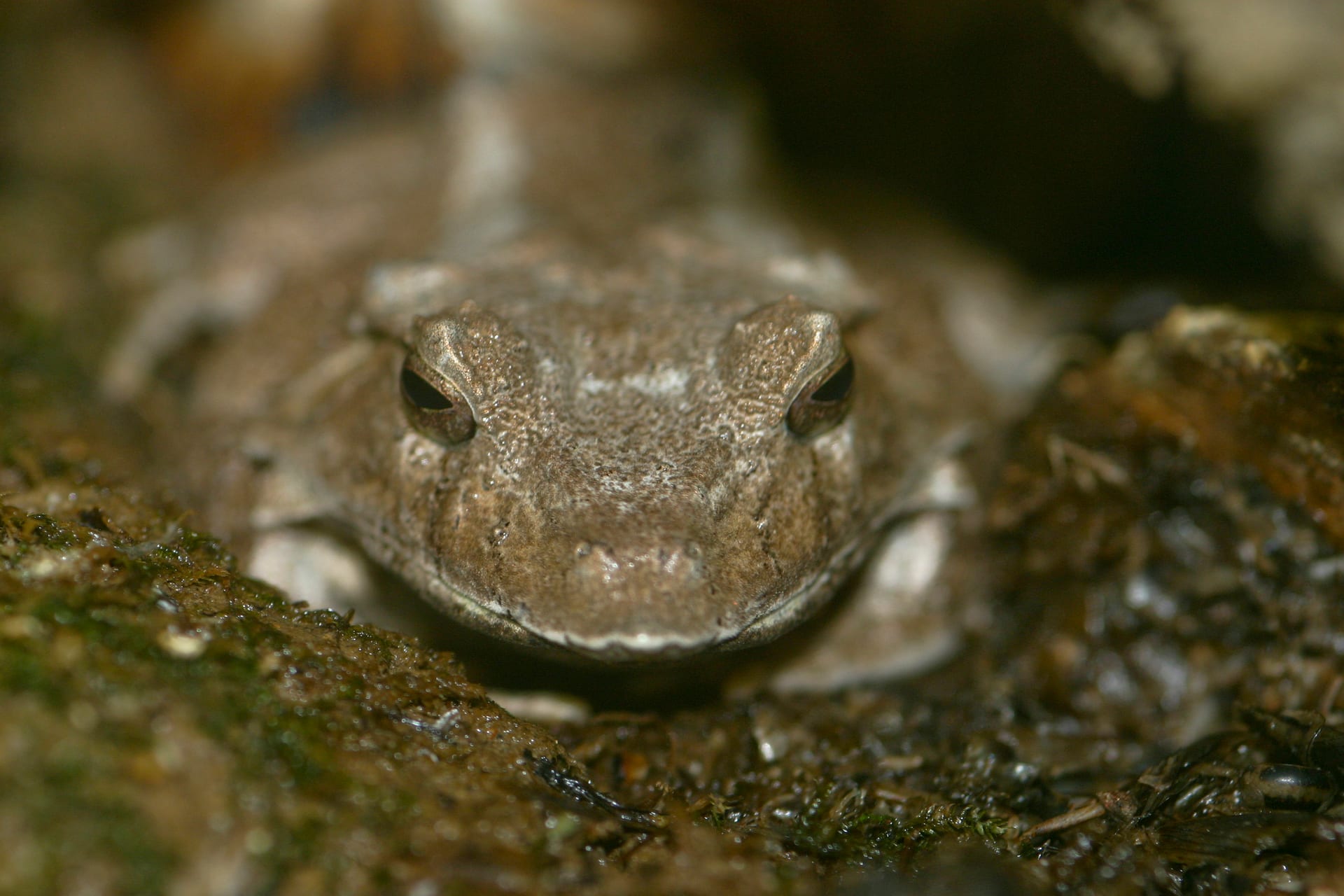
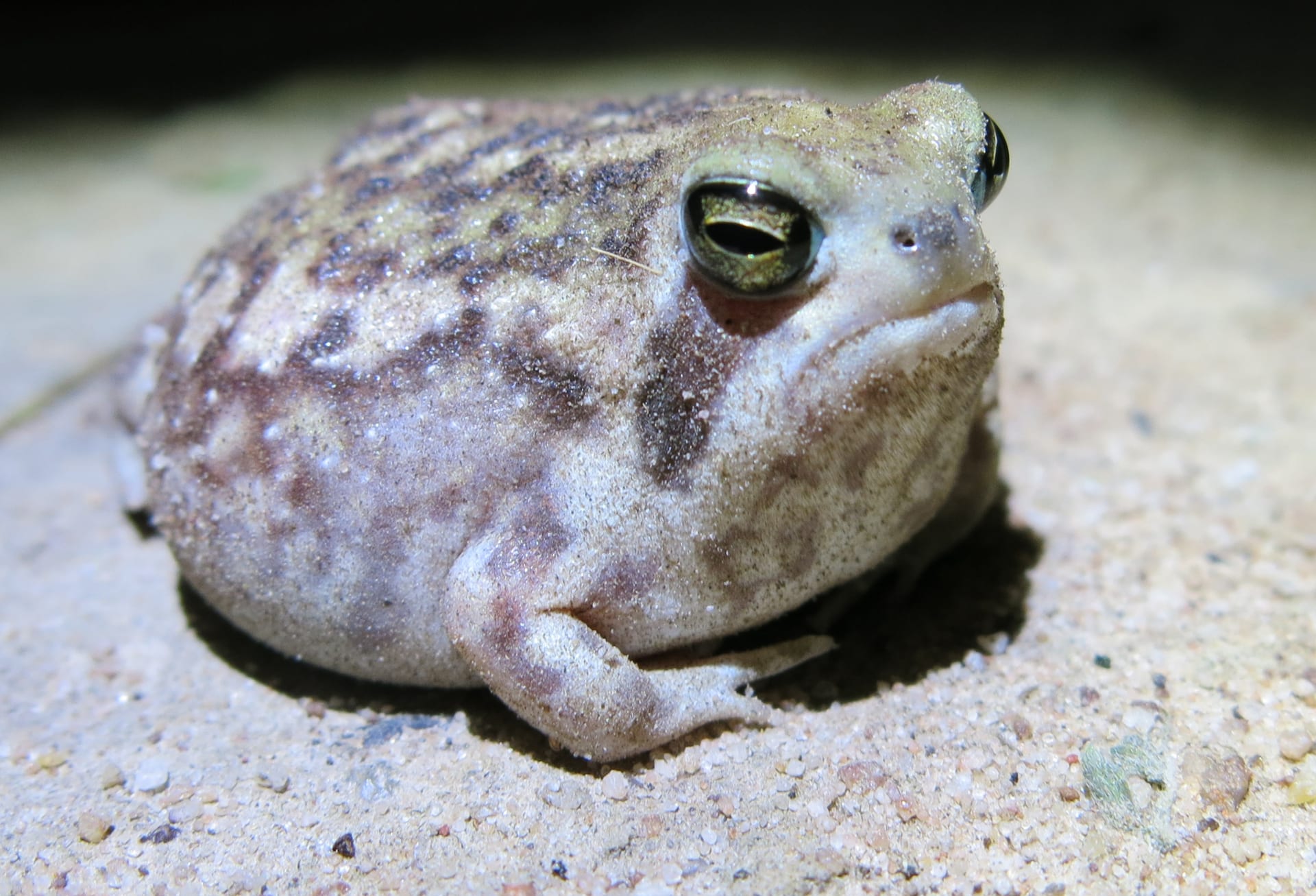
A burrowing frog of the sandy soils of southern Africa. Its round, balloon-like body and stumpy legs leave it unable to jump or swim, and when startled it inflates and backs into its burrow. Development is direct, with froglets hatching straight from the egg.
Difficulty
Intermediate
Temperature
21〜27℃
Lifespan
5-8 years
Size
3-6cm
Humidity
60〜80%
Diet
Termites, ants and small insects
About
Breviceps adspersus is a burrowing brevicipitid widespread in the savannas of southern Africa. Males measure 3-4.7 cm and the larger females 4-6 cm. The body is round and squat, brown to greenish-brown, with stumpy limbs, and the frog can neither jump nor swim. It digs backwards using hardened metatarsal tubercles like spades, and spends the dry season 15-30 cm below the surface. It emerges only on nights after rain to feed and breed. Males are too small to grip females, so they secrete a glue from the skin that binds the pair together; they then reverse down into a chamber the female has dug, where she lays her eggs. Development is direct and froglets hatch straight from the egg.
Source: Wikipedia (CC BY-SA 4.0)
Lifespan of the Bushveld Rain Frog
The Bushveld Rain Frog lives 5-8 years.
Size of the Bushveld Rain Frog
The Bushveld Rain Frog grows to 3-6cm.
Temperature & humidity for the Bushveld Rain Frog
The ideal temperature for the Bushveld Rain Frog is 21〜27℃. Ideal humidity is 60〜80%.
In captivity use a well-ventilated enclosure with a deep layer of coco fibre or sphagnum for burrowing, held at 21-27 C and 60-80% humidity, and feed small live invertebrates.
Basic Info
Origin
Southern Africa (Angola, DR Congo, Namibia, Botswana, Zambia, Zimbabwe, South Africa, Eswatini, Mozambique)
Care Specifications
PeacefulSolitaryBreeding: Very hard
Sources: Biodiversity and Development Institute: Bushveld Rain Frog / Amphipedia: Rain Frog Care / Wikipedia (English)
References & Sources
Edited & verified by: BreederDirect editorial team
The taxonomic, regulatory, and husbandry data on this page are compiled and verified against the authoritative primary sources below.
Taxonomy & Authority
Accepted name: Breviceps adspersus Peters, 1882
Synonyms: Breviceps mossambicus adspersus Peters, 1882, Breviceps pretoriensis FitzSimons, 1930
Authority databases: GBIF
Nomenclature follows global taxonomic authority databases.
Regulations & Conservation Status
Not CITES-listedIUCN LC · Least Concern
Sources: CITES Appendices (species not listed) / IUCN Red List
Regulations may change. Always verify the latest information with the relevant authorities.
Bushveld Rain Frog Listings
Loading latest listingsFind listings for this species