 © KLPrice / CC BY-SA 3.0
Indian Sand Boa
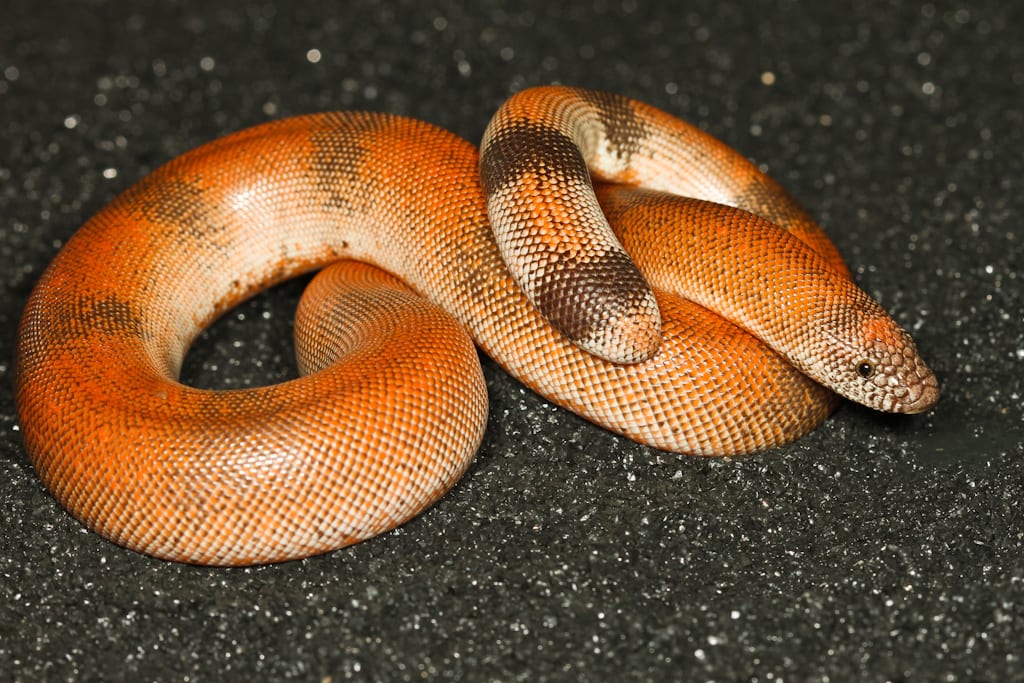
The Indian sand boa is a burrowing snake native to the semi-desert regions stretching from Iran through Pakistan to India. Its wedge-shaped head and blunt, rounded tail look so similar that keepers have long nicknamed it the two-headed snake. Rather than an active display animal, it spends most of its time buried in the substrate, making it a species valued for its quiet, low-key presence. Known for a calm, easygoing temperament and a manageable adult size of roughly 60 to 90 cm, it is a popular choice for snake keepers who are just starting out.
View Indian Sand Boa encyclopedia →0% commission on your first sales!Register by September 30, 2026 and your first 2 sales are commission-free!
Breeder Wanted!
List on BreederDirect and sell directly to customers nationwide!
6 Transparency Promises from Br-Choku
Every Reptiles & Amphibians from verified Breeder breeders includes complete information: morph, genetics, feeding requirements, and temperament details.
- Morph Information
- Actual Photos
- Feeding Information
- Temperament Information
- Genetics Information
- Age (Months)
Browse all 280 breeds
Difficulty Level
Feeding Type
Temperament
Verified breeders wanted for Reptiles & Amphibians
Breeders are signing up now ahead of launch. Subscribe to be notified when new listings go live.
Getting alerts is free with a member account. When new listings match your saved search, we'll notify you by email and in-app.
Browse other categories
Verified breeders (preview)
Are you raising reptiles & amphibians?
Register as a breeder and connect with buyers directly.
Apply as a breederIndian Sand Boa key facts
- Care level
- Beginner-friendly
- Lifespan
- 15-20 years
- Size
- 60-90cm
- Temperature
- 27〜32℃
- Humidity
- 50〜65%
- Diet
- Thawed frozen mice and rats
- Temperature & Humidity
- Aim for a substrate temperature of 27-32 C. Place the heat source under one third to one half of the enclosure to give a hot spot of 32 C and an ambient of 27 C. Keep relative humidity at a minimum of 50-65 percent. Year-round night-time drops are not necessary for health or for captive breeding.
- Enclosure
- Adults are fine in the equivalent of 10 to 20 gallons (about 38-76 litres), and being fossorial they need little height. Cover the whole floor with 5-10 cm of loose sand, sandy soil, wood chip or aspen. Keep a flat-bottomed water bowl available and clean at all times.
- Diet & Feeding
- In the wild it constricts mainly rodents, and some specimens have reportedly fed only on other snakes. In captivity offer thawed frozen mice or rats sized to the snake, warmed to about 32 C, using soft-tipped feeding tongs.
- Temperament
- Known as a very calm species that rarely bites and is easy to handle. It spends the day underground and moves slowly. It is not social, so keep it singly.
- Notes
- Its two-headed look has attracted superstition, and it has been trafficked in India despite protection under Schedule IV of the Wildlife Protection Act 1972. Check that any animal was legally bred and imported. Listed on CITES Appendix II as Boidae spp. since 4 February 1977, so no registration certificate is required. The IUCN Red List assesses it as Near Threatened.
About Indian Sand Boa
The Indian sand boa is a burrowing semi-desert snake known for its wedge head and round tail, nicknamed the two-headed snake. Calm and beginner-friendly, it reaches about 60-90 cm as an adult.
7 things to know before welcoming a Indian Sand Boa
1Deep, Diggable Substrate
Indian sand boas are burrowing snakes that spend much of their time submerged in the substrate. Provide a deep, loose substrate they can fully disappear into. Not seeing them often is simply natural behavior, not a cause for concern.
2Head and Tail Look Alike
The wedge-shaped head and the blunt, rounded tail look so similar that this species has long been nicknamed the two-headed snake. Until you get used to it, take a moment to identify the head before handling.
3Calm, Easygoing Temperament
With slow movements and a docile nature, this species is considered manageable even for those new to keeping snakes. Still, sudden movements can startle it into a defensive posture, so handle it gently and calmly.
4Prefers a Dry Environment
Coming from semi-desert habitats, this species does poorly in overly humid conditions. Keep the enclosure well-ventilated and on the dry side, with a temperature gradient so it can choose its own comfortable spot.
5Not Very Active or Visible
Since it spends much of its time underground, this is not a snake you will see actively moving around very often. It suits keepers who enjoy a quiet, low-activity presence rather than constant visible action.
6Secure, Escape-Proof Lid
This species is surprisingly strong and may push through substrate looking for gaps. Choose an enclosure with a lockable, secure lid and make sure there are no openings it could exploit.
7Feed Pre-Killed, Thawed Prey
The basic diet is appropriately sized frozen-thawed mice. Offering food with feeding tongs helps reduce the risk of accidental bites. Before bringing one home, it is worth confirming feeding frequency and prey size in advance.
Frequently asked questions about Indian Sand Boa
- Q.How big does an Indian sand boa get?
- A.Adults typically reach about 60 to 90 cm in length. It has a fairly stout build, but it is a manageable size compared to many other snakes.
- Q.Is this snake suitable for beginners?
- A.Its calm temperament and slow movements make it a species generally considered beginner-friendly. That said, it is worth learning its specific needs beforehand, such as providing dry conditions and deep, diggable substrate.
- Q.Why is it called the two-headed snake?
- A.Its wedge-shaped head and blunt, rounded tail look remarkably similar. Until you are familiar with the species, telling the two ends apart can be tricky, which is exactly where the nickname comes from.
- Q.Is it venomous or dangerous?
- A.No, it is a non-venomous snake that subdues prey by constriction. With its docile temperament, there is no need for excessive concern as long as it is handled calmly.
- Q.Is it subject to CITES?
- A.Indian Sand Boa is listed in CITES Appendix II. International trade requires a permit from the exporting country, but as far as CITES is concerned, no registration is needed to buy or sell individuals already legally in Japan.
Useful tools for Indian Sand Boa care
Learn more about Indian Sand Boa in the encyclopedia
View Indian Sand Boa encyclopedia entry →
Care difficulty, lifespan, size and diet — all basics covered.
More in this category
Can't find the one you're looking for?
Post your wishes for free and breeders with matching animals will contact you with introductions.