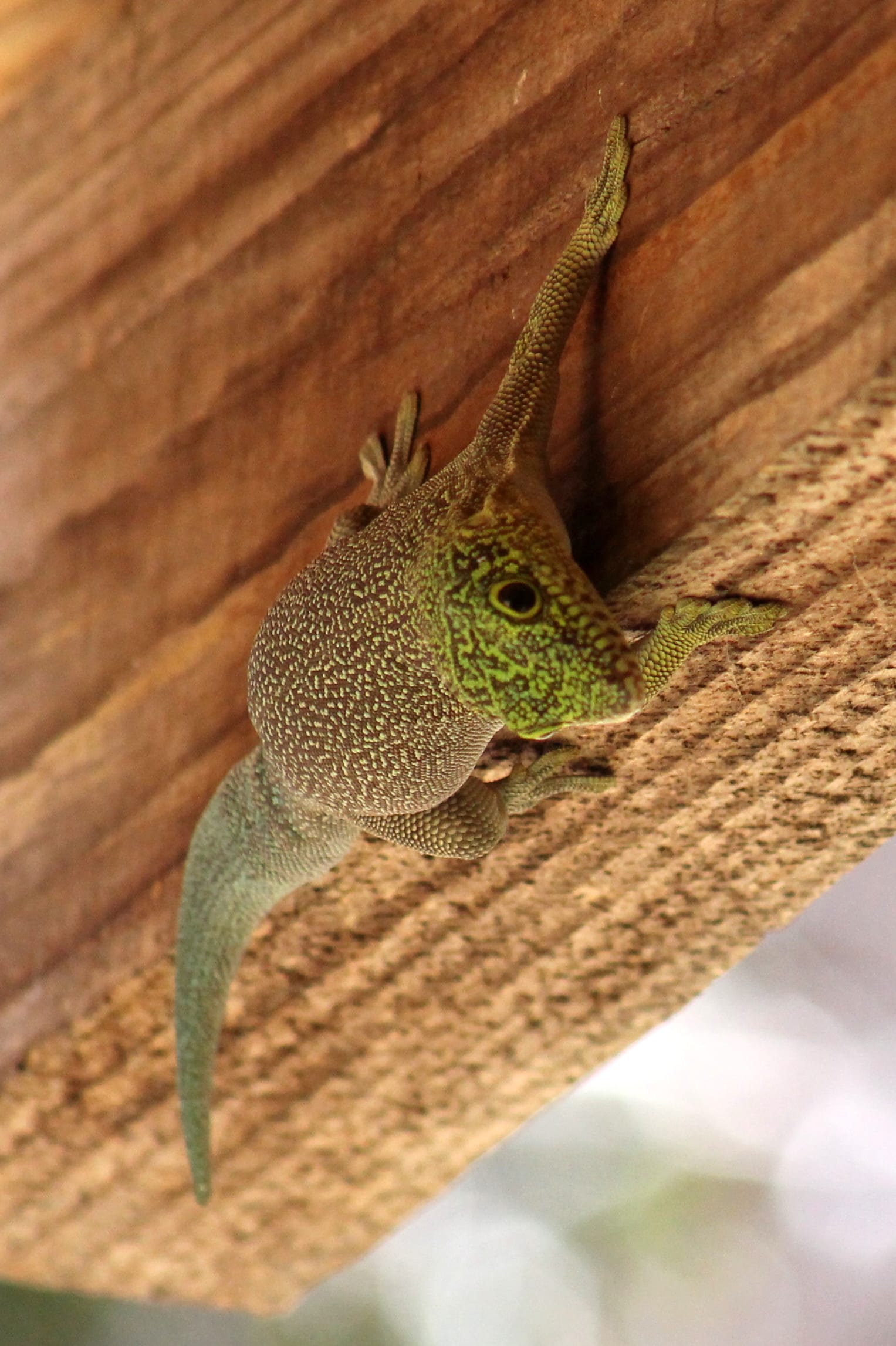
 © Heinonlein / CC BY-SA 4.0
Standing's Day Gecko
Standing's Day Gecko is a striking, large-bodied gecko native to the dry spiny forests of southwestern Madagascar. Reaching 20 to 25 cm in total length, it shifts in color from grayish brown to blue-green depending on the light, giving it a dramatic, ever-changing appearance. With its bold build and confident presence, it stands out among day geckos for its sheer physical presence. Because wild populations have suffered from overcollection, attentive care in captivity matters all the more. This is considered a species for experienced keepers, requiring a spacious enclosure and careful attention to temperature and humidity — but for those ready to meet its needs, it makes for a rewarding, long-term companion.
View Standing's Day Gecko encyclopedia →0% commission on your first sales!Register by September 30, 2026 and your first 2 sales are commission-free!
Breeder Wanted!
List on BreederDirect and sell directly to customers nationwide!
6 Transparency Promises from Br-Choku
Every Reptiles & Amphibians from verified Breeder breeders includes complete information: morph, genetics, feeding requirements, and temperament details.
- Morph Information
- Actual Photos
- Feeding Information
- Temperament Information
- Genetics Information
- Age (Months)
Browse all 280 breeds
Difficulty Level
Feeding Type
Temperament
Verified breeders wanted for Reptiles & Amphibians
Breeders are signing up now ahead of launch. Subscribe to be notified when new listings go live.
Getting alerts is free with a member account. When new listings match your saved search, we'll notify you by email and in-app.
Browse other categories
Verified breeders (preview)
Are you raising reptiles & amphibians?
Register as a breeder and connect with buyers directly.
Apply as a breederStanding's Day Gecko key facts
- Care level
- Advanced
- Lifespan
- 15-20 years
- Size
- 20-25cm total length, sometimes larger
- Temperature
- Humidity
- 40〜75%
- Diet
- Crickets and dubia roaches, prepared fruit-based gecko diet, nectar
- Temperature & Humidity
- Keep the basking spot at 32-35C, the cool zone at 24-31C and night-time temperatures at 22-23C. Aim for average humidity of 40-75 per cent. Although it is a dry-forest species, letting humidity fall too low causes shedding problems, so mist morning and evening. Target a UV index of 3.0-4.0 at the basking site.
- Enclosure
- As a large, active arboreal species it needs a tall enclosure of at least 60 x 60 x 120 cm even for one animal. Run thick branches and driftwood at several levels and provide a well-lit basking branch near the top. Live plants and a moisture-retentive substrate hold humidity; suspend heat lamps clear of the mesh top to prevent burns.
- Diet & Feeding
- In the wild it takes insects and other invertebrates and will even eat smaller lizards, supplementing this with soft fruit, pollen and nectar. In captivity use a prepared fruit-based gecko diet as the base with crickets and dubia roaches alongside, dusting the feeders with calcium.
- Temperament
- In the wild it lives in pairs in trees. Breeding pairs have been kept together successfully, but males must never be housed together. Unless breeding, a single animal or a group of females is safer, and any animals that fight should be separated at once. It is fast and thin-skinned, so it is not suited to handling.
- Notes
- It belongs to Phelsuma, listed on CITES Appendix II, so import requires an export permit from the exporting country; Appendix II animals need no Japanese registration certificate. The IUCN assesses it as Vulnerable, with illegal collection for the pet trade named as a threat, so choose captive-bred animals and confirm the origin of any animal you acquire.
About Standing's Day Gecko
A guide to Standing's Day Gecko, a large day gecko species endemic to Madagascar, covering its traits, temperament, and what experienced keepers should know before bringing one home.
7 things to know before welcoming a Standing's Day Gecko
1Needs a Spacious Enclosure
Reaching 20-25 cm in length, this gecko needs a tall, roomy enclosure with plenty of depth. Fill it with plants and branches to create vertical space where it can move around actively.
2Light and UVB Matter
Its coloration shifts from grayish brown to blue-green depending on light intensity. Proper UVB exposure and a consistent lighting cycle are essential for its health.
3Prefers a Drier Setup
This species comes from dry spiny forest habitat. Avoid excessive humidity and aim for a clear dry-humid cycle in your husbandry.
4Skittish and Alert
Standing's Day Geckos are wary and quick-moving, making them poorly suited to handling. They're best enjoyed as an animal to observe rather than hold.
5Delicate Skin
Like other day geckos, its skin is thin and delicate and can tear if gripped too firmly. Keep handling to an absolute minimum.
6A Long-Term Commitment
With a lifespan of 15 to 20 years, this is a long-term companion that calls for lasting commitment.
7Best for Experienced Keepers
This species is generally considered suitable for experienced keepers. Prior experience with day geckos or other arid-adapted reptiles is a real advantage.
Frequently asked questions about Standing's Day Gecko
- Q.Can beginners keep a Standing's Day Gecko?
- A.This species is generally considered suitable for experienced keepers. It requires careful management of temperature, humidity, and UVB lighting, so prior reptile-keeping experience is recommended before taking one on.
- Q.How big does this gecko get?
- A.It's a large day gecko species that reaches 20 to 25 cm in total length. Some individuals can grow even larger than that.
- Q.Can I handle it and interact with it directly?
- A.It tends to be wary and quick-moving, so it isn't well suited to frequent handling. Its skin is also delicate, so it's best enjoyed mainly through observation rather than direct contact.
- Q.How long will I need to care for it?
- A.Its lifespan is around 15 to 20 years, making it a relatively long-lived species. It's worth planning for long-term care before bringing one home.
- Q.Why does its color change?
- A.Its coloration shifts from grayish brown to blue-green depending on light intensity. This is a natural trait seen in day geckos and part of what makes the species visually distinctive.
Useful tools for Standing's Day Gecko care
Learn more about Standing's Day Gecko in the encyclopedia
View Standing's Day Gecko encyclopedia entry →
Care difficulty, lifespan, size and diet — all basics covered.
More in this category
Can't find the one you're looking for?
Post your wishes for free and breeders with matching animals will contact you with introductions.