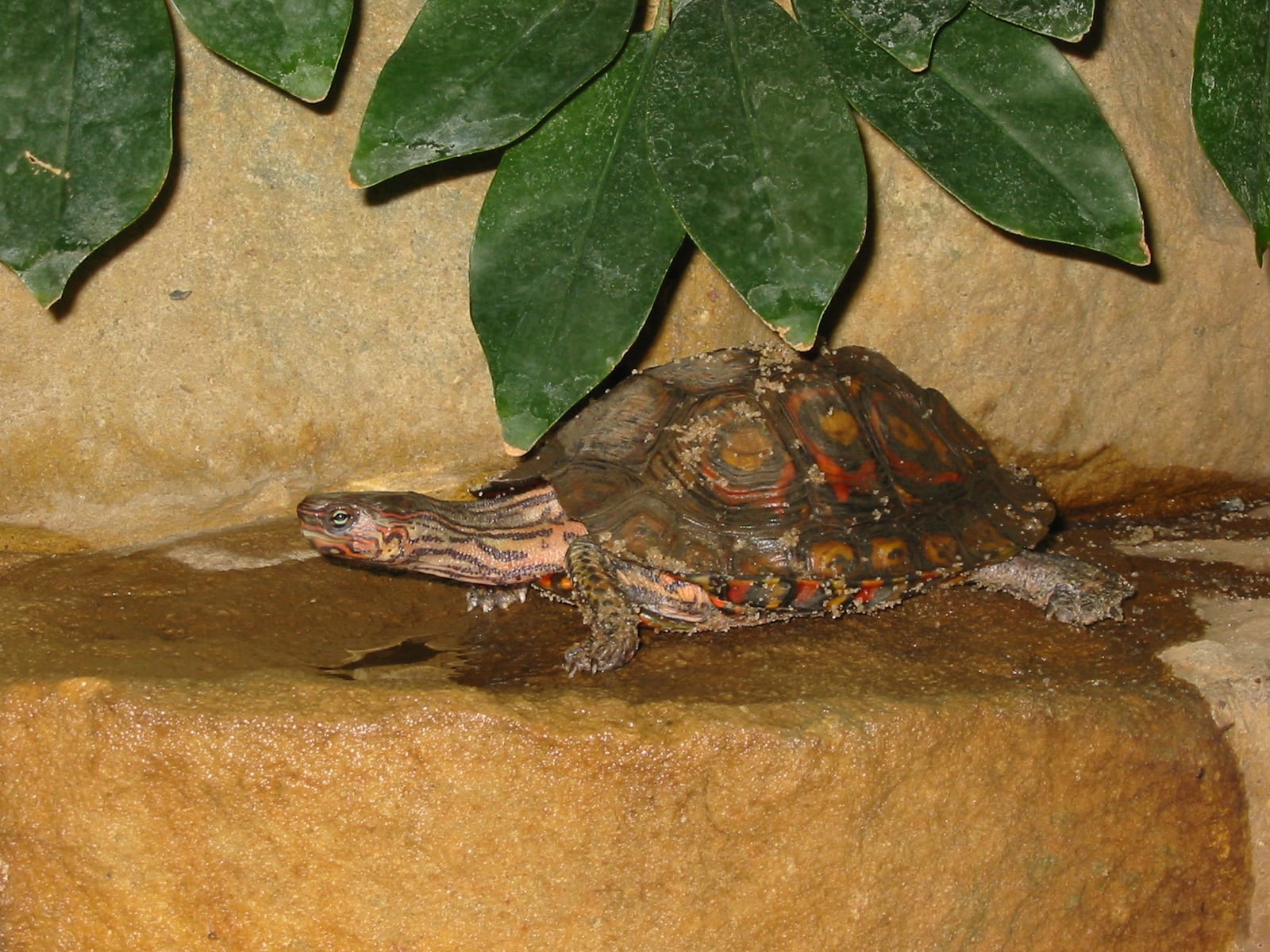
 © Tornadohalt / CC BY-SA 3.0
Painted Wood Turtle
The Painted Wood Turtle is a Central American species known for the vivid red streaks marking its head and body. More terrestrial than many turtles, it spends much of its time walking about on land rather than staying submerged, making it a rewarding species to watch. There are four recognized subspecies, and Japan has imported this turtle since the 1960s, mainly individuals from Guatemala and Costa Rica. Personalities vary by individual, but a well-adjusted turtle can become an active, confident explorer. Because they require careful management of temperature, humidity, and UV lighting, this species suits keepers with some prior reptile experience who want to take the time to get to know their turtle.
View Painted Wood Turtle encyclopedia →0% commission on your first sales!Register by September 30, 2026 and your first 2 sales are commission-free!
Breeder Wanted!
List on BreederDirect and sell directly to customers nationwide!
6 Transparency Promises from Br-Choku
Every Reptiles & Amphibians from verified Breeder breeders includes complete information: morph, genetics, feeding requirements, and temperament details.
- Morph Information
- Actual Photos
- Feeding Information
- Temperament Information
- Genetics Information
- Age (Months)
Browse all 319 breeds
Difficulty Level
Feeding Type
Temperament
Verified breeders wanted for Reptiles & Amphibians
Breeders are signing up now ahead of launch. Subscribe to be notified when new listings go live.
Getting alerts is free with a member account. When new listings match your saved search, we'll notify you by email and in-app.
Browse other categories
Verified breeders (preview)
Are you raising reptiles & amphibians?
Register as a breeder and connect with buyers directly.
Apply as a breederPainted Wood Turtle key facts
- Care level
- Intermediate
- Lifespan
- Few data on lifespan in captivity
- Size
- Maximum carapace length 21.4 cm (females larger; males up to 18 cm)
- Temperature
- 24〜30℃
- Diet
- Omnivore (fruit, vegetables, insects, worms)
- Temperature & Humidity
- For the Costa Rican subspecies, 24-30°C (76-86°F) is considered comfortable, with humidity around 60%.
- Housing
- Mostly terrestrial, but even the drought-tolerant subspecies should have a broad, shallow pool about 12-15 cm deep. About 20 cm of loose, sandy soil is recommended as substrate.
- Diet & Feeding
- An omnivore: fruit and vegetables such as banana, melon and greens plus insects and worms. Supplement calcium for healthy shell growth.
- Temperament
- It adapts well, and some learn to recognize their keepers as a source of food.
- Notes
- The four subspecies are distinguished by locality and pattern; mainly the Guatemalan and Costa Rican forms are traded. Check the subspecies and origin. Never release a captive animal into the wild.
About Painted Wood Turtle
Meet the Painted Wood Turtle, a Central American species with striking red head and body markings. Learn about its four subspecies, terrestrial habits, and care considerations.
7 things to know before welcoming a Painted Wood Turtle
1Prefers Life on Land
Painted Wood Turtles spend more time walking on land than swimming in water. Set up the enclosure with both a shallow water dish and a generous dry area so the turtle has room to roam.
2Temperature & Humidity Care
Coming from Central America's tropical to subtropical regions, this species needs a proper temperature gradient from a basking lamp and UV light, plus humidity maintained through moist substrate. Excessively dry conditions can affect skin and shell condition.
3Best Suited to Intermediate Keepers
The Painted Wood Turtle is considered a species for intermediate-level keepers, requiring simultaneous management of temperature, humidity, UV exposure, and diet. It suits people with some prior reptile-keeping experience.
4Plan for Adult Size
Adults reach a shell length of up to about 21.4 cm, with females typically growing larger than males (males reach up to about 18 cm). Prepare a spacious enclosure in advance with their full adult size in mind.
5Omnivorous Diet Needs Variety
Painted Wood Turtles are omnivores that eat a balanced mix of vegetables, fruit, and animal protein. Avoid relying on any single food and pay attention to calcium and overall nutritional balance to support good health.
6Markings Vary by Subspecies
The species is divided into four subspecies, and turtles imported into Japan have mainly come from the Guatemalan and Costa Rican subspecies. The pattern of red streaking can vary by origin and subspecies, which is part of the appeal.
7Listed Under CITES Appendix II
The Painted Wood Turtle is listed under CITES Appendix II. It's worth understanding this point before deciding to bring one home.
Frequently asked questions about Painted Wood Turtle
- Q.Can beginners keep a Painted Wood Turtle?
- A.The Painted Wood Turtle is considered a species for intermediate-level keepers. Because it requires attention to multiple factors like temperature, humidity, and UV lighting, it suits someone with some prior reptile-keeping experience.
- Q.How big do they get as adults?
- A.Adults reach a shell length of up to about 21.4 cm. Females tend to grow larger than males, with males reaching up to about 18 cm.
- Q.Do they spend more time in water or on land?
- A.Painted Wood Turtles are strongly terrestrial and spend more time walking around on land than in water. It's a good idea to provide a generously sized dry area within the enclosure.
- Q.Do the subspecies look different from each other?
- A.Yes, the Painted Wood Turtle is divided into four subspecies, and the pattern of red streaking can vary depending on origin and subspecies. Turtles imported into Japan have mainly come from the Guatemalan and Costa Rican subspecies.
- Q.Are there any regulations to check before bringing one home?
- A.The Painted Wood Turtle is listed under CITES Appendix II. It's worth understanding this point before deciding to bring one home.
Useful tools for Painted Wood Turtle care
Learn more about Painted Wood Turtle in the encyclopedia
View Painted Wood Turtle encyclopedia entry →
Care difficulty, lifespan, size and diet — all basics covered.
More in this category
Can't find the one you're looking for?
Post your wishes for free and breeders with matching animals will contact you with introductions.