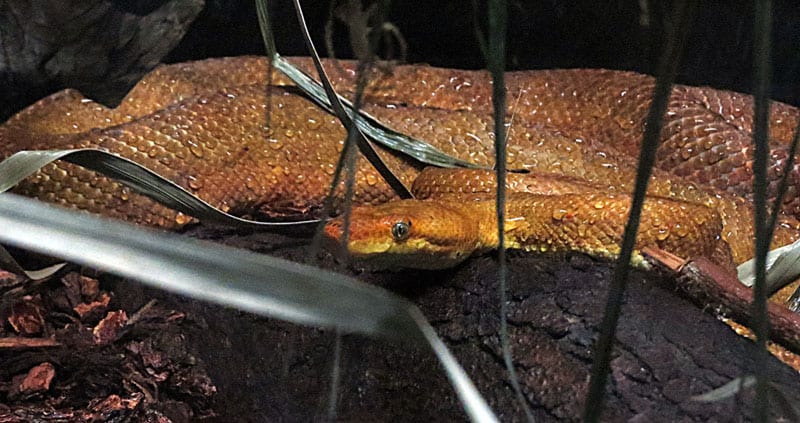
 © Dick Culbert from Gibsons, B.C., Canada / CC BY 2.0
Pacific Tree Boa
The Pacific tree boa (Candoia bibroni) is the largest species in the Pacific boa genus, native to islands across the South Pacific. Its coloring ranges from pale tan to reddish-brown, often patterned with bands or blotches, though some individuals are patternless, giving keepers plenty of color and pattern variety to appreciate. As a fully arboreal snake, it spends much of its time coiled around branches, giving it a distinctive presence among boas. Unlike egg-laying snakes, it is viviparous, giving birth to live young rather than eggs. Adults reach a maximum total length of around 1.5 meters, and the species is generally considered better suited to keepers with some prior snake-keeping experience.
View Pacific Tree Boa encyclopedia →0% commission on your first sales!Register by September 30, 2026 and your first 2 sales are commission-free!
Breeder Wanted!
List on BreederDirect and sell directly to customers nationwide!
6 Transparency Promises from Br-Choku
Every Reptiles & Amphibians from verified Breeder breeders includes complete information: morph, genetics, feeding requirements, and temperament details.
- Morph Information
- Actual Photos
- Feeding Information
- Temperament Information
- Genetics Information
- Age (Months)
Browse all 319 breeds
Difficulty Level
Feeding Type
Temperament
Verified breeders wanted for Reptiles & Amphibians
Breeders are signing up now ahead of launch. Subscribe to be notified when new listings go live.
Getting alerts is free with a member account. When new listings match your saved search, we'll notify you by email and in-app.
Browse other categories
Verified breeders (preview)
Are you raising reptiles & amphibians?
Register as a breeder and connect with buyers directly.
Apply as a breederPacific Tree Boa key facts
- Care level
- Intermediate
- Lifespan
- Few data on lifespan in captivity
- Size
- Up to about 1.5 m total length
- Diet
- Carnivore (small mammals, birds, lizards)
- Housing
- As a fully arboreal snake it needs a tall enclosure with several perches of different thicknesses.
- Temperature & Humidity
- It lives in tropical forest from sea level to 1,600 m. Published husbandry temperatures are scarce, so adjust heating by watching the snake's condition.
- Diet & Feeding
- Wild snakes eat birds, lizards, rodents and bats; in captivity rodents such as mice are the usual food.
- Health & Cautions
- It is viviparous, giving birth to live young; watch the condition of gravid females if breeding.
- Notes
- It can be confused with C. carinata or C. paulsoni; check the scientific name and origin when buying. Never release a captive animal into the wild.
About Pacific Tree Boa
Pacific tree boa (Candoia bibroni): the largest Pacific boa species, native to South Pacific islands. Tan to reddish-brown with banding, fully arboreal and live-bearing, reaching up to 1.5m — a good match for keepers with some experience.
7 things to know before welcoming a Pacific Tree Boa
1Truly Arboreal Habits
In the wild this species spends most of its time in trees, so the enclosure should include several sturdy branches or driftwood pieces it can coil around. Vertical space matters more than floor area for this snake.
2Nocturnal and Reserved
This is a nocturnal snake that tends to stay hidden and still during the day. It can be somewhat nervous, so minimizing handling and keeping the enclosure in a quiet, low-traffic spot helps it settle in.
3Humidity Needs
Coming from South Pacific island habitats, this boa does best with consistently elevated humidity. Letting the enclosure dry out too much can make shedding difficult, so regular misting is recommended.
4Best Suited to Experienced Keepers
This species is generally considered a better fit for keepers with some prior snake-keeping experience rather than a first snake. Understanding its temperament and environmental needs makes day-to-day care much smoother.
5Live-Bearing Reproduction
Unlike many snakes that lay eggs, the Pacific tree boa gives birth to fully formed live young. Anyone considering breeding should plan around this reproductive difference from egg-laying species.
6Adult Size Up to 1.5 Meters
Adults can reach a maximum total length of around 1.5 meters. Because they're arboreal, it's wise to plan for a tall, spacious enclosure that accommodates their full grown size well before they reach it.
7Varied Colors and Patterns
Base colors range from pale tan to reddish-brown, often with banding or blotches, though some individuals lack pattern entirely. It's worth looking closely at an individual's specific coloring before bringing one home.
Frequently asked questions about Pacific Tree Boa
- Q.Can beginners keep a Pacific tree boa?
- A.This species is generally considered suited to keepers with some experience rather than absolute beginners. Prior experience managing temperature, humidity, and an arboreal setup will make care much easier.
- Q.How big does a Pacific tree boa get?
- A.Adults reach a maximum total length of around 1.5 meters, making it the largest species in the Pacific boa genus. Plan for an enclosure sized to match its adult length well in advance.
- Q.How long do Pacific tree boas live?
- A.There isn't yet much documented data on captive lifespans for this species. It's best to plan for a potentially long-term commitment when considering bringing one home.
- Q.Is it true they give birth to live young instead of eggs?
- A.Yes, that's correct. The Pacific tree boa is viviparous, meaning the young develop inside the mother and are born live rather than hatching from eggs.
- Q.Are there any legal considerations for keeping this species?
- A.The Pacific tree boa is listed under CITES Appendix II, an international framework related to trade in certain species. If you'd like more detail, it's worth checking the latest official information.
Useful tools for Pacific Tree Boa care
Learn more about Pacific Tree Boa in the encyclopedia
View Pacific Tree Boa encyclopedia entry →
Care difficulty, lifespan, size and diet — all basics covered.
More in this category
Can't find the one you're looking for?
Post your wishes for free and breeders with matching animals will contact you with introductions.