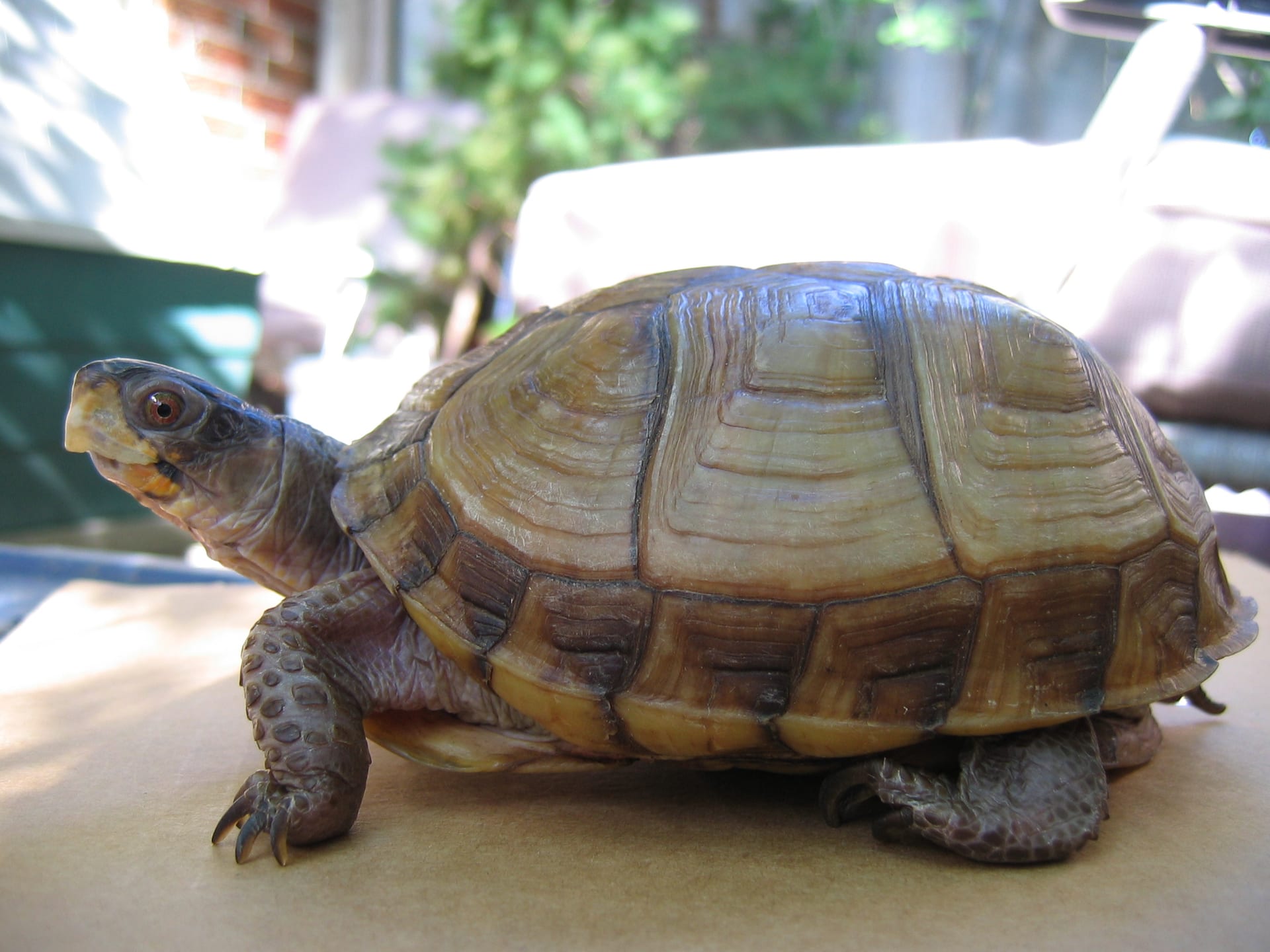
 © Original uploaded by Carnopod (Transfered by L.tak) / Public domain
Three-toed Box Turtle
The Three-toed Box Turtle is an American box turtle named for the three toes on its hind feet. Adults reach 13–18 cm in shell length, with an olive or yellowish-brown carapace that carries little pattern, giving it a calm, understated look. Males develop yellow, red and orange spots on the head and throat, and the species is the state reptile of Missouri. It is a land-dwelling turtle that can be a little wary at first but tends to settle once it has had time to adjust to its surroundings. It is rated for intermediate keepers, and because it is a long-lived species, it is worth making a long-term care plan before you bring one home.
View Three-toed Box Turtle encyclopedia →0% commission on your first sales!Register by September 30, 2026 and your first 2 sales are commission-free!
Breeder Wanted!
List on BreederDirect and sell directly to customers nationwide!
6 Transparency Promises from Br-Choku
Every Reptiles & Amphibians from verified Breeder breeders includes complete information: morph, genetics, feeding requirements, and temperament details.
- Morph Information
- Actual Photos
- Feeding Information
- Temperament Information
- Genetics Information
- Age (Months)
Browse all 319 breeds
Difficulty Level
Feeding Type
Temperament
Verified breeders wanted for Reptiles & Amphibians
Breeders are signing up now ahead of launch. Subscribe to be notified when new listings go live.
Getting alerts is free with a member account. When new listings match your saved search, we'll notify you by email and in-app.
Browse other categories
Verified breeders (preview)
Are you raising reptiles & amphibians?
Register as a breeder and connect with buyers directly.
Apply as a breederThree-toed Box Turtle key facts
- Care level
- Intermediate
- Lifespan
- Few captive lifespan data (plan for a long-lived pet)
- Size
- Carapace length 13-18 cm
- Diet
- Omnivore (earthworms, insects, snails, fruit, mushrooms, leaves)
- Housing
- In dry weather it digs into leaf litter to conserve moisture, and it soaks for long periods when water is available. Provide damp substrate, leaf litter and a shallow soaking dish.
- Diet & Feeding
- An omnivore that eats earthworms, insects, snails, slugs, fruit such as strawberries, mushrooms and leafy greens, with a preference for live food.
- Temperature & Humidity
- In the wild it moves seasonally to maintain its preferred humidity and brumates in winter, so seasonal temperature management matters in captivity.
- Temperament
- When alarmed it closes its hinged plastron. It is considered one of the box turtles most adaptable to indoor housing.
- Notes
- It hybridizes with eastern box turtles, and four-toed animals may be hybrids, so do not breed it with other box turtles. Never release a captive animal into the wild.
About Three-toed Box Turtle
The Three-toed Box Turtle is an American box turtle named for the three toes on its hind feet. Reaching 13–18 cm in shell length, it suits intermediate keepers. Learn about its temperament, care and what to prepare before bringing one home.
7 things to know before welcoming a Three-toed Box Turtle
1Room to Roam
Adults reach 13–18 cm in shell length and spend most of their time walking on land rather than swimming. A roomy enclosure with plenty of floor area suits them better than a deep tank. Provide a shallow water dish for drinking and soaking, and a substrate that holds some moisture.
2Why Intermediate Level
The Three-toed Box Turtle is rated for intermediate keepers. Managing humidity and temperature and adjusting the diet take steady daily observation. It helps to learn the basics first and then fine-tune the setup as you watch how your turtle responds.
3Plan for the Long Term
Data on lifespan in captivity is limited, but this is known as a long-lived species. Think ahead about how you would keep caring for it through moves or changes in your household. It also helps to decide in advance who will share the daily care.
4Listed on CITES Appendix II
The Three-toed Box Turtle is listed on CITES Appendix II. Before bringing one home, ask the breeder about the individual's background and how it has been kept, and raise any questions you have.
5Shyness and Settling In
When startled, it may pull in its head and limbs and close up its shell. Right after arrival, provide a hiding spot and avoid unnecessary handling so it can settle in quietly. Given time to adjust, it is more likely to show calm behavior.
6A Balanced Omnivore Diet
In the wild it is described as an omnivore that eats insects, earthworms, plants and fruit. In captivity, offer both animal and plant foods in balance, and keep calcium supplementation in mind. Varying the menu gradually helps avoid relying on a single food.
7Health Checks
If you notice swollen eyes, a runny nose, loss of appetite, or a deformed or soft shell, consult a veterinarian who treats reptiles early. Overly dry conditions or an unbalanced diet can sometimes be involved, so it is reassuring to review the enclosure and feeding routine regularly. Finding a reptile-friendly clinic within reach before you bring your turtle home is also a good idea.
Frequently asked questions about Three-toed Box Turtle
- Q.Can a beginner keep one?
- A.It is rated for intermediate keepers. Humidity and diet need regular adjustment, so some experience with reptiles or turtles is reassuring. If you are new to this, talk to the breeder about care and the equipment you will need before deciding.
- Q.How large do adults get?
- A.Adults typically reach 13–18 cm in shell length. Plan an enclosure with enough floor space for their full-grown size.
- Q.How long do they live?
- A.Records on lifespan in captivity are limited, so a definite figure cannot be given. It is considered a long-lived species, so it is important to prepare a long-term care plan.
- Q.Can males and females be told apart?
- A.Males develop yellow, red and orange spots on the head and throat, which gives a visual clue. Growth stage and individual variation can make it less clear-cut, so if the sex matters to you, it is best to confirm with the breeder.
- Q.What do they eat?
- A.They are considered omnivores, so offer a balance of animal foods such as insects and earthworms and plant foods such as vegetables and fruit. Keep calcium supplementation in mind, and avoid relying on the same food all the time.
Useful tools for Three-toed Box Turtle care
Learn more about Three-toed Box Turtle in the encyclopedia
View Three-toed Box Turtle encyclopedia entry →
Care difficulty, lifespan, size and diet — all basics covered.
More in this category
Can't find the one you're looking for?
Post your wishes for free and breeders with matching animals will contact you with introductions.