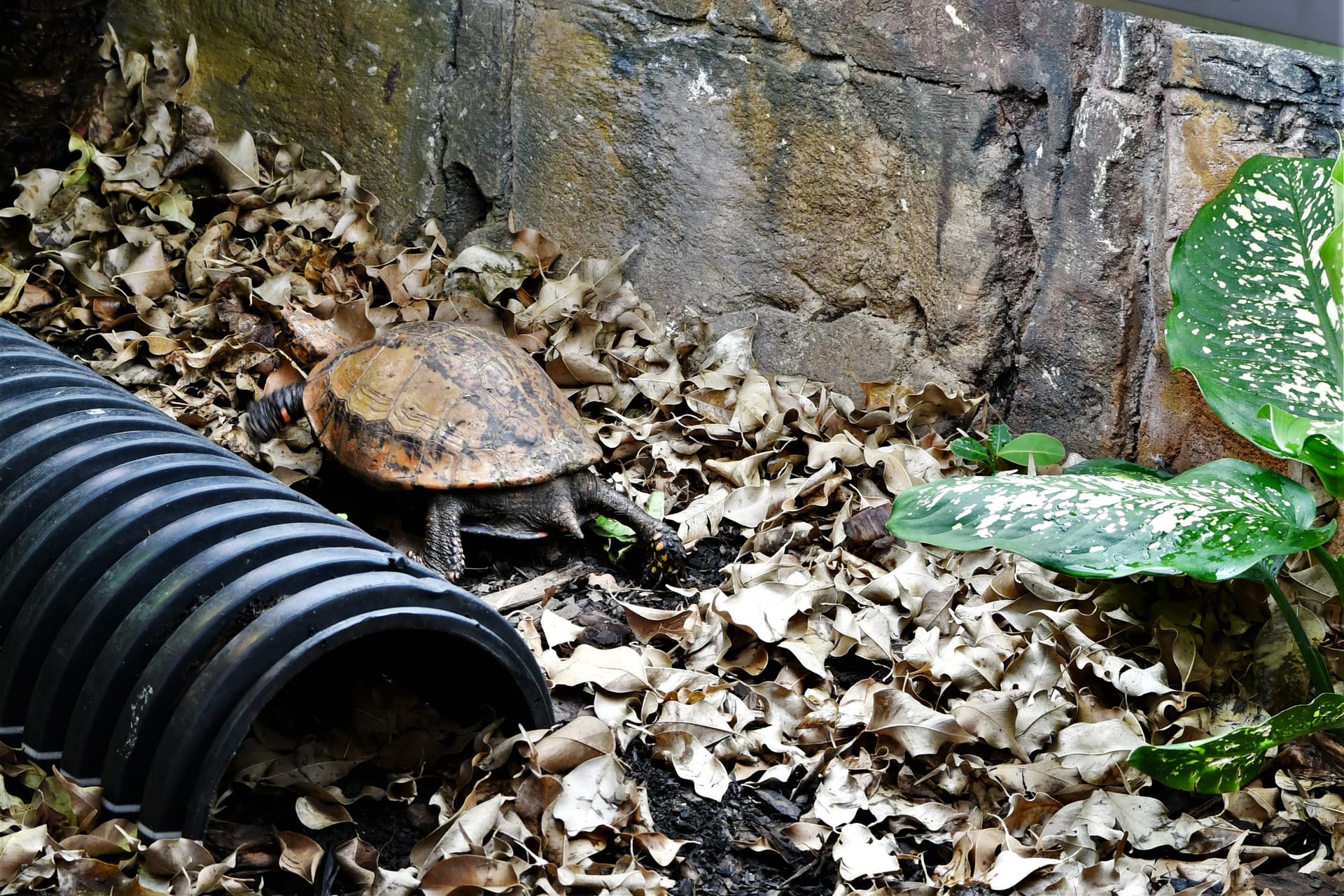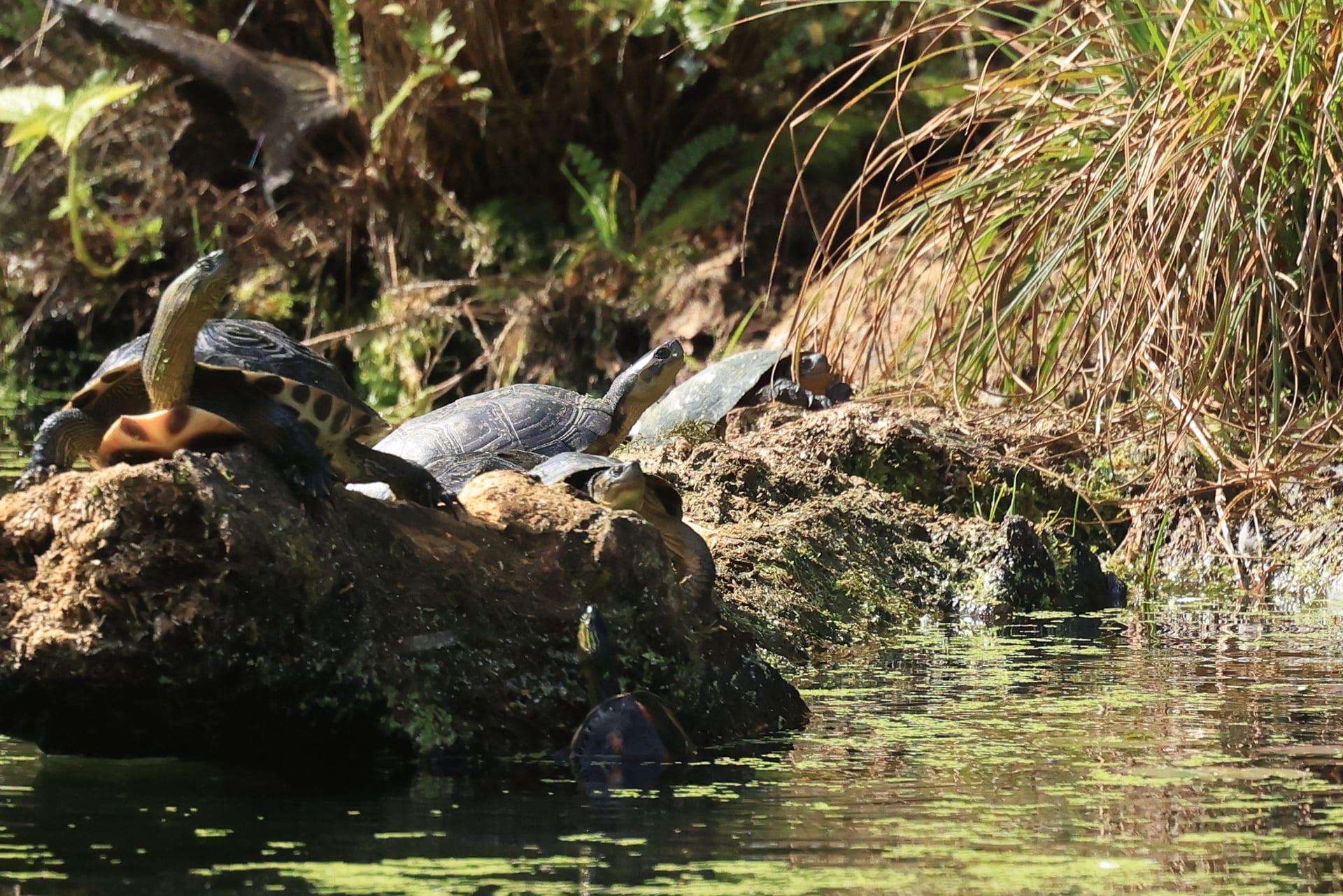
Source: Wikimedia Commons
Big-Headed Turtle
AdvancedPlatysternon megacephalum
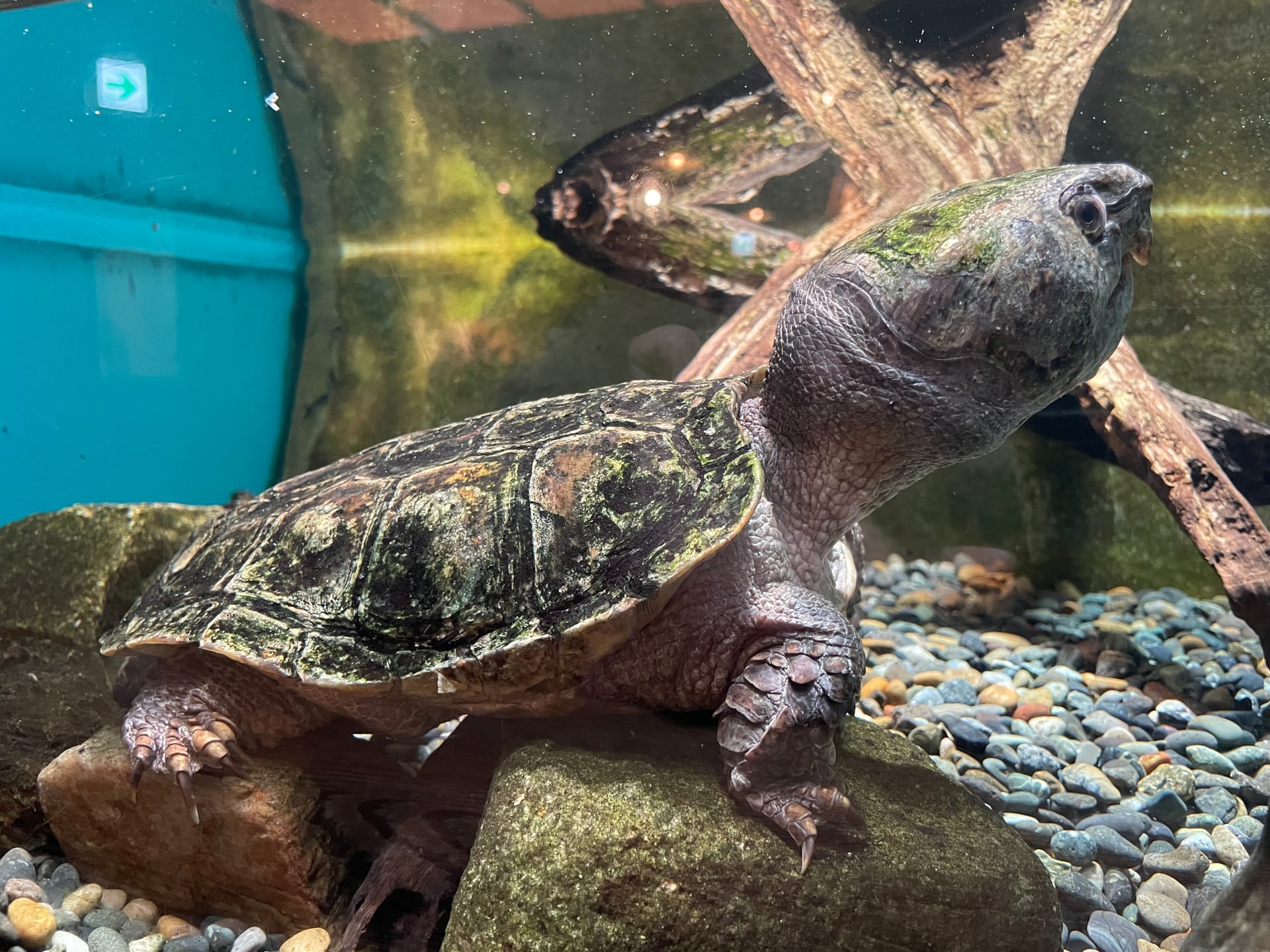
A nocturnal turtle of hill streams with a huge head as thick as the shell is deep and a tail as long as or longer than the carapace. Because the head is so large and the shell so flat it cannot withdraw its head. The carapace reaches 21.5 cm.
Difficulty
Advanced
Temperature
25〜32℃
Lifespan
Maximum recorded longevity in captivity is 27 years
Size
Carapace up to 21.5cm, with males larger than females
Humidity
40〜70%
Diet
Insects, crustaceans, molluscs, fish, tadpoles and prepared pellets
About
Platysternon megacephalum is the big-headed turtle, sole member of its family and genus in most treatments. The carapace is extremely flat and reaches 21.5 cm, while the head is enormous and as thick as the shell is deep; the specific name megacephalum, meaning great head, matches both the English and Japanese names. Because the head is so large and the shell so flat, the turtle cannot draw its head inside. A single large scale covers the top of the head and the horny beak is large and thick. The tail is very long, equal to or longer than the carapace, and strong enough to grip branches. It favours streams about a metre wide and 10 cm deep, is nocturnal and rests by day in rock crevices. It is carnivorous, taking insects, crustaceans, molluscs and fish. A 2025 proposal would raise the Burmese subspecies and the Guangxi populations to full species, making three in the genus.
Source: Wikipedia (CC BY-SA 4.0)
Lifespan of the Big-Headed Turtle
The Big-Headed Turtle lives Maximum recorded longevity in captivity is 27 years.
Size of the Big-Headed Turtle
The Big-Headed Turtle grows to Carapace up to 21.5cm, with males larger than females.
Basic Info
Origin
Southern China, Myanmar, Thailand, Laos, northeastern Cambodia and Viet Nam, in hill and low-mountain streams
Lifespan
Maximum recorded longevity in captivity is 27 years
Size
Carapace up to 21.5cm, with males larger than females
Care Specifications
AggressiveSolitaryBreeding: Very hard
Sources: Wikipedia (Japanese): Big-headed turtle / Wikipedia (English): Big-headed turtle / Reptile Database / AnAge: The Animal Ageing and Longevity Database
References & Sources
Edited & verified by: BreederDirect editorial team
The taxonomic, regulatory, and husbandry data on this page are compiled and verified against the authoritative primary sources below.
Primary sources
- Wikipedia
- CITES Appendices
- Ministry of the Environment: list of invasive alien species
- Order for Enforcement of the Act on Welfare and Management of Animals (designated dangerous animals)
- Wikipedia (Japanese): Big-headed turtle
- Wikipedia (English): Big-headed turtle
- Reptile Database
- AnAge: The Animal Ageing and Longevity Database
Taxonomy & Authority
Accepted name: Platysternon megacephalum Gray, 1831
Synonyms: Platysternum megacephalum Gray, 1831, Platysternon peguense Gray, 1870, Platysternon megacephalum shiui Ernst & McCord, 1987
Authority databases: Reptile Database
Nomenclature follows global taxonomic authority databases.
Regulations & Conservation Status
CITES Appendix IIUCN CR · Critically Endangered
Listed in CITES Appendix II in 2003, and listed in Appendix I at the family level (Carettochelyidae) effective June 12, 2013. It qualifies as an international rare wildlife species, and individual registration certificates are required for transfers and other transactions. It does not fall under the designated animals listed in the Animal Protection and Management Act Enforcement Order, nor is it designated as a designated invasive species.
Sources: CITES Appendices / Ministry of the Environment: list of invasive alien species / Order for Enforcement of the Act on Welfare and Management of Animals (designated dangerous animals)
Regulations may change. Always verify the latest information with the relevant authorities.
Big-Headed Turtle Listings
Loading latest listingsFind listings for this species