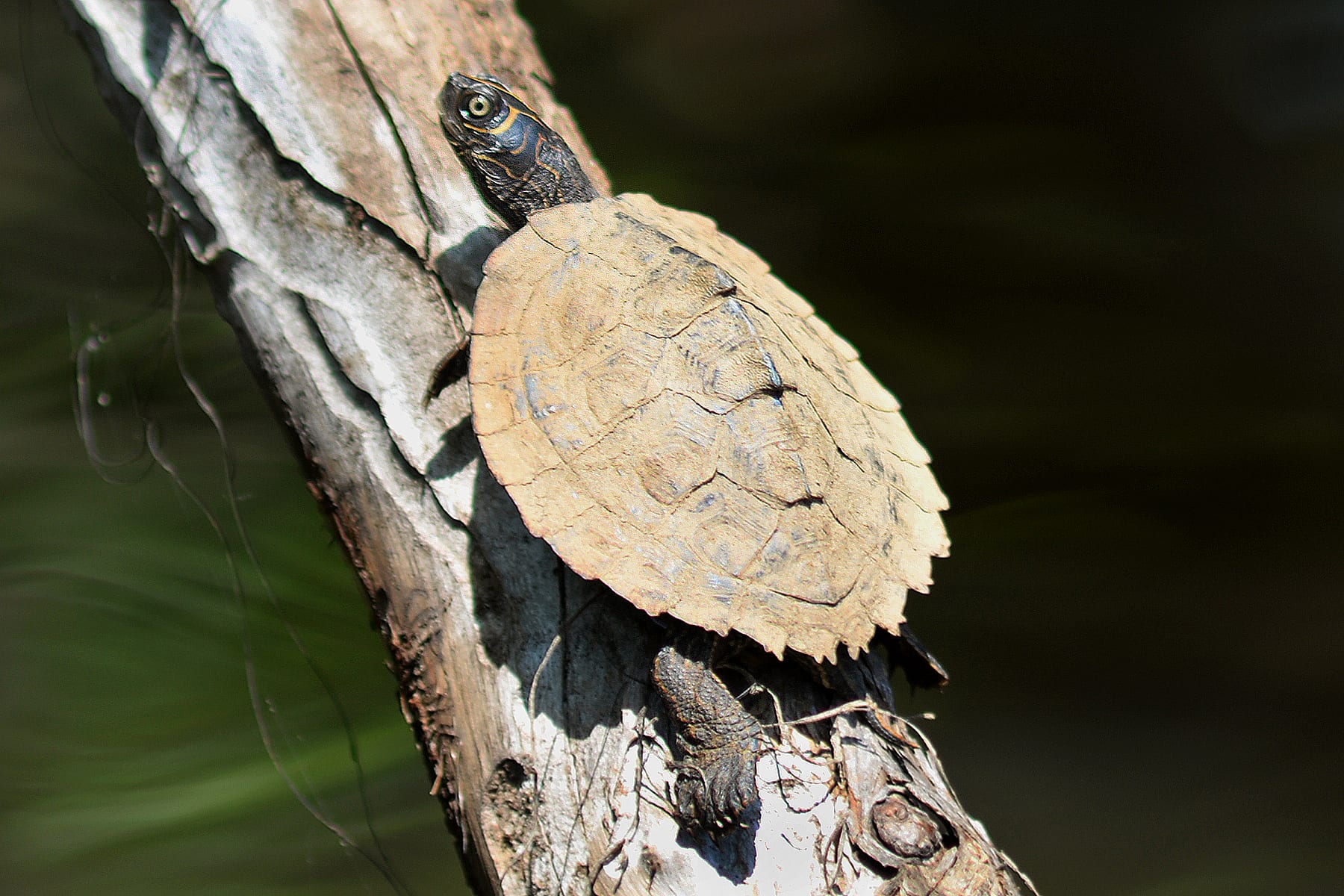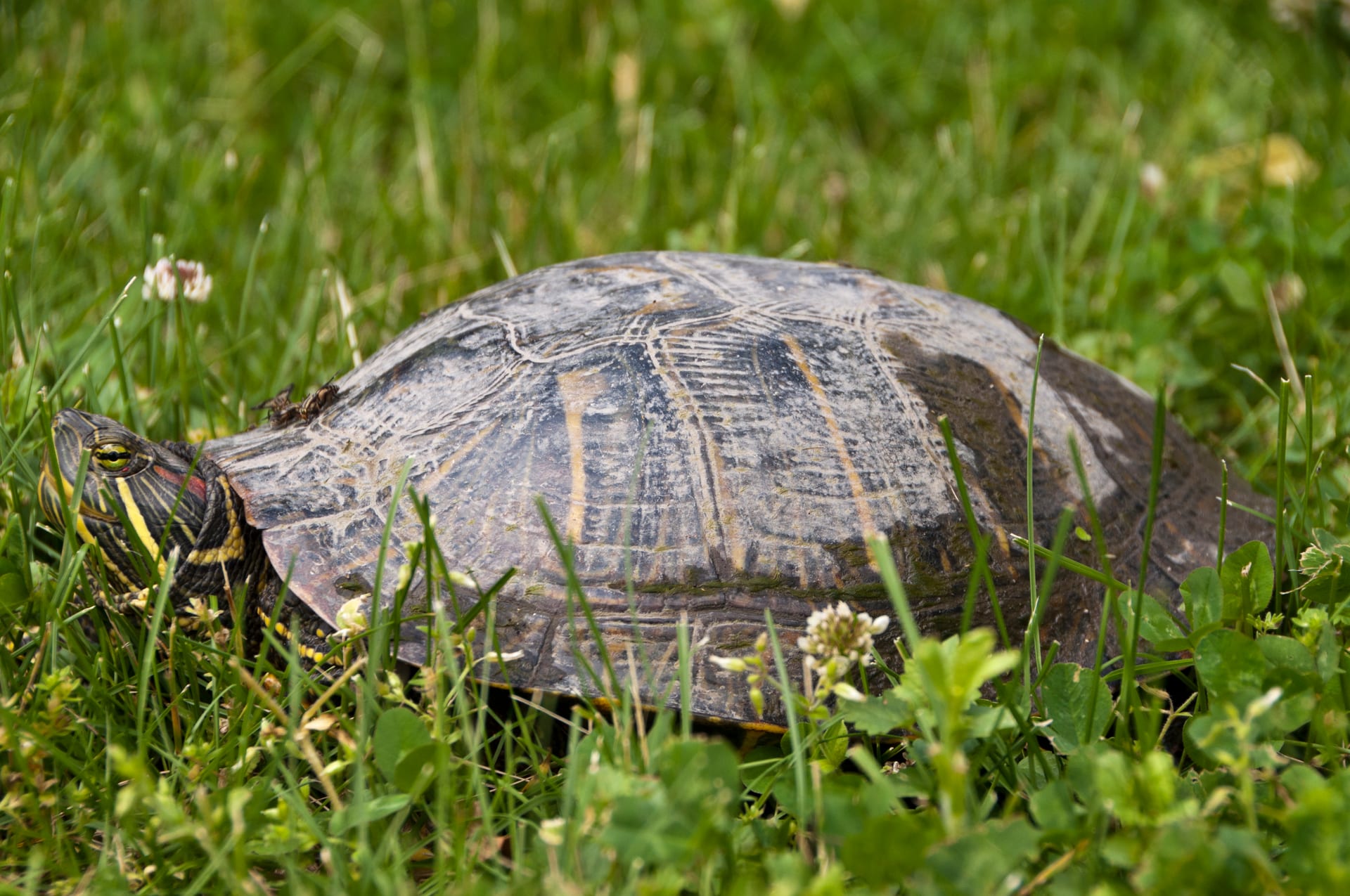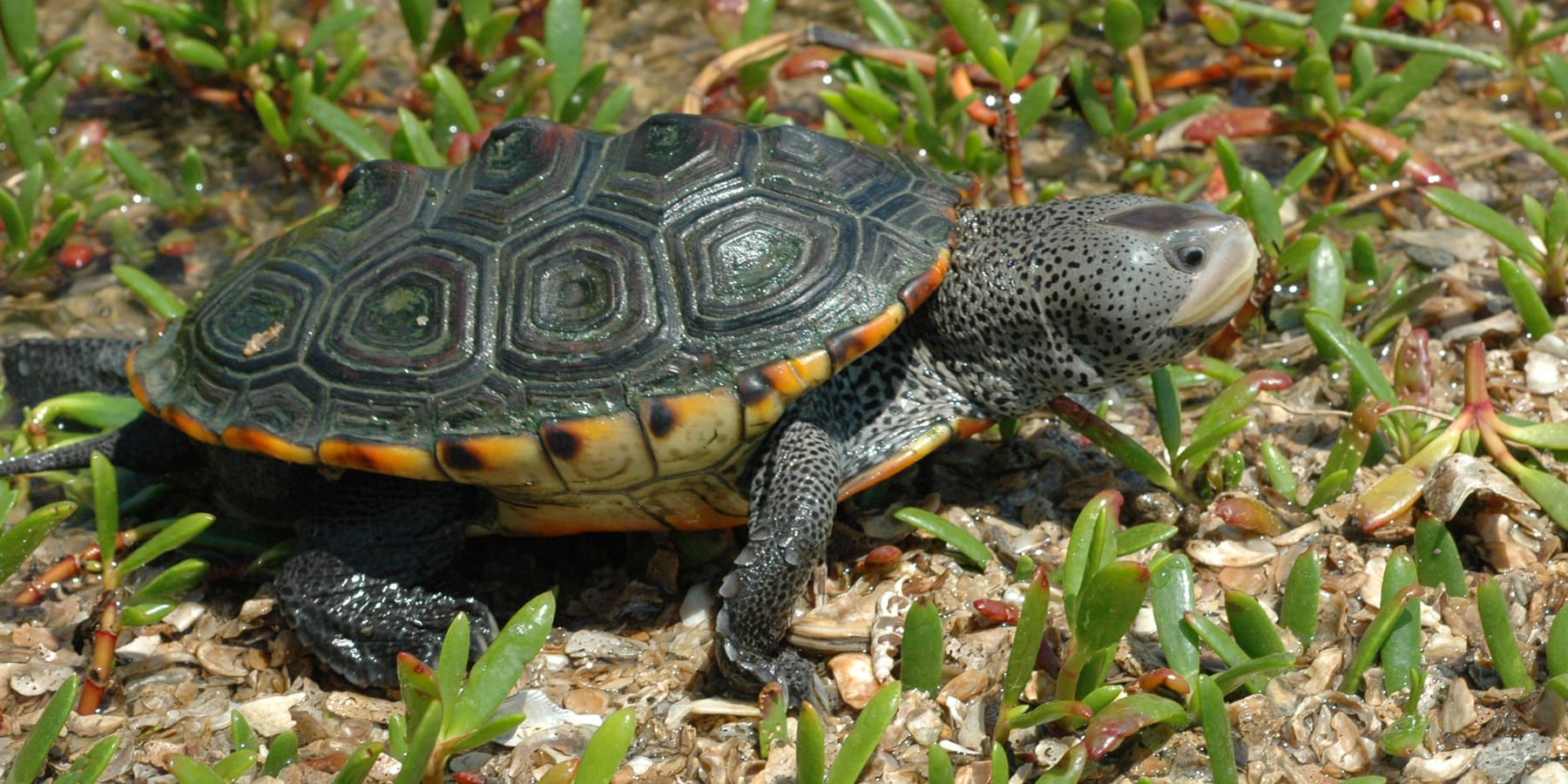
Source: Wikimedia Commons
Diamondback Terrapin
IntermediateMalaclemys terrapin
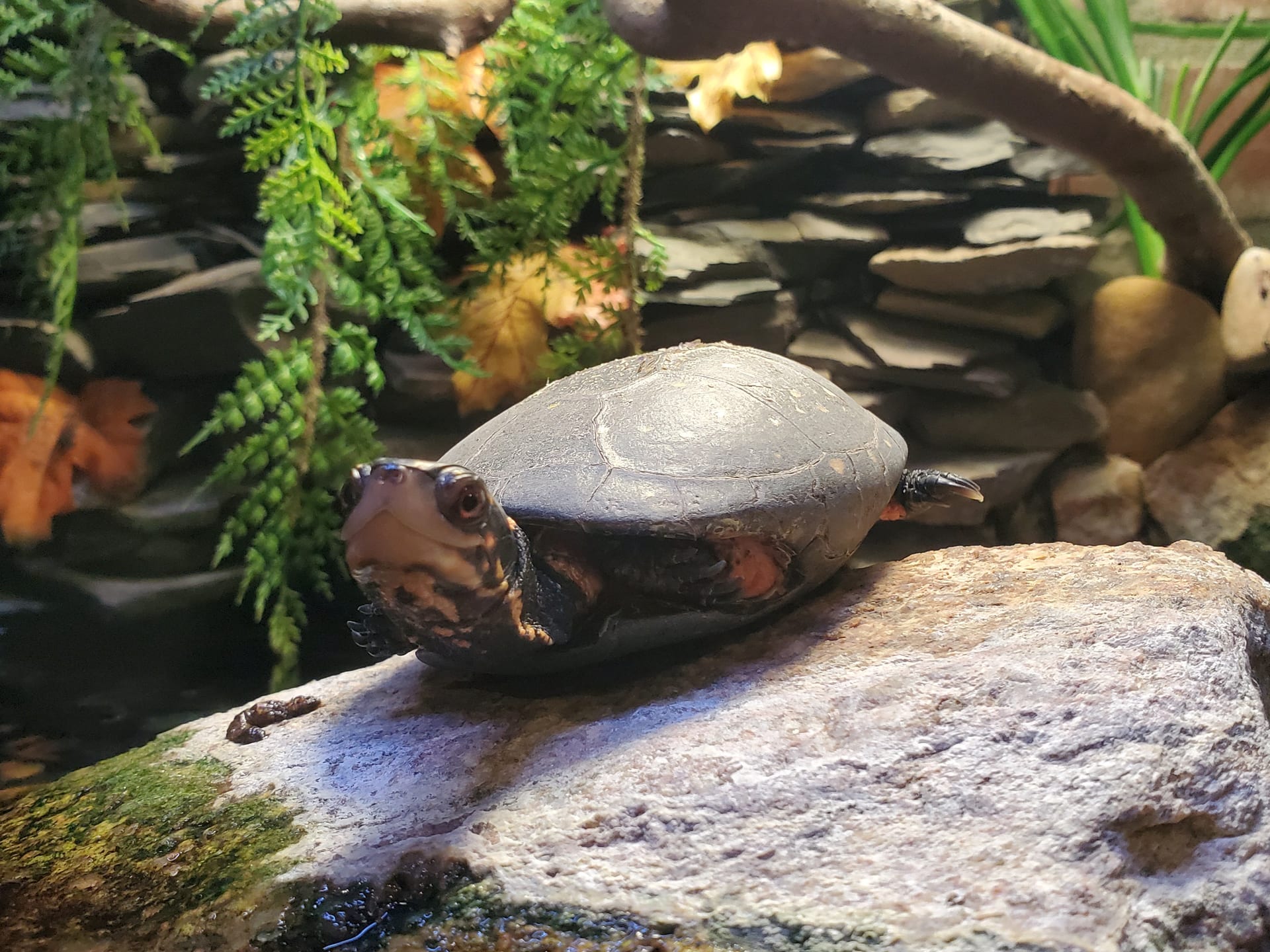
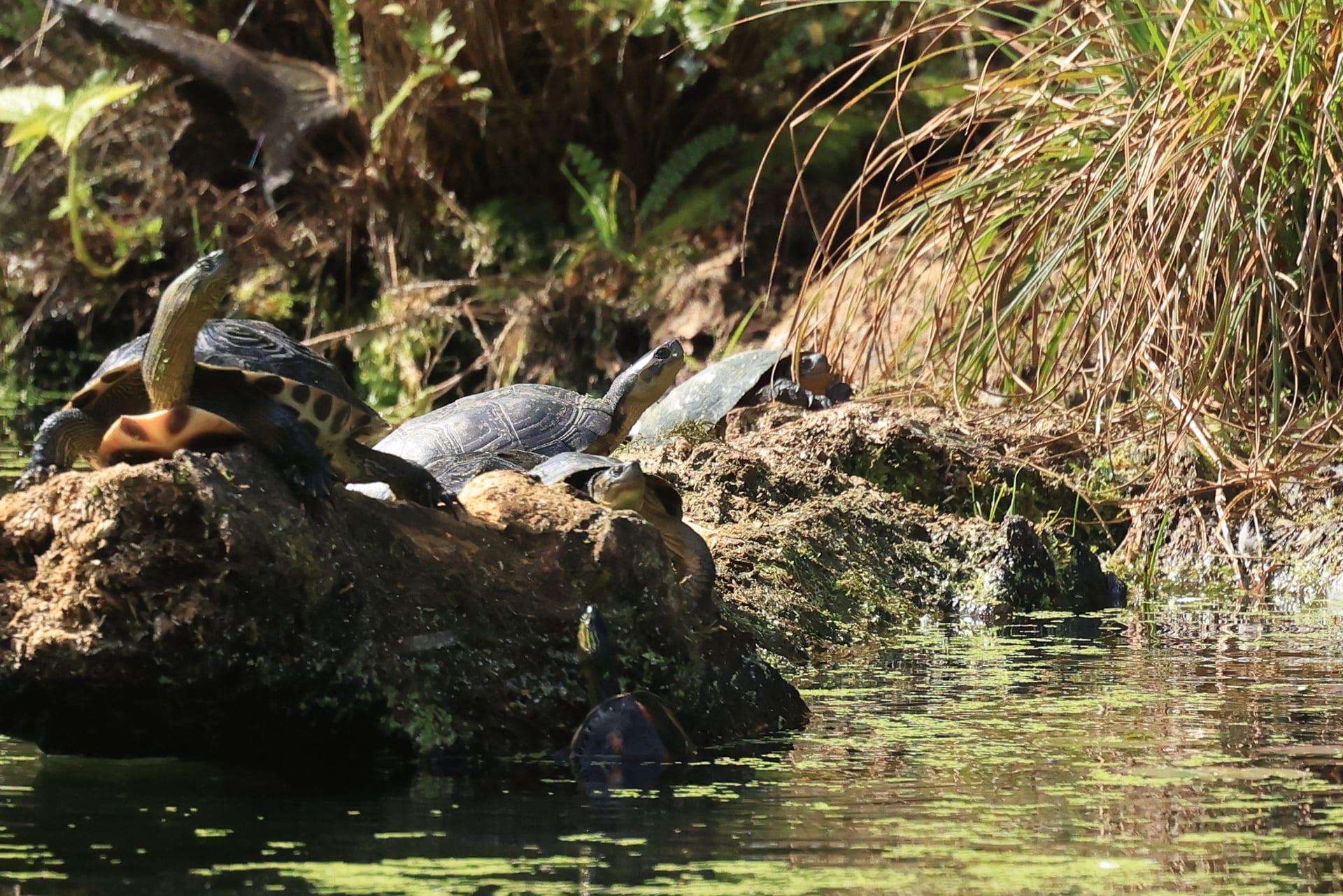
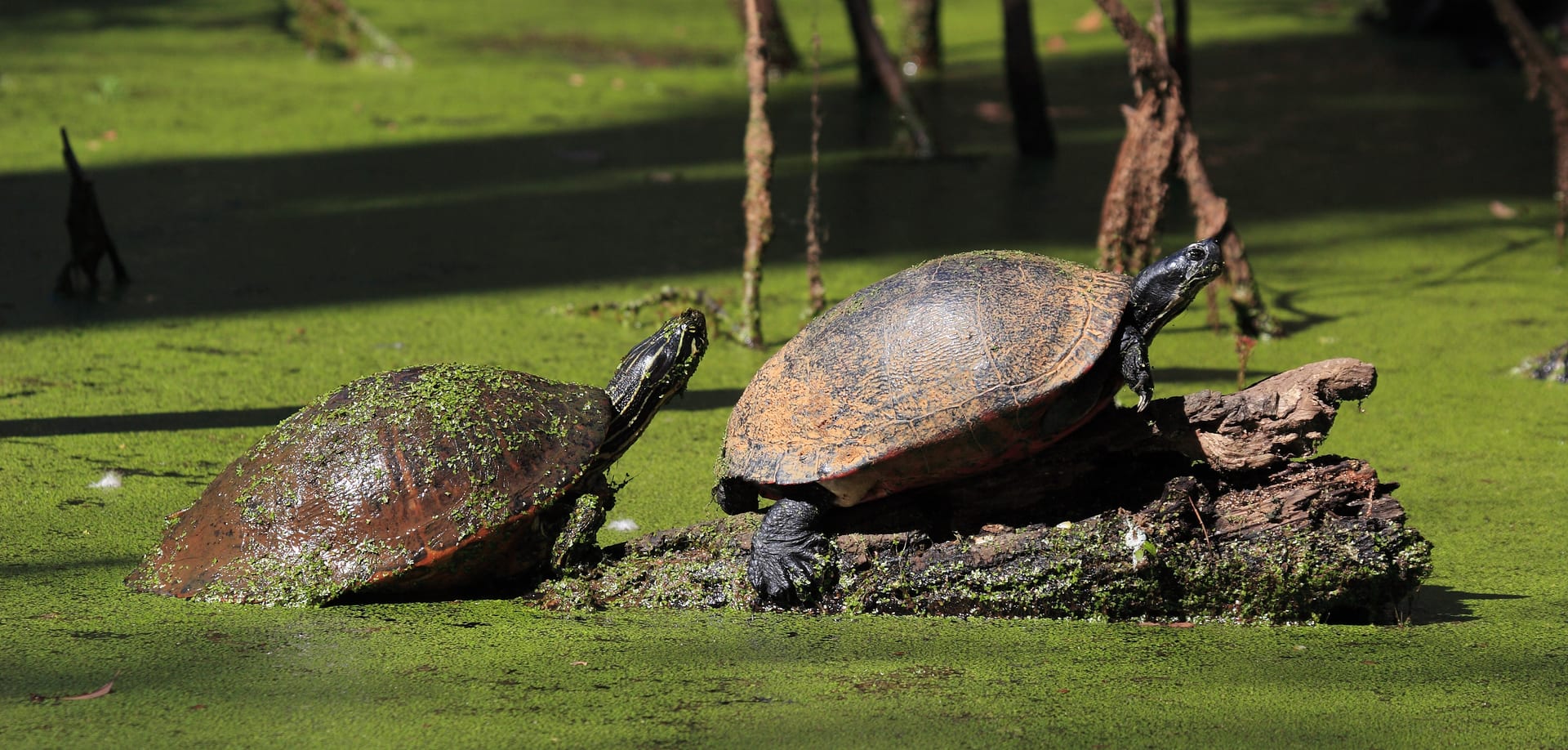
An emydid turtle confined to the brackish coasts of eastern North America. Its English name comes from the concentric growth rings on the carapace scutes, which resemble the facets of a diamond. Lachrymal salt glands allow it to live in sea water.
Difficulty
Intermediate
Lifespan
Up to 40 years in captivity; about 25 years is the estimate for wild animals
Size
Carapace up to 23.8cm; males up to 15.3cm
Humidity
40〜70%
Diet
Aquatic turtle pellets, snails and bivalves, crustaceans and small fish
About
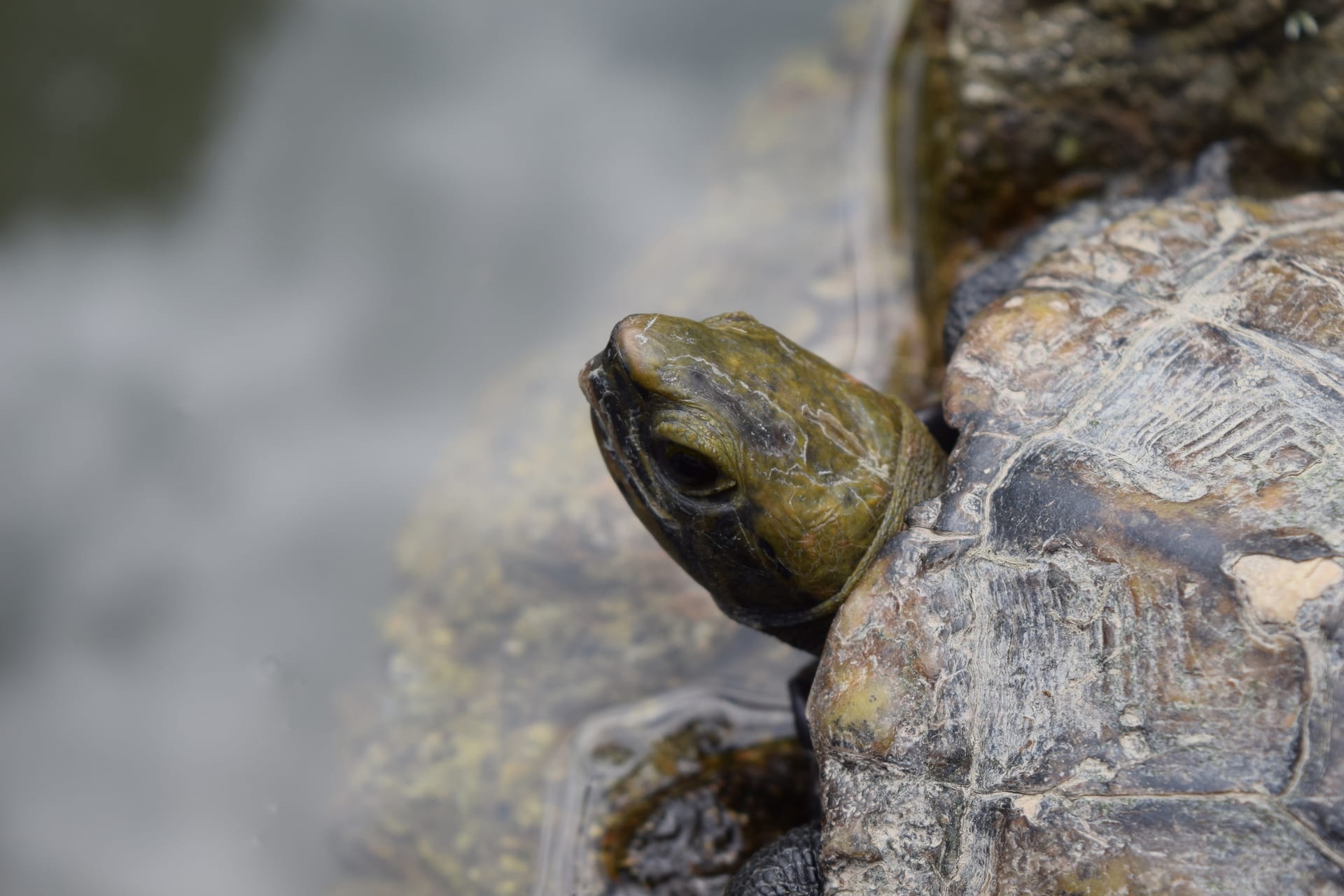
Malaclemys terrapin is an emydid turtle of the brackish coastal waters of eastern and Gulf-coast North America and the only member of its genus. Uniquely among North American turtles it lives only in saline habitats such as salt marshes, tidal flats and estuaries, and enlarged lachrymal salt glands let it survive long periods in full-strength sea water. The skin is greyish white to pale grey with black spots and streaks, and the top of the head is covered with large spindle-shaped scales. The concentric growth rings on the carapace scutes give the animal its English name. Seven subspecies are recognised, differing in carapace shape, keel development and the colour of skin and beak. The sexes differ markedly: females have much larger jaws and crush molluscs powerfully. The species was severely depleted by harvesting for food in the early twentieth century.
Source: Wikipedia (CC BY-SA 4.0)
Lifespan of the Diamondback Terrapin
The Diamondback Terrapin lives Up to 40 years in captivity; about 25 years is the estimate for wild animals.
Size of the Diamondback Terrapin
The Diamondback Terrapin grows to Carapace up to 23.8cm; males up to 15.3cm.
Basic Info
Origin
The Atlantic and Gulf coasts of the United States from Massachusetts to Texas, and Bermuda, in salt marshes, tidal flats, inlets and estuaries
Lifespan
Up to 40 years in captivity; about 25 years is the estimate for wild animals
Size
Care Specifications
PeacefulSolitaryBreeding: Moderate
Sources: Reptiles Magazine: Diamondback Terrapin Natural History and Captive Care / Wikipedia (Japanese): Diamondback terrapin / Wikipedia (English): Diamondback terrapin / Reptile Database
References & Sources
Edited & verified by: BreederDirect editorial team
The taxonomic, regulatory, and husbandry data on this page are compiled and verified against the authoritative primary sources below.
Primary sources
- Wikipedia
- CITES Appendices
- Ministry of the Environment: list of invasive alien species
- Order for Enforcement of the Act on Welfare and Management of Animals (designated dangerous animals)
- Reptiles Magazine: Diamondback Terrapin Natural History and Captive Care
- Wikipedia (Japanese): Diamondback terrapin
- Wikipedia (English): Diamondback terrapin
- Reptile Database
Taxonomy & Authority
Accepted name: Malaclemys terrapin (Schoepff, 1793)
Synonyms: Testudo terrapin Schoepff, 1793, Emys macrocephala Gray, 1844, Malacoclemmys terrapin (Cope, 1875)
Authority databases: Reptile Database
Nomenclature follows global taxonomic authority databases.
Regulations & Conservation Status
CITES Appendix IIIUCN VU · Vulnerable
Listed in CITES Appendix II effective June 12, 2013. As an Appendix II species, no CITES registration certificate for internationally rare wild fauna and flora is required. It does not fall under the designated animals listed in the Ordinance for the Enforcement of the Law Concerning the Protection and Management of Animals, nor is it designated as a specified alien species.
Sources: CITES Appendices / Ministry of the Environment: list of invasive alien species / Order for Enforcement of the Act on Welfare and Management of Animals (designated dangerous animals)
Regulations may change. Always verify the latest information with the relevant authorities.
Diamondback Terrapin Listings
Loading latest listingsFind listings for this species