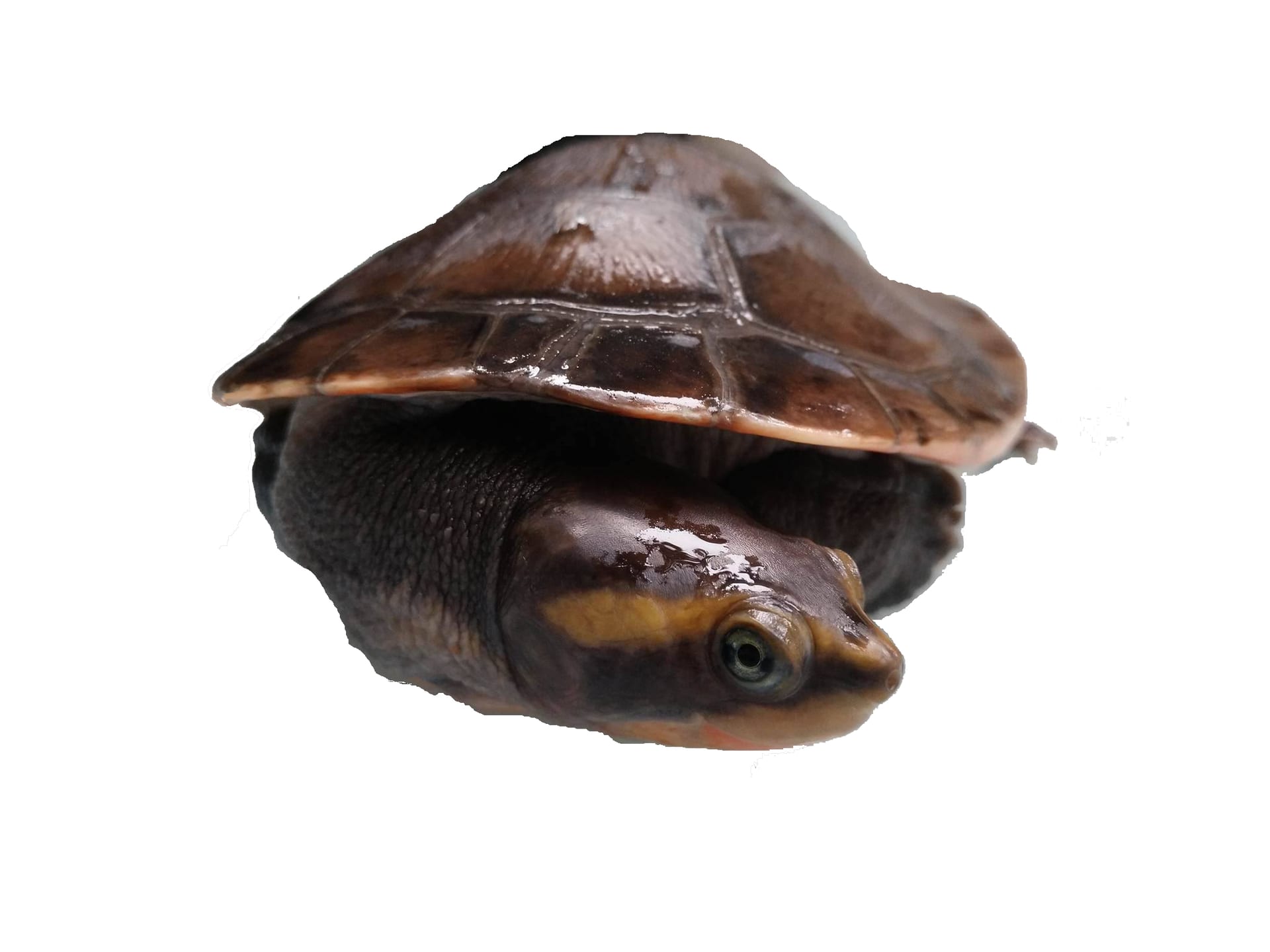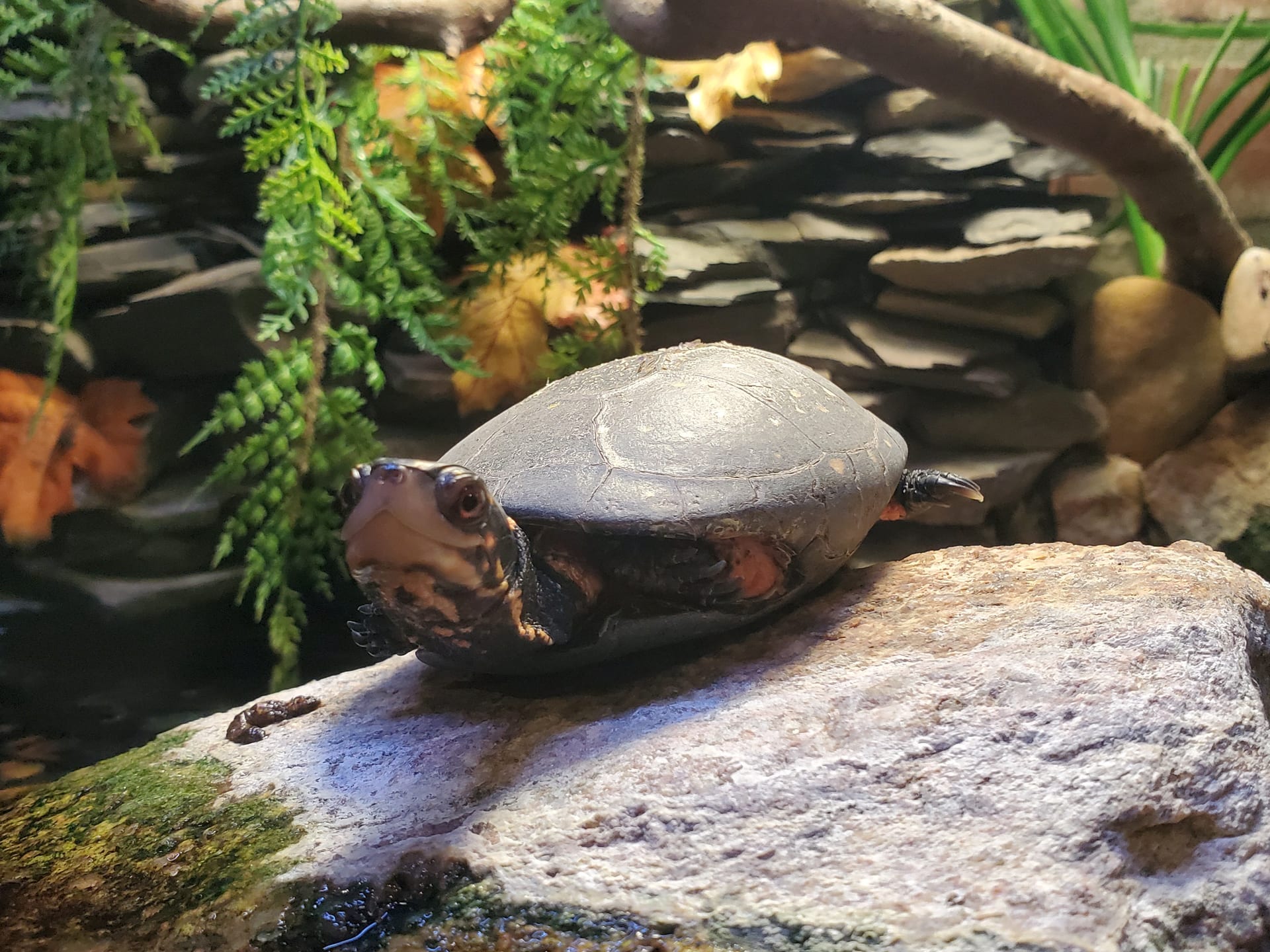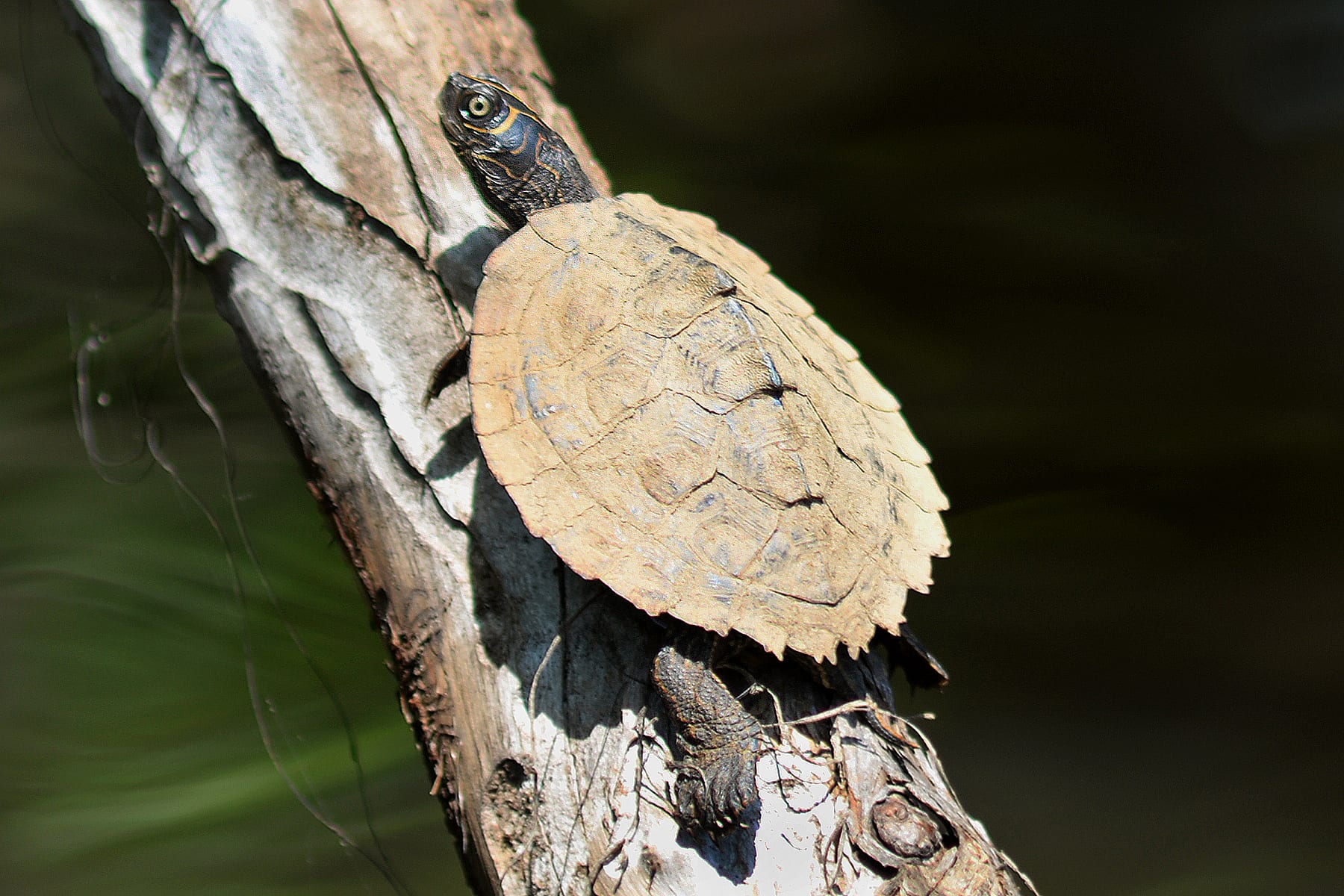
Source: Wikimedia Commons
Mississippi Map Turtle
BeginnerGraptemys pseudogeographica
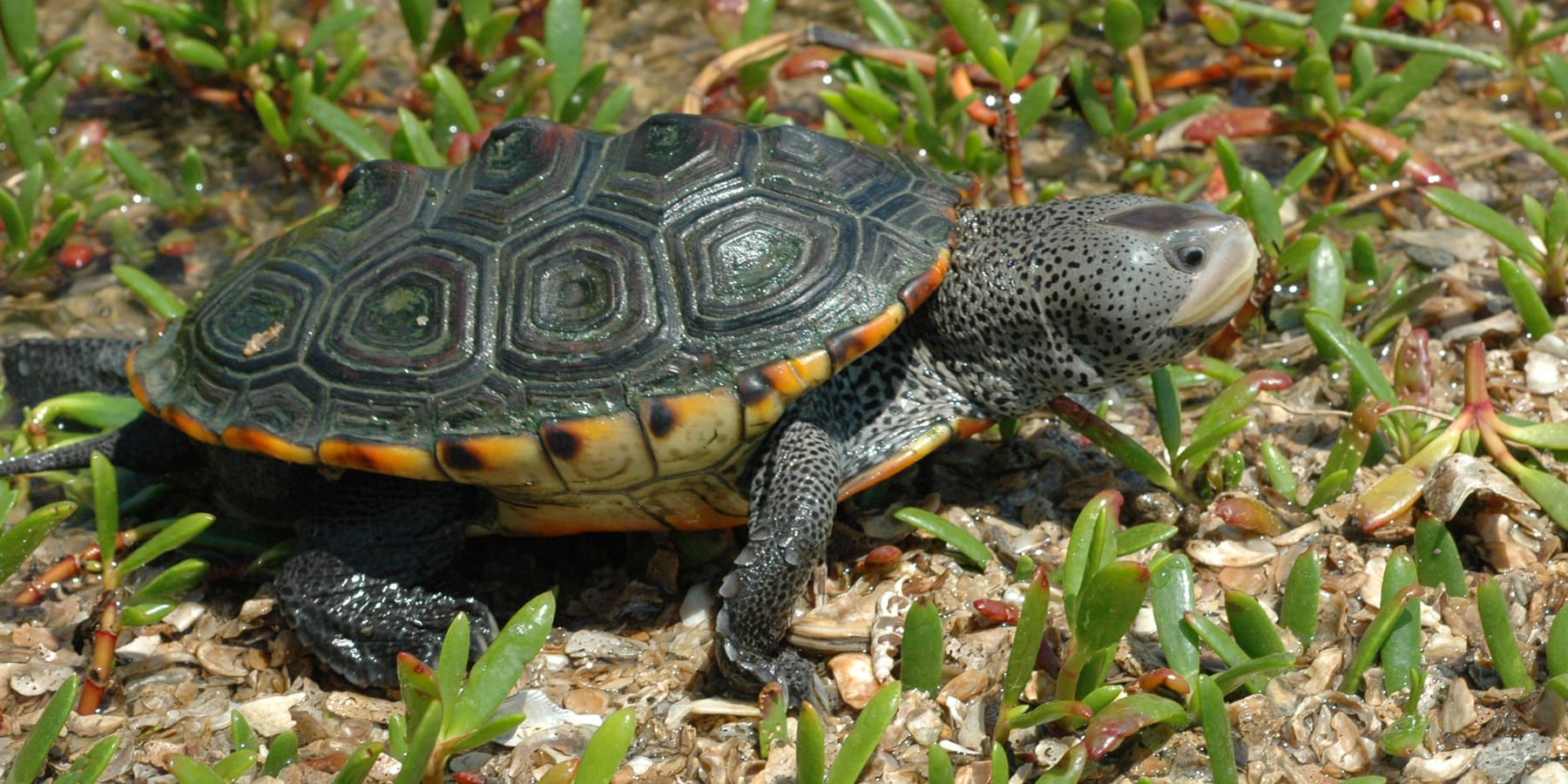
A map turtle named for the fine light lines on its carapace, which resemble contour lines on a map. It lives in the Mississippi drainage and is told from its congeners by a white or grey iris without a dark bar. The carapace reaches 25 cm.
Difficulty
Beginner
Lifespan
Maximum recorded longevity in captivity is 35 years
Size
Carapace up to 25cm, with females larger than males
Humidity
40〜70%
Diet
Aquatic turtle pellets, fish, insects, crustaceans, snails and aquatic plants
About
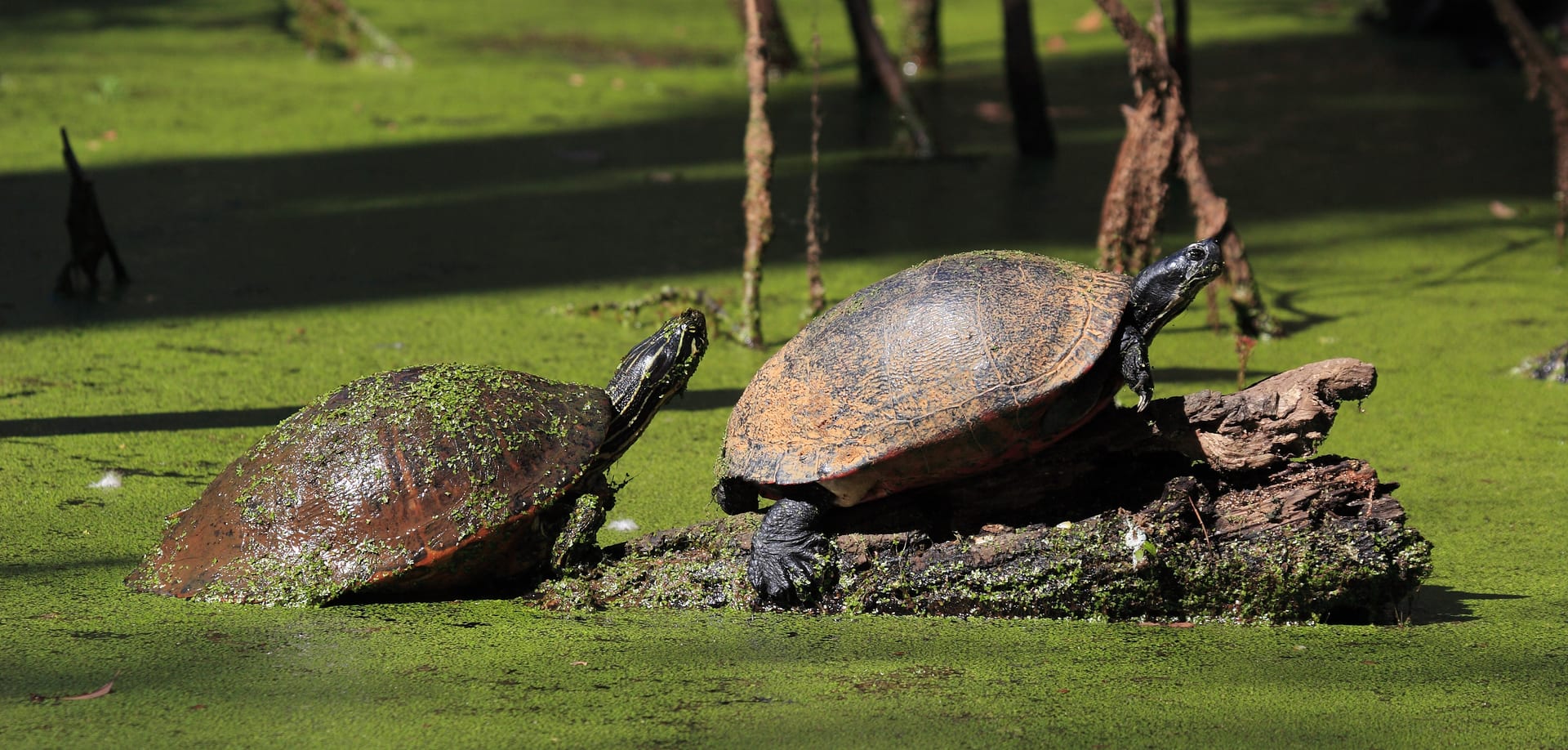
The Mississippi map turtle is an emydid of the genus Graptemys; the name in the trade refers to the subspecies Graptemys pseudogeographica kohnii. The carapace reaches 25 cm, females being larger, and the rear marginal scutes are serrated. Fine white to cream lines mark the head, with a blotch running from behind the eye downwards, and the iris is white or grey - alone in the genus, this subspecies has no dark bar across the iris. Juveniles have spine-like projections on the vertebral scutes that smooth out with age. Unusually for a map turtle it also lives in still water; it is strongly aquatic but climbs onto logs and rocks to bask for long periods, sliding into the water when startled. Omnivorous with a carnivorous bias, it eats a greater proportion of molluscs where no congener specialises in them.
Source: Wikipedia (CC BY-SA 4.0)
Lifespan of the Mississippi Map Turtle
The Mississippi Map Turtle lives Maximum recorded longevity in captivity is 35 years.
Size of the Mississippi Map Turtle
The Mississippi Map Turtle grows to Carapace up to 25cm, with females larger than males.
Basic Info
Origin
The lower Mississippi drainage of the United States, mainly in large rivers and in lakes near them
Lifespan
Maximum recorded longevity in captivity is 35 years
Size
Carapace up to 25cm, with females larger than males
Care Specifications
PeacefulGroupBreeding: Moderate
Sources: Reptiles Magazine: Map Turtle Care and Information / Wikipedia (Japanese): Mississippi map turtle / Wikipedia (English): False map turtle / Reptile Database / AnAge: The Animal Ageing and Longevity Database
References & Sources
Edited & verified by: BreederDirect editorial team
The taxonomic, regulatory, and husbandry data on this page are compiled and verified against the authoritative primary sources below.
Primary sources
- Wikipedia
- CITES Appendices
- Ministry of the Environment: list of invasive alien species
- Order for Enforcement of the Act on Welfare and Management of Animals (designated dangerous animals)
- Reptiles Magazine: Map Turtle Care and Information
- Wikipedia (Japanese): Mississippi map turtle
- Wikipedia (English): False map turtle
- Reptile Database
- AnAge: The Animal Ageing and Longevity Database
Taxonomy & Authority
Accepted name: Graptemys pseudogeographica (Gray, 1831)
Synonyms: Emys pseudogeographica Gray, 1831, Graptemys kohnii (Baur, 1890), Malaclemys pseudogeographica (McDowell, 1964)
Authority databases: Reptile Database
Nomenclature follows global taxonomic authority databases.
Regulations & Conservation Status
CITES Appendix IIIIUCN LC · Least Concern
Graptemys spp. was listed in CITES Appendix III by the United States, effective 14 June 2006 (Listing country: United States). As an Appendix III species, special international registration is not required. It is not designated as a Special Animal under the Animal Welfare and Management Act nor as a Designated Invasive Species.
Sources: CITES Appendices / Ministry of the Environment: list of invasive alien species / Order for Enforcement of the Act on Welfare and Management of Animals (designated dangerous animals)
Regulations may change. Always verify the latest information with the relevant authorities.
Mississippi Map Turtle Listings
Loading latest listingsFind listings for this species