Source: Wikimedia Commons
Pink-Bellied Side-Necked Turtle
BeginnerEmydura subglobosa
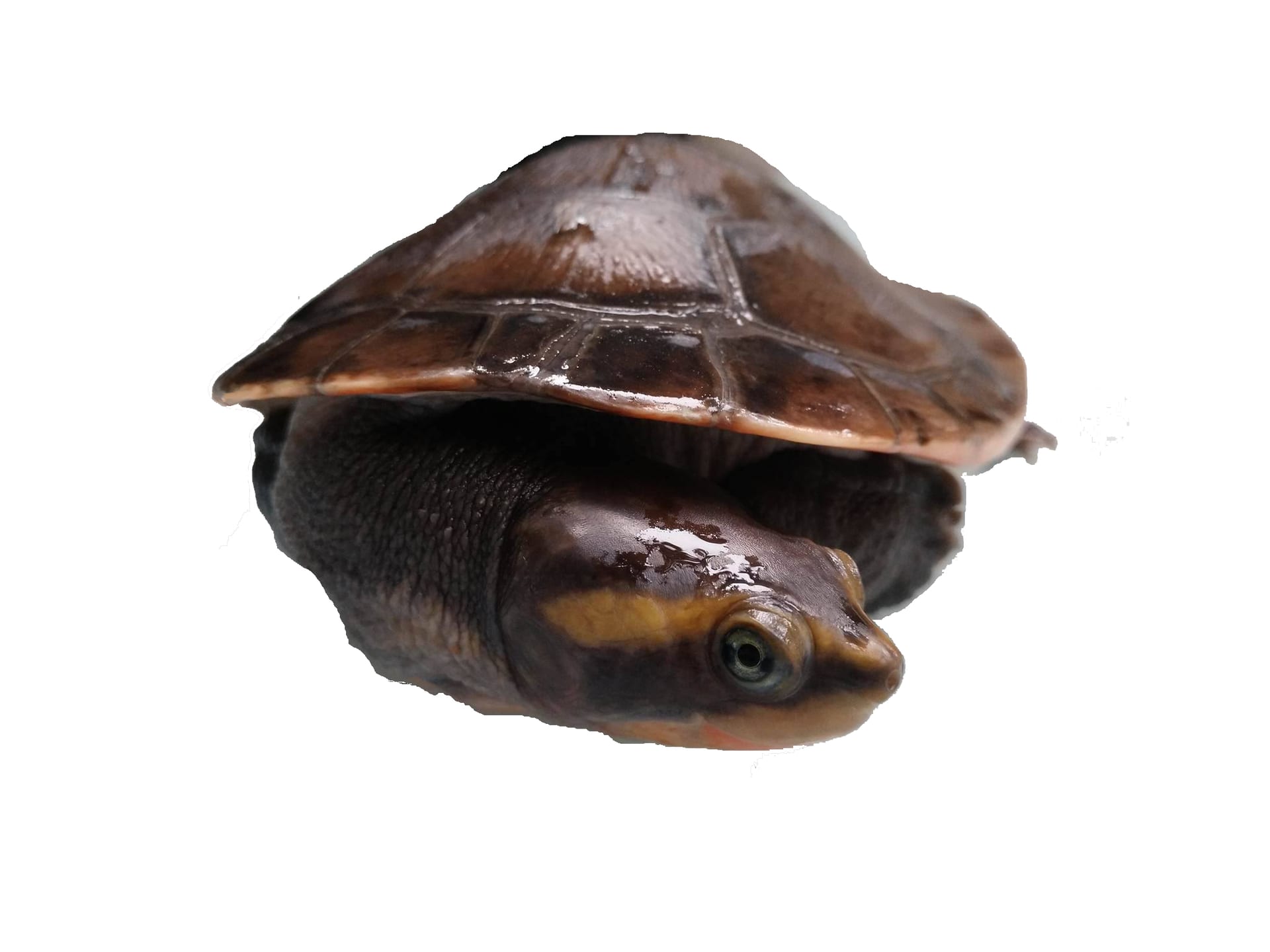
A chelid turtle whose plastron is orange-tinged pink, with a broad yellow stripe running from the snout to above the tympanum. An active, strong-swimming species, and common in the trade. The carapace reaches 25.5 cm.
Difficulty
Beginner
Lifespan
20-30 years
Size
Carapace up to 25.5cm
Humidity
40〜70%
Diet
Aquatic turtle pellets, fish, frogs, insects, crustaceans, snails, earthworms, fruit and aquatic plants
About
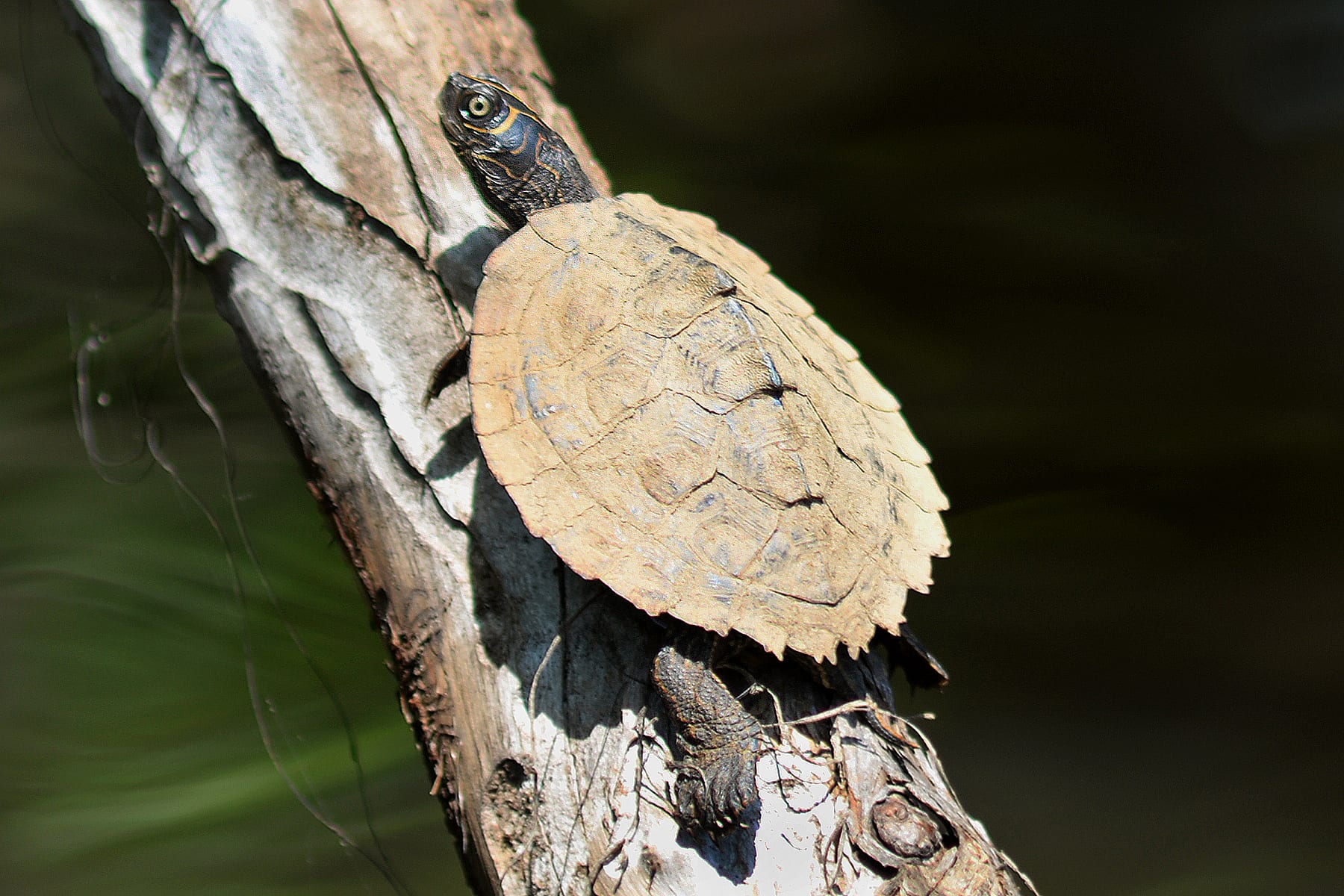
Emydura subglobosa is a chelid turtle and the only member of its genus that also occurs on New Guinea. The carapace reaches 25.5 cm, is a narrow oval seen from above and is black to brown. In the nominate subspecies a broad yellow stripe runs from the snout to above the tympanum, and the plastron - and in some animals the limbs as well - is an orange-tinged pink that gives the turtle its English and Japanese names. The iris carries a horizontal dark bar. Juveniles have a round carapace with a keel on the vertebral scutes that disappears with growth. Semi-aquatic, it lives in slow rivers and lakes with dense aquatic vegetation, spends most of its time in the water and also basks. It is omnivorous with a carnivorous bias. Large numbers reach Japan, mostly captive-bred animals of the nominate subspecies, sometimes sold under the synonym Emydura albertisii.
Source: Wikipedia (CC BY-SA 4.0)
Lifespan of the Pink-Bellied Side-Necked Turtle
The Pink-Bellied Side-Necked Turtle lives 20-30 years.
Size of the Pink-Bellied Side-Necked Turtle
The Pink-Bellied Side-Necked Turtle grows to Carapace up to 25.5cm.
Basic Info
Origin
Southern New Guinea in Indonesia and Papua New Guinea, and northern Cape York and beyond in Australia, in slow rivers and lakes with dense aquatic vegetation
Lifespan
20-30 years
Size
Carapace up to 25.5cm
Care Specifications
PeacefulGroupBreeding: Moderate
Sources: Reptiles Magazine: Pink-Bellied Side-Necked Turtle Care Sheet / Wikipedia (Japanese): Red-bellied short-necked turtle / Wikipedia (English): Red-bellied short-necked turtle / Reptile Database
References & Sources
Edited & verified by: BreederDirect editorial team
The taxonomic, regulatory, and husbandry data on this page are compiled and verified against the authoritative primary sources below.
Primary sources
- Wikipedia
- CITES Appendices (species not listed)
- Ministry of the Environment: list of invasive alien species
- Order for Enforcement of the Act on Welfare and Management of Animals (designated dangerous animals)
- Reptiles Magazine: Pink-Bellied Side-Necked Turtle Care Sheet
- Wikipedia (Japanese): Red-bellied short-necked turtle
- Wikipedia (English): Red-bellied short-necked turtle
- Reptile Database
Taxonomy & Authority
Accepted name: Emydura subglobosa Krefft, 1876
Synonyms: Euchelymys subglobosa Krefft, 1876, Emydura albertisii (Boulenger, 1888), Emydura subglobosa worrelli Wells & Wellington, 1985
Authority databases: Reptile Database
Nomenclature follows global taxonomic authority databases.
Regulations & Conservation Status
Not CITES-listed
Not listed in CITES Appendix. This species is neither designated under the Law on Welfare and Management of Animals nor a designated invasive species. Australia prohibits the export of wild specimens.
Sources: CITES Appendices (species not listed) / Ministry of the Environment: list of invasive alien species / Order for Enforcement of the Act on Welfare and Management of Animals (designated dangerous animals)
Regulations may change. Always verify the latest information with the relevant authorities.
Pink-Bellied Side-Necked Turtle Listings
Loading latest listingsFind listings for this species