Source: Wikimedia Commons
Pig-Nosed Turtle
AdvancedCarettochelys insculpta
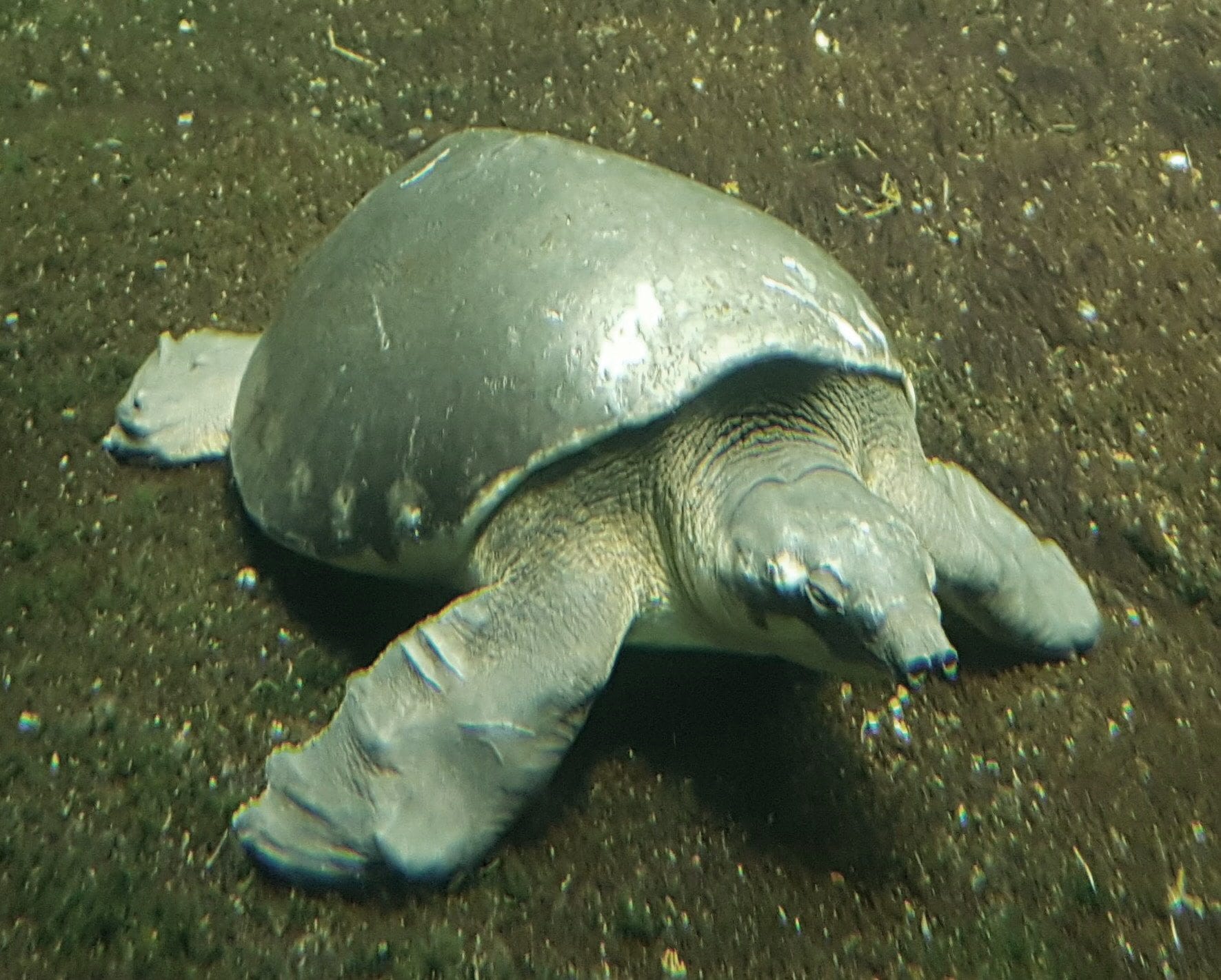
Its forelimbs are flippers like a sea turtle and its protruding snout with large nostrils resembles a pig nose, hence the English name. The only living member of its family, it is fully aquatic and leaves the water only to nest.
Difficulty
Advanced
Temperature
25〜32℃
Lifespan
Recorded at over 17 years in captivity
Size
Carapace to 56.3cm, with reports of 80cm, and up to 22.5kg
Humidity
40〜70%
Diet
Fruit, especially figs, aquatic plants, algae, insects, crustaceans, fish and prepared pellets
About
Carettochelys insculpta occurs in New Guinea and northern Australia and is the only living member of its family and genus. Neither carapace nor plastron carries horny scutes, and the surface is covered with fine wrinkles and small pits; the specific name insculpta, meaning carved, refers to this texture. Unlike the softshells it keeps a domed bony carapace beneath the leathery skin, and the plastron is joined to it by a strong bony bridge. The third to fifth digits of the forelimb are elongated into oar-like flippers and the turtle swims like a sea turtle. The long protruding snout with its large nostrils resembles a pig nose, hence the English name. It is omnivorous with a plant bias, eating mainly fruit and aquatic plants in the dry season and adding animal food in the wet. Fully aquatic, it comes ashore only to nest and is a powerful swimmer.
Source: Wikipedia (CC BY-SA 4.0)
Lifespan of the Pig-Nosed Turtle
The Pig-Nosed Turtle lives Recorded at over 17 years in captivity.
Size of the Pig-Nosed Turtle
The Pig-Nosed Turtle grows to Carapace to 56.3cm, with reports of 80cm, and up to 22.5kg.
Basic Info
Origin
Southern Papua province of Indonesia, southwestern New Guinea in Papua New Guinea, and the northern Northern Territory of Australia, in clear slow rivers, lakes and marshes
Lifespan
Recorded at over 17 years in captivity
Size
Carapace to 56.3cm, with reports of 80cm, and up to 22.5kg
Care Specifications
AggressiveSolitaryBreeding: Hard
Sources: Wikipedia (Japanese): Pig-nosed turtle / Wikipedia (English): Pig-nosed turtle / Reptile Database
References & Sources
Edited & verified by: BreederDirect editorial team
The taxonomic, regulatory, and husbandry data on this page are compiled and verified against the authoritative primary sources below.
Taxonomy & Authority
Accepted name: Carettochelys insculpta Ramsay, 1886
Synonyms: Carettochelys insculptus Ramsay, 1886, Carettochelys canni Wells, 2007
Authority databases: Reptile Database
Nomenclature follows global taxonomic authority databases.
Regulations & Conservation Status
CITES Appendix IIIUCN EN · Endangered
Listed in CITES Appendix II effective January 12, 2005. As an Appendix II species, an international endangered species certificate is not required. It does not qualify as a designated animal under the Animal Protection and Management Act enforcement regulations, nor is it designated as a specified alien species. Domestic trade and export are prohibited in Australia and Papua New Guinea.
Sources: CITES Appendices / Ministry of the Environment: list of invasive alien species / Order for Enforcement of the Act on Welfare and Management of Animals (designated dangerous animals)
Regulations may change. Always verify the latest information with the relevant authorities.
Pig-Nosed Turtle Listings
Loading latest listingsFind listings for this species