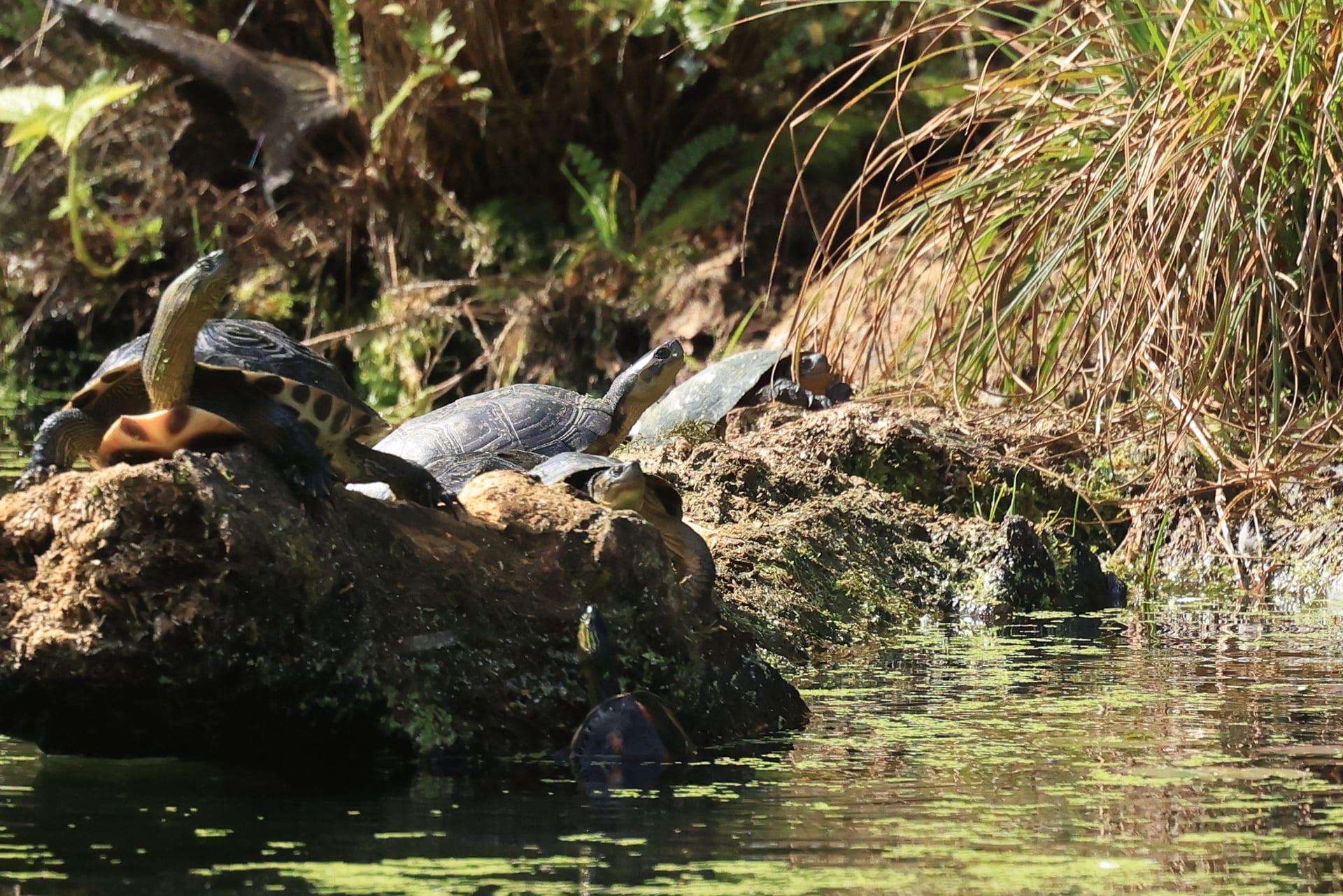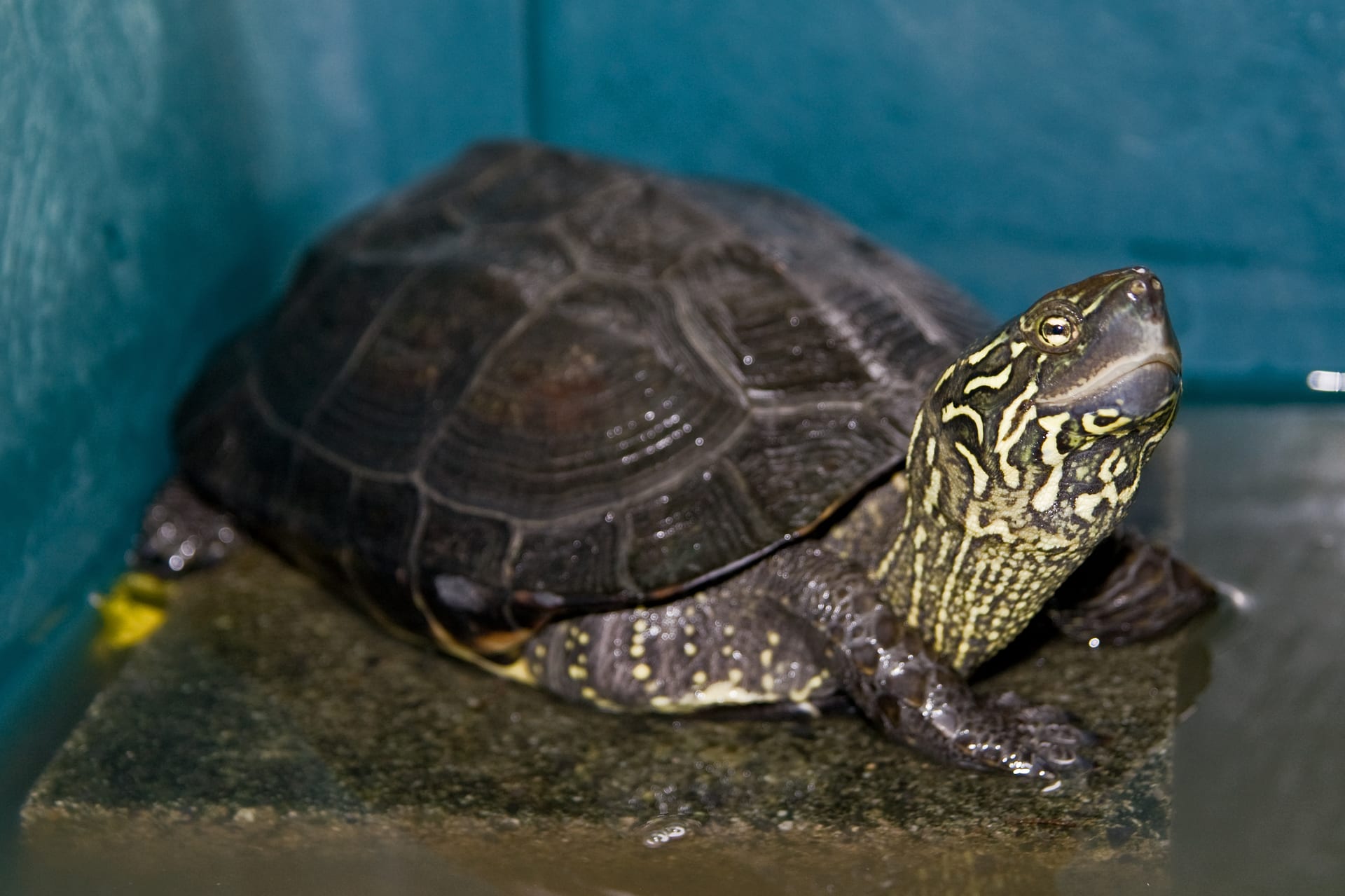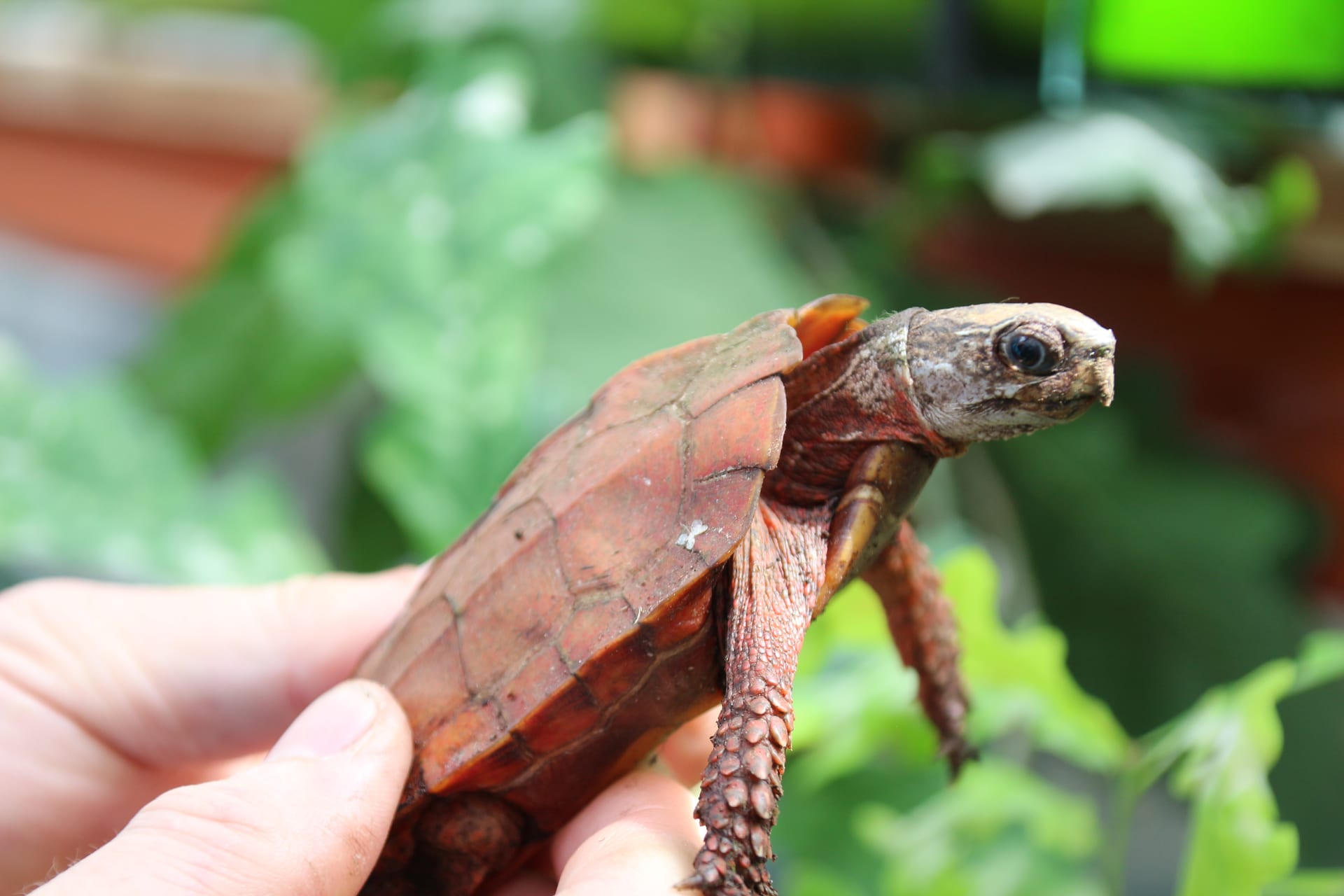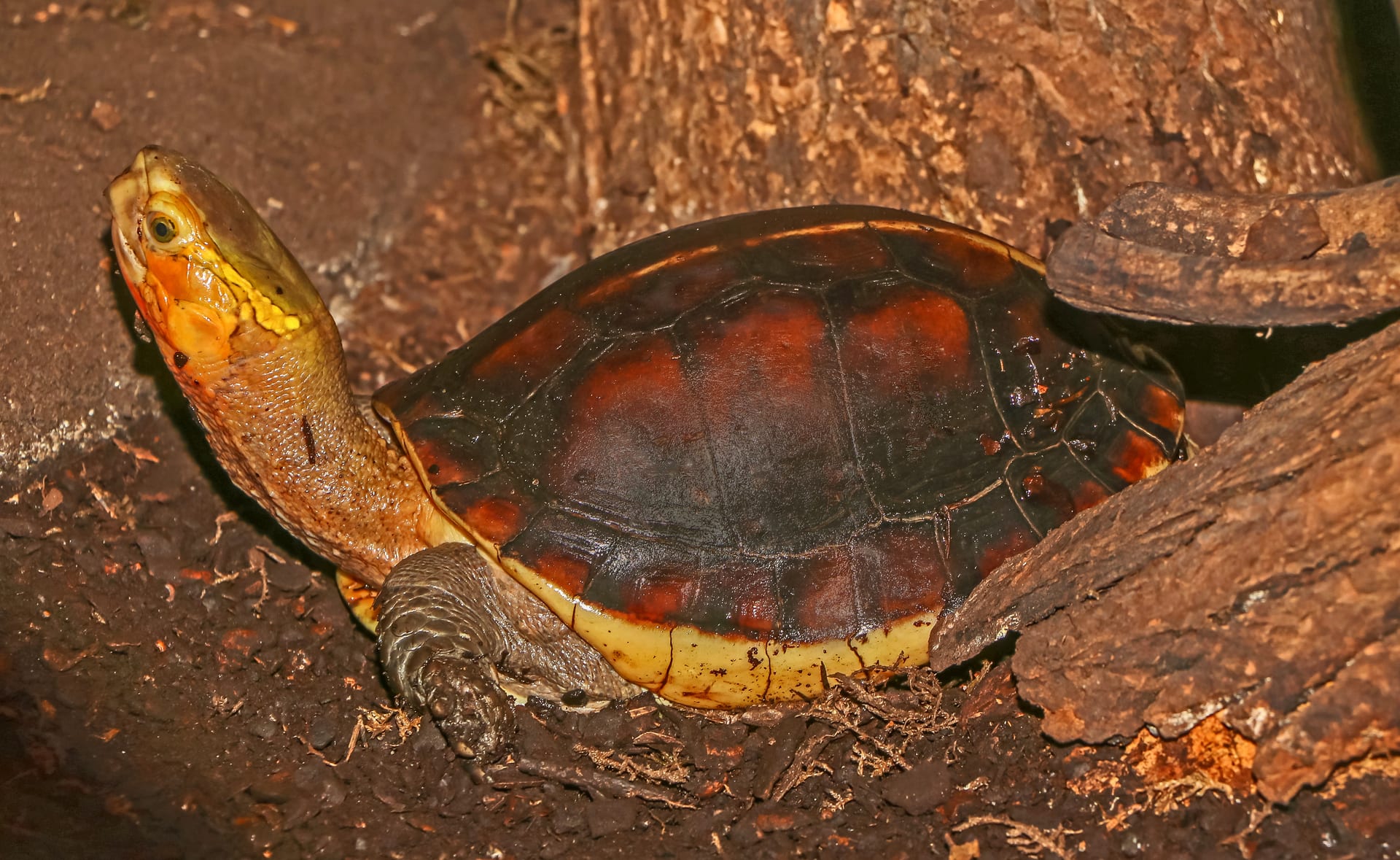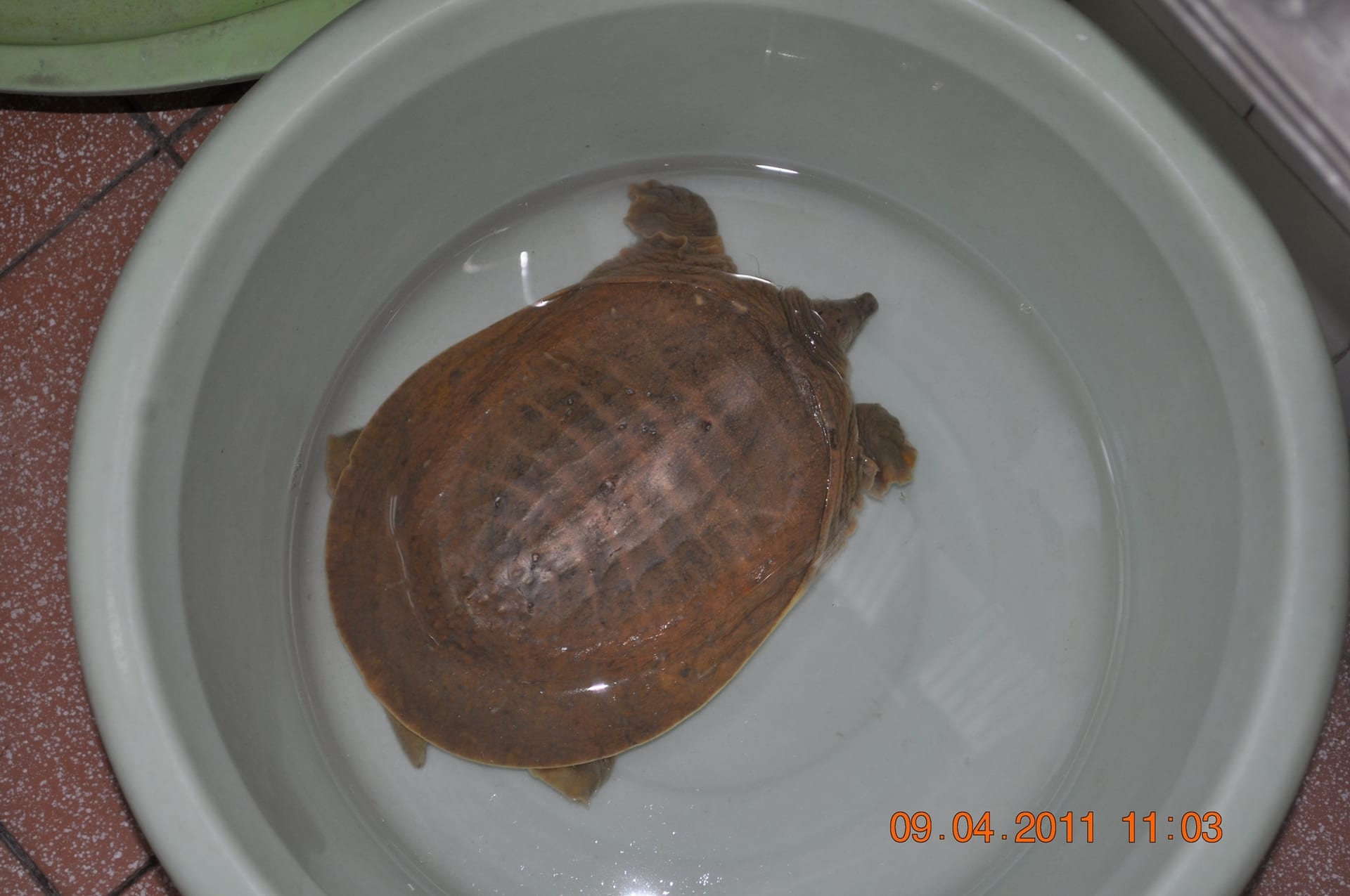
Source: Wikimedia Commons
Chinese Softshell Turtle
IntermediatePelodiscus sinensis
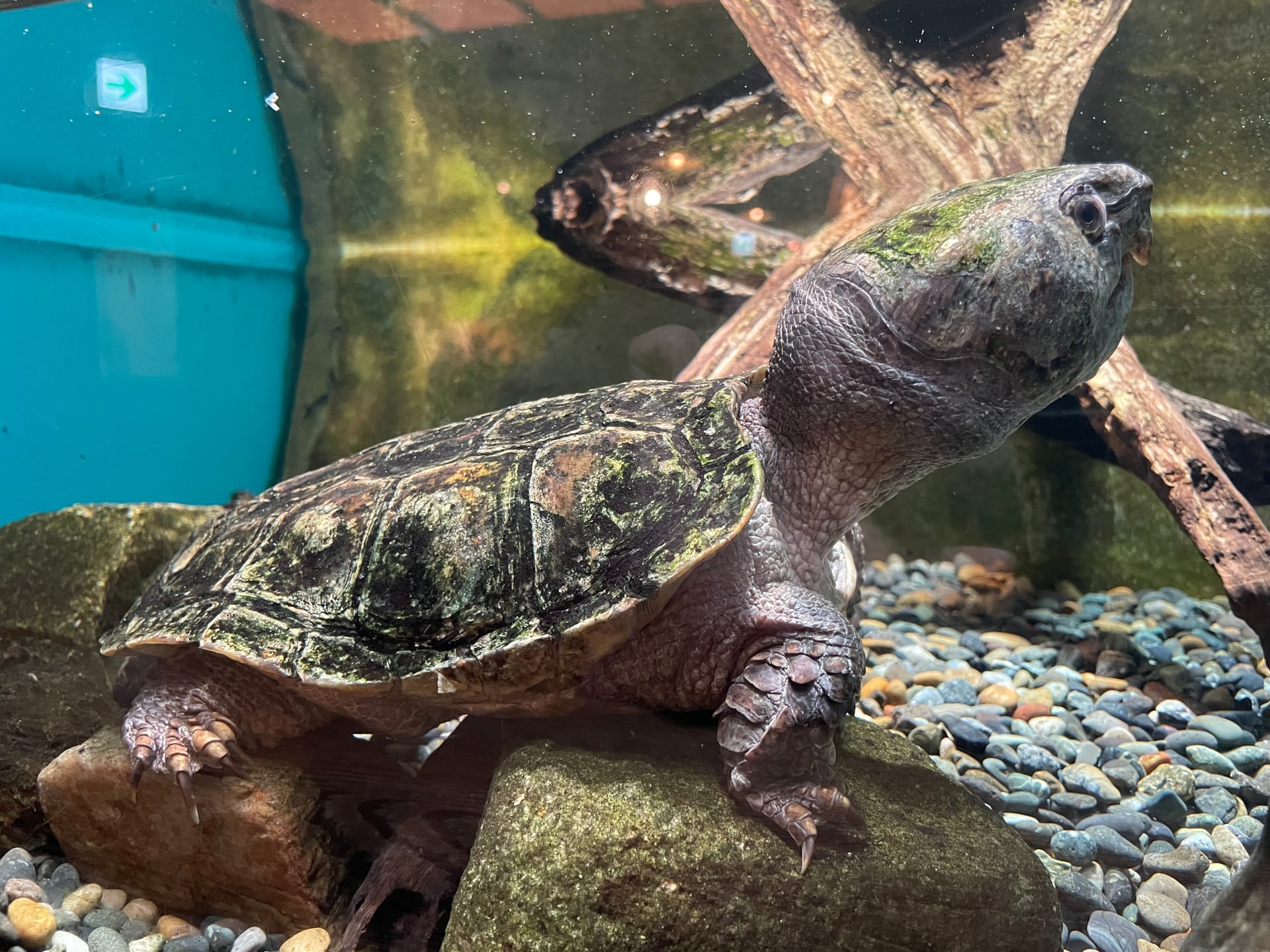
The English name softshell refers to the leathery carapace, which lacks horny scutes. It breathes by raising its long snout to the surface like a snorkel and ambushes prey while lying buried in sand or mud. Its jaws are powerful and it bites readily.
Difficulty
Intermediate
Temperature
25〜32℃
Lifespan
15-30 years
Size
Carapace to 33cm in females and 27cm in males; Japanese populations reach 38.5cm, with rare records to 60cm
Humidity
40〜70%
Diet
Prepared pellets, fish, amphibians, crustaceans, molluscs and occasionally aquatic plants
About
A softshell turtle whose defining feature is a leathery carapace without horny scutes. The light, flexible shell lets it move easily in open water and over muddy bottoms. Broadly webbed feet, sharp jaws and a readiness to bite mean it does not rely on its shell for defence. Capillaries in the throat are so well developed that it can take up some dissolved oxygen from the water, allowing long dives, and because it can breathe by raising its long snout to the surface it rarely comes ashore. It normally lies buried in mud or sand on the bottom, matching its colour, and ambushes passing prey. Demand for food and medicine makes it the most economically important freshwater turtle in the world and it is farmed on a large scale; animals in the pet trade are mostly farmed as well. In Japan it occurs from the Kanto and Chubu regions of Honshu southwards to Kyushu, but native animals and descendants of escapees from farms are mixed together and the true natural range remains unclear.
Source: Wikipedia (CC BY-SA 4.0)
Lifespan of the Chinese Softshell Turtle
The Chinese Softshell Turtle lives 15-30 years.
Size of the Chinese Softshell Turtle
The Chinese Softshell Turtle grows to Carapace to 33cm in females and 27cm in males; Japanese populations reach 38.5cm, with rare records to 60cm.
Basic Info
Origin
Mainland China from Inner Mongolia to Guangxi including Hong Kong, and Taiwan, with introduced populations across Asia and in Spain, Brazil and Hawaii, in slow rivers, lakes and canals
Lifespan
15-30 years
Care Specifications
AggressiveSolitaryBreeding: Moderate
Sources: Wikipedia (Japanese): Chinese softshell turtle / Wikipedia (English): Chinese softshell turtle / Reptile Database / Reptiles Magazine: American Softshell Turtles
References & Sources
Edited & verified by: BreederDirect editorial team
The taxonomic, regulatory, and husbandry data on this page are compiled and verified against the authoritative primary sources below.
Primary sources
- Wikipedia
- CITES Appendices (species not listed)
- Ministry of the Environment: list of invasive alien species
- Order for Enforcement of the Act on Welfare and Management of Animals (designated dangerous animals)
- Wikipedia (Japanese): Chinese softshell turtle
- Wikipedia (English): Chinese softshell turtle
- Reptile Database
- Reptiles Magazine: American Softshell Turtles
Taxonomy & Authority
Accepted name: Pelodiscus sinensis (Wiegmann, 1834)
Synonyms: Trionyx sinensis Wiegmann, 1834, Pelodiscus japonicus (Temminck & Schlegel, 1835), Amyda sinensis (Stejneger, 1907)
Authority databases: Reptile Database
Nomenclature follows global taxonomic authority databases.
Regulations & Conservation Status
Not CITES-listedIUCN VU · Vulnerable
It is not currently listed on any CITES appendix. It was listed on Appendix III at the request of the People's Republic of China (effective June 23, 2005) but has since been removed. This species is not designated as either a specific animal under the Schedule of the Enforcement Ordinance of the Animal Protection and Management Law or a specified alien species.
Sources: CITES Appendices (species not listed) / Ministry of the Environment: list of invasive alien species / Order for Enforcement of the Act on Welfare and Management of Animals (designated dangerous animals)
Regulations may change. Always verify the latest information with the relevant authorities.
Chinese Softshell Turtle Listings
Loading latest listingsFind listings for this species