Source: Wikimedia Commons
Black-Breasted Leaf Turtle
AdvancedGeoemyda spengleri
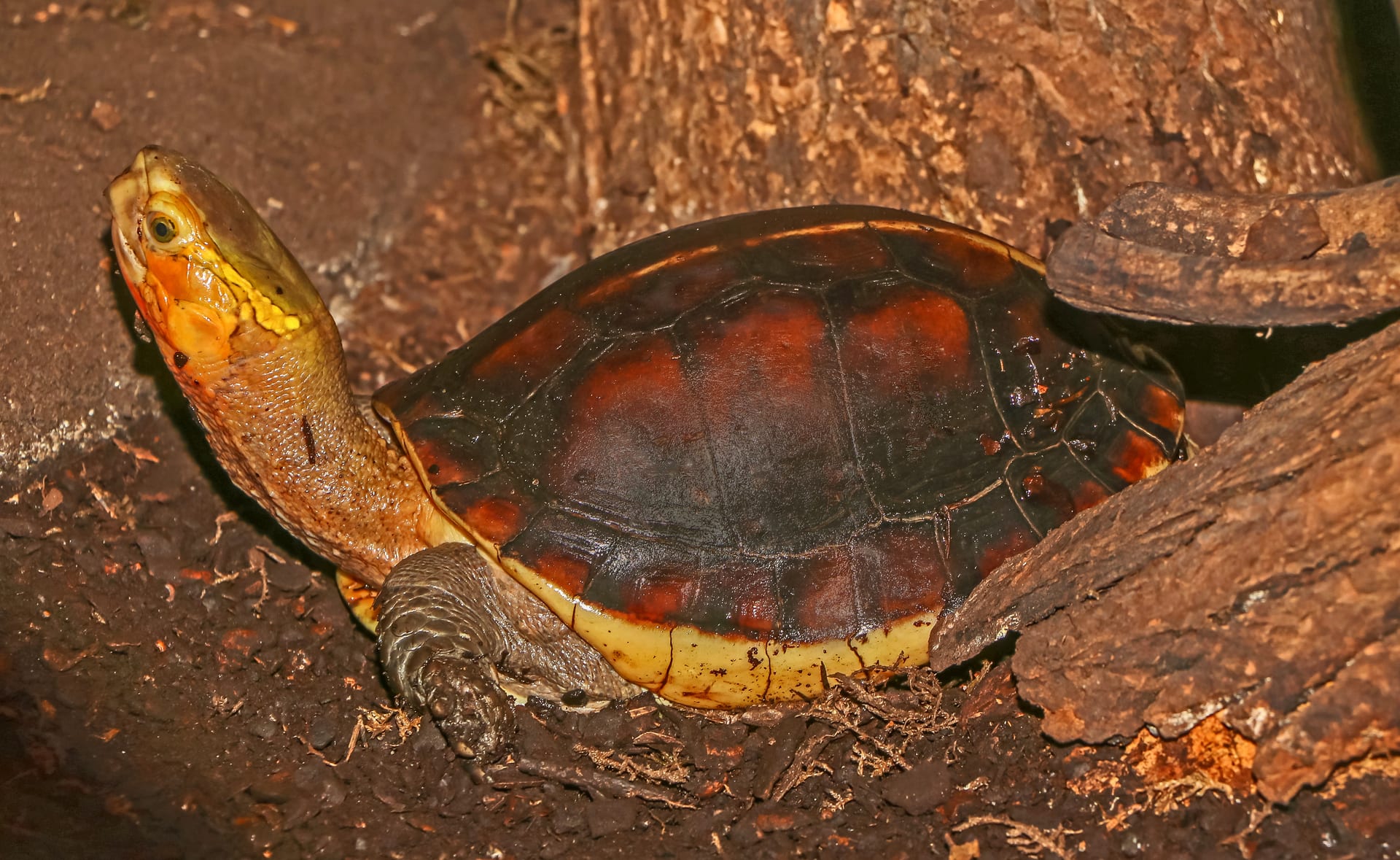
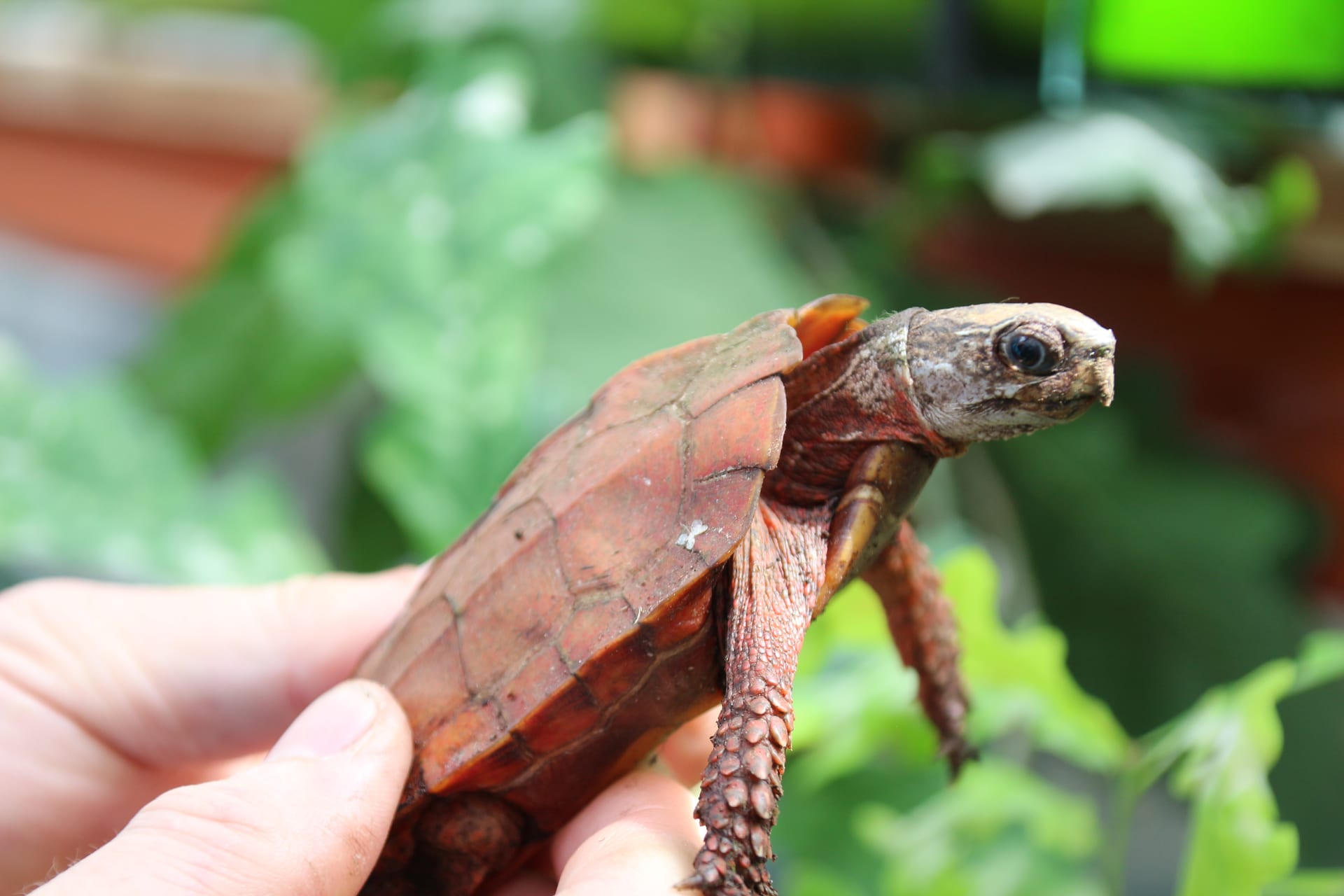
A very small leaf turtle, 11.5 cm long, that cuts up fast-moving prey with its blade-like beak. Juveniles and females have pale yellow stripes on the head and a yellow or red iris, while adult males lose the stripes and the iris turns white.
Difficulty
Advanced
Temperature
25〜32℃
Lifespan
Lifespan is estimated at 20-24 years
Size
Carapace 11.5cm, with females larger than males
Humidity
40〜70%
Diet
Crickets, chopped pinky mice, arthropods, land snails, earthworms and fruit
About
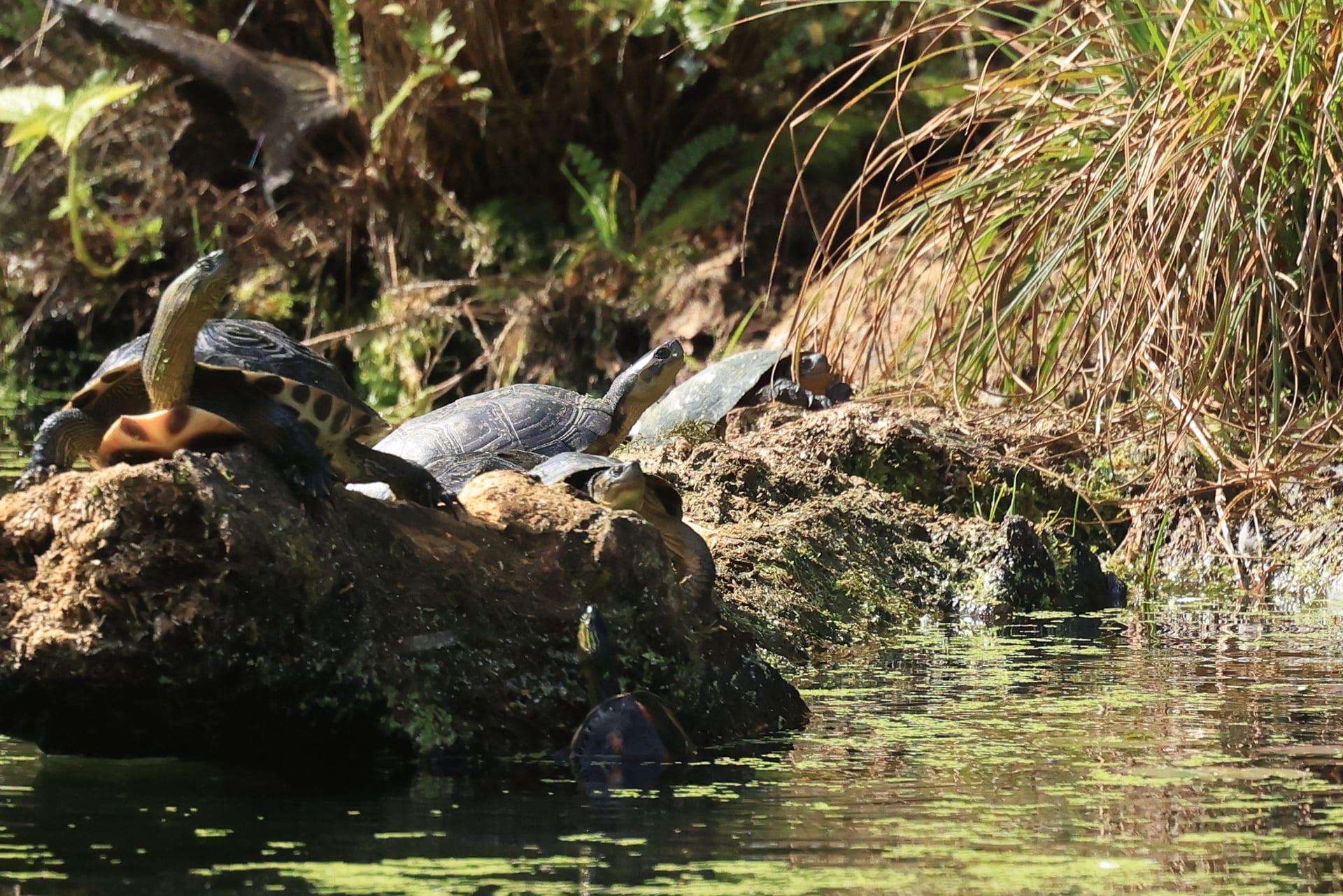
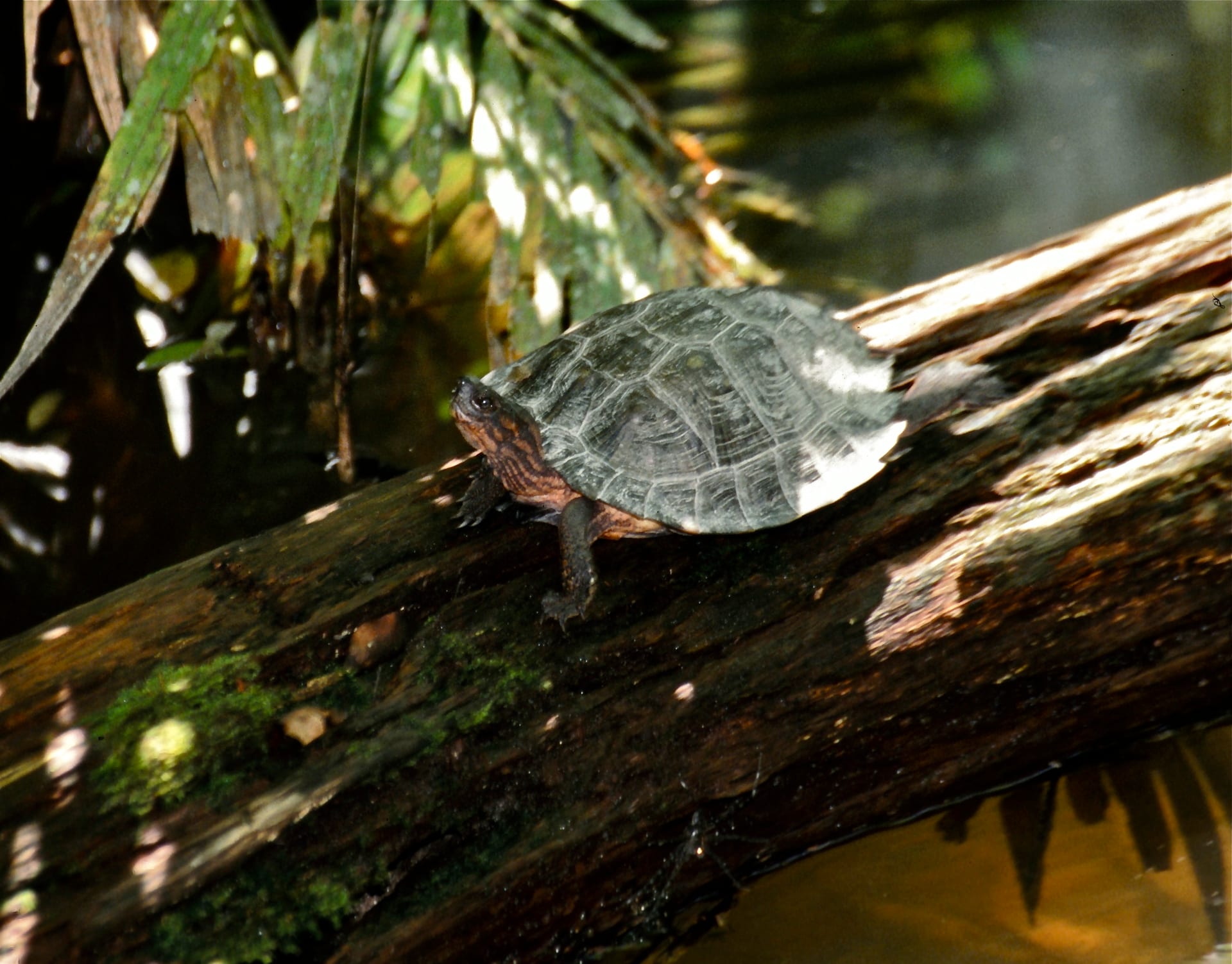
Geoemyda spengleri is a geoemydid leaf turtle, very small at 11.5 cm, with females larger than males. The carapace is brown to reddish brown, and there is no axillary scute on the bridge. The snout is hooked and the beak is blade-like with a thin cutting edge, well suited to pinning and slicing fast-moving prey. Its eyesight is good and it closes on prey quickly. Juveniles and adult females carry pale yellow stripes on the head and have a yellow or red iris, while adult males lose the stripes and the iris becomes white or pale grey, making the sexes easy to tell apart. Terrestrial, it lives in montane and hill forest and lays only one or two eggs per clutch. It was once traded cheaply and in quantity, but numbers in trade have fallen sharply since the CITES listing.
Source: Wikipedia (CC BY-SA 4.0)
Lifespan of the Black-Breasted Leaf Turtle
The Black-Breasted Leaf Turtle lives Lifespan is estimated at 20-24 years.
Size of the Black-Breasted Leaf Turtle
The Black-Breasted Leaf Turtle grows to Carapace 11.5cm, with females larger than males.
Basic Info
Origin
Southern China and Viet Nam, in montane and hill forest
Lifespan
Lifespan is estimated at 20-24 years
Size
Carapace 11.5cm, with females larger than males
Care Specifications
PeacefulSolitaryBreeding: Hard
Sources: Wikipedia (Japanese): Black-breasted leaf turtle / Wikipedia (English): Black-breasted leaf turtle / Reptile Database
References & Sources
Edited & verified by: BreederDirect editorial team
The taxonomic, regulatory, and husbandry data on this page are compiled and verified against the authoritative primary sources below.
Primary sources
Taxonomy & Authority
Accepted name: Geoemyda spengleri (Gmelin, 1789)
Synonyms: Testudo spengleri Gmelin, 1789, Geoemyda spengleri (Gray, 1834), Nicoria spengleri (Strauch, 1862)
Authority databases: Reptile Database
Nomenclature follows global taxonomic authority databases.
Regulations & Conservation Status
CITES Appendix IIIUCN EN · Endangered
The population from the People's Republic of China was listed in CITES Appendix III in 2005, and the species was listed in Appendix II effective June 12, 2013. As an Appendix II species, registration certificates for species designated as international rare wild animals and plants are not required. It is not included in the special animals listed in the table of the Ordinance for the Enforcement of the Animal Welfare and Management Act, nor in the designated invasive alien species.
Sources: CITES Appendices / Ministry of the Environment: list of invasive alien species / Order for Enforcement of the Act on Welfare and Management of Animals (designated dangerous animals)
Regulations may change. Always verify the latest information with the relevant authorities.
Black-Breasted Leaf Turtle Listings
Loading latest listingsFind listings for this species