Source: Wikimedia Commons
Burmese Star Tortoise
AdvancedGeochelone platynota
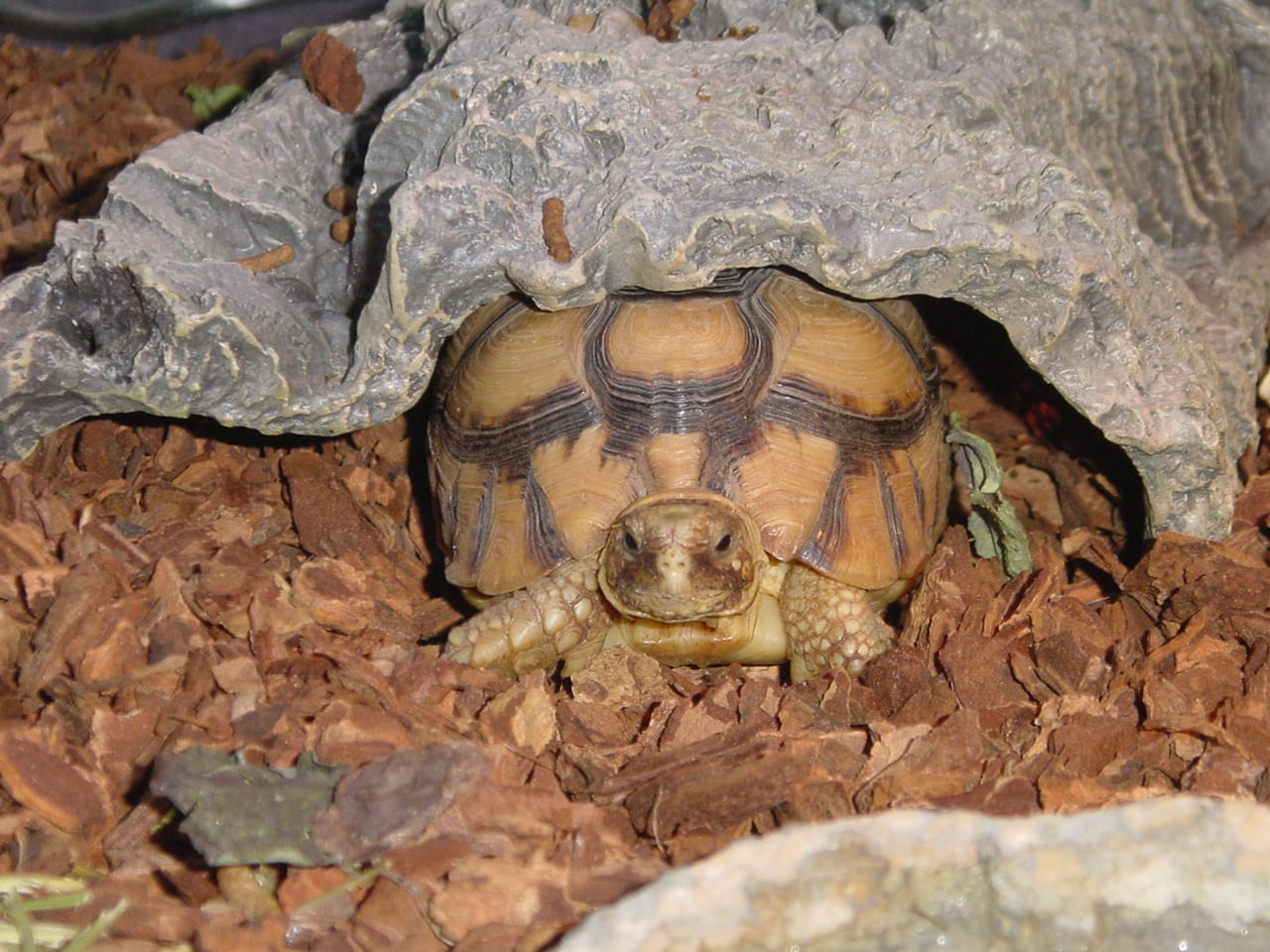
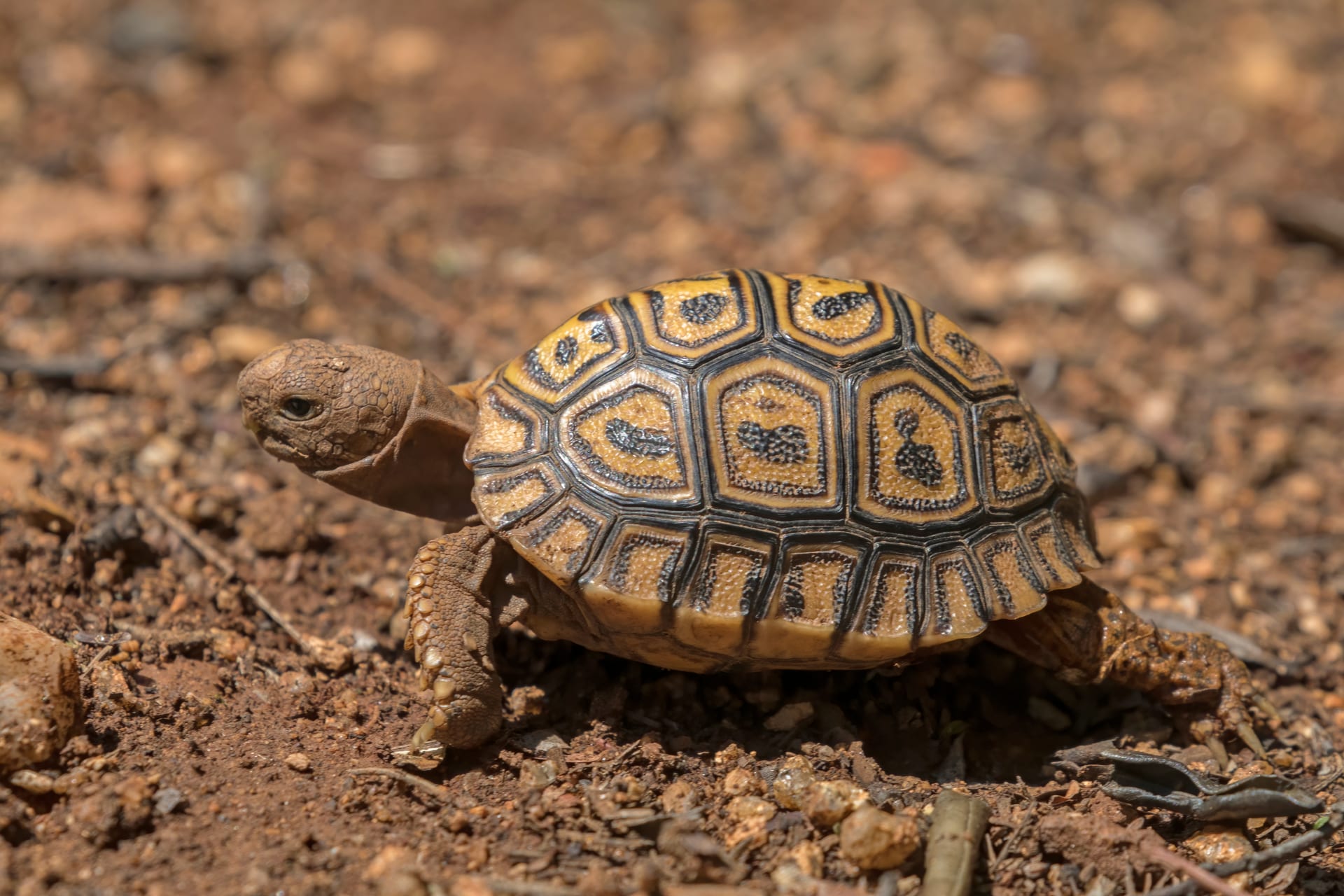
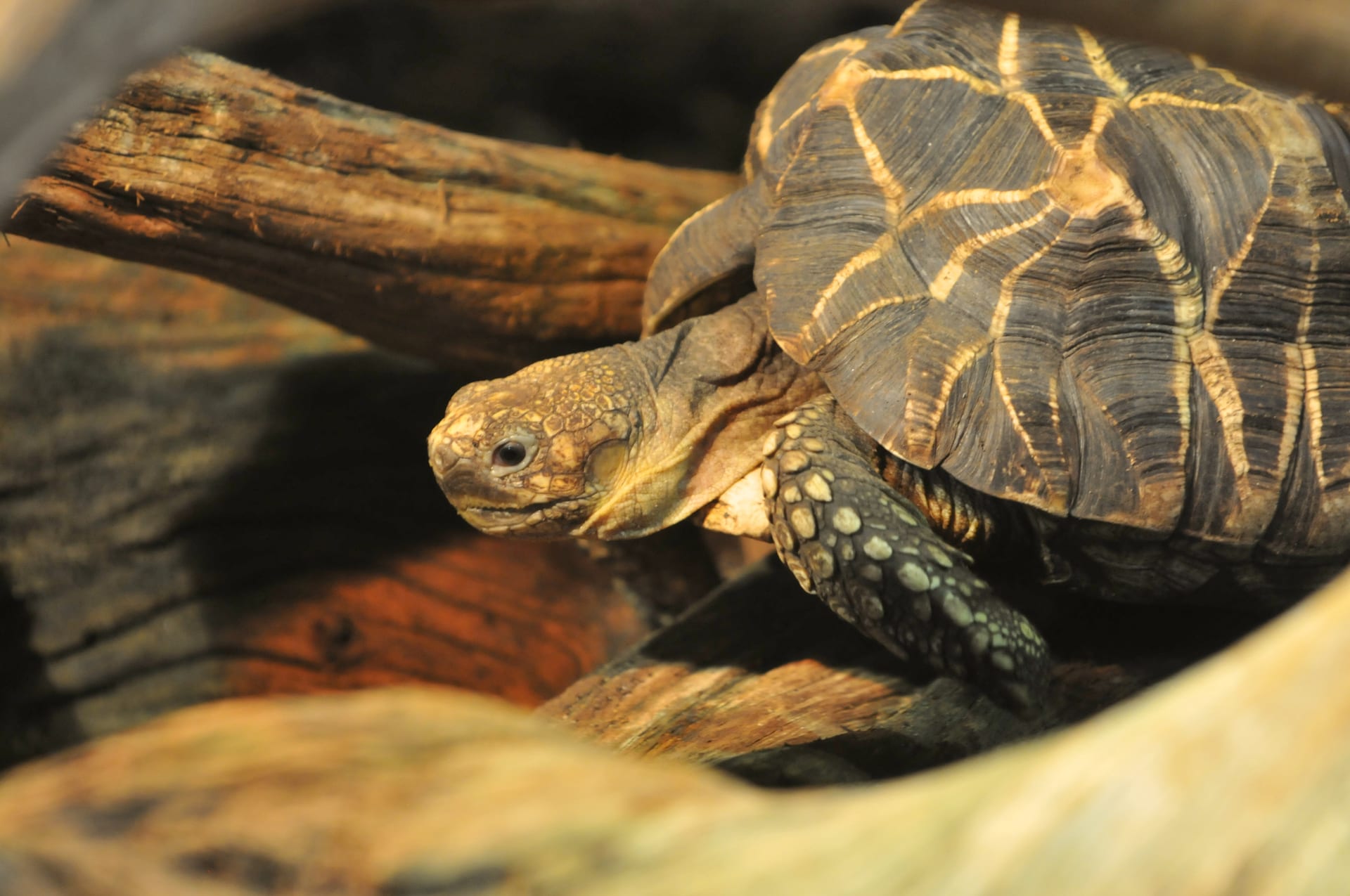
The radiating markings on each carapace scute look like stars, hence its English and Japanese names. The specific name platynota, meaning flat-backed, refers to the flattened top of the shell. The carapace reaches 26 cm.
Difficulty
Advanced
Lifespan
25-40 years
Size
Carapace up to 26cm, females larger and some animals exceeding this
Humidity
40〜70%
Diet
Vegetables, fruit, prepared tortoise diet, grasses and mushrooms
About
Geochelone platynota is endemic to Myanmar and reaches a carapace length of 26 cm, with larger animals recorded. The shell is domed and looks slightly elongated from above, and the flattened top gives the specific name platynota, meaning flat-backed. On a black to dark brown ground, each vertebral and costal scute carries radiating greyish or yellowish brown rays that look like stars, the source of its English and Japanese names. The rays number six or fewer, fewer than in the Indian star tortoise, which is a useful identification point, and the marginals carry two V-shaped stripes. Urban and agricultural development and collection for food and the pet trade caused a steep decline, and the species has been considered extinct in the wild since about 2000. Captive breeding and reintroduction in protected areas in Myanmar have raised the captive population to an estimated 7,150 animals as of 2016.
Source: Wikipedia (CC BY-SA 4.0)
Lifespan of the Burmese Star Tortoise
The Burmese Star Tortoise lives 25-40 years.
Size of the Burmese Star Tortoise
The Burmese Star Tortoise grows to Carapace up to 26cm, females larger and some animals exceeding this.
Basic Info
Origin
Central Myanmar, in inland deciduous tropical monsoon forest and its surroundings
Lifespan
25-40 years
Size
Carapace up to 26cm, females larger and some animals exceeding this
Care Specifications
PeacefulSolitaryBreeding: Hard
Sources: Reptiles Magazine: The Burmese Star Tortoise / Wikipedia (Japanese): Burmese star tortoise / Wikipedia (English): Burmese star tortoise / Reptile Database
References & Sources
Edited & verified by: BreederDirect editorial team
The taxonomic, regulatory, and husbandry data on this page are compiled and verified against the authoritative primary sources below.
Primary sources
- Wikipedia
- CITES Appendices
- Ministry of the Environment: list of invasive alien species
- Order for Enforcement of the Act on Welfare and Management of Animals (designated dangerous animals)
- Reptiles Magazine: The Burmese Star Tortoise
- Wikipedia (Japanese): Burmese star tortoise
- Wikipedia (English): Burmese star tortoise
- Reptile Database
Taxonomy & Authority
Accepted name: Geochelone platynota Blyth, 1863
Synonyms: Testudo platynota Blyth, 1863, Geochelone platynota (Loveridge & Williams, 1957), Peltastes platynotus (Gray, 1869)
Authority databases: Reptile Database
Nomenclature follows global taxonomic authority databases.
Regulations & Conservation Status
CITES Appendix IIUCN CR · Critically Endangered
Listed in CITES Appendix II at the genus level in 1975 and at the family level in 1977, it was subsequently listed in Appendix I effective June 12, 2013. As a species designated as international rare wild animals and plants, individual registration certificates are required for transfer and other transactions. It is not included in the special animals listed in the table of the Ordinance for the Enforcement of the Animal Welfare and Management Act, nor in the designated invasive alien species. In Myanmar, collection and export are legally prohibited.
Sources: CITES Appendices / Ministry of the Environment: list of invasive alien species / Order for Enforcement of the Act on Welfare and Management of Animals (designated dangerous animals)
Regulations may change. Always verify the latest information with the relevant authorities.
Burmese Star Tortoise Listings
Loading latest listingsFind listings for this species