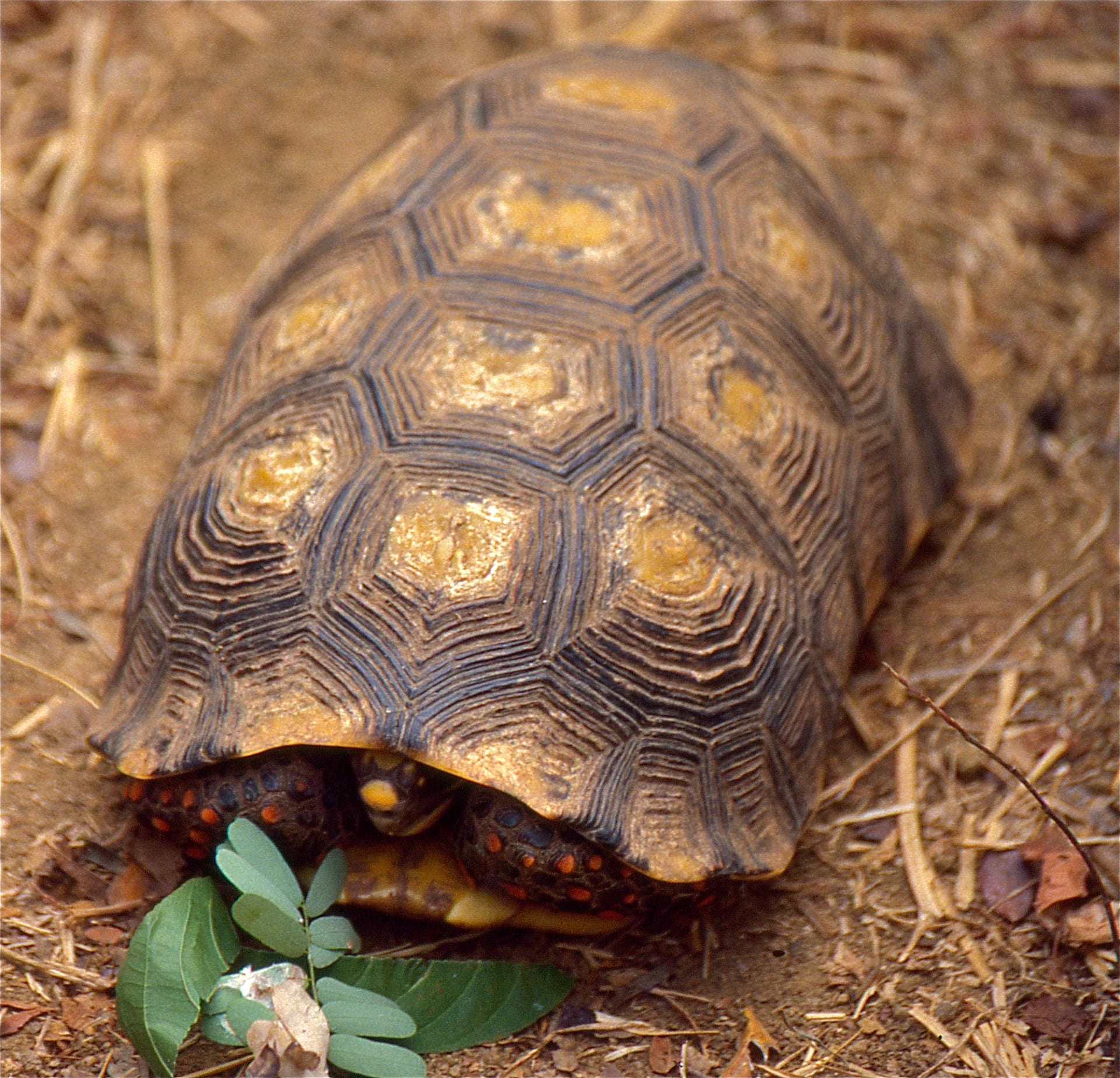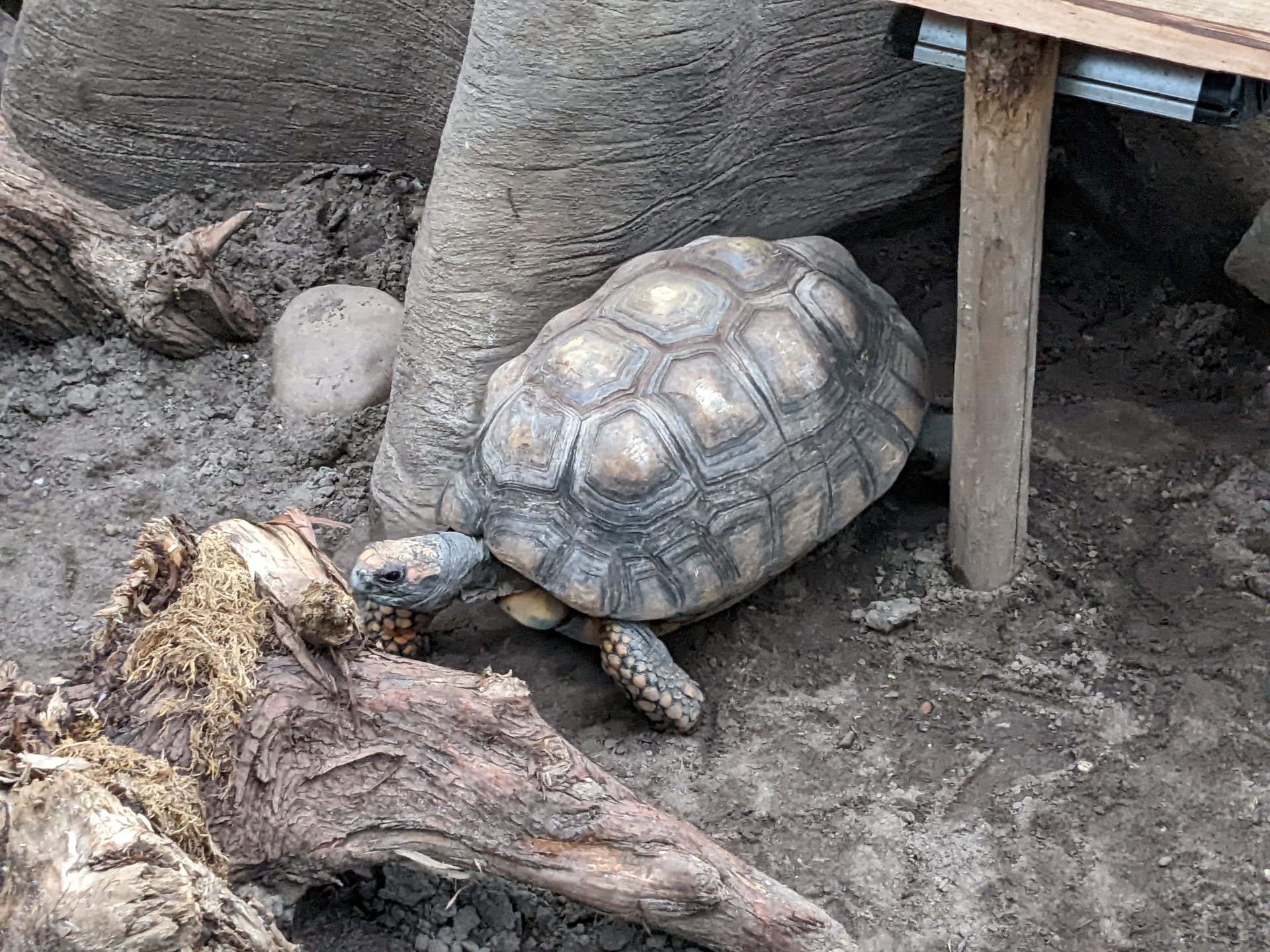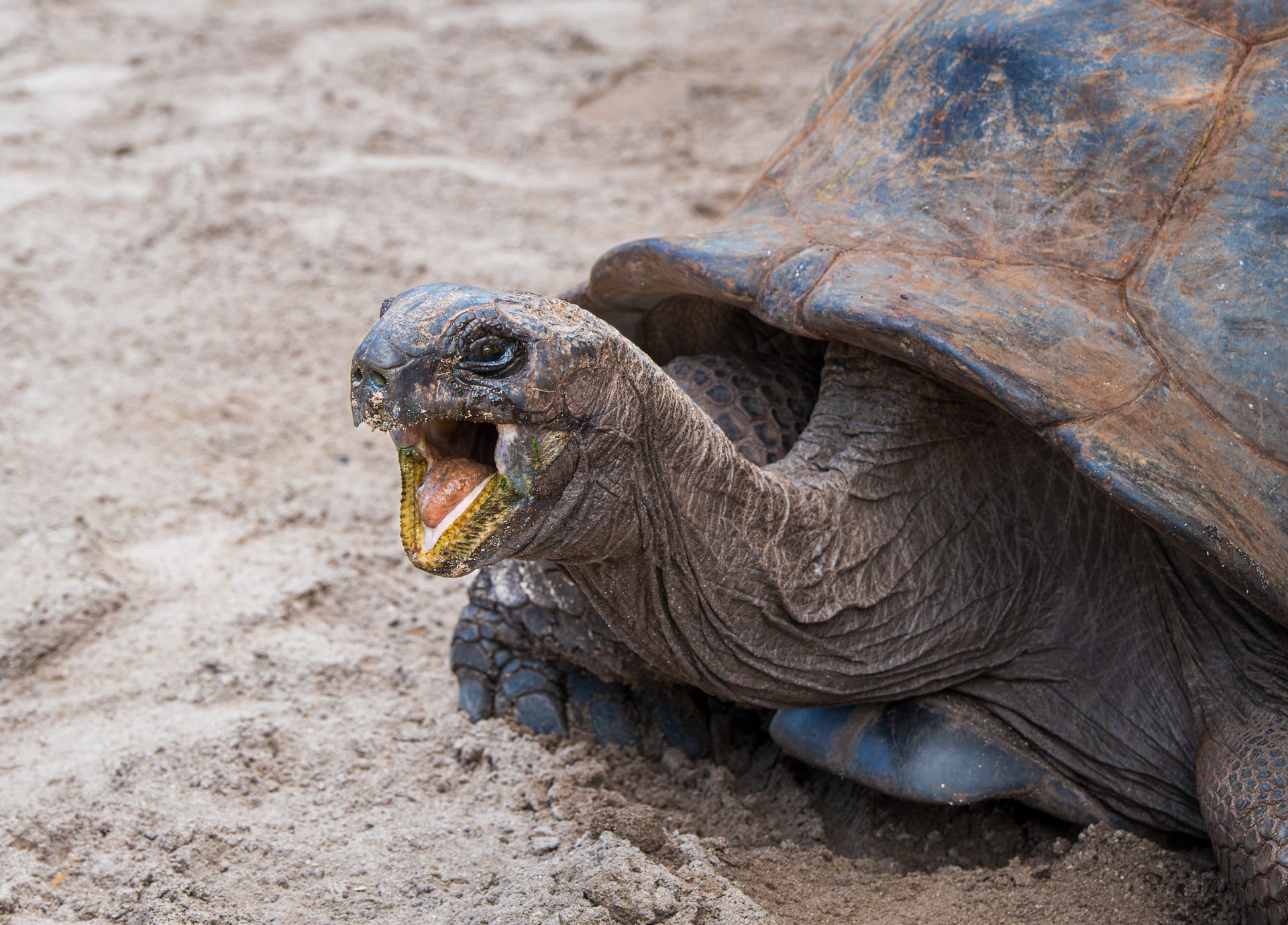
Source: Wikimedia Commons
Aldabra Giant Tortoise
AdvancedAldabrachelys gigantea
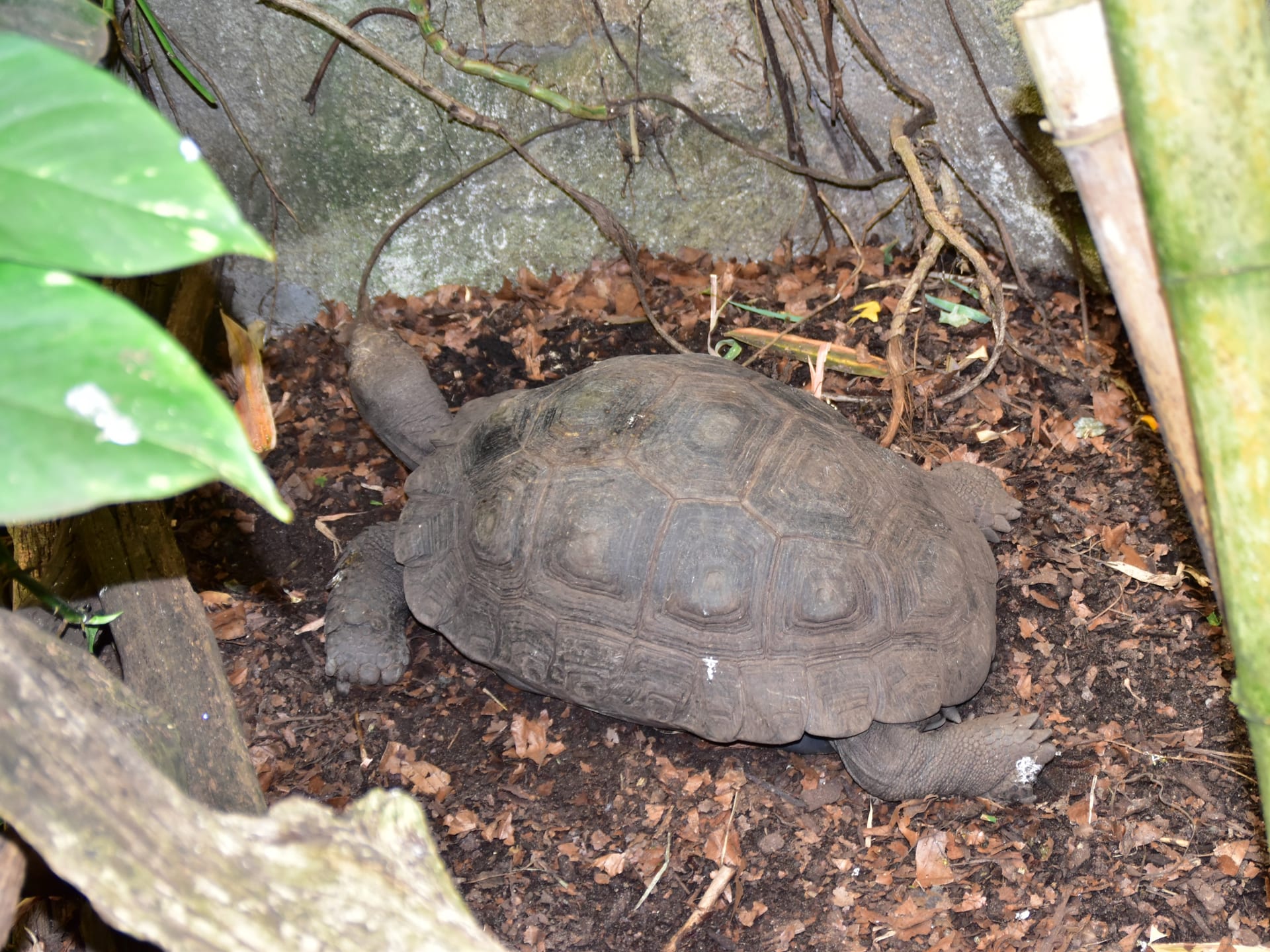
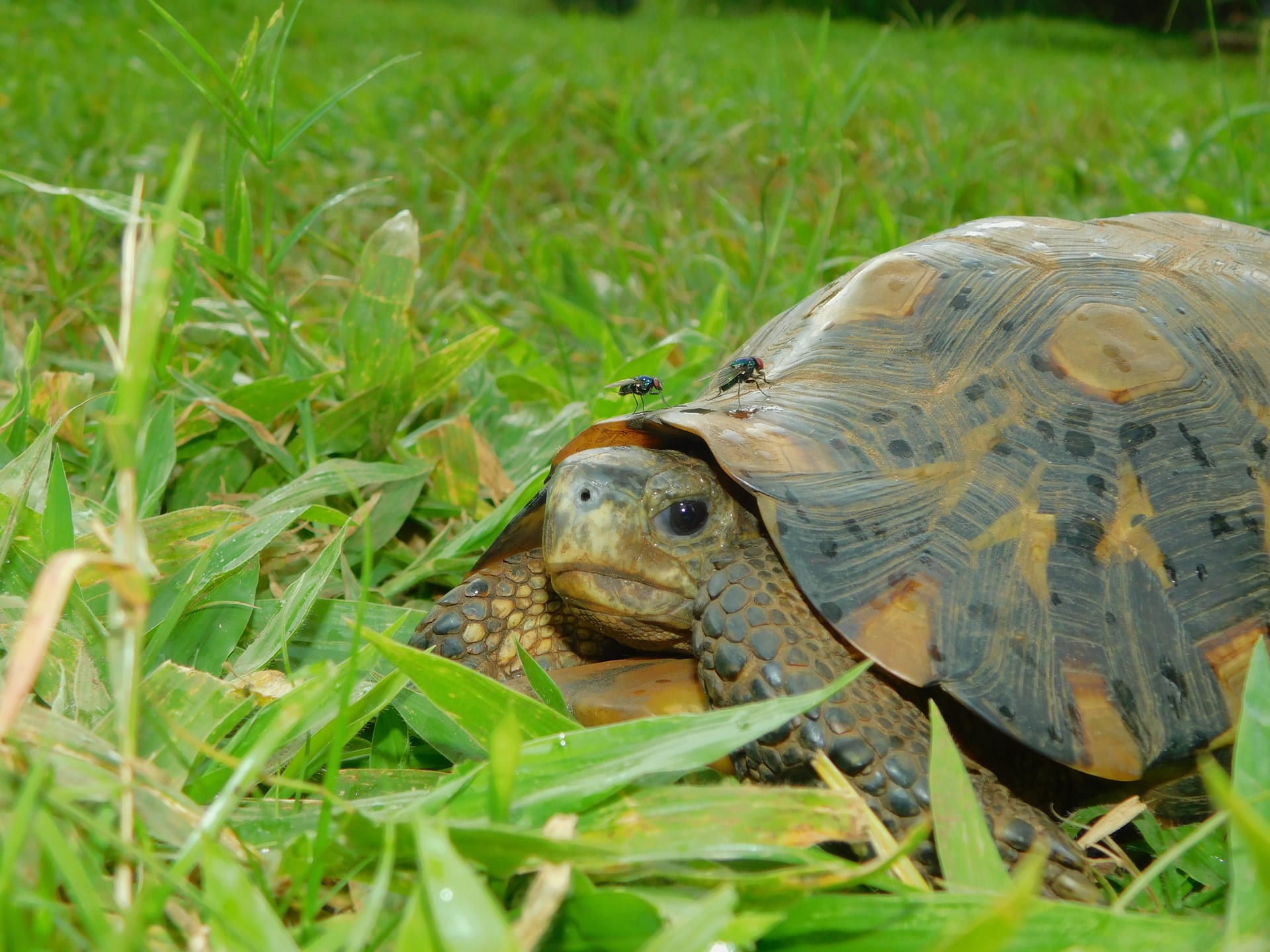
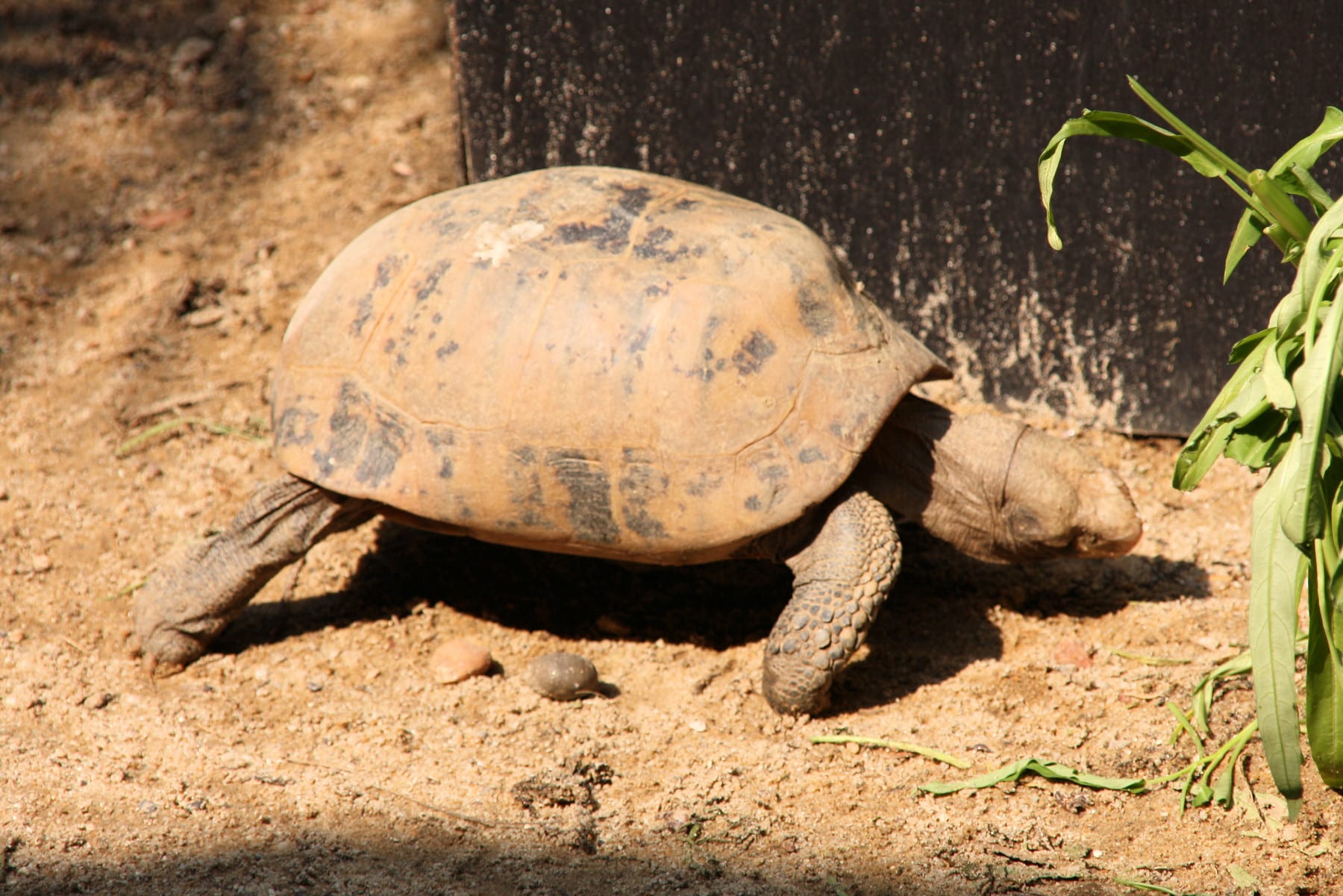
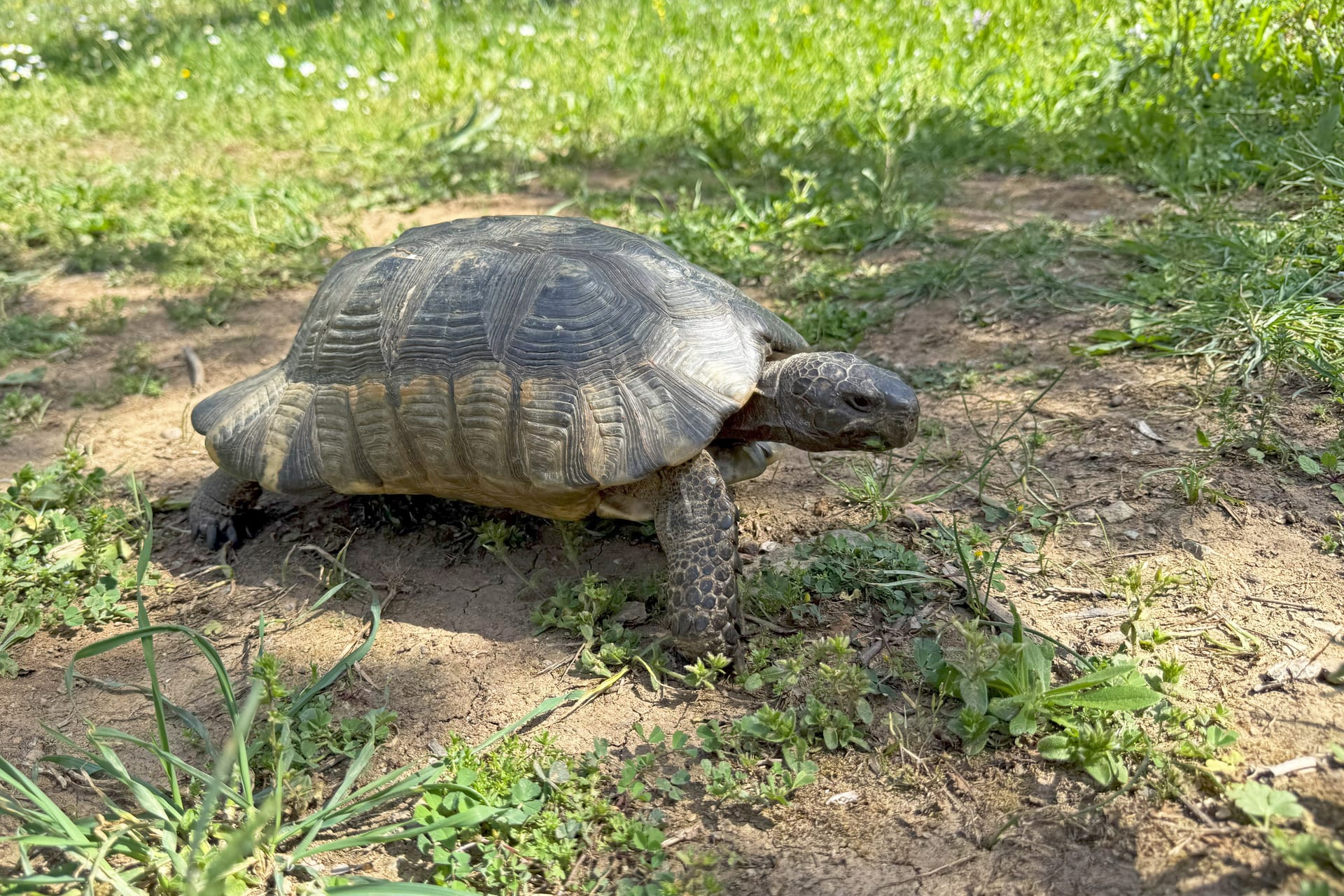
The second largest living giant tortoise, with a carapace to 138 cm and a uniformly black or blackish brown shell. It is notably social, moves in groups, and is known for good memory and colour recognition.
Difficulty
Advanced
Lifespan
Commonly reaches 100 years, and captive animals have lived longer
Size
Carapace up to 138cm, with males larger than females
Humidity
40〜70%
Diet
Grasses and sedges, young shoots and leaves of shrubs, vegetables and fruit
About
Aldabrachelys gigantea lives on the Aldabra Atoll of Seychelles and is the second largest living giant tortoise, with a carapace to 138 cm. The shell is uniformly black or blackish brown, the head is somewhat flattened, and head, neck, limbs and tail are dark grey. It copes poorly with heat: wild animals bask little, keep to the shade and, while feeding, turn the tail towards the sun so that the shell shades the head. On sunny days in the wet season it becomes crepuscular, resting in shade by day and bathing in water or mud. It is markedly social and gathers in groups to feed and to sleep. Intelligent, with good memory, learning ability and colour recognition, captive animals can be target-trained with food rewards to respond to particular colours. It is mainly herbivorous, eating grasses and the young shoots and leaves of shrubs, but will also take carrion and the dung of its own species.
Source: Wikipedia (CC BY-SA 4.0)
Lifespan of the Aldabra Giant Tortoise
The Aldabra Giant Tortoise lives Commonly reaches 100 years, and captive animals have lived longer.
Size of the Aldabra Giant Tortoise
The Aldabra Giant Tortoise grows to Carapace up to 138cm, with males larger than females.
Basic Info
Origin
The Aldabra Atoll of Seychelles, in coastal grassland, inland scrub and mangrove wetland
Lifespan
Commonly reaches 100 years, and captive animals have lived longer
Size
Care Specifications
PeacefulGroupBreeding: Hard
Sources: Reptiles Magazine: Aldabra Tortoise Care Sheet / Wikipedia (Japanese): Aldabra giant tortoise / Wikipedia (English): Aldabra giant tortoise / Reptile Database
References & Sources
Edited & verified by: BreederDirect editorial team
The taxonomic, regulatory, and husbandry data on this page are compiled and verified against the authoritative primary sources below.
Primary sources
- Wikipedia
- CITES Appendices
- Ministry of the Environment: list of invasive alien species
- Order for Enforcement of the Act on Welfare and Management of Animals (designated dangerous animals)
- Reptiles Magazine: Aldabra Tortoise Care Sheet
- Wikipedia (Japanese): Aldabra giant tortoise
- Wikipedia (English): Aldabra giant tortoise
- Reptile Database
Taxonomy & Authority
Accepted name: Aldabrachelys gigantea (Schweigger, 1812)
Synonyms: Testudo gigantea Schweigger, 1812, Geochelone gigantea (Fitzinger, 1835), Dipsochelys dussumieri (Gray, 1831)
Authority databases: Reptile Database
Nomenclature follows global taxonomic authority databases.
Regulations & Conservation Status
CITES Appendix IIIUCN VU · Vulnerable
Listed in CITES Appendix II at the genus level in 1975, and at the family level in 1977 (current listing effective January 2, 2017). As an Appendix II species, registration certificates for international rare wildlife are not required. It does not fall under the designated animals listed in the Animal Protection and Management Act Enforcement Order, nor is it designated as a designated invasive species. Its habitat is legally protected in the Seychelles and is registered as a World Natural Heritage site.
Sources: CITES Appendices / Ministry of the Environment: list of invasive alien species / Order for Enforcement of the Act on Welfare and Management of Animals (designated dangerous animals)
Regulations may change. Always verify the latest information with the relevant authorities.
Aldabra Giant Tortoise Listings
Loading latest listingsFind listings for this species