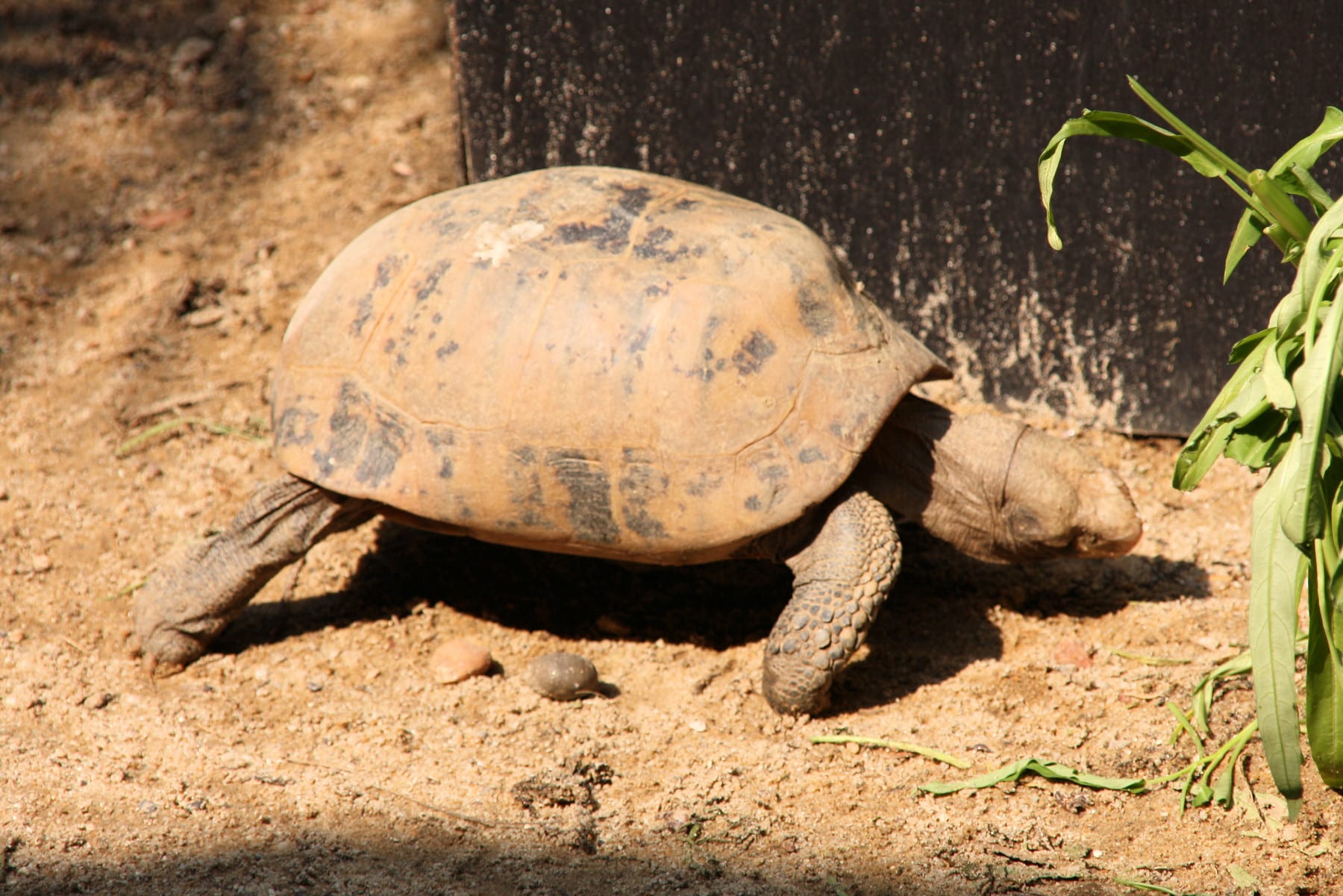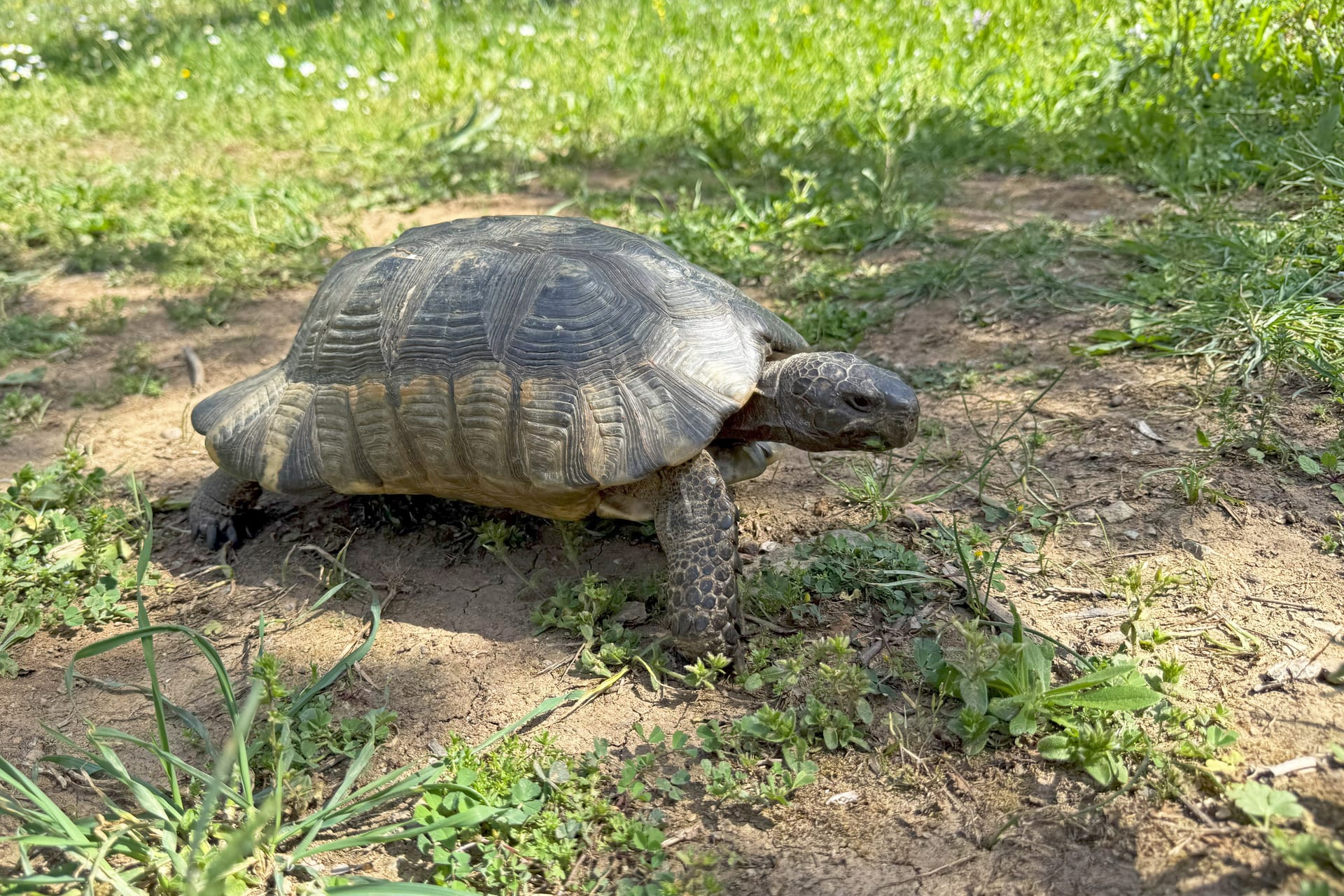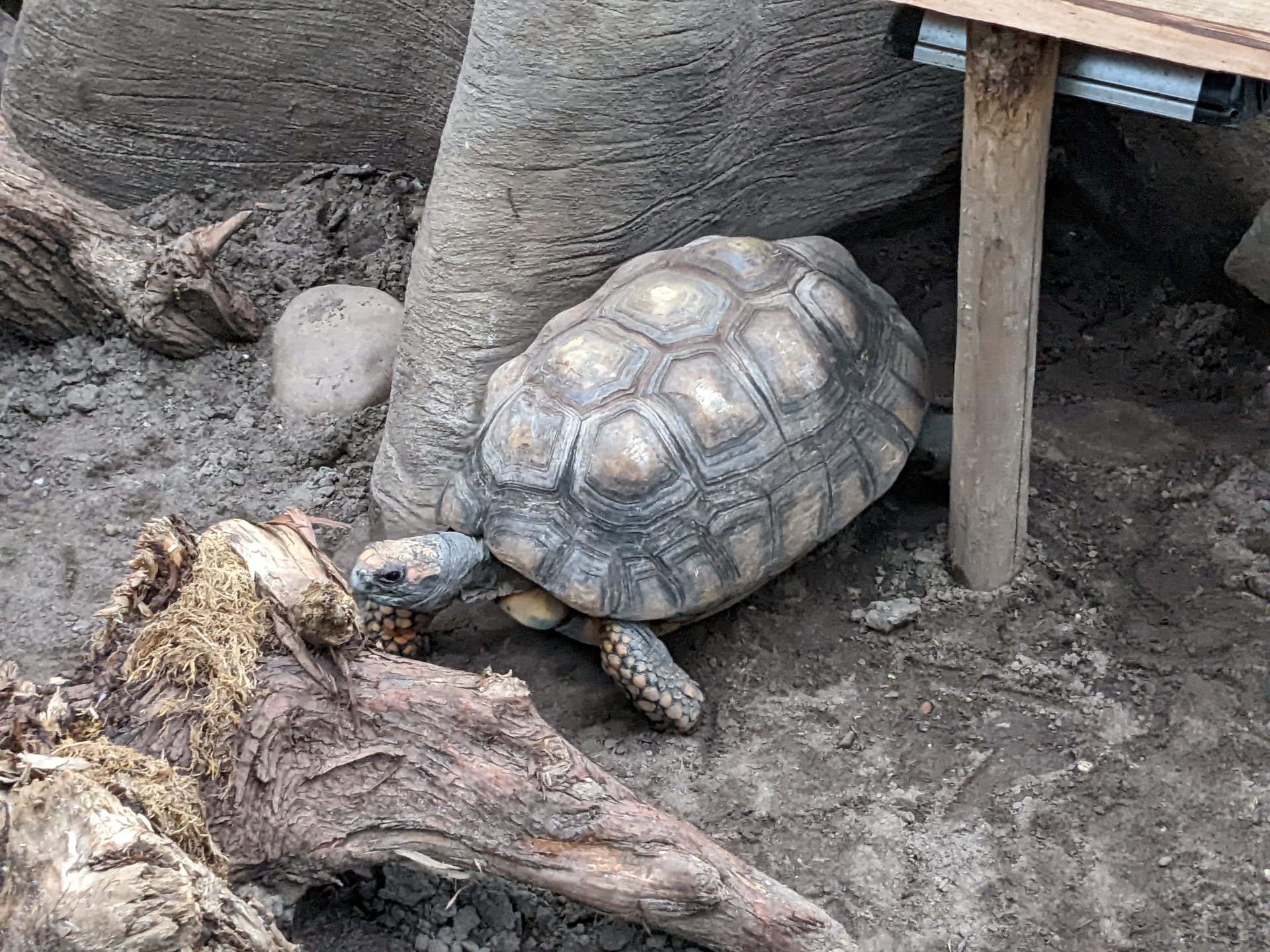
Source: Wikimedia Commons
Yellow-Footed Tortoise
AdvancedChelonoidis denticulatus
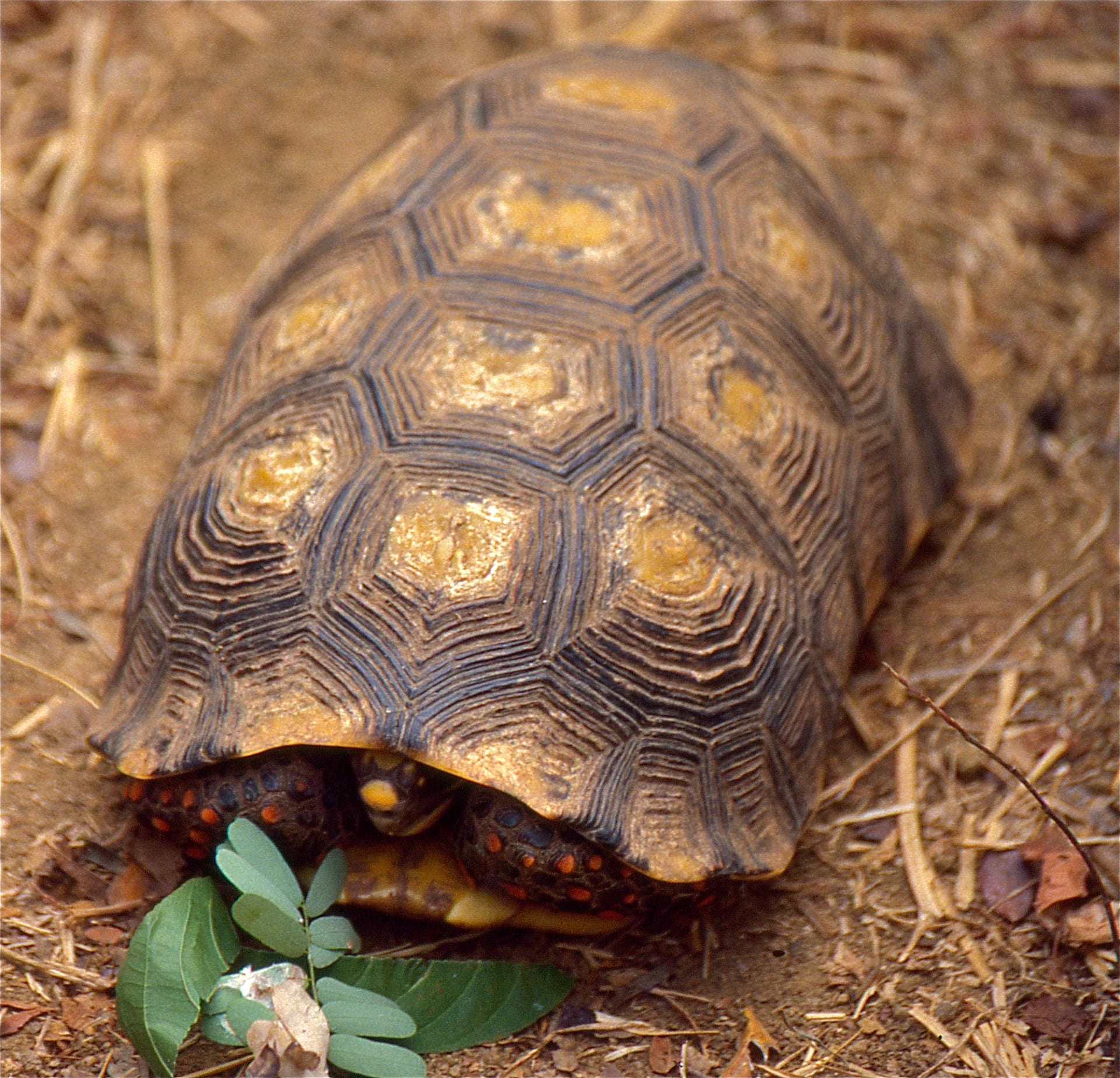
Named for the yellow and orange markings on the large scales of the forelimbs. The largest tortoise on the South American mainland, with a carapace to 82 cm; the specific name denticulata refers to the serrated marginal scutes.
Difficulty
Advanced
Lifespan
Fifty years or more under good care, commonly given as 50-60 years
Size
Carapace up to 82cm, though most animals reach about 35cm
Humidity
40〜70%
Diet
Leafy greens, fruit, flowers, mushrooms, tortoise diet and a small amount of animal protein
About
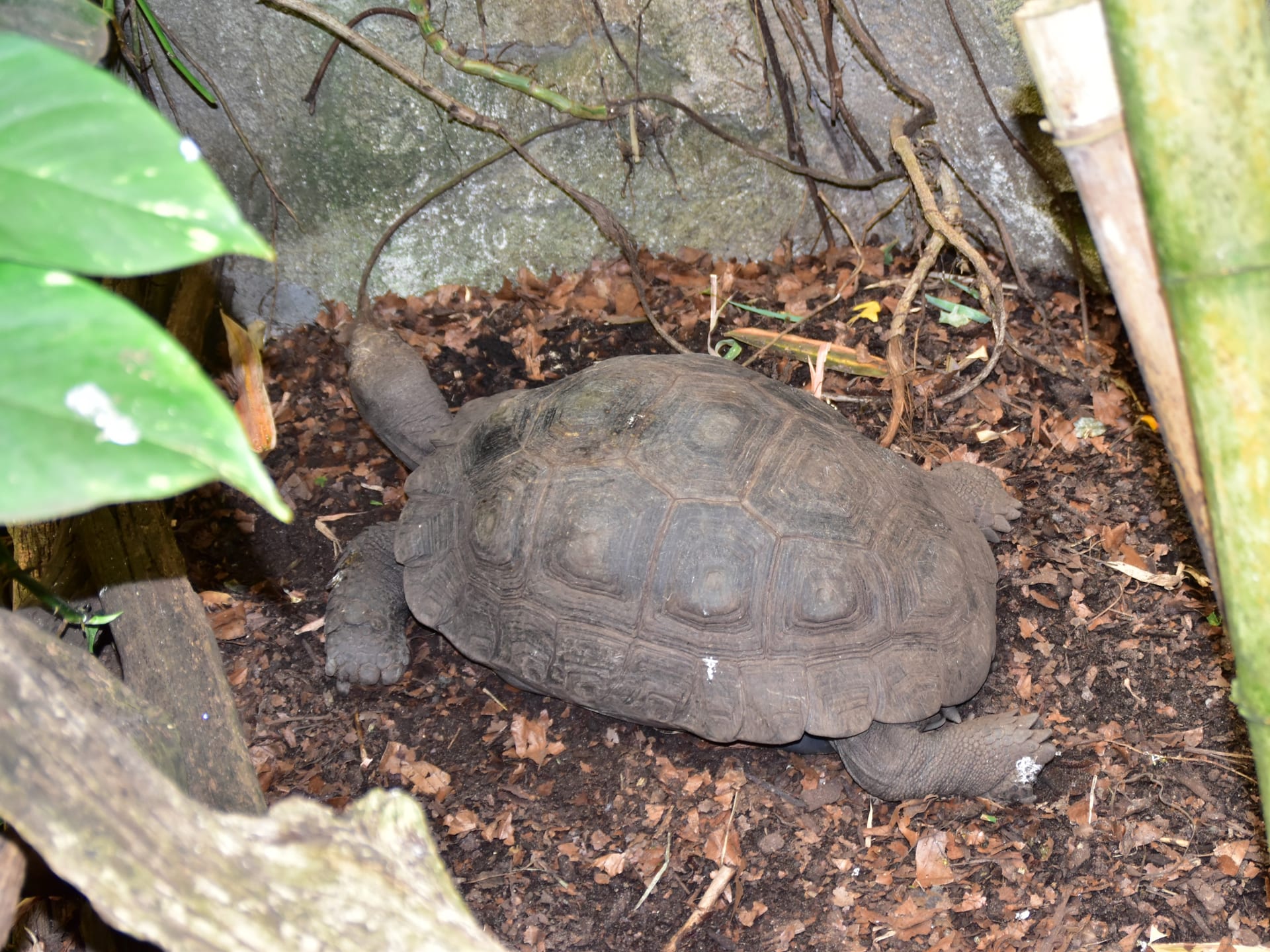
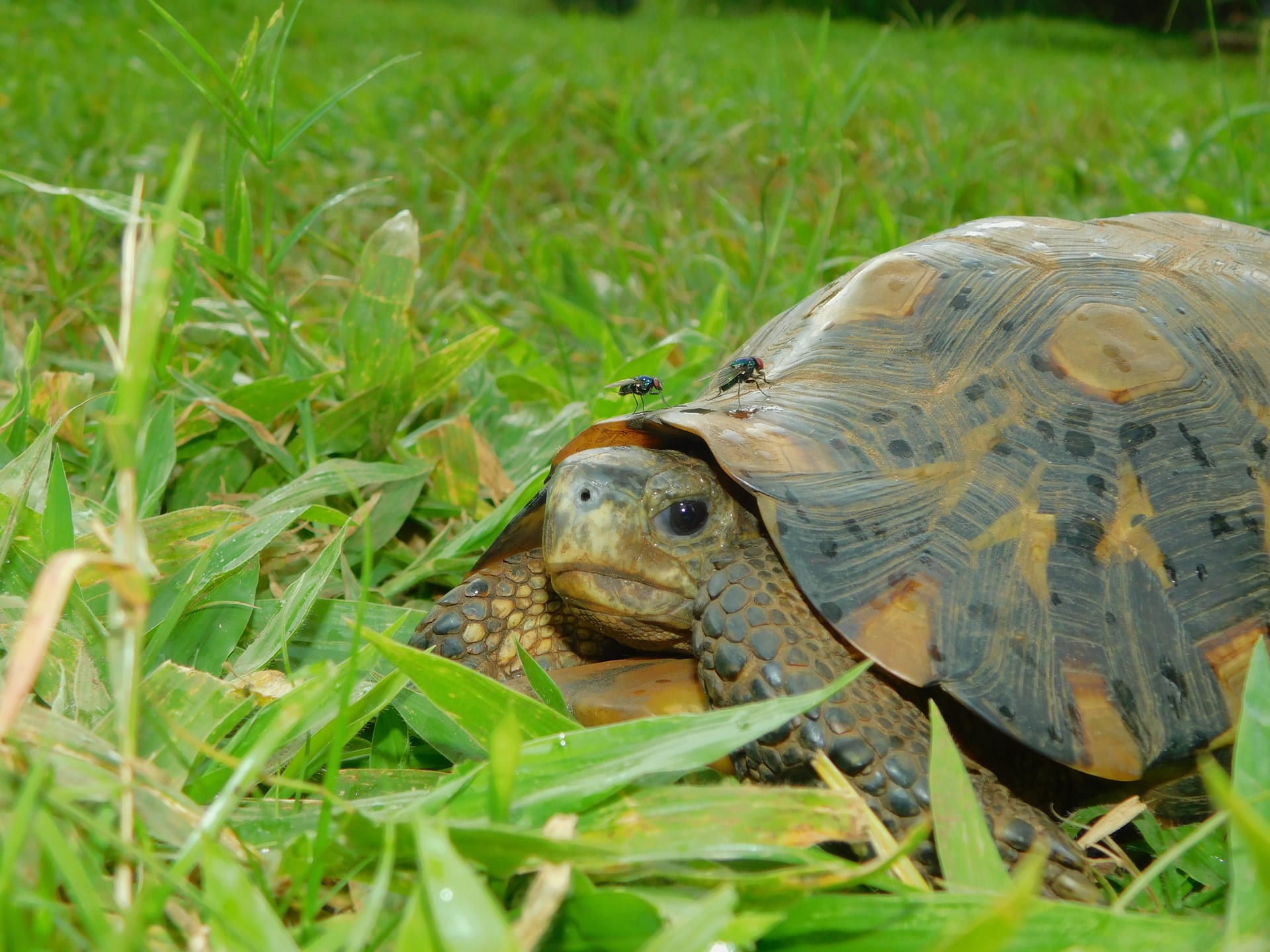
Chelonoidis denticulatus is a tortoise of the rainforests of northern South America and the largest tortoise on the South American mainland. The carapace reaches 82 cm, males being larger, although most animals stop around 35 cm. The shell is domed with parallel sides and looks elongated from above, and the rear marginals are weakly serrated - the source of the specific name denticulata, meaning toothed. The carapace is dark brown with yellow or orange around the scutes present from hatching, though old animals may lose the pale areas. Yellow and orange markings on the head and forelimbs give the tortoise its English and Japanese names. It is omnivorous with a strong plant bias, eating mainly flowers in the dry season and fruit in the wet, as well as leaves, roots, bark, mushrooms, insects and land snails.
Source: Wikipedia (CC BY-SA 4.0)
Lifespan of the Yellow-Footed Tortoise
The Yellow-Footed Tortoise lives Fifty years or more under good care, commonly given as 50-60 years.
Size of the Yellow-Footed Tortoise
The Yellow-Footed Tortoise grows to Carapace up to 82cm, though most animals reach about 35cm.
Basic Info
Origin
Northern South America in Colombia, Venezuela, the Guianas, Brazil, Ecuador, Peru and Bolivia, in evergreen and deciduous rainforest
Lifespan
Fifty years or more under good care, commonly given as 50-60 years
Size
Carapace up to 82cm, though most animals reach about 35cm
Care Specifications
PeacefulSolitaryBreeding: Moderate
Sources: Reptiles Magazine: Yellow-Footed Tortoise Care Sheet / Wikipedia (Japanese): Yellow-footed tortoise / Wikipedia (English): Yellow-footed tortoise / Reptile Database
References & Sources
Edited & verified by: BreederDirect editorial team
The taxonomic, regulatory, and husbandry data on this page are compiled and verified against the authoritative primary sources below.
Primary sources
- Wikipedia
- CITES Appendices
- Ministry of the Environment: list of invasive alien species
- Order for Enforcement of the Act on Welfare and Management of Animals (designated dangerous animals)
- Reptiles Magazine: Yellow-Footed Tortoise Care Sheet
- Wikipedia (Japanese): Yellow-footed tortoise
- Wikipedia (English): Yellow-footed tortoise
- Reptile Database
Taxonomy & Authority
Accepted name: Chelonoidis denticulatus (Linnaeus, 1766)
Synonyms: Testudo denticulata Linnaeus, 1766, Geochelone denticulata (Williams, 1960), Chelonoidis denticulata (Bour, 1980)
Authority databases: Reptile Database
Nomenclature follows global taxonomic authority databases.
Regulations & Conservation Status
CITES Appendix IIIUCN VU · Vulnerable
Listed in CITES Appendix II at the family level (Testudinidae) in 1977 (current listing effective January 2, 2017). As an Appendix II species, registration certificates for international rare wildlife are not required. It does not fall under the designated animals listed in the Animal Protection and Management Act Enforcement Order, nor is it designated as a designated invasive species.
Sources: CITES Appendices / Ministry of the Environment: list of invasive alien species / Order for Enforcement of the Act on Welfare and Management of Animals (designated dangerous animals)
Regulations may change. Always verify the latest information with the relevant authorities.
Yellow-Footed Tortoise Listings
Loading latest listingsFind listings for this species