Source: Wikimedia Commons
Indochinese Box Turtle
AdvancedCuora galbinifrons
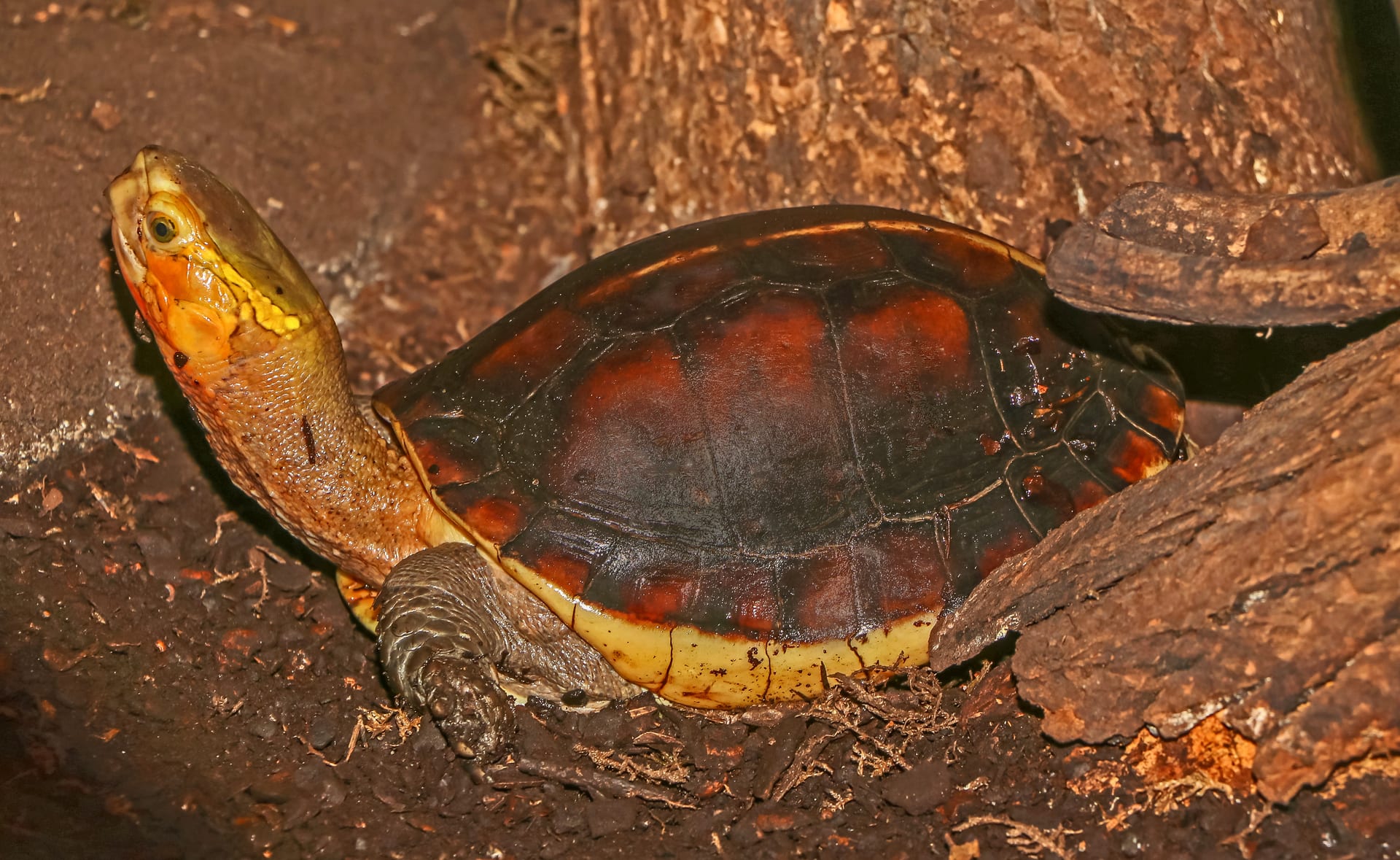
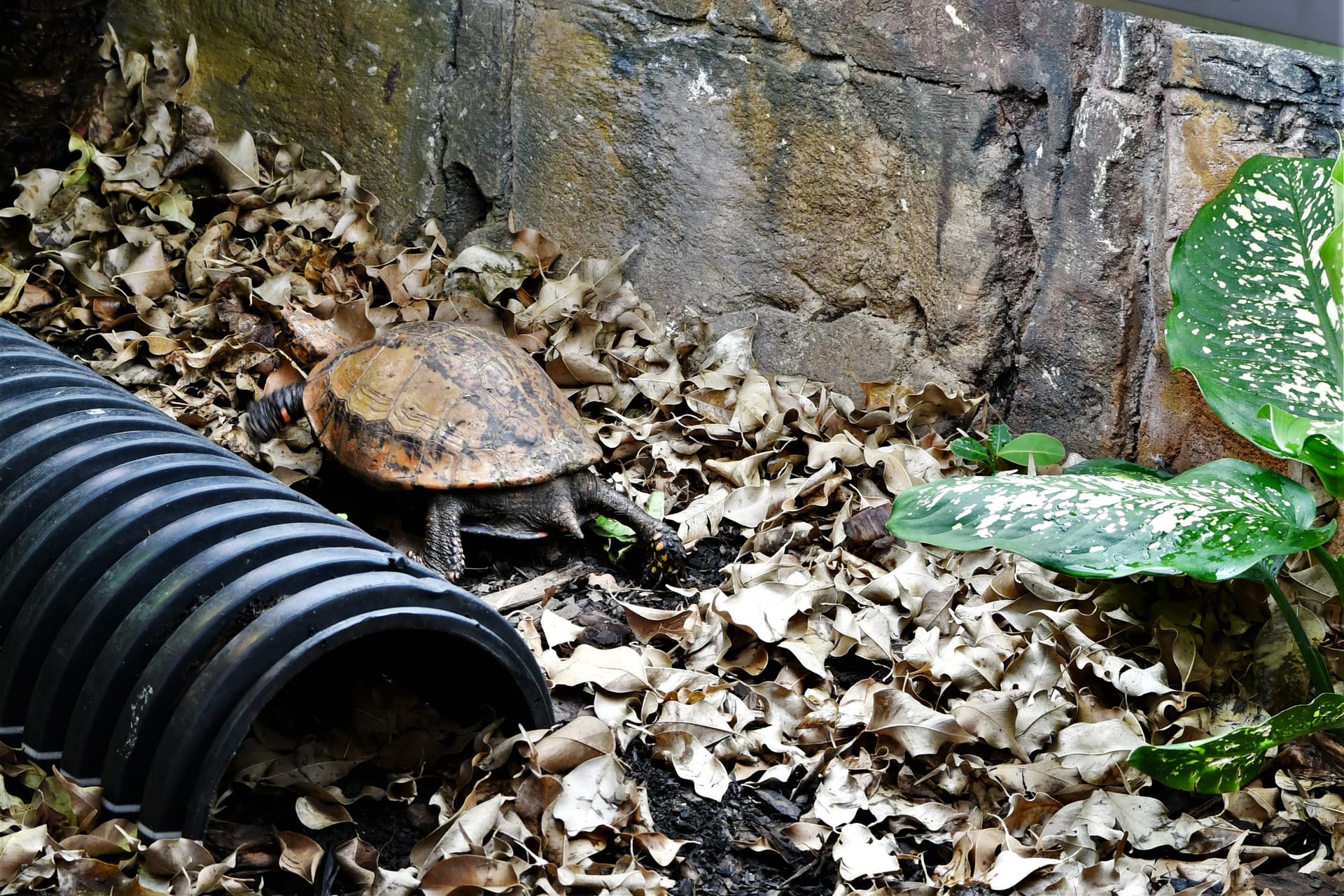
As the specific name galbinifrons, meaning yellow-green forehead, suggests, the head is yellow to yellowish green, which is the origin of its Japanese name. A montane box turtle with a domed carapace and a hinge that closes the shell completely. The carapace reaches 19.8 cm.
Difficulty
Advanced
Temperature
25〜32℃
Lifespan
20+ years
Size
Carapace up to 19.8cm, with little difference between the sexes
Humidity
40〜70%
Diet
Insects, land snails, earthworms, fruit, vegetables and prepared pellets
About
Cuora galbinifrons is a geoemydid box turtle with a carapace to 19.8 cm and little difference between the sexes. The carapace is domed and is deepest and widest a little behind the middle. The plastron is large and unnotched, and the hinge, among the best developed in the genus, closes the shell completely. The head is yellow, dark yellow or greyish brown, sometimes with a greenish cast, and the specific name galbinifrons means yellow-green forehead; the Japanese name, from moegi meaning yellow-green, refers to the same feature. Three subspecies were formerly recognised, but the Bourret and Vietnamese southern forms are now usually treated as separate species. Terrestrial, it lives in montane and hill forest, and its nervous disposition and the poor condition of imported animals have long made it a difficult species to keep.
Source: Wikipedia (CC BY-SA 4.0)
Lifespan of the Indochinese Box Turtle
The Indochinese Box Turtle lives 20+ years.
Size of the Indochinese Box Turtle
The Indochinese Box Turtle grows to Carapace up to 19.8cm, with little difference between the sexes.
Basic Info
Origin
Southern China in Yunnan, Hainan, Guangdong and Guangxi, and northern Viet Nam, in montane and hill forest and dense scrub
Lifespan
20+ years
Size
Carapace up to 19.8cm, with little difference between the sexes
Care Specifications
Semi-aggressiveSolitaryBreeding: Very hard
Sources: Wikipedia (Japanese): Indochinese box turtle / Wikipedia (English): Indochinese box turtle / Reptile Database
References & Sources
Edited & verified by: BreederDirect editorial team
The taxonomic, regulatory, and husbandry data on this page are compiled and verified against the authoritative primary sources below.
Primary sources
Taxonomy & Authority
Accepted name: Cuora galbinifrons Bourret, 1939
Synonyms: Cyclemys galbinifrons (Bourret, 1939), Cuora galbinifrons bourreti Obst & Reimann, 1994, Cuora galbinifrons picturata Lehr, Fritz & Obst, 1998
Authority databases: Reptile Database
Nomenclature follows global taxonomic authority databases.
Regulations & Conservation Status
CITES Appendix IIUCN CR · Critically Endangered
The genus Cuora (Cuora spp.) was listed on CITES Appendix II in 2000 and was subsequently listed on Appendix I effective 23 February 2023. As an internationally rare wild fauna and flora species, a registration certificate is required for each individual for transfer and other purposes. It does not fall under the designated animals listed in the Schedule of the Order for Enforcement of the Law Concerning the Protection and Management of Animals, nor is it designated as a designated alien species.
Sources: CITES Appendices / Ministry of the Environment: list of invasive alien species / Order for Enforcement of the Act on Welfare and Management of Animals (designated dangerous animals)
Regulations may change. Always verify the latest information with the relevant authorities.
Indochinese Box Turtle Listings
Loading latest listingsFind listings for this species