Source: Wikimedia Commons
Malayan Box Turtle
IntermediateCuora amboinensis
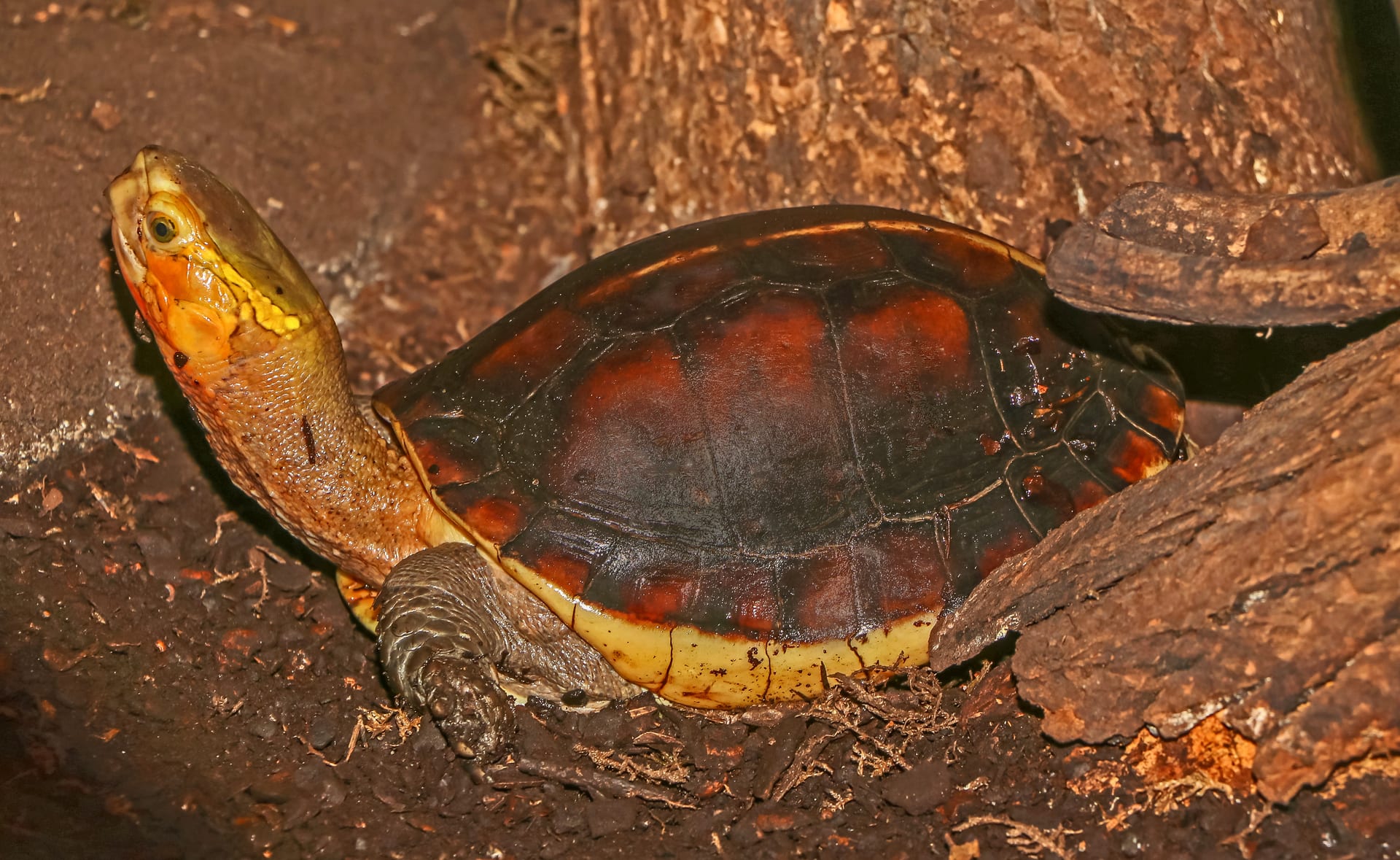
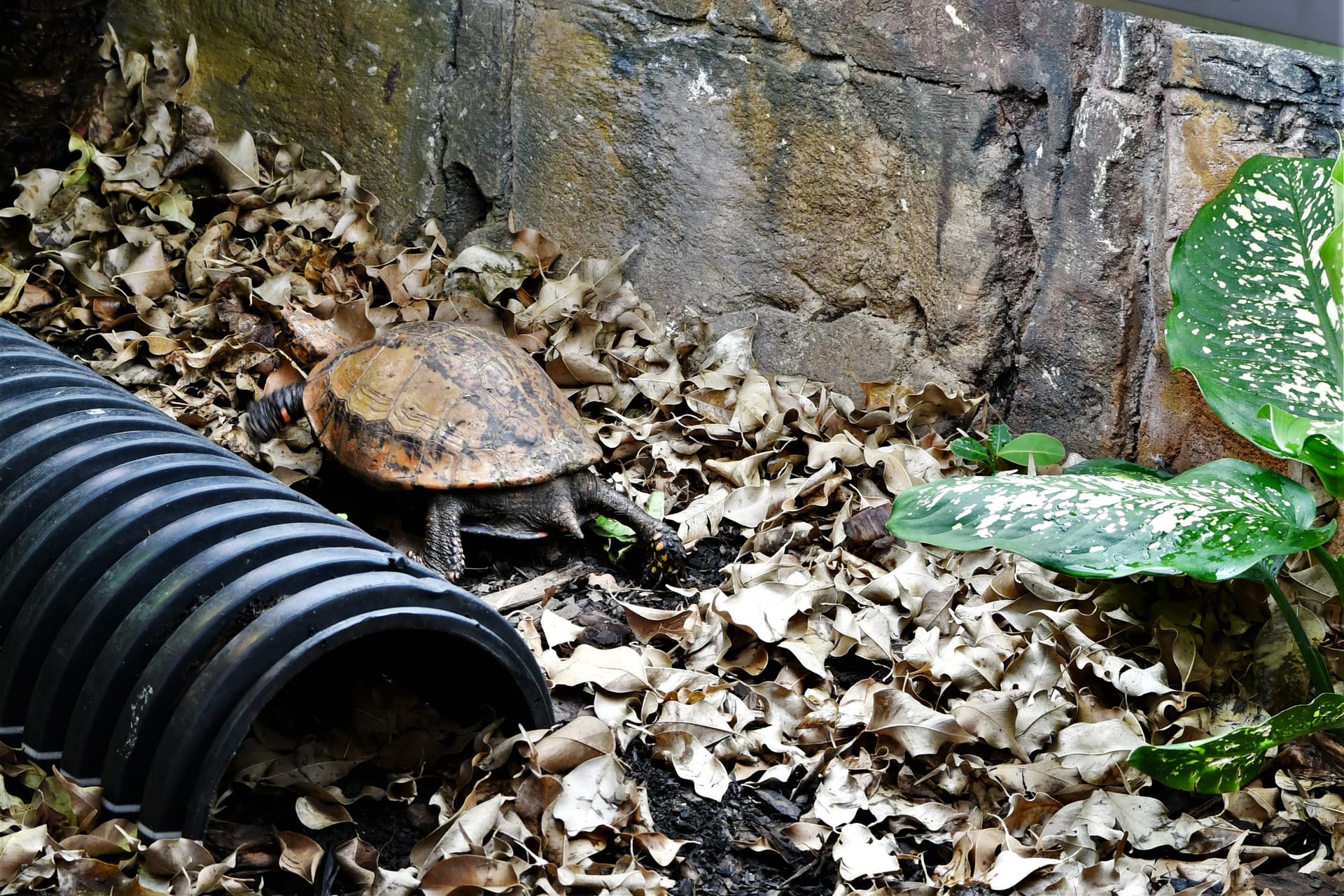
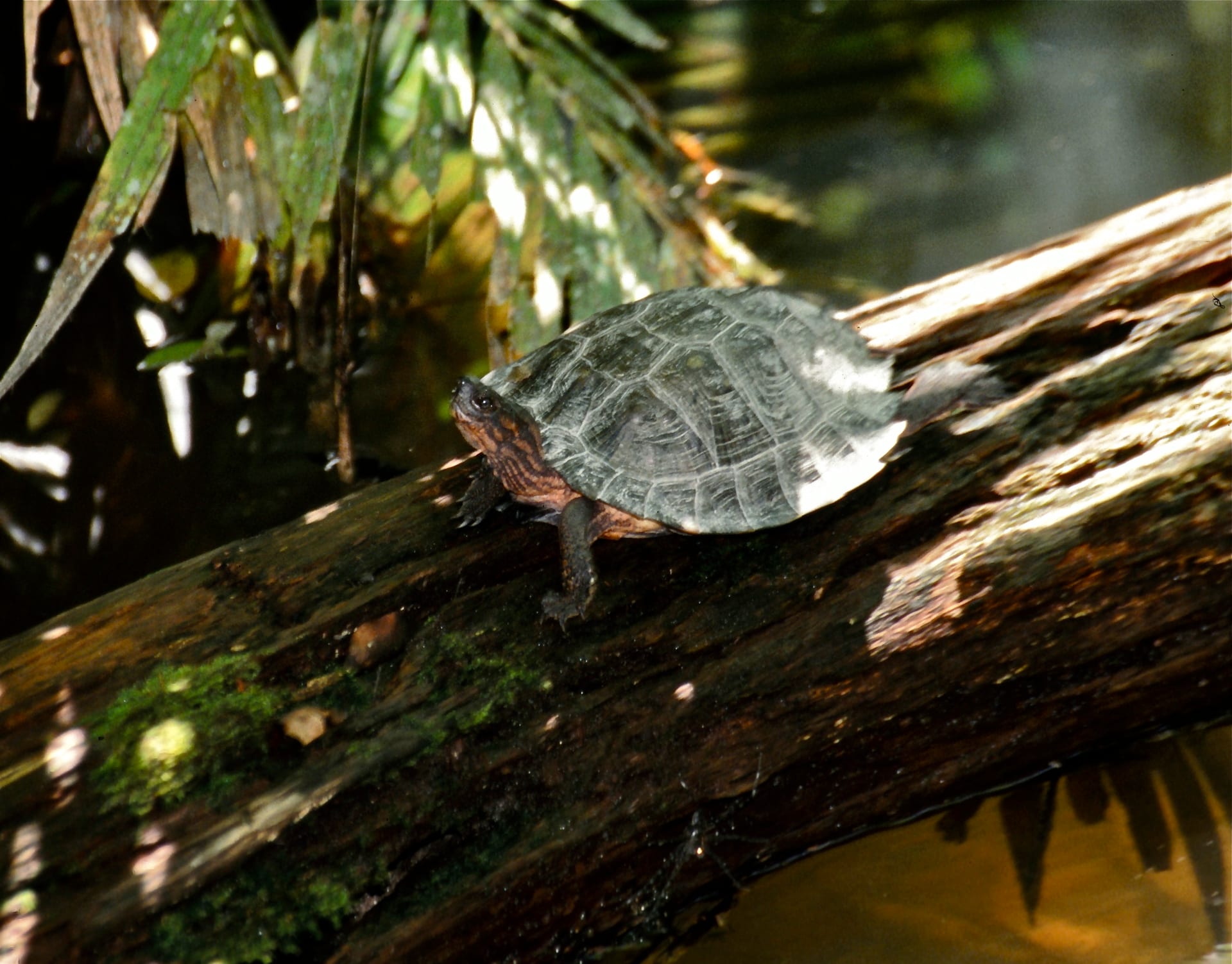
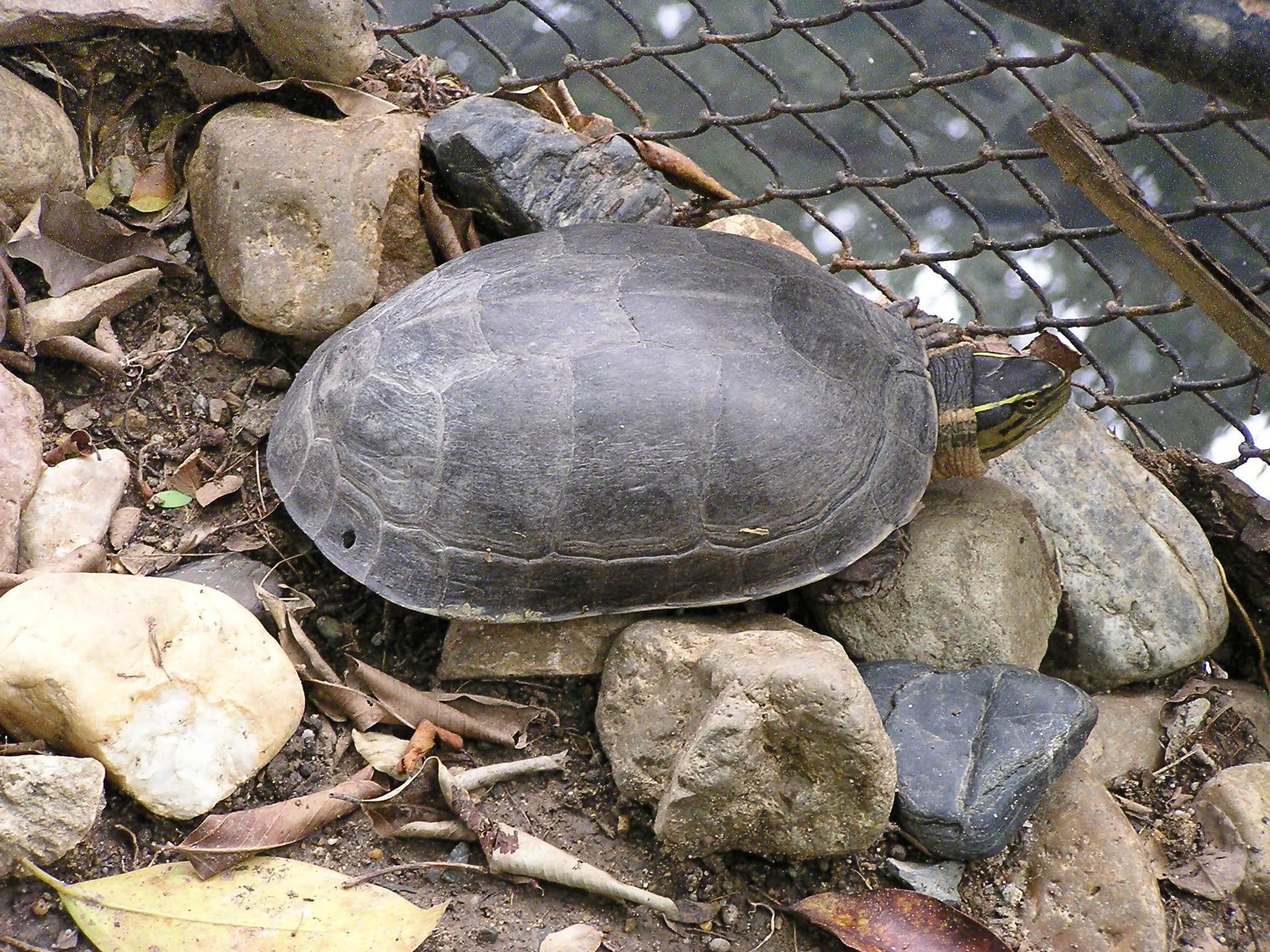
The type species of Cuora and the most widely distributed box turtle and geoemydid. The plastral hinge is well developed and closes the shell almost completely. It is the most aquatic member of the genus. The carapace reaches 21.6 cm.
Difficulty
Intermediate
Temperature
25〜32℃
Lifespan
Maximum recorded longevity in captivity is 38 years
Size
Carapace up to 21.6cm, with females larger than males
Humidity
40〜70%
Diet
Leaves of aquatic and terrestrial plants, fruit, mushrooms, algae, insects, crustaceans, snails, fish and prepared pellets
About
Cuora amboinensis is the type species of the box turtle genus and has the widest range of any Cuora or indeed any geoemydid. The carapace reaches 21.6 cm and females are larger. It is a black to dark brown oval with unserrated rear marginals, and the plastron is yellow to pale yellow with a single dark blotch on each scute. The plastral hinge is exceptionally well developed and closes the gap between carapace and plastron almost completely. The head is brown to black with three yellow stripes on each side, a useful identification feature. The specific name amboinensis refers to Ambon Island in Indonesia, the type locality. It is the most aquatic Cuora, and juveniles in particular take to the water and swim well. It is also found in heavily modified habitats such as paddy fields, irrigation canals and mangroves. Adults prefer plant food while juveniles are more carnivorous.
Source: Wikipedia (CC BY-SA 4.0)
Lifespan of the Malayan Box Turtle
The Malayan Box Turtle lives Maximum recorded longevity in captivity is 38 years.
Size of the Malayan Box Turtle
The Malayan Box Turtle grows to Carapace up to 21.6cm, with females larger than males.
Basic Info
Origin
From northeastern India and Bangladesh across mainland and island Southeast Asia, in slow rivers, ponds, wetlands and canals of lowlands and hills below 500 m
Lifespan
Maximum recorded longevity in captivity is 38 years
Size
Care Specifications
PeacefulSolitaryBreeding: Moderate
Sources: Wikipedia (Japanese): Southeast Asian box turtle / Wikipedia (English): Southeast Asian box turtle / Reptile Database / AnAge: The Animal Ageing and Longevity Database
References & Sources
Edited & verified by: BreederDirect editorial team
The taxonomic, regulatory, and husbandry data on this page are compiled and verified against the authoritative primary sources below.
Primary sources
- Wikipedia
- CITES Appendices
- Ministry of the Environment: list of invasive alien species
- Order for Enforcement of the Act on Welfare and Management of Animals (designated dangerous animals)
- Wikipedia (Japanese): Southeast Asian box turtle
- Wikipedia (English): Southeast Asian box turtle
- Reptile Database
- AnAge: The Animal Ageing and Longevity Database
Taxonomy & Authority
Accepted name: Cuora amboinensis (Riche in Daudin, 1801)
Synonyms: Testudo amboinensis Daudin, 1801, Cistoclemmys amboinensis (Fitzinger, 1835), Cuora amboinensis kamaroma Rummler & Fritz, 1991
Authority databases: Reptile Database
Nomenclature follows global taxonomic authority databases.
Regulations & Conservation Status
CITES Appendix IIIUCN EN · Endangered
In 2000, Cuora spp. was listed in CITES Appendix II (current listing effective 23 February 2023). As an Appendix II species, special international registration is not required. It is not designated as a Special Animal under the Animal Welfare and Management Act nor as a Designated Invasive Species.
Sources: CITES Appendices / Ministry of the Environment: list of invasive alien species / Order for Enforcement of the Act on Welfare and Management of Animals (designated dangerous animals)
Regulations may change. Always verify the latest information with the relevant authorities.
Malayan Box Turtle Listings
Loading latest listingsFind listings for this species