Source: Wikimedia Commons
Sandfish Skink
AdvancedScincus scincus
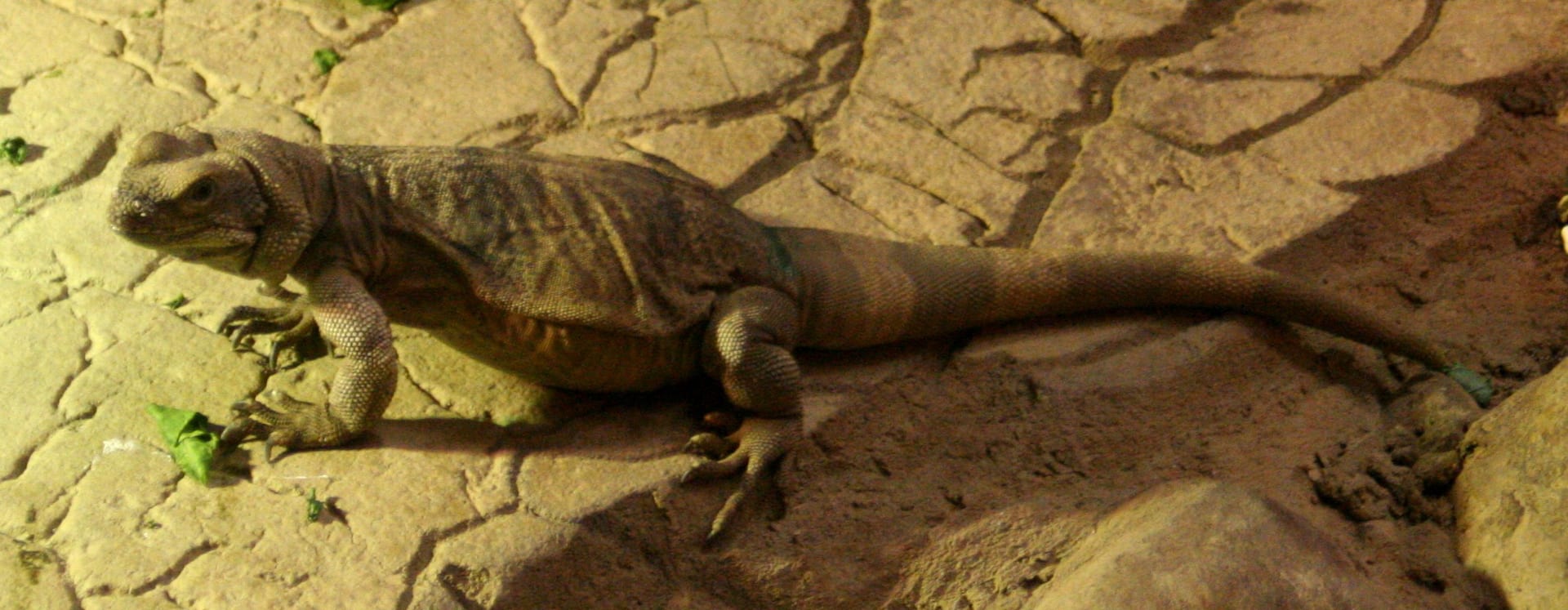
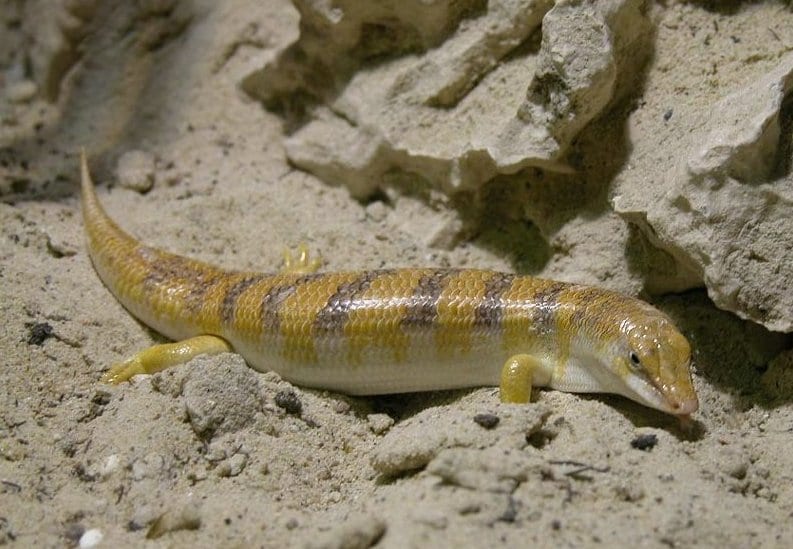
A skink with a wedge-shaped snout, a countersunk lower jaw and flattened, fringed, shovel-like feet, which dives into sand as though swimming. It is yellow-caramel with brown-black crossbands and about 20 cm long.
Difficulty
Advanced
Lifespan
6-10 years
Size
About 20cm total length including the short tail
Humidity
40〜70%
Diet
Carnivorous: insects and other arthropods
About
The sandfish skink (Scincus scincus) is a skink of the Sahara and the Arabian Peninsula, about 20 cm long including its short tail. Its English name comes from its ability to move through sand as if swimming: it undulates its body, producing vibrations in the sand at a steady 3 Hz as it submerges. This both prevents overheating and provides escape from predators such as the Saharan sand viper. The snout is a long wedge and the lower jaw is countersunk into a basket-like shape that keeps sand out of the mouth when diving. The body tapers smoothly from a conical head to the tail and is covered in smooth, glossy scales. The limbs are short and sturdy, with long, flattened, fringed toes that work like shovels. Colour is yellow-caramel with brown-black crossbands. It is highly specialised for a life in sand, and substrate quality is the key to keeping it.
Source: Wikipedia (CC BY-SA 4.0)
Lifespan of the Sandfish Skink
The Sandfish Skink lives 6-10 years.
Size of the Sandfish Skink
The Sandfish Skink grows to About 20cm total length including the short tail.
Basic Info
Origin
The Sahara and the Arabian Peninsula, including Tunisia, Algeria, Libya, Egypt, Sinai, Israel, Jordan, Saudi Arabia, Yemen, Iraq, Iran, Senegal, Mali, Niger, Nigeria and Sudan
Lifespan
6-10 years
Size
About 20cm total length including the short tail
Care Specifications
PeacefulGroupBreeding: Hard
Sources: ReptiFiles: Sandfish Care Guide / ReptiFiles: Sandfish Temperatures, UVB & Humidity / Reptile Database: Scincus scincus
References & Sources
Edited & verified by: BreederDirect editorial team
The taxonomic, regulatory, and husbandry data on this page are compiled and verified against the authoritative primary sources below.
Taxonomy & Authority
Accepted name: Scincus scincus (Linnaeus, 1758)
Synonyms: Lacerta scincus Linnaeus, 1758, Scincus officinalis Laurenti, 1768, Scincus meccensis Wiegmann, 1837
Authority databases: GBIF · Reptile Database
Nomenclature follows global taxonomic authority databases.
Regulations & Conservation Status
Not CITES-listedIUCN LC · Least Concern
Not currently listed in the CITES Appendix (no current listing in Species+). The IUCN Red List assessment is Least Concern (LC). The species is not included in the designated animals listed in the annexes of the Animal Welfare and Management Law Enforcement Order, nor in the designated invasive species under the Invasive Species Law Enforcement Order.
Sources: CITES Species+ (species not currently listed) / IUCN Red List
Regulations may change. Always verify the latest information with the relevant authorities.
Sandfish Skink Listings
Loading latest listingsFind listings for this species