Source: Wikimedia Commons
Rhinoceros Rat Snake
IntermediateGonyosoma boulengeri
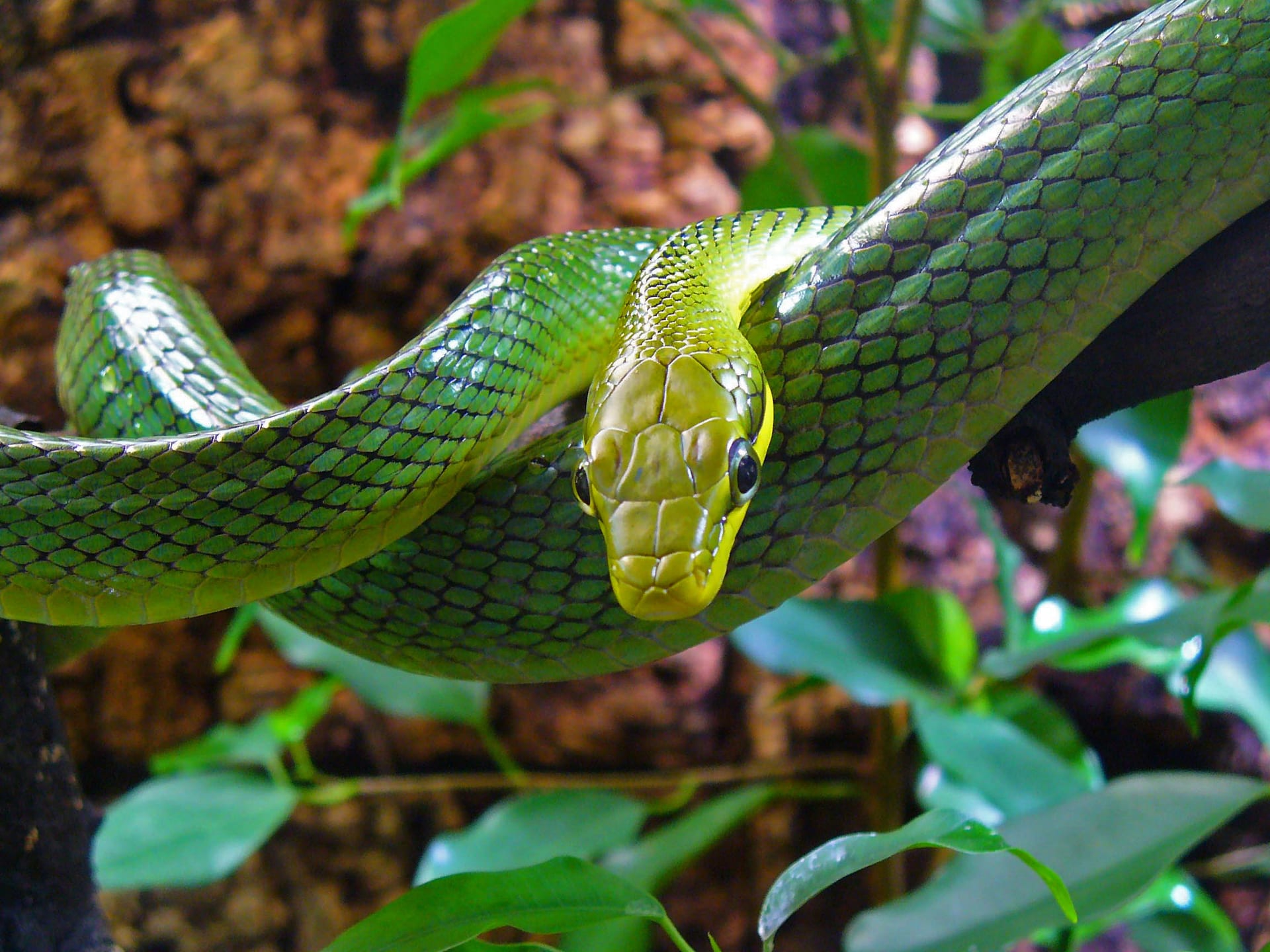
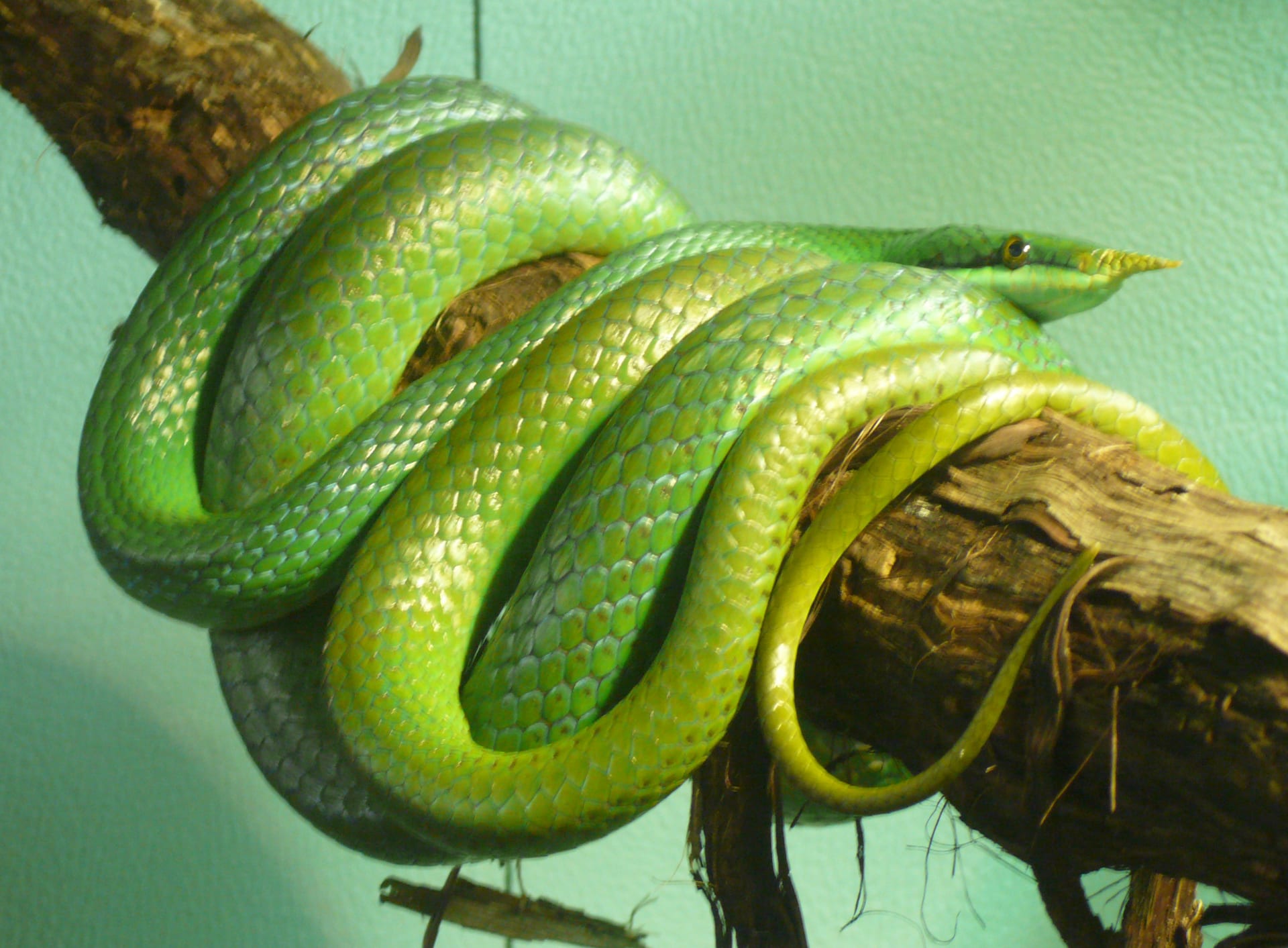
An arboreal colubrid with a long, mobile, scaled protrusion on the tip of the snout, likened to a rhinoceros horn, which gives it its name. A fine black line runs from the pointed snout through the eye to the neck, and the throat and upper labials are whitish to pale green.
Difficulty
Intermediate
Temperature
25〜32℃
Lifespan
10-16 years
Size
100-160cm total length
Humidity
40〜70%
Diet
Carnivorous: small mammals such as mice, birds, reptiles and amphibians, and at times insects and even fish
About
The rhinoceros rat snake (Gonyosoma boulengeri) is an arboreal colubrid ranging from northern Vietnam into southern China and measuring 100-160 cm. Its most distinctive feature is the long, mobile, scaled protrusion on the tip of the snout, likened to a rhinoceros horn, which gives it both its English and Japanese names. There are 19 rows of dorsal scales at midbody. A fine black line runs from the pointed snout through the eye to the neck, and the throat and upper labials are whitish to pale green. Hatchlings are brownish grey with dark edging on some dorsal scales; at 12-14 months they turn steel grey and by about 24 months take on the bluish-green to green adult colour, though a rare few keep the steel grey. It lives in subtropical forest at 300-1,100 m, especially in valleys with streams, keeping mainly to shrubs and the lower levels of trees. Sources differ on its activity, some describing it as chiefly diurnal and others as mainly nocturnal. It matures at about two years, mates in April and May, lays five to ten eggs, and the young hatch after 60-90 days at 30-35 cm.
Source: Wikipedia (CC BY-SA 4.0)
Lifespan of the Rhinoceros Rat Snake
The Rhinoceros Rat Snake lives 10-16 years.
Size of the Rhinoceros Rat Snake
The Rhinoceros Rat Snake grows to 100-160cm total length.
Basic Info
Origin
Northern Vietnam (Ha Tinh, Vinh Phuc, Yen Bai and others) and southern China (Guangxi, Hainan and Yunnan), in subtropical forest at 300-1,100 m, especially in valleys with streams
Lifespan
10-16 years
Care Specifications
Semi-aggressiveSolitaryBreeding: Hard
Sources: Reptile Database: Gonyosoma boulengeri / Wikipedia (English): Rhinoceros ratsnake / Wikipedia (German): Spitznasennatter
References & Sources
Edited & verified by: BreederDirect editorial team
The taxonomic, regulatory, and husbandry data on this page are compiled and verified against the authoritative primary sources below.
Taxonomy & Authority
Accepted name: Gonyosoma boulengeri (Mocquard, 1897)
Synonyms: Rhynchophis boulengeri Mocquard, 1897, Proboscidophis versicolor Fan, 1931
Authority databases: GBIF · Reptile Database
Nomenclature follows global taxonomic authority databases.
Regulations & Conservation Status
Not CITES-listedIUCN LC · Least Concern
Not listed in any CITES appendix (no listing record in Species+). The IUCN Red List assessment is Least Concern (LC). This species is neither included among the designated animals listed in the Animal Welfare and Management Law Ordinance Schedule nor designated as an alien species under the Invasive Species Act Ordinance.
Sources: CITES Species+ (species not listed) / IUCN Red List
Regulations may change. Always verify the latest information with the relevant authorities.
Rhinoceros Rat Snake Listings
Loading latest listingsFind listings for this species