Source: Wikimedia Commons
Mandarin Rat Snake
IntermediateEuprepiophis mandarinus
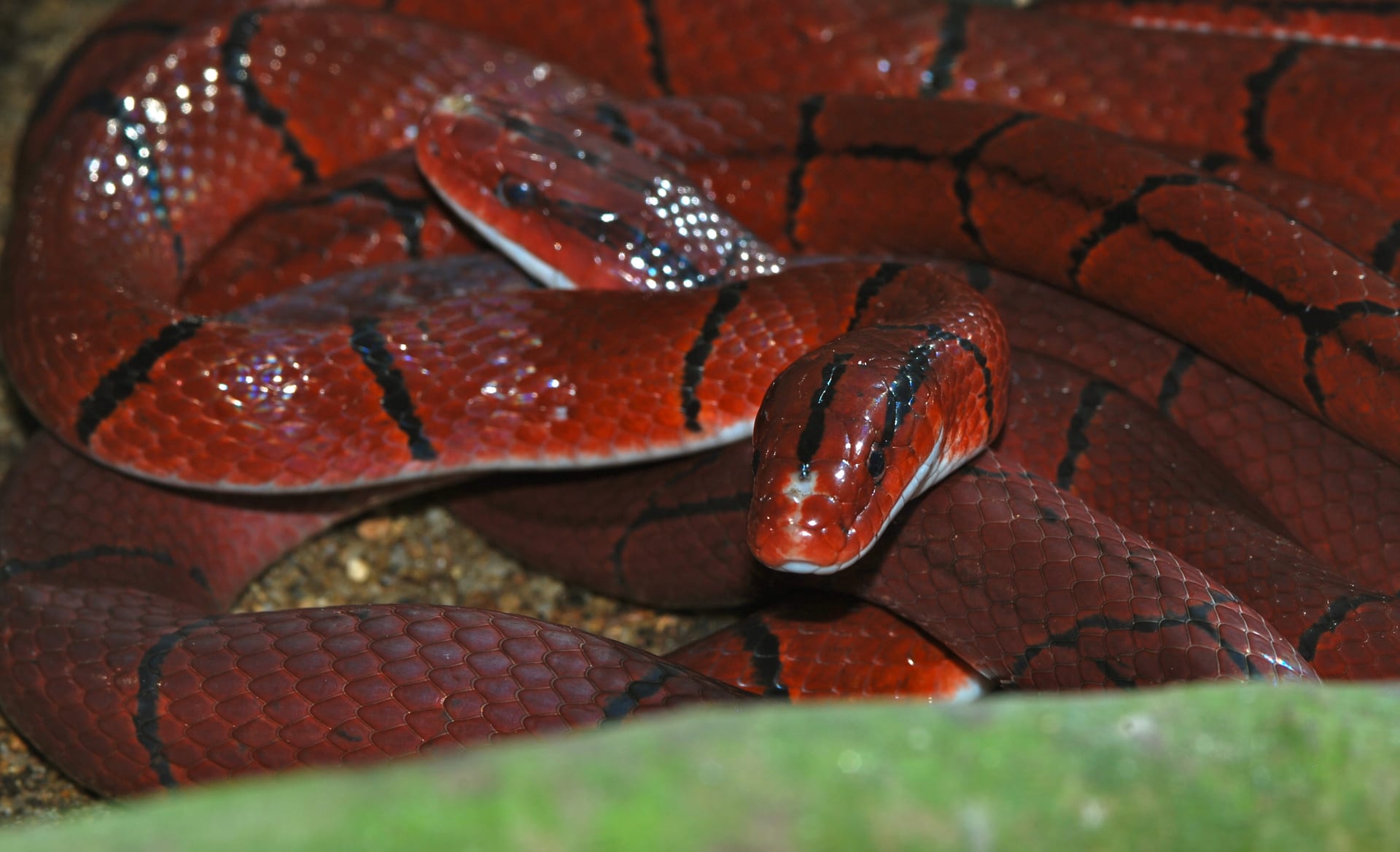
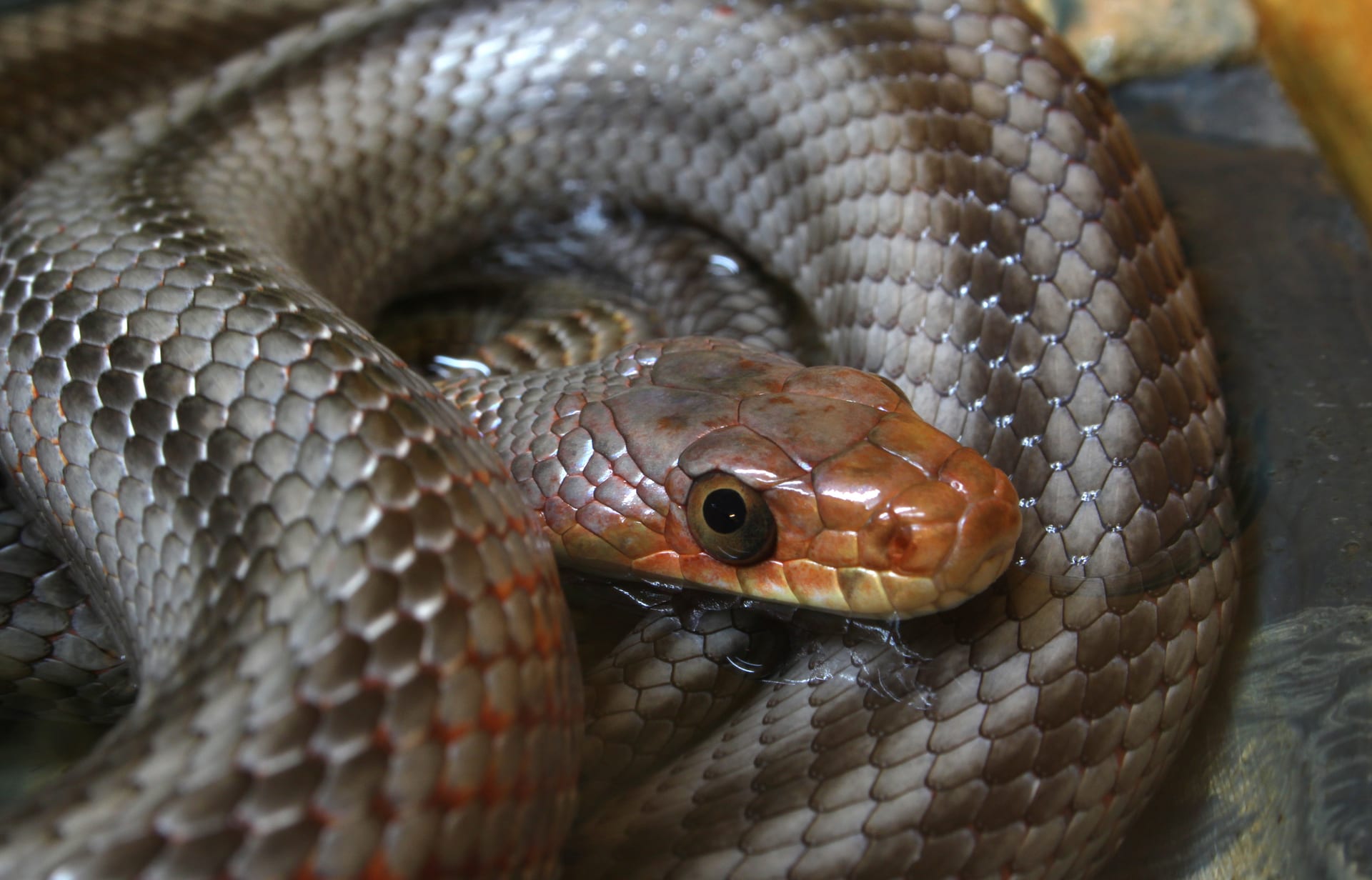
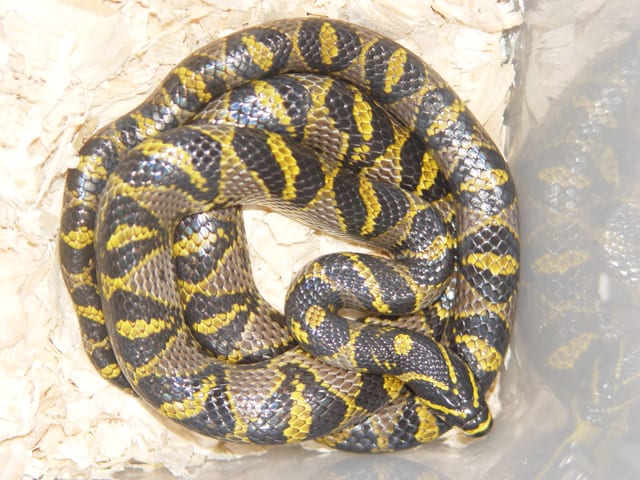
A medium-sized colubrid, grey with diamond-shaped black and yellow markings along the back. Small for a rat snake, it does not exceed 1.4 m even as an adult. It is secretive and often shelters in rodent burrows.
Difficulty
Intermediate
Temperature
16〜27℃
Lifespan
Typically 10-15 years
Size
Up to 1.4m total length
Humidity
40〜70%
Diet
Carnivorous, mainly small rodents
About
The mandarin rat snake (Euprepiophis mandarinus) is a colubrid ranging from north-eastern India through southern China to Taiwan, a close relative of the Japanese forest rat snake in the same genus. Diamond-shaped black and yellow markings along a grey body make it one of the most sought-after rat snakes. It is small for the group, not exceeding 1.4 m as an adult. Secretive by nature, it often shelters in rodent burrows, feeds mainly on small rodents and is largely crepuscular. Like its Japanese congener it prefers cool conditions and tolerates cold far better than heat. Cantor described it in 1842 from a specimen taken on Zhoushan Island in Zhejiang, China.
Source: Wikipedia (CC BY-SA 4.0)
Lifespan of the Mandarin Rat Snake
The Mandarin Rat Snake lives Typically 10-15 years.
Imported wild-caught animals were once in poor condition and the species had a reputation for being difficult, but captive experience has accumulated and lifespans of 10-15 years are now typical.
Size of the Mandarin Rat Snake
The Mandarin Rat Snake grows to Up to 1.4m total length.
Temperature & humidity for the Mandarin Rat Snake
The ideal temperature for the Mandarin Rat Snake is 16〜27℃.
Basic Info
Origin
North-eastern India (Arunachal Pradesh, Mizoram and Nagaland), northern Myanmar, Laos, Vietnam, Taiwan and China from the south north to Shaanxi and west to south-eastern Tibet, on montane forest floors
Care Specifications
PeacefulSolitaryBreeding: Hard
Sources: Reptiles Magazine: Mandarin Rat Snake Care Sheet / Reptile Database: Euprepiophis mandarinus / Wikipedia (English)
References & Sources
Edited & verified by: BreederDirect editorial team
The taxonomic, regulatory, and husbandry data on this page are compiled and verified against the authoritative primary sources below.
Taxonomy & Authority
Accepted name: Euprepiophis mandarinus (Cantor, 1842)
Synonyms: Coluber mandarinus Cantor, 1842, Elaphe mandarina (Cantor, 1842), Elaphe takasago Takahashi, 1930
Authority databases: GBIF · Reptile Database
Nomenclature follows global taxonomic authority databases.
Regulations & Conservation Status
Not CITES-listedIUCN LC · Least Concern
Not listed in any CITES appendix (not recorded in Species+). IUCN Red List assessment: Least Concern (LC). This species is not included in either the specified animals listed in the appended table of the Ordinance for Enforcement of the Animal Welfare and Management Law, nor the specified invasive alien species under the Ordinance for Enforcement of the Invasive Alien Species Act.
Sources: CITES Species+ (species not listed) / IUCN Red List
Regulations may change. Always verify the latest information with the relevant authorities.
Mandarin Rat Snake Listings
Loading latest listingsFind listings for this species