Source: Wikimedia Commons
Red Bamboo Rat Snake
IntermediateOreocryptophis porphyraceus
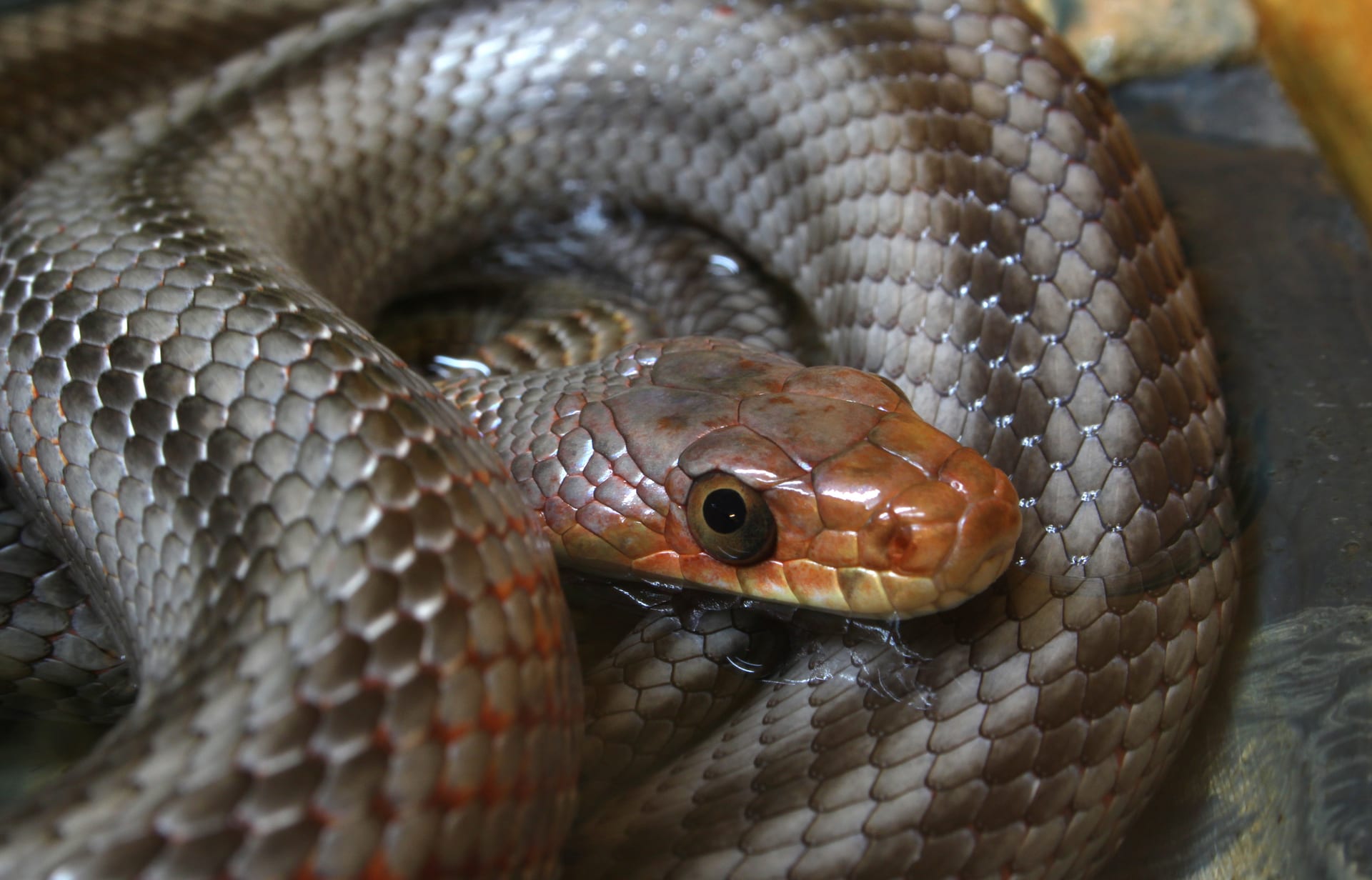
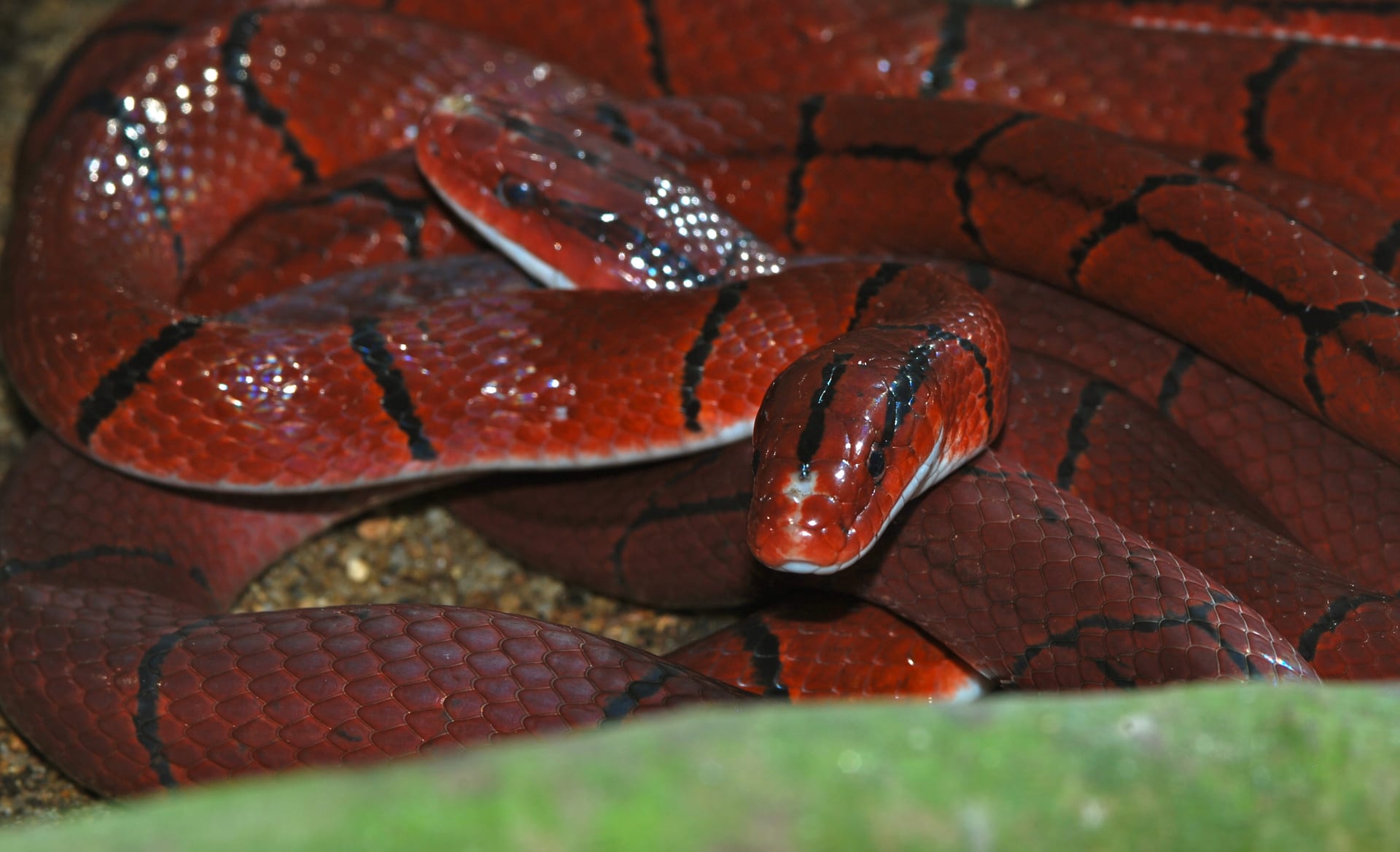
A small colubrid in red to orange with two black stripes running the length of the body, or black crossbands in some subspecies. The head is small, sharp and squarish. It is a terrestrial to semi-fossorial snake of cool montane forest floors.
Difficulty
Intermediate
Temperature
24〜26℃
Lifespan
12-18 years
Size
Little over 1m at most; large females average about 102cm
Humidity
40〜70%
Diet
Carnivorous: small rodents and other small animals such as frogs
About
The red bamboo rat snake (Oreocryptophis porphyraceus) is a colubrid of montane forest from South-East to East Asia and the only member of its genus, formerly placed in Elaphe. It is small for a rat snake: even large females average only about 102 cm. The head is small, sharp and squarish, and the body is red to orange with two black stripes running its full length, though some subspecies show black crossbands instead, so pattern varies widely. It is strictly terrestrial and prefers a cool, very humid climate, which confines it to hills and mountain plateaus. It is most often found above 800 m in evergreen moist rainforest or monsoon forest, spending most of its time in deep leaf litter and under stones and dead wood. It is crepuscular, active from late evening into the night and from dawn until late morning. It is one of the most sought-after rat snakes in captivity, but it is heat-sensitive and suffers above 29 C.
Source: Wikipedia (CC BY-SA 4.0)
Lifespan of the Red Bamboo Rat Snake
The Red Bamboo Rat Snake lives 12-18 years.
Size of the Red Bamboo Rat Snake
The Red Bamboo Rat Snake grows to Little over 1m at most; large females average about 102cm.
Temperature & humidity for the Red Bamboo Rat Snake
The ideal temperature for the Red Bamboo Rat Snake is 24〜26℃.
Basic Info
Origin
North-eastern India, Nepal, Bhutan, Bangladesh, Myanmar, Thailand, Laos, northern Vietnam, southern China, Tibet, Taiwan, West Malaysia and Indonesia (Sumatra), in evergreen moist rainforest and monsoon forest above 800 m
Care Specifications
PeacefulSolitaryBreeding: Hard
Sources: Reptiles Magazine: Breeding Oreocryptophis porphyraceus Rat Snakes / Reptile Database: Oreocryptophis porphyraceus / Wikipedia (German): Bambusnatter
References & Sources
Edited & verified by: BreederDirect editorial team
The taxonomic, regulatory, and husbandry data on this page are compiled and verified against the authoritative primary sources below.
Taxonomy & Authority
Accepted name: Oreocryptophis porphyraceus (Cantor, 1839)
Synonyms: Coluber porphyraceus Cantor, 1839, Elaphe porphyracea (Cantor, 1839), Liopeltis kawakamii Oshima, 1910
Authority databases: GBIF · Reptile Database
Nomenclature follows global taxonomic authority databases.
Regulations & Conservation Status
Not CITES-listedIUCN LC · Least Concern
Not listed in any CITES appendix (no listing record in Species+). The IUCN Red List assessment is Least Concern (LC). This species is neither included among the designated animals listed in the Act on Welfare and Management of Animals Ordinance Schedule nor designated as an alien species under the Invasive Species Act Ordinance.
Sources: CITES Species+ (species not listed) / IUCN Red List
Regulations may change. Always verify the latest information with the relevant authorities.
Red Bamboo Rat Snake Listings
Loading latest listingsFind listings for this species