Source: Wikimedia Commons
Green Basilisk
IntermediateBasiliscus plumifrons
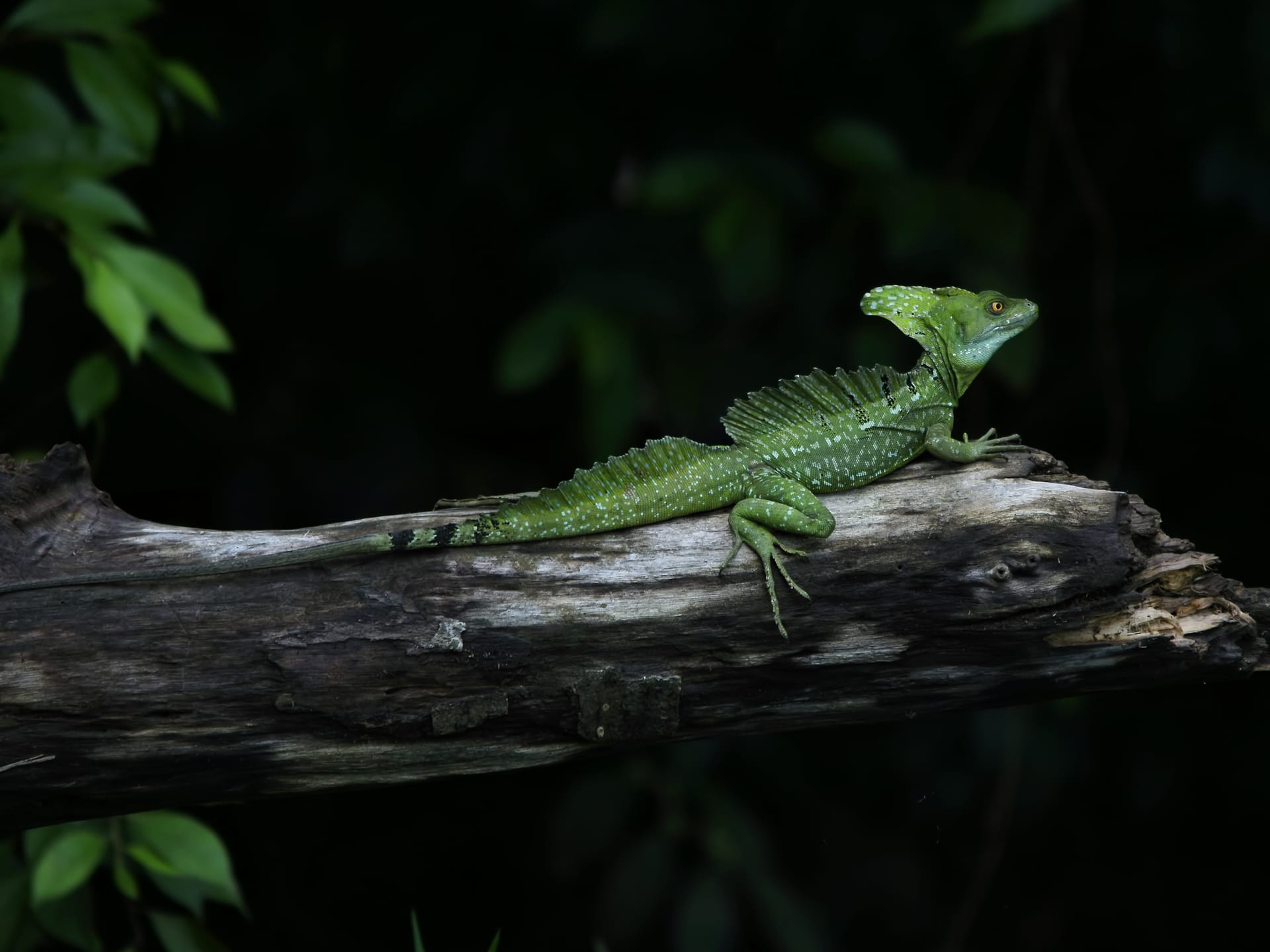
A Central American lizard in brilliant green, with two plumes on the crown and a tall crest running from the back onto the tail, both most developed in adult males. It is famous for escaping by running across the surface of water.
Difficulty
Intermediate
Lifespan
13-15 years in captivity
Size
60-76cm total length, the tail making up about two-thirds
Humidity
50〜75%
Diet
Omnivorous with a strong animal bias: insects such as dragonflies and grasshoppers, small reptiles, amphibians, birds and mammals, and fruit
About
The green basilisk (Basiliscus plumifrons) is a corytophanid lizard of Central American rainforest. It reaches 60-76 cm in total length, the tail accounting for about two-thirds. Colour ranges from dark green through emerald to blue-green, with fine yellowish to bluish flecking on the back. Adult males carry two plumes on the crown, one in front of the other, and a crest up to 5 cm high running from the back to the tail base; females and juveniles have much smaller plumes and crests. It lives in forest along running water and spends its time on branches overhanging it. Startled, it either drops into the water or rears onto its hind legs and runs, crossing the surface for short distances. It recognises only moving water as water, so a current in the water container helps in captivity. Clutches are of 15-20 eggs, which hatch in about 60-90 days at 29-31 C. It is also one of the few iguanian lizards in which parthenogenesis has been recorded.
Source: Wikipedia (CC BY-SA 4.0)
Lifespan of the Green Basilisk
The Green Basilisk lives 13-15 years in captivity.
Size of the Green Basilisk
The Green Basilisk grows to 60-76cm total length, the tail making up about two-thirds.
Basic Info
Origin
Honduras, Nicaragua, Costa Rica and Panama, in hot, humid rainforest with streams and rivers
Lifespan
13-15 years in captivity
Size
60-76cm total length, the tail making up about two-thirds
Care Specifications
AggressiveSolitaryBreeding: Moderate
Sources: Reptiles Magazine: Plumed Basilisk Lizard Care Tips / Reptiles Magazine: Care And Breeding the Basilisk Lizard / Wikipedia (Japanese)
References & Sources
Edited & verified by: BreederDirect editorial team
The taxonomic, regulatory, and husbandry data on this page are compiled and verified against the authoritative primary sources below.
Taxonomy & Authority
Accepted name: Basiliscus plumifrons Cope, 1875
Authority databases: GBIF · Reptile Database
Nomenclature follows global taxonomic authority databases.
Regulations & Conservation Status
Not CITES-listedIUCN LC · Least Concern
Not listed in any CITES appendix (not recorded in Species+). IUCN Red List assessment: Least Concern (LC). This species is not included in either the specified animals listed in the appended table of the Ordinance for Enforcement of the Animal Welfare and Management Law, nor the specified invasive alien species under the Ordinance for Enforcement of the Invasive Alien Species Act.
Sources: CITES Species+ (species not listed) / IUCN Red List
Regulations may change. Always verify the latest information with the relevant authorities.
Green Basilisk Listings
Loading latest listingsFind listings for this species